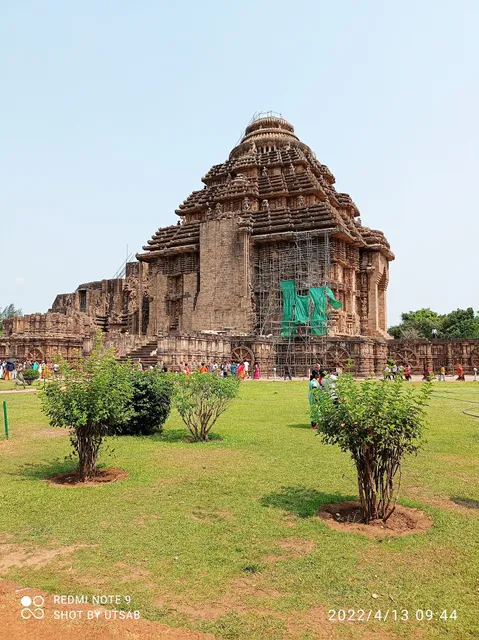
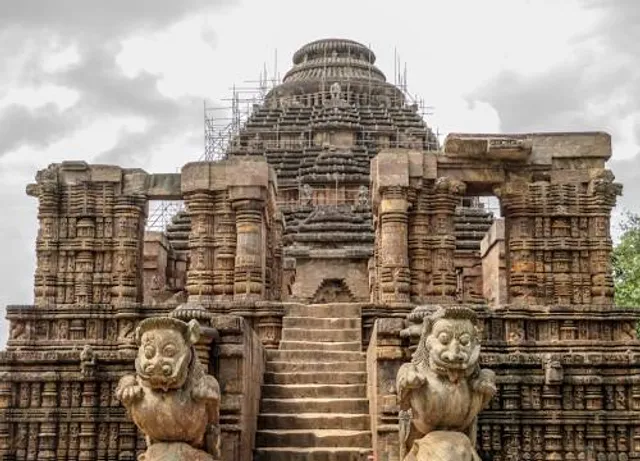
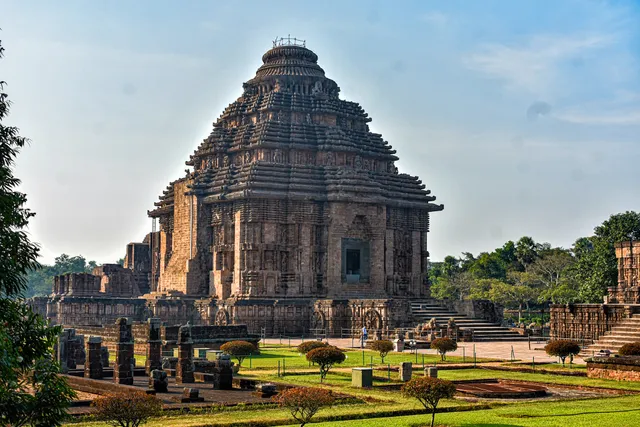
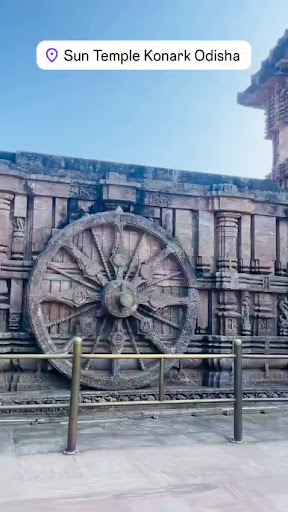
The Konark Sun Temple, also known as the Black Pagoda, is a 13th-century Hindu temple in Odisha, India, dedicated to the Sun God Surya. Designed as a giant, stone chariot with 12 pairs of wheels, it is a UNESCO World Heritage Site and an example of Orissan architectur.
Location -
The Temple is located in an eponymous village (now NAC Area) about 35 kilometres (22 mi) northeast of Puri and 65 kilometres (40 mi) southeast of Bhubaneswar on the Bay of Bengal coastline in the Indian state of Odisha. The nearest airport is Biju Patnaik Airport in Bhubaneswar, Odisha. Both Puri and Bhubaneswar are major railway hubs connected by Indian Railways.
The Name & where it's is derived from:-
The name Konark (Koṇarka) derives from the combination of the Sanskrit words Koṇa (corner or angle) and Arka (the sun).
The context of the term Kona is unclear, but probably refers to the southeast location of this temple either within a larger temple complex or in relation to other sun temples on the subcontinent. The Arka refers to the Hindu sun god Surya.
Construction & History:-
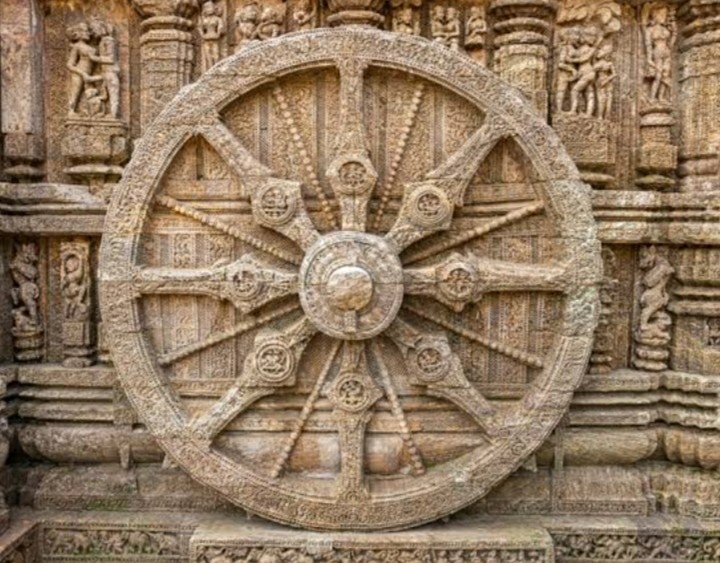
The Konark Sun Temple was built in 1250 CE during the reign of the Eastern Ganga King Narasingha Deva I from stone in the form of a giant ornamented chariot dedicated to the Sun god, Surya. In Hindu Vedic iconography Surya is represented as rising in the east and traveling rapidly across the sky in a chariot drawn by seven horses. He is described typically as a resplendent standing person holding a lotus flower in both his hands, riding the chariot marshaled by the charioteer Aruna. The seven horses are named after the seven meters of Sanskrit prosody: Gayatri, Brihati, Ushnih, Jagati, Trishtubh, Anushtubh, and Pankti. Typically seen flanking Surya are two females who represent the dawn goddesses, Usha and Pratyusha. The goddesses are shown to be shooting arrows, a symbol of their initiative in challenging the darkness. The architecture is also symbolic, with the chariot's twelve pairs of wheels corresponding to the 12 months of the Hindu calendar, each month paired into two cycles (Shukla and Krishna)
The Konark temple presents this iconography on a grand scale. It has 24 elaborately carved stone wheels which are nearly 12 feet (3.7 m) in diameter and are pulled by a set of seven horses. When viewed from inland during the dawn and sunrise, the chariot-shaped temple appears to emerge from the depths of the blue sea carrying the sun.
The sun temple was made from three types of stone. Chlorite was used for the door lintel and frames as well as some sculptures. Laterite was used for the core of the platform and staircases near the foundation. Khondalite was used for other parts of the temple. According to Mitra, the Khondalite stone weathers faster over time, and this may have contributed to erosion and accelerated the damage when parts of the temples were destroyed.None of these stones occur naturally nearby, and the architects and artisans must have procured and moved the stones from distant sources, probably using the rivers and water channels near the site.The masons then created ashlar, wherein the stones were polished and finished so as to make joints hardly visible.
The original temple had a main sanctum sanctorum (vimana), which is estimated to have been 229 feet (70 m) tall. The main vimana fell in 1837. The main mandapa audience hall (jagamohana), which is about 128 feet (39 m) tall, still stands and is the principal structure in the surviving ruins. Among the structures that have survived to the current day are the dance hall (Nata mandira) and the dining hall (Bhoga mandapa)
Myth and Legend:-
The temple is associated with various legends, including one about a boy named Dharmapada and the temple's alleged magnetic properties,
This temple is depicted on the reverse side of the Mahatma Gandhi New Series ₹10 note
Where you Should Stay Though not maintained one must stay in OTDC Yatrinivas ( Managed by Odisha Tourism ) a walkable distance so one can visit early morning & Late evenings. Time Required 3 to 4 hrs. Tickets at...
Read moreKonark Sun Temple: A Marvel of Ancient Indian Architecture
Located in the eastern state of Odisha, India, the Konark Sun Temple is an iconic example of ancient Indian architecture and a testament to the region's rich cultural heritage. This magnificent temple, dedicated to the Sun God, is a masterpiece of medieval Indian art and architecture.
History and Significance
Built in the 13th century during the reign of King Narasimhadeva I of the Eastern Ganga dynasty, the Konark Sun Temple was constructed to commemorate the king's military victories. The temple's design and architecture are deeply rooted in Hindu mythology and symbolism, reflecting the importance of the Sun God in Hinduism.
Architecture and Design
The Konark Sun Temple is a stunning example of the Kalinga style of architecture, characterized by intricate carvings, ornate decorations, and a unique blend of Hindu and Buddhist influences. The temple's design is inspired by the concept of the Sun God's chariot, with 24 wheels, each representing an hour of the day.
The temple's main structure is divided into three distinct sections:
Deula (sanctum sanctorum): The innermost sanctum, where the deity is enshrined. Jagamohana (assembly hall): The middle section, which serves as a gathering place for devotees. Nata Mandir (dance hall): The outermost section, which features intricate carvings and sculptures depicting various dance poses.
Intricate Carvings and Sculptures
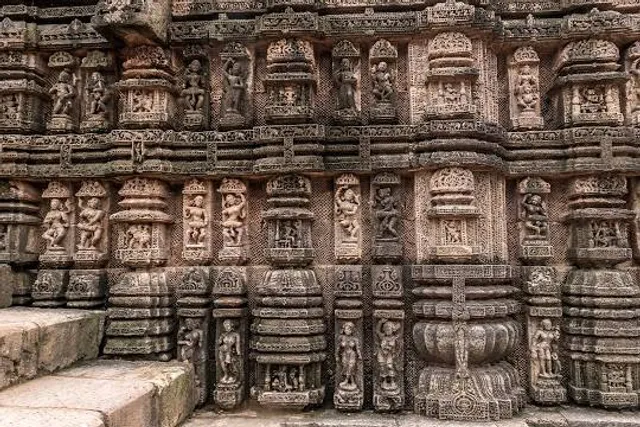
The Konark Sun Temple is renowned for its exquisite carvings and sculptures, which adorn the temple's walls, pillars, and ceilings. These intricate works of art depict various themes, including:
Mythological scenes: Episodes from Hindu mythology, such as the Ramayana and the Mahabharata. Dance and music: Sculptures showcasing various dance poses and musical instruments. Erotic sculptures: Explicit carvings, which were a common feature of medieval Indian art. Astronomical symbols: Carvings representing various astronomical symbols, such as the Sun, Moon, and stars.
Conservation Efforts
The Konark Sun Temple has undergone significant conservation efforts over the years to preserve its structural integrity and artistic heritage. The Archaeological Survey of India (ASI) has been responsible for the temple's conservation and maintenance since 1903.
Tourism and Cultural Significance
The Konark Sun Temple is a major tourist attraction in Odisha, attracting millions of visitors each year. The temple's cultural significance extends beyond its architectural and artistic value, as it represents the rich cultural heritage of India and the importance of preserving our historical monuments.
Interesting Facts
UNESCO World Heritage Site: The Konark Sun Temple was designated a UNESCO World Heritage Site in 1984. Solar alignment: The temple's design ensures that the Sun's rays illuminate the sanctum sanctorum during the winter solstice. Intricate wheel carvings: The temple's 24 wheels are adorned with intricate carvings, which are considered some of the finest examples of medieval Indian art.
In conclusion, the Konark Sun Temple is an awe-inspiring example of ancient Indian architecture, art, and culture. Its intricate carvings, sculptures, and astronomical symbols make it a fascinating destination for tourists, historians, and art enthusiasts alike.
And i personally like this...
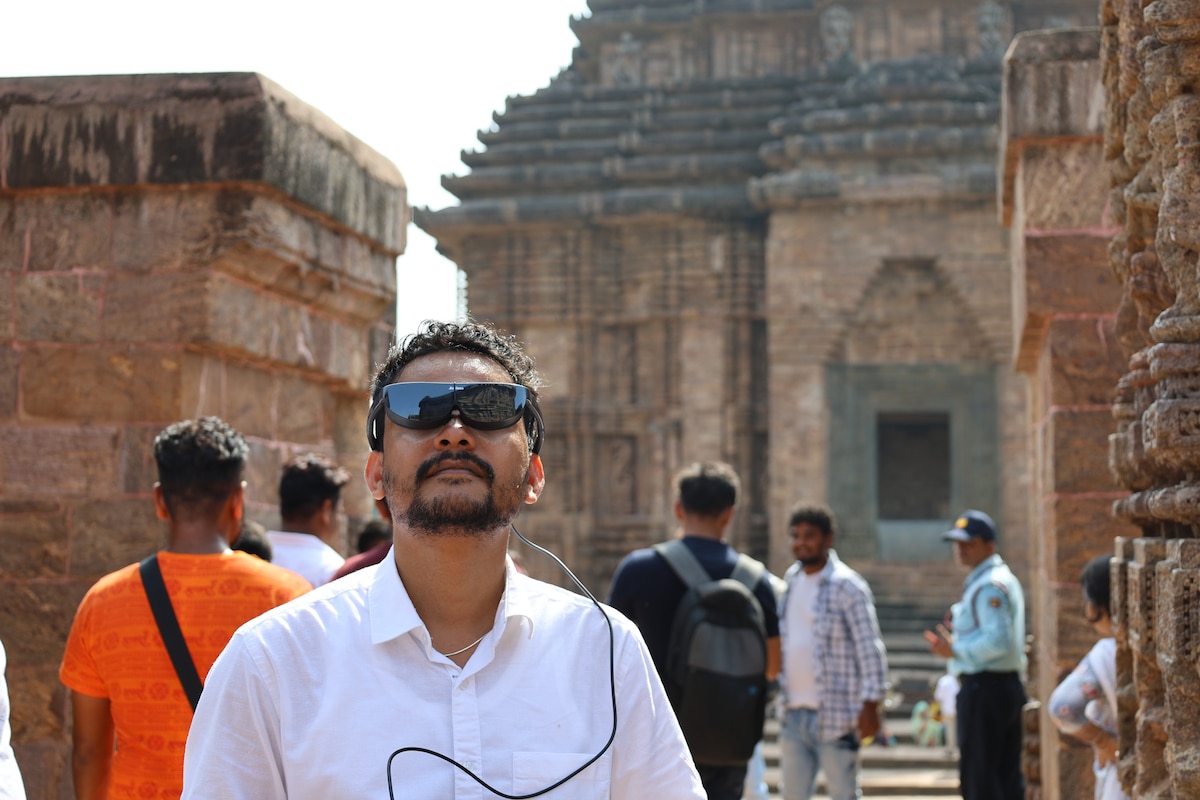
Read moreA 13th century Sun temple purportedly built by the Eastern Gangas and one of the most monumental and stunning temples in India. In fact the Sun Temple at Konark is defunct temple since there is no idol of the Sun or any other god that is worshipped there. You'll find no priests and you don't have to take off your shoes. It is actually a protected historical site under the care of the Archaeological Survey of India. The Shikhara of the temple is long gone (destroyed) and the Jagamohana is what remains now although it has been filled in with sand and stones and perhaps concrete to prevent the roof from collapsing. A large amount of material and debris from the temple can be found in the complex, now somewhat arranged aesthetically by the ASI. The Natamandapa is to the front of the Jagamohana and offers good views and photography spots for the temple. It has been a few years since some beautification and restoration work has been going on and the lawns around the temple are well maintained and look lush.
Drinking water is available at many places. Toilets are available too. Two large trees provide much needed shade to the visitors. The exit as it is positioned now will take you through a small market that sells temple related memorabilia.
Entry fee for Indian nationals is 40/- rupees per head. For foreign visitors it must be way more, maybe 500/- or 600/- rupees. I personally dislike this kind of scammy practices. Foreigners need to be encouraged to come and visit the architectural heritage of India.
Lots of 'guides' and photographers trying to sell their services. Steer clear. Carry a cap, a pair of good goggles and a sturdy umbrella. Carry water too. The heat is, without exaggeration, deadly. Anytime other than between November and February, the heat is such that it's a life and death situation trying to explore the monument. That's not how it should be. One needs to enjoy the wonderment of seeing something so beautiful made from stone and not worry about dehydration or stroke.
Plenty of restaurants outside. Cabs, autos also available. The route to Konark from Puri will take you on the Marine Drive road and you must spend some time on the Chandrabhaga beach which is one of the cleanest and most beautiful looking beaches in India. Choose your visit according to the weather, fellow travellers. In India, weather is everything.
And yes, this temple complex is a UNESCO World Heritage site and deservedly so. The sculptures on the temple walls are marvellous. You'll find a lot of erotic sculptures in very creative and frank poses - animal on men, men on animals, threesomes, 69s, fellating ladies - you name it. Why did sculptors make such sexually charged sculptures on a temple wall? Perhaps because India and Indians weren't weird about desire and nudity and sex back then and 'kama' was as noble a pursuit as 'dharma' or 'artha' or 'moksha'. But for real, visit in the winters or else carry...
Read more