HTML SitemapExplore
Find Things to DoFind The Best Restaurants

Arikamedu — Attraction in Puducherry

Name
Arikamedu
Description
Arikamedu is an archaeological site in Southern India, in Kakkayanthope, Ariyankuppam Commune, Puducherry. It is 4 kilometres from the capital, Pondicherry of the Indian territory of Puducherry. Sir Mortimer Wheeler 1945, and Jean-Marie Casal conducted archaeological excavations there in 1947–1950.
Nearby attractions
Nearby restaurants
Nearby hotels
Anglo Resort
186-187, 3rd Cross St, sengazhuneer amman nagar, Veerampattinam, Puducherry, Tamil Nadu 605007, India
Seaward Resort
86/2, Arikamedu Rd, Kakayanthoppu, Ariyankuppam, Puducherry 605007, India
MSR BEACH RESORTS
15 MGR NAGER VEERAMPATTINAM, Ariyankuppam, Puducherry 605007, India
Buddha Moon House
168, Harbor St, Veerampattinam, Puducherry 605007, India
Le Pondy Beachside - TIE Hotels & Resorts
13, Harbor st, Veerampatinam, Ariyankuppam, Puducherry 605007, India
Jeyam Residency
No. 48 & 49, Thiruneelagandan Nayanar Street, Mahalakshmi Nagar, Murungapakkam, Ariyankuppam, Puducherry, 605004, India
Blue Beach Homestay Pondicherry
No. 11, 12, 13, Veerampattinam Rd, Kaakaayanthope, Ariyankuppam, Puducherry 605007, India
YJS Guest House
VRV9+PWC, 119, Veerampattinam Rd, Post, Kaakaayanthope, Ariyankuppam, Puducherry 605007, India
Franco Tamil Villas by Western Valley resorts
Art and Craft, Franco Tamil Villas, near Govt Catering College, Murungapakkam, Puducherry, 605004, India
River View Rooms
67, Harbour Rd, Thengaithittu, Puducherry, 605004, India
Related posts
Keywords
Arikamedu tourism.Arikamedu hotels.Arikamedu bed and breakfast. flights to Arikamedu.Arikamedu attractions.Arikamedu restaurants.Arikamedu travel.Arikamedu travel guide.Arikamedu travel blog.Arikamedu pictures.Arikamedu photos.Arikamedu travel tips.Arikamedu maps.Arikamedu things to do.
Arikamedu things to do, attractions, restaurants, events info and trip planning
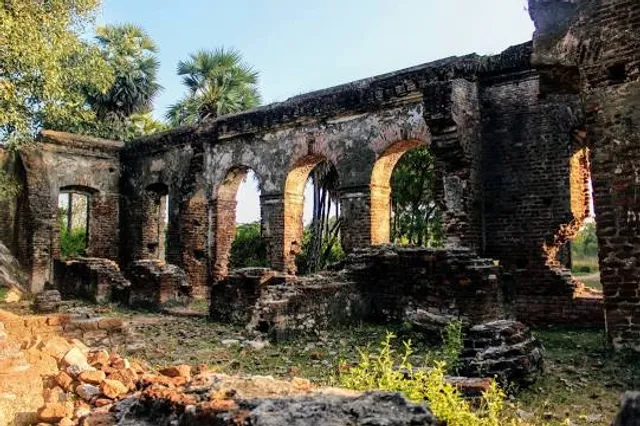
Arikamedu
IndiaPuducherryArikamedu

Basic Info

Arikamedu

Ariyankuppam, Veerampattinam, Puducherry 605007, India
3.6(1.3K)
Open 24 hours
Save
spot

Ratings & Description

Info

Arikamedu is an archaeological site in Southern India, in Kakkayanthope, Ariyankuppam Commune, Puducherry. It is 4 kilometres from the capital, Pondicherry of the Indian territory of Puducherry. Sir Mortimer Wheeler 1945, and Jean-Marie Casal conducted archaeological excavations there in 1947–1950.

Cultural
Outdoor
Family friendly
attractions: , restaurants:
logoLearn more insights from Wanderboat AI.
Phone
+91 99445 37681
Website
arikamedu.blogspot.com

Plan your stay

hotel
Pet-friendly Hotels in Puducherry
Find a cozy hotel nearby and make it a full experience.
hotel
Affordable Hotels in Puducherry
Find a cozy hotel nearby and make it a full experience.
hotel
The Coolest Hotels You Haven't Heard Of (Yet)
Find a cozy hotel nearby and make it a full experience.
hotel
Trending Stays Worth the Hype in Puducherry
Find a cozy hotel nearby and make it a full experience.

Reviews

Things to do nearby

Uncover Pondicherry Creole cuisine
Mon, Dec 29 • 5:00 PM
Puducherry, Puducherry, 605001, India
View details
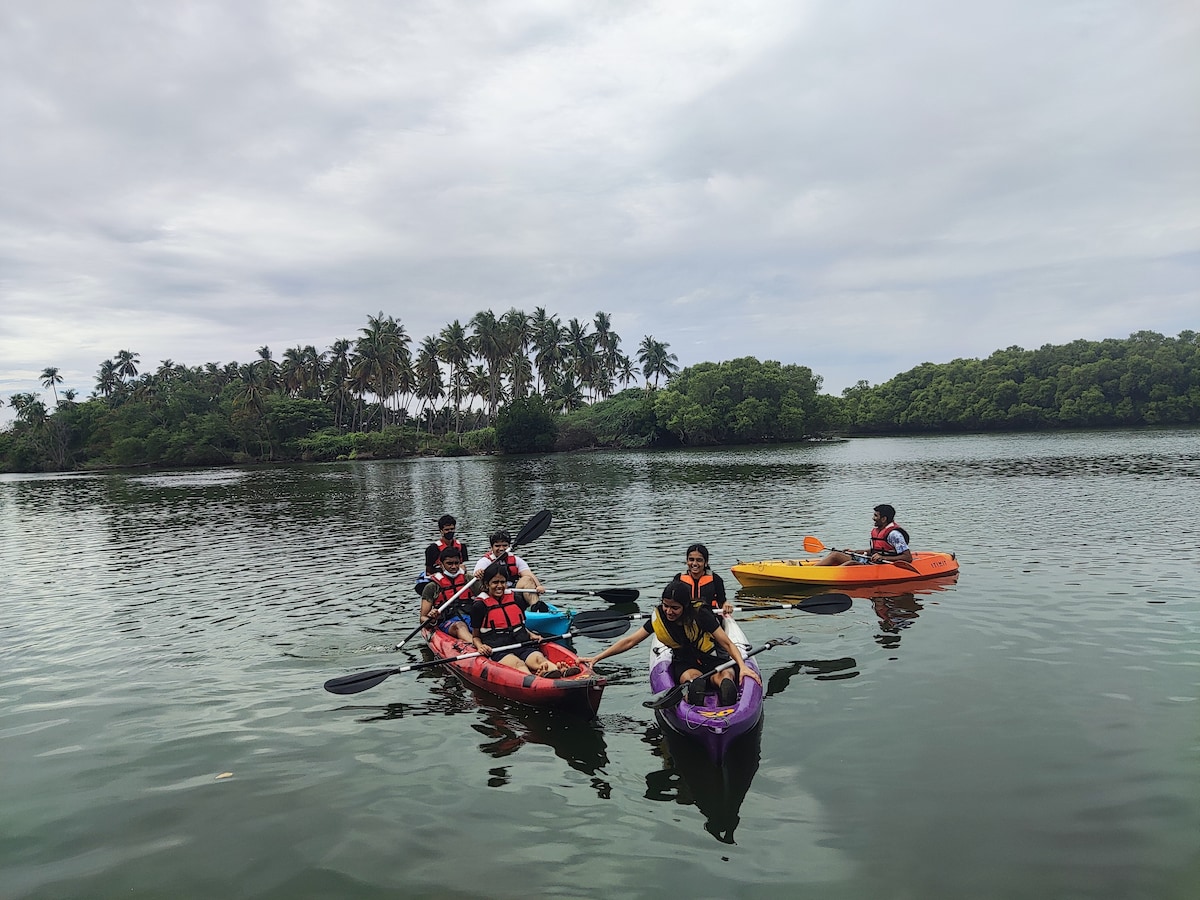
Kayak Pondicherrys mangroves with a travel expert
Tue, Dec 30 • 7:00 AM
Puducherry, Puducherry, 605004, India
View details
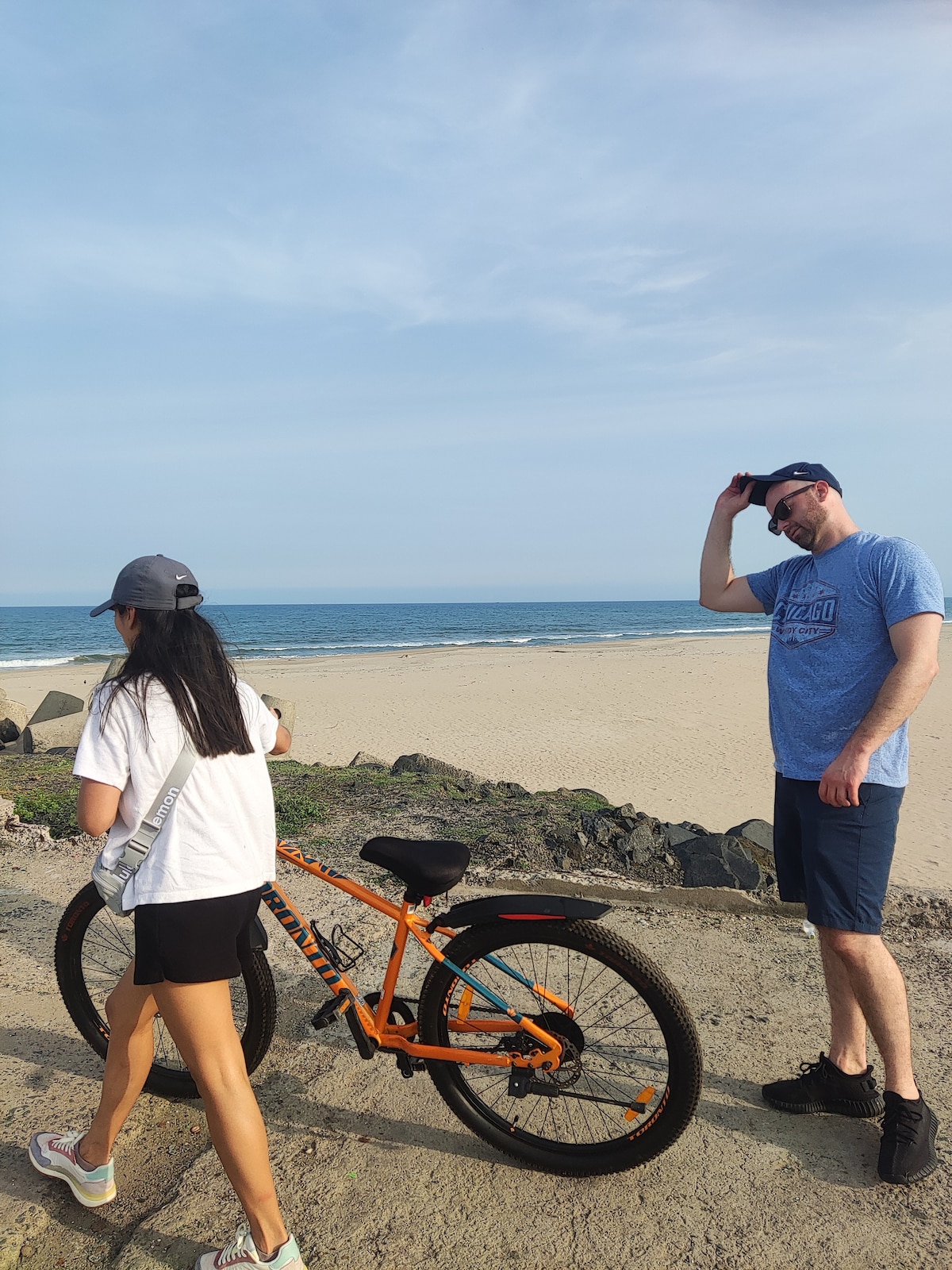
Cycle to ancient ruins and unexplored Beaches
Tue, Dec 30 • 6:30 AM
Eden Beach Parking Ariyankuppam, Puducherry, 605007, India
View details
Get the Appoverlay
Get the AppOne tap to find yournext favorite spots!
Wanderboat LogoWanderboat

Your everyday Al companion for getaway ideas

CompanyAbout Us
InformationAI Trip PlannerSitemap
SocialXInstagramTiktokLinkedin
LegalTerms of ServicePrivacy Policy

Get the app

© 2025 Wanderboat. All rights reserved.

Reviews of Arikamedu

3.6
(1,337)
avatar
3.0
7y

A very good place for Photo-shoots, Videography, Hangouts, etc. during day times. Taking the help of the Local Guide is very essential, if you need to really know this place.

Arikamedu (a fishermen colony & was used as a port), an Archaeological site is 4 Kms. south of Puducherry on the bank of Ariyankuppam River, which is said to be an ancient Roman trade centre. The long history dated back to the 2nd Century B.C., the PORT TOWN was inhabited by Romans, Cholas and French, etc, who left their mark on this wonderful place. It also suggests Sangam period, ancient Chola (1 B.C.), Chinese periods, etc. Evidences are there for Medieval East-West maritime trade as well.

Inland trade with other places such as Kaveripattinam, Alagankulam, Musiri and Suttukeni which are situated along river valley routes is also registered.

The “Wine” seems to have been a majorImport (Amphora jars - Yavanas and wine have been mentioned in the Tamil literatures). The Exports must have included textile, beads, semiprecious gems, glass and shell bangles, etc.

Later the site was divided into two sectors, the northern and southern, as they were perceived to have been inhabited by different ethnic groups.

Monsieur Pigneau de Behaine (Between 1771 and 1773)- designated Bishop of Adran - built a seminary and residence on the eastern part of the mount for the Jesuit missionaries driven out of Siam. It was abandoned in 1783.

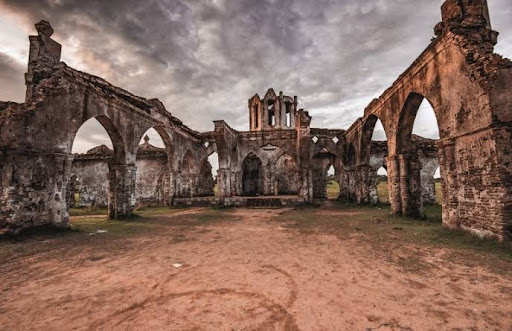
The remaining walls of the seminary clearly indicate the use of mixed style of bricks and some of them, probably might have been pilfered from the ancient structures. The mission house has been the point of reference for many excavators (Wheeler, Casal and Vimala Begely & Co, etc).

Locals say that there are many other structure / buildings (in KMs), just below few feet (Mostly belonging to this French period).

There are a few fragments of decorative ceramic tiles and reliefs, pieces of pottery and glass in the Puducherry Museum.

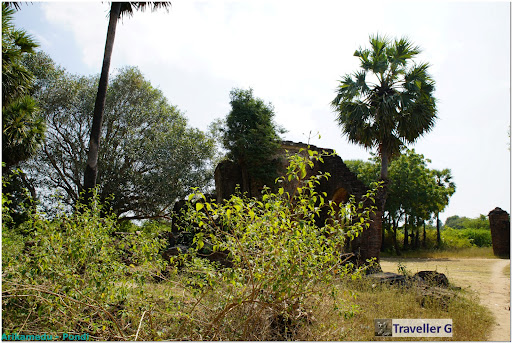
TODAY: Except for the 2 PILLARS, perpendicular walls and mission house ruins + Heaps of bricks, there is not much that can be seen on the surface as the excavated trenches have been filled up. Coconut Trees, Palm Trees and Mango trees are seen in abundance {Ref to our Photos}. The view of the river is very scenic!

The staff over there were very cooperative and helpful. One could take us to the river side and shown even an abandoned WELL (Ruins – Pl Ref to Photos & if you like, pl comment). We could see the ruins of...

   Read more
avatar
5.0
3y

Arikamedu is an archaeological site in Southern India, in Kakkayanthope, Ariyankuppam Commune, Puducherry. It is 4 kilometres (2.5 mi) from the capital, Pondicherry of the Indian territory of Puducherry.

Sir Mortimer Wheeler 1945, and Jean-Marie Casal conducted archaeological excavations there in 1947–1950. The site was identified as the port of Podouke, known as an "emporium" in the Periplus of the Erythraean Sea and Ptolemy. Digs have found Amphorae, Arretine ware, Roman lamps, glassware, glass and stone beads, and gems at the site. Based on these excavations, Wheeler concluded that the Arikamedu was a Greek (Yavana) trading post that traded with Rome, starting during the reign of Augustus Caesar, and lasted about two hundred years—from the late first century BCE to the first and second centuries CE. Subsequent investigation by Vimala Begley from 1989 to 1992 modified this assessment, and now place the period of settlement from the 2nd century BCE to the 8th century CE.

Significant findings at Arikamedu include numerous Indo-Pacific beads, which facilitated fixing the period of its origin. Red and black ceramics—known as megalithic stones or Pandukal in Tamil meaning "old stones" and used to mark graves—have existed at the site even prior to dates of the trading post, and also in later periods.

Arikamedu is a coastal fishing village, under the Ariankuppam Panchayat, on the southeastern coast of India, 4 kilometres (2.5 mi) from Pondicherry, on the Pondicherry-Cuddalore road; it was originally a French colonial town. It is located on the bank of the Ariyankuppam River (for most part of the year the river is considered a lagoon), also known as Virampattinam River, which forms the northern outlet of the Gingee River as it joins the Bay of Bengal. As the site is located at the bend of the river it provides protection to sea-going vessels...

   Read more
avatar
5.0
3y

Arikamedu is an archaeological site in Southern India, in Kakkayanthope, Ariyankuppam Commune, Puducherry. It is 4 kilometres (2.5 mi) from the capital, Pondicherry of the Indian territory of Puducherry.

Hidden gems near Pondicherry!!!!! ARIKAMEDU PORT & MANGROVE FOREST 🌳

Arikamedu, an abandoned city of South India and a flourishing Indo Roman trade centre during the 1st century BC is located about 7 Km south of Pondicherry on the bank of Ariyankuppam River. Arikamedu was an ancient port involved in the so-called Indo-Roman trade from the 3rd BCE.

As you enter the territory of this heritage site, you will come across the relics of walls, columns and mortars standing forlorn along the bank of Ariyankuppam River that will take you back to the glorious days of Roman trade in this region.

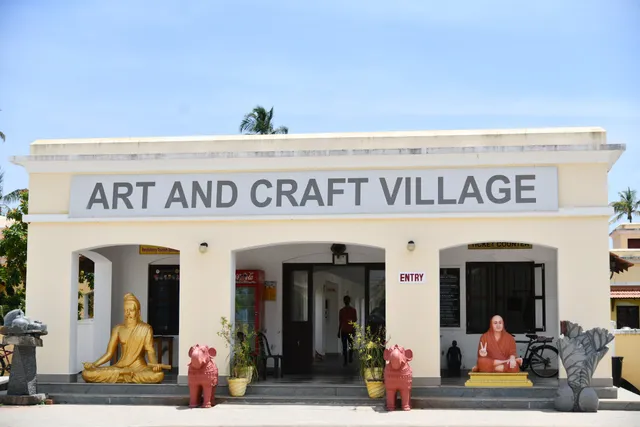
You can reach this place from both road or boat ride. The boat ride starts from Art &Craft Village( Wills Boat House-Murungapakkam, Pondicherry)

The ride Charges ₹280 per person on sharing basis. ( One can take private boat also starting from ₹2500 based on the locations included)

The boat ride not only include the visit to this amazing archeological excavation but also includes the view of beautiful mangrove forests, ship yard and sangam point (Ariyankuppam River meeting Sea 🌊)

The Art &Craft Village is itself a repository of art and handmade items. Handmade bags, Terracotta jewellery, Wooden toys, Marble accessories & decorative pieces etc... One can find many beautiful art and craft pieces to cherish and purchase!!!

I would recommend people to definitely visit this place and do take the boat ride to Arikamedu and enjoy the beautiful views and click amazing pictures!!! Note: Do carry water bottle as whole boat ride...

   Read more
Page 1 of 7
Previous
Next

Posts

TravellerGTravellerG
A very good place for Photo-shoots, Videography, Hangouts, etc. during day times. Taking the help of the Local Guide is very essential, if you need to really know this place. Arikamedu (a fishermen colony & was used as a port), an Archaeological site is 4 Kms. south of Puducherry on the bank of Ariyankuppam River, which is said to be an ancient Roman trade centre. The long history dated back to the 2nd Century B.C., the PORT TOWN was inhabited by Romans, Cholas and French, etc, who left their mark on this wonderful place. It also suggests Sangam period, ancient Chola (1 B.C.), Chinese periods, etc. Evidences are there for Medieval East-West maritime trade as well. Inland trade with other places such as Kaveripattinam, Alagankulam, Musiri and Suttukeni which are situated along river valley routes is also registered. The “Wine” seems to have been a majorImport (Amphora jars - Yavanas and wine have been mentioned in the Tamil literatures). The Exports must have included textile, beads, semiprecious gems, glass and shell bangles, etc. Later the site was divided into two sectors, the northern and southern, as they were perceived to have been inhabited by different ethnic groups. Monsieur Pigneau de Behaine (Between 1771 and 1773)- designated Bishop of Adran - built a seminary and residence on the eastern part of the mount for the Jesuit missionaries driven out of Siam. It was abandoned in 1783. The remaining walls of the seminary clearly indicate the use of mixed style of bricks and some of them, probably might have been pilfered from the ancient structures. The mission house has been the point of reference for many excavators (Wheeler, Casal and Vimala Begely & Co, etc). Locals say that there are many other structure / buildings (in KMs), just below few feet (Mostly belonging to this French period). There are a few fragments of decorative ceramic tiles and reliefs, pieces of pottery and glass in the Puducherry Museum. TODAY: Except for the 2 PILLARS, perpendicular walls and mission house ruins + Heaps of bricks, there is not much that can be seen on the surface as the excavated trenches have been filled up. Coconut Trees, Palm Trees and Mango trees are seen in abundance {Ref to our Photos}. The view of the river is very scenic! The staff over there were very cooperative and helpful. One could take us to the river side and shown even an abandoned WELL (Ruins – Pl Ref to Photos & if you like, pl comment). We could see the ruins of Fort Walls, etc.
Vishnu MohanVishnu Mohan
Arikamedu is an archaeological site in Southern India, in Kakkayanthope, Ariyankuppam Commune, Puducherry. It is 4 kilometres (2.5 mi) from the capital, Pondicherry of the Indian territory of Puducherry. Sir Mortimer Wheeler 1945, and Jean-Marie Casal conducted archaeological excavations there in 1947–1950. The site was identified as the port of Podouke, known as an "emporium" in the Periplus of the Erythraean Sea and Ptolemy. Digs have found Amphorae, Arretine ware, Roman lamps, glassware, glass and stone beads, and gems at the site. Based on these excavations, Wheeler concluded that the Arikamedu was a Greek (Yavana) trading post that traded with Rome, starting during the reign of Augustus Caesar, and lasted about two hundred years—from the late first century BCE to the first and second centuries CE. Subsequent investigation by Vimala Begley from 1989 to 1992 modified this assessment, and now place the period of settlement from the 2nd century BCE to the 8th century CE. Significant findings at Arikamedu include numerous Indo-Pacific beads, which facilitated fixing the period of its origin. Red and black ceramics—known as megalithic stones or Pandukal in Tamil meaning "old stones" and used to mark graves—have existed at the site even prior to dates of the trading post, and also in later periods. Arikamedu is a coastal fishing village, under the Ariankuppam Panchayat, on the southeastern coast of India, 4 kilometres (2.5 mi) from Pondicherry, on the Pondicherry-Cuddalore road; it was originally a French colonial town. It is located on the bank of the Ariyankuppam River (for most part of the year the river is considered a lagoon), also known as Virampattinam River, which forms the northern outlet of the Gingee River as it joins the Bay of Bengal. As the site is located at the bend of the river it provides protection to sea-going vessels that dock there.
Venkatesha PrasannaVenkatesha Prasanna
This place is not worth the visit. First of all there is nothing much to see except for a dilapidated structure, the only one which is remaining now. Apart from this structure there is nothing else. The place is now used for cattle grazing and is poorly maintained. There is no one to take care of in this area. Even the localites nearby don't know about this place. The access to this place is extremely difficult especially for 4 wheelers. Google maps will not give you the correct route in the last 1.5 kms. It shows the path wherein a two wheeler will have difficulty in going. After much searching and checking with the localites, finally we managed to get the route which a four wheeler can barely scrape through the road. The last 500 mtrs is a mud road and there are no sign boards either. So it's a great difficulty to reach the place. Once you reach there there is nothing except for one dilapidated structure. Personally I feel it is not worth the visit. Some hype has been created in the social media but there is nothing left in this place now. This place was a major trade centre between India and the Dutch many years ago. A lot of excavation was done and huge artifacts, utensils, coins and other items were found here during the excavations and they provided evidence to the trade which was happening earlier. Many of these can be seen in the Pondicherry museum which one should definitely visit. This place is about 8 km from white Town.
See more posts
See more posts
hotel
Find your stay

Pet-friendly Hotels in Puducherry

Find a cozy hotel nearby and make it a full experience.

A very good place for Photo-shoots, Videography, Hangouts, etc. during day times. Taking the help of the Local Guide is very essential, if you need to really know this place. Arikamedu (a fishermen colony & was used as a port), an Archaeological site is 4 Kms. south of Puducherry on the bank of Ariyankuppam River, which is said to be an ancient Roman trade centre. The long history dated back to the 2nd Century B.C., the PORT TOWN was inhabited by Romans, Cholas and French, etc, who left their mark on this wonderful place. It also suggests Sangam period, ancient Chola (1 B.C.), Chinese periods, etc. Evidences are there for Medieval East-West maritime trade as well. Inland trade with other places such as Kaveripattinam, Alagankulam, Musiri and Suttukeni which are situated along river valley routes is also registered. The “Wine” seems to have been a majorImport (Amphora jars - Yavanas and wine have been mentioned in the Tamil literatures). The Exports must have included textile, beads, semiprecious gems, glass and shell bangles, etc. Later the site was divided into two sectors, the northern and southern, as they were perceived to have been inhabited by different ethnic groups. Monsieur Pigneau de Behaine (Between 1771 and 1773)- designated Bishop of Adran - built a seminary and residence on the eastern part of the mount for the Jesuit missionaries driven out of Siam. It was abandoned in 1783. The remaining walls of the seminary clearly indicate the use of mixed style of bricks and some of them, probably might have been pilfered from the ancient structures. The mission house has been the point of reference for many excavators (Wheeler, Casal and Vimala Begely & Co, etc). Locals say that there are many other structure / buildings (in KMs), just below few feet (Mostly belonging to this French period). There are a few fragments of decorative ceramic tiles and reliefs, pieces of pottery and glass in the Puducherry Museum. TODAY: Except for the 2 PILLARS, perpendicular walls and mission house ruins + Heaps of bricks, there is not much that can be seen on the surface as the excavated trenches have been filled up. Coconut Trees, Palm Trees and Mango trees are seen in abundance {Ref to our Photos}. The view of the river is very scenic! The staff over there were very cooperative and helpful. One could take us to the river side and shown even an abandoned WELL (Ruins – Pl Ref to Photos & if you like, pl comment). We could see the ruins of Fort Walls, etc.
TravellerG

TravellerG

hotel
Find your stay

Affordable Hotels in Puducherry

Find a cozy hotel nearby and make it a full experience.

Get the Appoverlay
Get the AppOne tap to find yournext favorite spots!
Arikamedu is an archaeological site in Southern India, in Kakkayanthope, Ariyankuppam Commune, Puducherry. It is 4 kilometres (2.5 mi) from the capital, Pondicherry of the Indian territory of Puducherry. Sir Mortimer Wheeler 1945, and Jean-Marie Casal conducted archaeological excavations there in 1947–1950. The site was identified as the port of Podouke, known as an "emporium" in the Periplus of the Erythraean Sea and Ptolemy. Digs have found Amphorae, Arretine ware, Roman lamps, glassware, glass and stone beads, and gems at the site. Based on these excavations, Wheeler concluded that the Arikamedu was a Greek (Yavana) trading post that traded with Rome, starting during the reign of Augustus Caesar, and lasted about two hundred years—from the late first century BCE to the first and second centuries CE. Subsequent investigation by Vimala Begley from 1989 to 1992 modified this assessment, and now place the period of settlement from the 2nd century BCE to the 8th century CE. Significant findings at Arikamedu include numerous Indo-Pacific beads, which facilitated fixing the period of its origin. Red and black ceramics—known as megalithic stones or Pandukal in Tamil meaning "old stones" and used to mark graves—have existed at the site even prior to dates of the trading post, and also in later periods. Arikamedu is a coastal fishing village, under the Ariankuppam Panchayat, on the southeastern coast of India, 4 kilometres (2.5 mi) from Pondicherry, on the Pondicherry-Cuddalore road; it was originally a French colonial town. It is located on the bank of the Ariyankuppam River (for most part of the year the river is considered a lagoon), also known as Virampattinam River, which forms the northern outlet of the Gingee River as it joins the Bay of Bengal. As the site is located at the bend of the river it provides protection to sea-going vessels that dock there.
Vishnu Mohan

Vishnu Mohan

hotel
Find your stay

The Coolest Hotels You Haven't Heard Of (Yet)

Find a cozy hotel nearby and make it a full experience.

hotel
Find your stay

Trending Stays Worth the Hype in Puducherry

Find a cozy hotel nearby and make it a full experience.

This place is not worth the visit. First of all there is nothing much to see except for a dilapidated structure, the only one which is remaining now. Apart from this structure there is nothing else. The place is now used for cattle grazing and is poorly maintained. There is no one to take care of in this area. Even the localites nearby don't know about this place. The access to this place is extremely difficult especially for 4 wheelers. Google maps will not give you the correct route in the last 1.5 kms. It shows the path wherein a two wheeler will have difficulty in going. After much searching and checking with the localites, finally we managed to get the route which a four wheeler can barely scrape through the road. The last 500 mtrs is a mud road and there are no sign boards either. So it's a great difficulty to reach the place. Once you reach there there is nothing except for one dilapidated structure. Personally I feel it is not worth the visit. Some hype has been created in the social media but there is nothing left in this place now. This place was a major trade centre between India and the Dutch many years ago. A lot of excavation was done and huge artifacts, utensils, coins and other items were found here during the excavations and they provided evidence to the trade which was happening earlier. Many of these can be seen in the Pondicherry museum which one should definitely visit. This place is about 8 km from white Town.
Venkatesha Prasanna

Venkatesha Prasanna

See more posts
See more posts