HTML SitemapExplore
logo
Find Things to DoFind The Best Restaurants

Chand Baori, Abhaneri — Attraction in Rajasthan

Name
Chand Baori, Abhaneri
Description
Nearby attractions
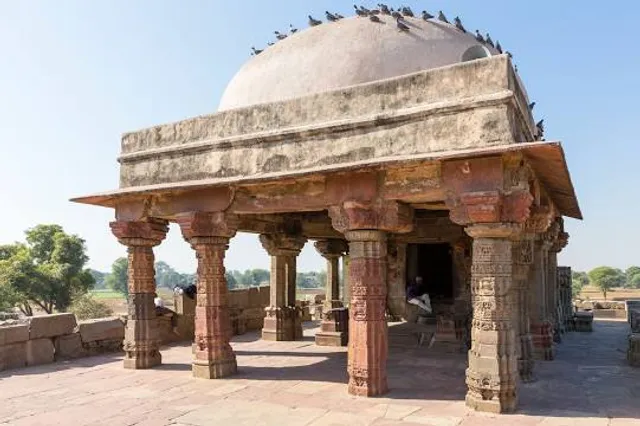
Harshad Mata Temple
Harshad Mata Temple, 80, Abhaneri, Rajasthan 303326, India
Nearby restaurants
Chand Baori Restaurant
Chand Bawri, Step Well, Abhaneri, Rajasthan 303326, India
Nearby hotels
Shahpura Abhaneri Resort
Step well, Chand Bawri, Step Well, NearChand Boari, Baswa, opposite Abhaneri, Abhaneri, Rajasthan 303326, India
Abhaneri Village Safari Camp
Abhaneri, Jassapara, Rajasthan 303313, India
Related posts
Keywords
Chand Baori, Abhaneri tourism.Chand Baori, Abhaneri hotels.Chand Baori, Abhaneri bed and breakfast. flights to Chand Baori, Abhaneri.Chand Baori, Abhaneri attractions.Chand Baori, Abhaneri restaurants.Chand Baori, Abhaneri travel.Chand Baori, Abhaneri travel guide.Chand Baori, Abhaneri travel blog.Chand Baori, Abhaneri pictures.Chand Baori, Abhaneri photos.Chand Baori, Abhaneri travel tips.Chand Baori, Abhaneri maps.Chand Baori, Abhaneri things to do.
Chand Baori, Abhaneri things to do, attractions, restaurants, events info and trip planning
Chand Baori, Abhaneri
IndiaRajasthanChand Baori, Abhaneri

Basic Info

Chand Baori, Abhaneri

Near Harshat Mata Temple, Abhaneri, Bandikui, Rajasthan 303326, India
4.5(3.7K)
Open 24 hours
Save
spot

Ratings & Description

Info

Cultural
Scenic
Family friendly
attractions: Harshad Mata Temple, restaurants: Chand Baori Restaurant
logoLearn more insights from Wanderboat AI.
Phone
+91 93519 15813
Website
chandbaori.org

Plan your stay

hotel
Pet-friendly Hotels in Rajasthan
Find a cozy hotel nearby and make it a full experience.
hotel
Affordable Hotels in Rajasthan
Find a cozy hotel nearby and make it a full experience.
hotel
The Coolest Hotels You Haven't Heard Of (Yet)
Find a cozy hotel nearby and make it a full experience.
hotel
Trending Stays Worth the Hype in Rajasthan
Find a cozy hotel nearby and make it a full experience.

Reviews

Nearby attractions of Chand Baori, Abhaneri

Harshad Mata Temple

Harshad Mata Temple

Harshad Mata Temple

4.6

(212)

Open until 6:00 PM
Click for details

Nearby restaurants of Chand Baori, Abhaneri

Chand Baori Restaurant

Chand Baori Restaurant

Chand Baori Restaurant

4.8

(318)

Click for details
Get the Appoverlay
Get the AppOne tap to find yournext favorite spots!
Wanderboat LogoWanderboat

Your everyday Al companion for getaway ideas

CompanyAbout Us
InformationAI Trip PlannerSitemap
SocialXInstagramTiktokLinkedin
LegalTerms of ServicePrivacy Policy

Get the app

© 2025 Wanderboat. All rights reserved.
logo

Reviews of Chand Baori, Abhaneri

4.5
(3,712)
avatar
5.0
1y

Who constructed this? An engineer, an architect, a mathematician, or a devotee? Without knowledge of geometry, mathematics, physics, and engineering, how is it possible?

Chand Baori: World’s Largest and Most Visually Striking Stepwell.💧

Chand Baori stepwell was built during the 8th and 9th centuries and has 3,500 narrow steps arranged in perfect symmetry, which descend 20m to the bottom of the well.

In the northern Indian states of Rajasthan and Gujarat, the problem of water is profound. Centuries ago, stepwells were built in these areas to provide water throughout the year. These wells acted as reservoirs or storage tanks that could store a large amount of water and keep it cool as well.

Known variously as baoris, baolis, and vavs, stepwells have steps built into the sides that can be descended to reach the water at the bottom. Stepwells are generally larger than common wells and are often of architectural significance, just like Chand Baori – one of the oldest and most famous stepwells in India.

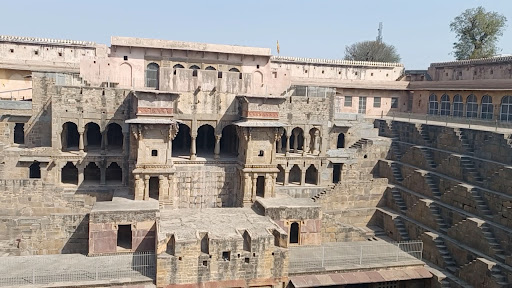
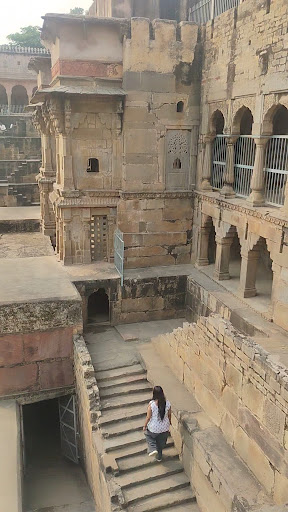
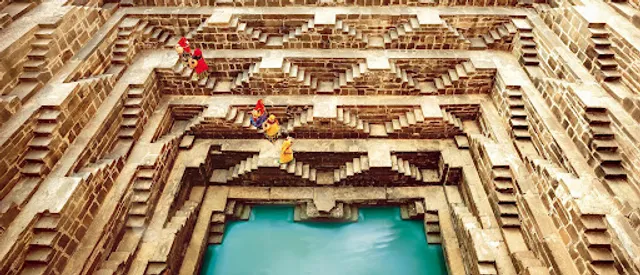
Chand Baori is a deep four-sided structure with an immense temple on one face. This incredible square structure is 13 stories deep, and lined along the walls on three sides are double flights of steps. 3,500 narrow steps arranged in perfect symmetry descend to the bottom of the well 20 meters deep to a murky green puddle of water. One side of the well has a pavilion and a resting room for the royals.

While there is no documentation about its construction, it is commonly believed to have been commissioned under the rule of King Chanda of the Nikumbha dynasty, between the 8th and 9th centuries.

Considered one of the best-kept hidden gems of India, Chand Baori is not easy to find since it’s slightly removed from the usual travel circuit of Rajasthan. But it deserves all the praise heaped on it. Chand Baori is located in a small town by the name of Abhaneri, about 93 kilometers from Jaipur, the capital city of Rajasthan. The place was called Abha Nagri (City of Brightness), but with time Abha Nagri became Abhaneri.

The steps and the whole surrounding area are fine examples of the architectural expertise of the great Indian architects. It also displays the geometrical intelligence of the architects of the bygone era. The steps form a magical maze, and the consequent play of light and shadow on the structure gives it a captivating look.

In addition to conserving water, Chand Baori also became a community gathering place for the Abhaneri locals. The townsfolk used to sit around the stepwell and cool off during the summer days. At the bottom of the well, the air is always about 5-6 degrees cooler than at the top.

Adjoining the baori are the ruins of the Harshat Mata temple, built in the 9th century shortly after Chand Baori was built. It was a ritual for pilgrims to wash their hands and feet at the well before entering the temple. This temple was destroyed during the 10th century by Mahmud Ghazni. Its many pillars, columns, and statues now lie scattered in the temple courtyard.

Chand Baori is no longer an active well and is maintained by the Archaeological Survey of India. Chand Baori was featured in the movie The Fall and also made a small appearance in Christopher Nolan’s blockbuster The Dark...

   Read more
avatar
5.0
1y

Architecturally very rich place. Chand Baori is said to be named after a local ruler of Nikumbh dynasty called Raja Chanda.

Chand Baori is a deep four-sided well with a large temple located in the back of the well. The basic architectural aspects of the monumental well consist of a long corridor of steps leading to five or six stories below ground level which can be seen at the site. Chand Baori consists of 3,500 narrow steps over 13 stories. The state of Rajasthan is extremely arid, and the design and final structure of Chand Baori were intended to conserve as much water as possible.

Ancient Indian scriptures made references to construction of wells, canals, tanks and dams and their efficient operation and maintenance. This site combined many of these operations to allow for easy access to local water. At the bottom of the well, the air remains 5-6 °C cooler than at the surface, and Chand Baori was used as a community gathering place for locals during periods of intense heat. One side of the well has a haveli pavilion and resting room for the royals.

Chand Baori is considered to be one of the oldest surviving step wells in the country. On three sides, it has 3500 steps cascading 13 stories deep into a massive tank at the bottom. The fourth side has pillared corridors at many levels.  Of interest here is its exquisite diamond-setting geometry of the cascading steps on three sides and the image of Sheshasayee Vishnu reclining on the serpent Ananta. This baori or stepwell has been constructed in an upside-down pyramid-style. The classical Indian texts on architecture (Vastu) like Aparajitapriccha or Vishvakarma's Vastushastra call this design a vijay vapi. The baori has double flights of steps on each of its ten landings on all three sides. On the fourth side, to the north, is a pillared corridor of many stories. This wall at the north contains two projected offsets to house a niche in each of them. These two niches serve as shrines, the right one houses the deity Ganesha while the left one has an image of Mahishasuramardini. The Ganesha shrine is crowned with chaitya having a female dancer and her attendant carved over it. There are many other dancing figures and attendants carved around this structure. On the upper section, carvings depicting Uma-Maheshwara and Simhavahini Durga can be seen in small nimodifications, repairs, reconstructions since its construction as it was in continuous use till late medieval period.The ancient stepwell underwent many changes for both beautification and better utitlity. A pillared verandah on all four sides seems to be a later addition. There is also a small room, Anderi Ujala, which was a spot to draw water with some traditional pulley-like equipment. Legend also says that a tunnel connected...

   Read more
avatar
4.0
2y

Abhaneri is in Dausa district of Rajasthan, 90 km from Jaipur. Is located at. Instead of staying here for its darshan, it would be appropriate to stay in Jaipur and visit it during the day time. • While going to Chand Bawdi, do visit the Bhangarh fort located in the middle. This is the most haunted place in India. • 30-60 minutes is enough time to visit Abhaneri. Although I spent 2 hours here as I inspected each and every artifact closely. • Visitors are available to provide darshan and information. If you've read this memoir, you won't need a tour guide.

Chand Bawdi, located in Abhaneri village near Jaipur, Rajasthan, is one of the most beautiful stepwells in India. I consider it to be the most pictorial step well.

This is a 13 floor deep step well. Inside the stepwell, you will gnaw at the symmetrical triangular structure of steps leading up to the water surface. Due to Rajasthan being a dry desert region, the construction of stepwells is common here. Apart from being an excellent water management system, these stepwells also provide coolness to the atmosphere in summer. The deplorable fact is that what was the motive behind building a water management system so architecturally attractive? Is it not that all the public structures of the 9th century used to be so beautiful and only a few are left as our heritage? If this is true, then it would not be an exaggeration to call the India of that era the shining diamond of the world.

Chand Bawdi is the oldest stepwell of Rajasthan and probably of entire India which is still alive. This deepest stepwell in India was built by King Chanda or Chandra of the Nikumbh dynasty in the 8th to 9th centuries. 1200 to 1300 years old, this structure is older than the Taj Mahal, Khajuraho temples and Chola temples , but relatively new than the sculptures of Ajanta and Ellora caves.

Abha Nagri, meaning the shining city, is a small town on the Jaipur-Agra road that was founded by Raja Chand. The name of this town, famous for exciting stepwells and Mata Mandir, was later changed to Abhaneri.

On the three walls of this stepwell, which is 19.5 meters deep, steps are built giving geometric shape. You don't climb these steps straight, you climb from one side. It is not known whether this type of triangular structure was done only from the point of view of beauty and artistry or it had other purpose. In my estimation, climbing the high stairs from one side might be better from the point of view of safety. Looking at these steps made in the form of a maze, it seems as if the stairs from which we come down, we will not be able to come back up even...

   Read more
Page 1 of 7
Previous
Next

Posts

David HarrisDavid Harris
Who constructed this? An engineer, an architect, a mathematician, or a devotee? Without knowledge of geometry, mathematics, physics, and engineering, how is it possible? Chand Baori: World’s Largest and Most Visually Striking Stepwell.💧 Chand Baori stepwell was built during the 8th and 9th centuries and has 3,500 narrow steps arranged in perfect symmetry, which descend 20m to the bottom of the well. In the northern Indian states of Rajasthan and Gujarat, the problem of water is profound. Centuries ago, stepwells were built in these areas to provide water throughout the year. These wells acted as reservoirs or storage tanks that could store a large amount of water and keep it cool as well. Known variously as baoris, baolis, and vavs, stepwells have steps built into the sides that can be descended to reach the water at the bottom. Stepwells are generally larger than common wells and are often of architectural significance, just like Chand Baori – one of the oldest and most famous stepwells in India. Chand Baori is a deep four-sided structure with an immense temple on one face. This incredible square structure is 13 stories deep, and lined along the walls on three sides are double flights of steps. 3,500 narrow steps arranged in perfect symmetry descend to the bottom of the well 20 meters deep to a murky green puddle of water. One side of the well has a pavilion and a resting room for the royals. While there is no documentation about its construction, it is commonly believed to have been commissioned under the rule of King Chanda of the Nikumbha dynasty, between the 8th and 9th centuries. Considered one of the best-kept hidden gems of India, Chand Baori is not easy to find since it’s slightly removed from the usual travel circuit of Rajasthan. But it deserves all the praise heaped on it. Chand Baori is located in a small town by the name of Abhaneri, about 93 kilometers from Jaipur, the capital city of Rajasthan. The place was called Abha Nagri (City of Brightness), but with time Abha Nagri became Abhaneri. The steps and the whole surrounding area are fine examples of the architectural expertise of the great Indian architects. It also displays the geometrical intelligence of the architects of the bygone era. The steps form a magical maze, and the consequent play of light and shadow on the structure gives it a captivating look. In addition to conserving water, Chand Baori also became a community gathering place for the Abhaneri locals. The townsfolk used to sit around the stepwell and cool off during the summer days. At the bottom of the well, the air is always about 5-6 degrees cooler than at the top. Adjoining the baori are the ruins of the Harshat Mata temple, built in the 9th century shortly after Chand Baori was built. It was a ritual for pilgrims to wash their hands and feet at the well before entering the temple. This temple was destroyed during the 10th century by Mahmud Ghazni. Its many pillars, columns, and statues now lie scattered in the temple courtyard. Chand Baori is no longer an active well and is maintained by the Archaeological Survey of India. Chand Baori was featured in the movie The Fall and also made a small appearance in Christopher Nolan’s blockbuster The Dark Knight Rises.
Shashikant SinghShashikant Singh
Architecturally very rich place. Chand Baori is said to be named after a local ruler of Nikumbh dynasty called Raja Chanda. Chand Baori is a deep four-sided well with a large temple located in the back of the well. The basic architectural aspects of the monumental well consist of a long corridor of steps leading to five or six stories below ground level which can be seen at the site. Chand Baori consists of 3,500 narrow steps over 13 stories. The state of Rajasthan is extremely arid, and the design and final structure of Chand Baori were intended to conserve as much water as possible. Ancient Indian scriptures made references to construction of wells, canals, tanks and dams and their efficient operation and maintenance. This site combined many of these operations to allow for easy access to local water. At the bottom of the well, the air remains 5-6 °C cooler than at the surface, and Chand Baori was used as a community gathering place for locals during periods of intense heat. One side of the well has a haveli pavilion and resting room for the royals. Chand Baori is considered to be one of the oldest surviving step wells in the country. On three sides, it has 3500 steps cascading 13 stories deep into a massive tank at the bottom. The fourth side has pillared corridors at many levels.  Of interest here is its exquisite diamond-setting geometry of the cascading steps on three sides and the image of Sheshasayee Vishnu reclining on the serpent Ananta. This baori or stepwell has been constructed in an upside-down pyramid-style. The classical Indian texts on architecture (Vastu) like Aparajitapriccha or Vishvakarma's Vastushastra call this design a vijay vapi. The baori has double flights of steps on each of its ten landings on all three sides. On the fourth side, to the north, is a pillared corridor of many stories. This wall at the north contains two projected offsets to house a niche in each of them. These two niches serve as shrines, the right one houses the deity Ganesha while the left one has an image of Mahishasuramardini. The Ganesha shrine is crowned with chaitya having a female dancer and her attendant carved over it. There are many other dancing figures and attendants carved around this structure. On the upper section, carvings depicting Uma-Maheshwara and Simhavahini Durga can be seen in small nimodifications, repairs, reconstructions since its construction as it was in continuous use till late medieval period.The ancient stepwell underwent many changes for both beautification and better utitlity. A pillared verandah on all four sides seems to be a later addition. There is also a small room, Anderi Ujala, which was a spot to draw water with some traditional pulley-like equipment. Legend also says that a tunnel connected Abhaneri to Dausa.
Hitesh KumawatHitesh Kumawat
Abhaneri is in Dausa district of Rajasthan, 90 km from Jaipur. Is located at. Instead of staying here for its darshan, it would be appropriate to stay in Jaipur and visit it during the day time. • While going to Chand Bawdi, do visit the Bhangarh fort located in the middle. This is the most haunted place in India. • 30-60 minutes is enough time to visit Abhaneri. Although I spent 2 hours here as I inspected each and every artifact closely. • Visitors are available to provide darshan and information. If you've read this memoir, you won't need a tour guide. Chand Bawdi, located in Abhaneri village near Jaipur, Rajasthan, is one of the most beautiful stepwells in India. I consider it to be the most pictorial step well. This is a 13 floor deep step well. Inside the stepwell, you will gnaw at the symmetrical triangular structure of steps leading up to the water surface. Due to Rajasthan being a dry desert region, the construction of stepwells is common here. Apart from being an excellent water management system, these stepwells also provide coolness to the atmosphere in summer. The deplorable fact is that what was the motive behind building a water management system so architecturally attractive? Is it not that all the public structures of the 9th century used to be so beautiful and only a few are left as our heritage? If this is true, then it would not be an exaggeration to call the India of that era the shining diamond of the world. Chand Bawdi is the oldest stepwell of Rajasthan and probably of entire India which is still alive. This deepest stepwell in India was built by King Chanda or Chandra of the Nikumbh dynasty in the 8th to 9th centuries. 1200 to 1300 years old, this structure is older than the Taj Mahal, Khajuraho temples and Chola temples , but relatively new than the sculptures of Ajanta and Ellora caves. Abha Nagri, meaning the shining city, is a small town on the Jaipur-Agra road that was founded by Raja Chand. The name of this town, famous for exciting stepwells and Mata Mandir, was later changed to Abhaneri. On the three walls of this stepwell, which is 19.5 meters deep, steps are built giving geometric shape. You don't climb these steps straight, you climb from one side. It is not known whether this type of triangular structure was done only from the point of view of beauty and artistry or it had other purpose. In my estimation, climbing the high stairs from one side might be better from the point of view of safety. Looking at these steps made in the form of a maze, it seems as if the stairs from which we come down, we will not be able to come back up even if we want to.
See more posts
See more posts
hotel
Find your stay

Pet-friendly Hotels in Rajasthan

Find a cozy hotel nearby and make it a full experience.

Who constructed this? An engineer, an architect, a mathematician, or a devotee? Without knowledge of geometry, mathematics, physics, and engineering, how is it possible? Chand Baori: World’s Largest and Most Visually Striking Stepwell.💧 Chand Baori stepwell was built during the 8th and 9th centuries and has 3,500 narrow steps arranged in perfect symmetry, which descend 20m to the bottom of the well. In the northern Indian states of Rajasthan and Gujarat, the problem of water is profound. Centuries ago, stepwells were built in these areas to provide water throughout the year. These wells acted as reservoirs or storage tanks that could store a large amount of water and keep it cool as well. Known variously as baoris, baolis, and vavs, stepwells have steps built into the sides that can be descended to reach the water at the bottom. Stepwells are generally larger than common wells and are often of architectural significance, just like Chand Baori – one of the oldest and most famous stepwells in India. Chand Baori is a deep four-sided structure with an immense temple on one face. This incredible square structure is 13 stories deep, and lined along the walls on three sides are double flights of steps. 3,500 narrow steps arranged in perfect symmetry descend to the bottom of the well 20 meters deep to a murky green puddle of water. One side of the well has a pavilion and a resting room for the royals. While there is no documentation about its construction, it is commonly believed to have been commissioned under the rule of King Chanda of the Nikumbha dynasty, between the 8th and 9th centuries. Considered one of the best-kept hidden gems of India, Chand Baori is not easy to find since it’s slightly removed from the usual travel circuit of Rajasthan. But it deserves all the praise heaped on it. Chand Baori is located in a small town by the name of Abhaneri, about 93 kilometers from Jaipur, the capital city of Rajasthan. The place was called Abha Nagri (City of Brightness), but with time Abha Nagri became Abhaneri. The steps and the whole surrounding area are fine examples of the architectural expertise of the great Indian architects. It also displays the geometrical intelligence of the architects of the bygone era. The steps form a magical maze, and the consequent play of light and shadow on the structure gives it a captivating look. In addition to conserving water, Chand Baori also became a community gathering place for the Abhaneri locals. The townsfolk used to sit around the stepwell and cool off during the summer days. At the bottom of the well, the air is always about 5-6 degrees cooler than at the top. Adjoining the baori are the ruins of the Harshat Mata temple, built in the 9th century shortly after Chand Baori was built. It was a ritual for pilgrims to wash their hands and feet at the well before entering the temple. This temple was destroyed during the 10th century by Mahmud Ghazni. Its many pillars, columns, and statues now lie scattered in the temple courtyard. Chand Baori is no longer an active well and is maintained by the Archaeological Survey of India. Chand Baori was featured in the movie The Fall and also made a small appearance in Christopher Nolan’s blockbuster The Dark Knight Rises.
David Harris

David Harris

hotel
Find your stay

Affordable Hotels in Rajasthan

Find a cozy hotel nearby and make it a full experience.

Get the Appoverlay
Get the AppOne tap to find yournext favorite spots!
Architecturally very rich place. Chand Baori is said to be named after a local ruler of Nikumbh dynasty called Raja Chanda. Chand Baori is a deep four-sided well with a large temple located in the back of the well. The basic architectural aspects of the monumental well consist of a long corridor of steps leading to five or six stories below ground level which can be seen at the site. Chand Baori consists of 3,500 narrow steps over 13 stories. The state of Rajasthan is extremely arid, and the design and final structure of Chand Baori were intended to conserve as much water as possible. Ancient Indian scriptures made references to construction of wells, canals, tanks and dams and their efficient operation and maintenance. This site combined many of these operations to allow for easy access to local water. At the bottom of the well, the air remains 5-6 °C cooler than at the surface, and Chand Baori was used as a community gathering place for locals during periods of intense heat. One side of the well has a haveli pavilion and resting room for the royals. Chand Baori is considered to be one of the oldest surviving step wells in the country. On three sides, it has 3500 steps cascading 13 stories deep into a massive tank at the bottom. The fourth side has pillared corridors at many levels.  Of interest here is its exquisite diamond-setting geometry of the cascading steps on three sides and the image of Sheshasayee Vishnu reclining on the serpent Ananta. This baori or stepwell has been constructed in an upside-down pyramid-style. The classical Indian texts on architecture (Vastu) like Aparajitapriccha or Vishvakarma's Vastushastra call this design a vijay vapi. The baori has double flights of steps on each of its ten landings on all three sides. On the fourth side, to the north, is a pillared corridor of many stories. This wall at the north contains two projected offsets to house a niche in each of them. These two niches serve as shrines, the right one houses the deity Ganesha while the left one has an image of Mahishasuramardini. The Ganesha shrine is crowned with chaitya having a female dancer and her attendant carved over it. There are many other dancing figures and attendants carved around this structure. On the upper section, carvings depicting Uma-Maheshwara and Simhavahini Durga can be seen in small nimodifications, repairs, reconstructions since its construction as it was in continuous use till late medieval period.The ancient stepwell underwent many changes for both beautification and better utitlity. A pillared verandah on all four sides seems to be a later addition. There is also a small room, Anderi Ujala, which was a spot to draw water with some traditional pulley-like equipment. Legend also says that a tunnel connected Abhaneri to Dausa.
Shashikant Singh

Shashikant Singh

hotel
Find your stay

The Coolest Hotels You Haven't Heard Of (Yet)

Find a cozy hotel nearby and make it a full experience.

hotel
Find your stay

Trending Stays Worth the Hype in Rajasthan

Find a cozy hotel nearby and make it a full experience.

Abhaneri is in Dausa district of Rajasthan, 90 km from Jaipur. Is located at. Instead of staying here for its darshan, it would be appropriate to stay in Jaipur and visit it during the day time. • While going to Chand Bawdi, do visit the Bhangarh fort located in the middle. This is the most haunted place in India. • 30-60 minutes is enough time to visit Abhaneri. Although I spent 2 hours here as I inspected each and every artifact closely. • Visitors are available to provide darshan and information. If you've read this memoir, you won't need a tour guide. Chand Bawdi, located in Abhaneri village near Jaipur, Rajasthan, is one of the most beautiful stepwells in India. I consider it to be the most pictorial step well. This is a 13 floor deep step well. Inside the stepwell, you will gnaw at the symmetrical triangular structure of steps leading up to the water surface. Due to Rajasthan being a dry desert region, the construction of stepwells is common here. Apart from being an excellent water management system, these stepwells also provide coolness to the atmosphere in summer. The deplorable fact is that what was the motive behind building a water management system so architecturally attractive? Is it not that all the public structures of the 9th century used to be so beautiful and only a few are left as our heritage? If this is true, then it would not be an exaggeration to call the India of that era the shining diamond of the world. Chand Bawdi is the oldest stepwell of Rajasthan and probably of entire India which is still alive. This deepest stepwell in India was built by King Chanda or Chandra of the Nikumbh dynasty in the 8th to 9th centuries. 1200 to 1300 years old, this structure is older than the Taj Mahal, Khajuraho temples and Chola temples , but relatively new than the sculptures of Ajanta and Ellora caves. Abha Nagri, meaning the shining city, is a small town on the Jaipur-Agra road that was founded by Raja Chand. The name of this town, famous for exciting stepwells and Mata Mandir, was later changed to Abhaneri. On the three walls of this stepwell, which is 19.5 meters deep, steps are built giving geometric shape. You don't climb these steps straight, you climb from one side. It is not known whether this type of triangular structure was done only from the point of view of beauty and artistry or it had other purpose. In my estimation, climbing the high stairs from one side might be better from the point of view of safety. Looking at these steps made in the form of a maze, it seems as if the stairs from which we come down, we will not be able to come back up even if we want to.
Hitesh Kumawat

Hitesh Kumawat

See more posts
See more posts