HTML SitemapExplore
logo
Find Things to DoFind The Best Restaurants

Junagarh Fort — Attraction in Rajasthan

Name
Junagarh Fort
Description
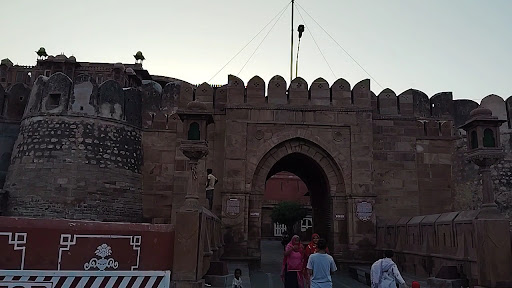
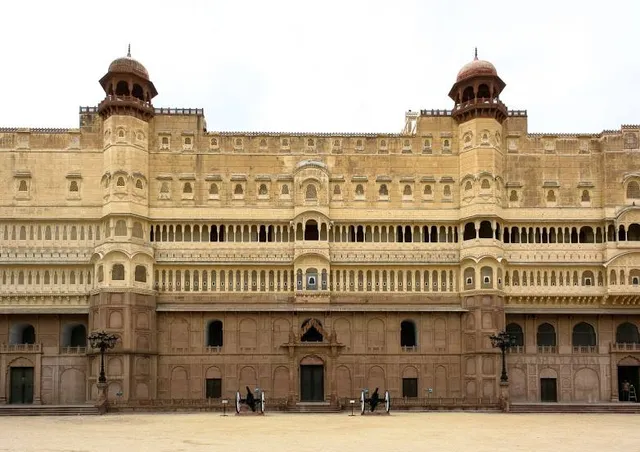
Junagarh Fort is a fort in the city of Bikaner, Rajasthan, India. Raja Dhaj, Ror Kumar, ruled over the principality of Junagarh in the fifth century BC.
Nearby attractions
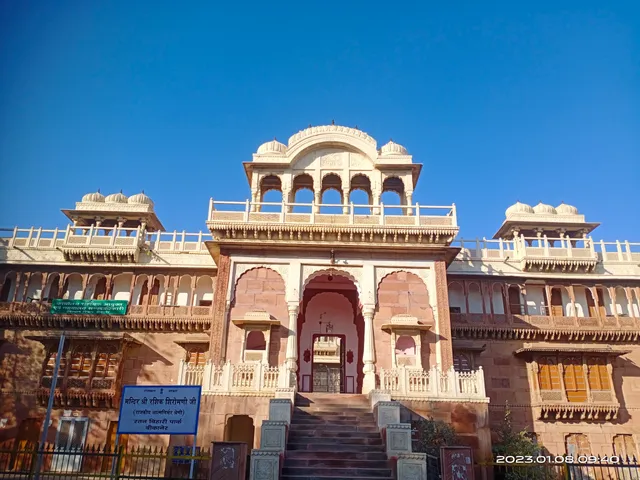
Ratan Bihari Temple
2898+R5W, KEM Rd, Chaukhunti Mohalla, Bikaner, Rajasthan 334001, India
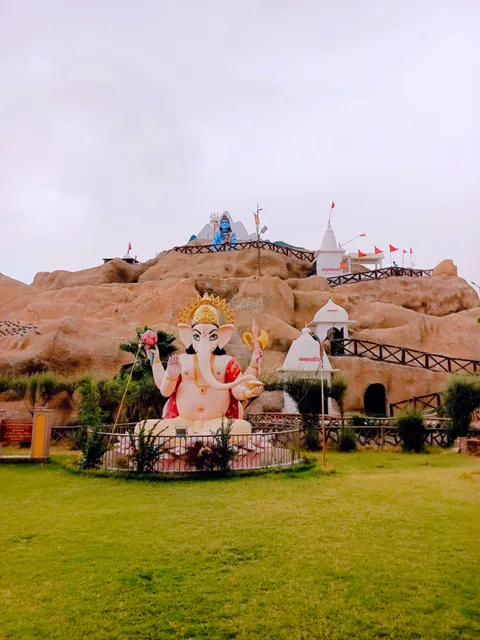
Vaishno Devi Temple_bikaner
28C6+PC7, Sri Ganganagar, Chaukhunti Mohalla, Bikaner, Rajasthan 334001, India
Nearby restaurants
Gallops Restaurant & Coffee House
Junagarh Fort Rd, opposite Junagarh Fort, Rath Khana Colony, Bikaner, Rajasthan 334001, India
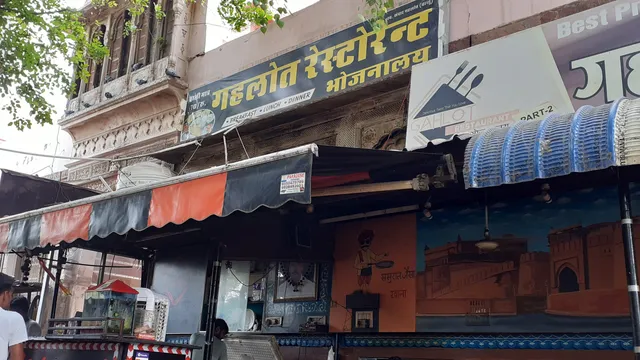
Gahlot
Old Bus Stand, near LIC Office, Junagarh Fort, Bikaner, Rajasthan 334001, India
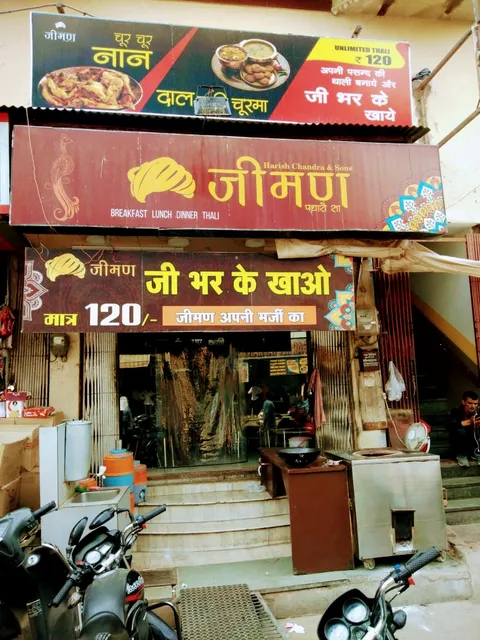
Jeeman restaurant
shop no 27 Daga Building, Mahatma Gandhi Rd, Bikaner, Rajasthan 334001, India
The Mirage Restaurant
2899+X28, Gajner Palace Hotel, Tehsil Kolayat, Gajner, Bikaner, Rajasthan 334001, India
Sangam Restaurant
Bikaner Fort, Bikaner, Rajasthan 334001, India
Bikaner Namkeen Bhandaar
2898+JM9, Bikaner, Rajasthan 334001, India
Bishnoism
Infront Bishnoi Dharamshalla, near collectorate, Bikaner, Rajasthan 334001, India
Shree shiv Sagar Restaurant and Fast Food
2898+HMH, Bikaner, Rajasthan 334001, India
Shri Ganesh Hotel & Resataurant
A-4, Tulsi Cir, Karni Colony, Sadul Colony, Bikaner, Rajasthan 334001, India
Bikaner
28F6+2MC, Sri Ganganagar, Chaukhunti Mohalla, Bikaner, Rajasthan 334001, India
Nearby hotels
Hotel Bhairon Vilas
next to Junagarh Fort, Kuchilpura, Bikaner, Rajasthan 334001, India
Hotel City Palace
Daga Building, KEM Rd, near tanishq jewellers, Bikaner Fort, Bikaner, Rajasthan 334001, India
OYO 25127 Hotel Metro Palace
Junagarh Fort Rd, Bikaner Fort, Bikaner, Rajasthan 334001, India
Hotel Bikaner
Daga Building, KEM Rd, Bikaner, Rajasthan 334001, India
The Fort View by Shivalaya
43 C, Old Ginani, near Junagarh Fort, Mehron Ka Bas, Bikaner, Rajasthan 334001, India
Hotel Shivika, Bikaner
KEM Rd, Bikaner, Rajasthan 334001, India
Hotel Bikana
2899+XVR, Mahatma Gandhi Rd, Bikaner, Rajasthan 334001, India
Hotel Sidhi Vinayak And Restuarant
Jai Bhagwan Rd, near Bothra Complex, Bikaner, Rajasthan 334001, India
Hotel Shiva's Regency
Alak Sagar Well, Bikaner, Rajasthan 334001, India
Hotel Continental Blue
Opposite DRM OFFICE, Modern market, Agarsen circle, Bikaner, Rajasthan 334001, India
Related posts
Keywords
Junagarh Fort tourism.Junagarh Fort hotels.Junagarh Fort bed and breakfast. flights to Junagarh Fort.Junagarh Fort attractions.Junagarh Fort restaurants.Junagarh Fort travel.Junagarh Fort travel guide.Junagarh Fort travel blog.Junagarh Fort pictures.Junagarh Fort photos.Junagarh Fort travel tips.Junagarh Fort maps.Junagarh Fort things to do.
Junagarh Fort things to do, attractions, restaurants, events info and trip planning
Junagarh Fort
IndiaRajasthanJunagarh Fort

Basic Info

Junagarh Fort

Bikaner Fort, Bikaner, Rajasthan 334001, India
4.5(13.4K)
Open 24 hours
Save
spot

Ratings & Description

Info

Junagarh Fort is a fort in the city of Bikaner, Rajasthan, India. Raja Dhaj, Ror Kumar, ruled over the principality of Junagarh in the fifth century BC.

Cultural
Outdoor
Family friendly
attractions: Ratan Bihari Temple, Vaishno Devi Temple_bikaner, restaurants: Gallops Restaurant & Coffee House, Gahlot, Jeeman restaurant, The Mirage Restaurant, Sangam Restaurant, Bikaner Namkeen Bhandaar, Bishnoism, Shree shiv Sagar Restaurant and Fast Food, Shri Ganesh Hotel & Resataurant, Bikaner
logoLearn more insights from Wanderboat AI.
Phone
+91 141 282 2861
Website
incredibleindia.gov.in

Plan your stay

hotel
Pet-friendly Hotels in Rajasthan
Find a cozy hotel nearby and make it a full experience.
hotel
Affordable Hotels in Rajasthan
Find a cozy hotel nearby and make it a full experience.
hotel
The Coolest Hotels You Haven't Heard Of (Yet)
Find a cozy hotel nearby and make it a full experience.
hotel
Trending Stays Worth the Hype in Rajasthan
Find a cozy hotel nearby and make it a full experience.

Reviews

Nearby attractions of Junagarh Fort

Ratan Bihari Temple

Vaishno Devi Temple_bikaner

Ratan Bihari Temple

Ratan Bihari Temple

4.4

(91)

Open 24 hours
Click for details
Vaishno Devi Temple_bikaner

Vaishno Devi Temple_bikaner

4.4

(96)

Open 24 hours
Click for details

Nearby restaurants of Junagarh Fort

Gallops Restaurant & Coffee House

Gahlot

Jeeman restaurant

The Mirage Restaurant

Sangam Restaurant

Bikaner Namkeen Bhandaar

Bishnoism

Shree shiv Sagar Restaurant and Fast Food

Shri Ganesh Hotel & Resataurant

Bikaner

Gallops Restaurant & Coffee House

Gallops Restaurant & Coffee House

4.0

(1.2K)

$$$

Click for details
Gahlot

Gahlot

3.8

(88)

Click for details
Jeeman restaurant

Jeeman restaurant

4.1

(495)

$

Click for details
The Mirage Restaurant

The Mirage Restaurant

3.8

(58)

Closed
Click for details
Get the Appoverlay
Get the AppOne tap to find yournext favorite spots!
Wanderboat LogoWanderboat

Your everyday Al companion for getaway ideas

CompanyAbout Us
InformationAI Trip PlannerSitemap
SocialXInstagramTiktokLinkedin
LegalTerms of ServicePrivacy Policy

Get the app

© 2025 Wanderboat. All rights reserved.
logo

Reviews of Junagarh Fort

4.5
(13,375)
avatar
5.0
3y

Junagarh Fort, an architectural marvel located in Bikaner, is a testament to the opulence and grandeur of the Rajputana dynasty. This historical treasure trove has garnered worldwide acclaim for its remarkable preservation of the belongings, reflecting the lavish lifestyle of its former inhabitants.

Stepping into the Junagarh Fort feels like embarking on a journey through time, as it houses an awe-inspiring collection of artifacts, weaponry, and regal possessions that have been meticulously preserved for centuries. The fort's interior is a captivating blend of intricate artwork, ornate furnishings, and royal heirlooms, providing visitors with a rare opportunity to immerse themselves in the opulent lifestyle of the Rajput rulers.

One of the most striking aspects of the fort is the preservation of all its belongings, which serves as a captivating window into the bygone era. Visitors are treated to a rare glimpse of history, with chambers adorned with antique furniture, intricate tapestries, and ornate decorations that showcase the wealth and exquisite taste of the fort's former inhabitants. The meticulous preservation of these artifacts is a testament to the unwavering dedication to conserving the historical legacy of the fort, allowing visitors to truly experience the grandeur of the Rajputana dynasty.

Adding to the allure of Junagarh Fort is the remarkable inclusion of modern amenities that are steeped in history. The fort's installation of a lift, dating back to the late 19th century, serves as a groundbreaking testament to the innovative spirit of the time. It remains a fascinating feature, providing a glimpse into the progressive mindset of the rulers, who sought to embrace technological advancements while preserving their rich heritage. The presence of this early form of a lift, or "eskalator," as it was called at the time, offers a captivating juxtaposition of historical preservation and forward-thinking ingenuity.

Moreover, the fort's association with aviation history through the inclusion of an actual aeroplane within its premises is a remarkable testament to the evolving landscape of technology and transportation. The saga of the airplane housed within the fort evokes a sense of wonder, symbolizing the fort's standing as a custodian of history and progress. It adds an unexpected layer of intrigue to the historical narrative of the fort, underscoring its ability to seamlessly blend tradition with modernity.

The history of Junagarh Fort itself is steeped in captivating tales of valor, architectural prowess, and political intrigue. Built in the 16th century by Raja Rai Singh, a trusted general in the army of Emperor Akbar, the fort stands as a symbol of Rajputana resilience and architectural splendor. Its construction was guided by an unwavering commitment to fortification, as evidenced by its formidable walls and strategically placed bastions that were designed to withstand enemy attacks. The fort's construction over generations reflects the evolution of Rajputana architecture, blending Mughal, Rajput, and Gujarati influences into a resplendent masterpiece.

Over the centuries, Junagarh Fort witnessed the rise and fall of numerous rulers, each contributing to its rich tapestry of history. From turbulent battles to peaceful prosperity, the fort bore witness to the ebb and flow of dynastic fortunes, leaving behind a legacy that continues to captivate visitors from around the world.

In conclusion, Junagarh Fort stands as a paragon of historical preservation, offering a captivating journey through the annals of Rajputana heritage. Its unparalleled collection of preserved belongings, including the pioneering lift and the intriguing presence of an airplane, serves as a testament to its unwavering commitment to both tradition and progress. The fort's rich history, architectural splendor, and captivating artifacts make it a must-visit destination for history enthusiasts and admirers of cultural heritage. A visit to Junagarh Fort is a sojourn through time, where the echoes of a regal past resound...

   Read more
avatar
5.0
16w

Junagadh Fort, also known as Uparkot Fort, is an ancient and historically significant fort located in Junagadh city in the western Indian state of Gujarat. The fort is perched on a rocky hill known as Girnar Hill, offering commanding views of the surrounding landscape. It is a remarkable monument that reflects a layered history stretching back over 2,000 years and showcases the convergence of diverse architectural and cultural influences.

The origins of Junagadh Fort date back to at least the 3rd century BCE, during the Mauryan Empire when the Mauryan emperor Chandragupta Maurya constructed fortifications here. However, the existing fortifications that visitors see today primarily evolved during the Maitraka dynasty (5th to 8th centuries CE) and the Chudasama Rajput rulers who controlled the region from the 9th to the 15th centuries. The fort’s strategic location on the slopes of the Girnar hills made it a key military and administrative center through centuries of changing rulers and empires.

The fort is locally known as Uparkot, which means “The Fort on the Hill,” and it is an architectural marvel built on uneven rocky terrain. The fort complex is immense, covering a large area with formidable walls, gates, water reservoirs, step wells, temples, and caves. Unlike most forts in Rajasthan which were built on hilltops, Junagadh Fort uniquely combines natural rock formations with human engineering to create a well-defended encampment that blends seamlessly into the landscape.

The fort features seven gates that were designed with defensive features like iron spikes to repel enemy war elephants and narrow passages to slow invading forces. Notable gates include the Adi Pol and the Hathiya Pol. Inside the fort complex, visitors can explore extensive ruins of palaces, Buddhist caves, and Jain temples which indicate the religious tolerance and pluralistic culture that existed in the region.

One of the fort’s most famous features is the Navghan Kuva, an ancient stepwell that was carved out of solid rock. This stepwell provided a crucial water supply during sieges or droughts and is renowned for its intricate design and engineering marvel. The fort also contains Buddhist caves with beautifully carved pillars and intricate sculptures, signifying the deep Buddhist influence during ancient times.

Architecturally, Junagadh Fort is a synthesis of Hindu, Buddhist, and Jain styles, reflecting the diverse cultural history of the region. Its fortification walls and bastions were constructed with local stone and expertly integrated into the rocky topography. The structures within the fort range from simple rock-cut caves to intricately sculpted temples and waterworks, showing a high degree of craftsmanship spanning several centuries.

Historically, Junagadh Fort has witnessed the rule of multiple dynasties including the Mauryas, the Kshatrapas, the Maitrakas, the Chudasamas, and later the Sultanate and Mughal periods. It remained an important stronghold and was rarely conquered due to its strategic location and formidable defenses. The fort played a vital role in regional politics and control of trade routes through Gujarat.

Today, Junagadh Fort is a protected monument under the Archaeological Survey of India and a popular tourist destination. Visitors come to explore its historic gates, step wells, caves, and temples while enjoying panoramic views of Junagadh city and the Girnar hills. The fort is not only a symbol of the martial valor of past rulers but also a testament to the architectural ingenuity and cultural diversity of ancient western India. Junagadh Fort (Uparkot Fort) is a splendid historical fortress showcasing centuries of Indian history, architectural mastery, and religious diversity. Its imposing stone walls, ancient water systems, and artistic cave temples make it a must-visit cultural landmark that narrates the story of Gujarat’s rich heritage and enduring...

   Read more
avatar
5.0
20w

Bikaner Fort - A Historical and Architectural Journey

Discover the grandeur of Junagarh Fort, Bikaner. A tale of historical and architectural exploration

Bikaner Fort, often called Junagarh Fort, is a gem of Rajasthan's architectural marvels. Nestled in the heart of Bikaner, this fort is a testament to the region's rich cultural and architectural legacy. Originally called Chintamani, the fort was renamed Junagarh or 'Old Fort' in the early 20th century when the ruling family moved to Lalgarh Palace outside the fort limits. Built with great determination and grandeur, the fort has witnessed centuries of history, from the valor of Rajput kings to the artistic brilliance that flourished within its walls. As one of Rajasthan's key landmarks, Bikaner Fort offers an insightful journey into the past, revealing the essence of the state's royal heritage. Junagarh Fort in Bikaner, Rajasthan is an age-old heritage site. The Fort is one of the most sought-after places to visit in Bikaner.

A Glimpse into the Past

The history of Bikaner Fort is intrinsically linked to the founding of Bikaner City by Rao Bika, a Rathore prince, in 1488. Rao Bika, the son of Rao Jodha, the founder of Jodhpur, set out to carve his own kingdom. Bikaner, strategically located in the arid Thar Desert, emerged as a powerful state under his leadership. To protect his fledgling kingdom, Rao Bika began the construction of a fort that would serve as a bastion against invasions and a symbol of the Rathore dynasty's growing influence.

The fort's foundation was laid in 1478, and successive rulers continued to expand and fortify it over the years. The structure today was primarily built between 1589 and 1593 by Raja Rai Singh, the sixth ruler of Bikaner, under the guidance of Mughal Emperor Akbar. Rai Singh, a general in Akbar's army, used the resources and wealth gained from his service to create a fort that would be both a military stronghold and a testament to the architectural grandeur of the time.

Architectural Splendor

Bikaner Fort is a masterpiece of architectural design, showcasing a blend of Rajput, Mughal, and Gujarati styles. This unique amalgamation reflects the cultural exchanges and influences that shaped the fort over the centuries. The fort is constructed predominantly from red sandstone, which gives it a warm, earthy hue that contrasts beautifully with the arid landscape of Bikaner.

The fort's design is characterized by massive walls, grand courtyards, and intricately carved balconies. The entrance is through the Karan Pol, a majestic gate that leads to a series of courtyards and palaces within the fort complex. The architecture of Bikaner Fort is not just about grandeur; it also incorporates practical elements, such as thick walls and narrow passages, designed to make the fort defensible against enemy attacks.

The Junagarh fort Bikaner Rajasthan consists of seven gates. The gates are referred to as ‘Pol’. Karan Pol, Suraj Pol, Daulat Pol, and Chand Pol are some of the names. The Suraj pol is east-facing and hence has the name as per sunlight’s availability. Palaces are named as karan mahal, phool mahal, anup mahal and badal mahal. Every palace inside the fort has its specific requirements. The Junagarh fort also has a museum. The museum consists of lots of antique and unique articles and paintings.

Several critical structures stand out inside the fort, each with unique significance. The Karan Mahal, one of the earliest structures within the fort, served as the hall of public audiences where the rulers addressed their subjects. Its design is simple yet imposing, reflecting the authority of the ruling king.

Another prominent building within the fort is Anup Mahal, a multi-story palace that served as the royal residence. The palace is renowned for its intricate woodwork, stunning lattice windows, and mirror-inlaid ceilings. Each room in Anup Mahal is a work of...

   Read more
Page 1 of 7
Previous
Next

Posts

Dharmendra SoniDharmendra Soni
Junagarh Fort, an architectural marvel located in Bikaner, is a testament to the opulence and grandeur of the Rajputana dynasty. This historical treasure trove has garnered worldwide acclaim for its remarkable preservation of the belongings, reflecting the lavish lifestyle of its former inhabitants. Stepping into the Junagarh Fort feels like embarking on a journey through time, as it houses an awe-inspiring collection of artifacts, weaponry, and regal possessions that have been meticulously preserved for centuries. The fort's interior is a captivating blend of intricate artwork, ornate furnishings, and royal heirlooms, providing visitors with a rare opportunity to immerse themselves in the opulent lifestyle of the Rajput rulers. One of the most striking aspects of the fort is the preservation of all its belongings, which serves as a captivating window into the bygone era. Visitors are treated to a rare glimpse of history, with chambers adorned with antique furniture, intricate tapestries, and ornate decorations that showcase the wealth and exquisite taste of the fort's former inhabitants. The meticulous preservation of these artifacts is a testament to the unwavering dedication to conserving the historical legacy of the fort, allowing visitors to truly experience the grandeur of the Rajputana dynasty. Adding to the allure of Junagarh Fort is the remarkable inclusion of modern amenities that are steeped in history. The fort's installation of a lift, dating back to the late 19th century, serves as a groundbreaking testament to the innovative spirit of the time. It remains a fascinating feature, providing a glimpse into the progressive mindset of the rulers, who sought to embrace technological advancements while preserving their rich heritage. The presence of this early form of a lift, or "eskalator," as it was called at the time, offers a captivating juxtaposition of historical preservation and forward-thinking ingenuity. Moreover, the fort's association with aviation history through the inclusion of an actual aeroplane within its premises is a remarkable testament to the evolving landscape of technology and transportation. The saga of the airplane housed within the fort evokes a sense of wonder, symbolizing the fort's standing as a custodian of history and progress. It adds an unexpected layer of intrigue to the historical narrative of the fort, underscoring its ability to seamlessly blend tradition with modernity. The history of Junagarh Fort itself is steeped in captivating tales of valor, architectural prowess, and political intrigue. Built in the 16th century by Raja Rai Singh, a trusted general in the army of Emperor Akbar, the fort stands as a symbol of Rajputana resilience and architectural splendor. Its construction was guided by an unwavering commitment to fortification, as evidenced by its formidable walls and strategically placed bastions that were designed to withstand enemy attacks. The fort's construction over generations reflects the evolution of Rajputana architecture, blending Mughal, Rajput, and Gujarati influences into a resplendent masterpiece. Over the centuries, Junagarh Fort witnessed the rise and fall of numerous rulers, each contributing to its rich tapestry of history. From turbulent battles to peaceful prosperity, the fort bore witness to the ebb and flow of dynastic fortunes, leaving behind a legacy that continues to captivate visitors from around the world. In conclusion, Junagarh Fort stands as a paragon of historical preservation, offering a captivating journey through the annals of Rajputana heritage. Its unparalleled collection of preserved belongings, including the pioneering lift and the intriguing presence of an airplane, serves as a testament to its unwavering commitment to both tradition and progress. The fort's rich history, architectural splendor, and captivating artifacts make it a must-visit destination for history enthusiasts and admirers of cultural heritage. A visit to Junagarh Fort is a sojourn through time, where the echoes of a regal past resound through the impecc
Himanshu SharmaHimanshu Sharma
Bikaner Fort - A Historical and Architectural Journey Discover the grandeur of Junagarh Fort, Bikaner. A tale of historical and architectural exploration Bikaner Fort, often called Junagarh Fort, is a gem of Rajasthan's architectural marvels. Nestled in the heart of Bikaner, this fort is a testament to the region's rich cultural and architectural legacy. Originally called Chintamani, the fort was renamed Junagarh or 'Old Fort' in the early 20th century when the ruling family moved to Lalgarh Palace outside the fort limits. Built with great determination and grandeur, the fort has witnessed centuries of history, from the valor of Rajput kings to the artistic brilliance that flourished within its walls. As one of Rajasthan's key landmarks, Bikaner Fort offers an insightful journey into the past, revealing the essence of the state's royal heritage. Junagarh Fort in Bikaner, Rajasthan is an age-old heritage site. The Fort is one of the most sought-after places to visit in Bikaner. A Glimpse into the Past The history of Bikaner Fort is intrinsically linked to the founding of Bikaner City by Rao Bika, a Rathore prince, in 1488. Rao Bika, the son of Rao Jodha, the founder of Jodhpur, set out to carve his own kingdom. Bikaner, strategically located in the arid Thar Desert, emerged as a powerful state under his leadership. To protect his fledgling kingdom, Rao Bika began the construction of a fort that would serve as a bastion against invasions and a symbol of the Rathore dynasty's growing influence. The fort's foundation was laid in 1478, and successive rulers continued to expand and fortify it over the years. The structure today was primarily built between 1589 and 1593 by Raja Rai Singh, the sixth ruler of Bikaner, under the guidance of Mughal Emperor Akbar. Rai Singh, a general in Akbar's army, used the resources and wealth gained from his service to create a fort that would be both a military stronghold and a testament to the architectural grandeur of the time. Architectural Splendor Bikaner Fort is a masterpiece of architectural design, showcasing a blend of Rajput, Mughal, and Gujarati styles. This unique amalgamation reflects the cultural exchanges and influences that shaped the fort over the centuries. The fort is constructed predominantly from red sandstone, which gives it a warm, earthy hue that contrasts beautifully with the arid landscape of Bikaner. The fort's design is characterized by massive walls, grand courtyards, and intricately carved balconies. The entrance is through the Karan Pol, a majestic gate that leads to a series of courtyards and palaces within the fort complex. The architecture of Bikaner Fort is not just about grandeur; it also incorporates practical elements, such as thick walls and narrow passages, designed to make the fort defensible against enemy attacks. The Junagarh fort Bikaner Rajasthan consists of seven gates. The gates are referred to as ‘Pol’. Karan Pol, Suraj Pol, Daulat Pol, and Chand Pol are some of the names. The Suraj pol is east-facing and hence has the name as per sunlight’s availability. Palaces are named as karan mahal, phool mahal, anup mahal and badal mahal. Every palace inside the fort has its specific requirements. The Junagarh fort also has a museum. The museum consists of lots of antique and unique articles and paintings. Several critical structures stand out inside the fort, each with unique significance. The Karan Mahal, one of the earliest structures within the fort, served as the hall of public audiences where the rulers addressed their subjects. Its design is simple yet imposing, reflecting the authority of the ruling king. Another prominent building within the fort is Anup Mahal, a multi-story palace that served as the royal residence. The palace is renowned for its intricate woodwork, stunning lattice windows, and mirror-inlaid ceilings. Each room in Anup Mahal is a work of art, with wall
PK SinghPK Singh
The foundation of the Junagarh fort was laid by Rao Bika in 1478. Earlier it was just a stone fort. The present Junagarh fort was built to protect the stone fort built by Bika. The city of Bikaner was established in 1472 and grew up around the mighty fortress. There were many attempts to capture it by foreign enemies. However, all except one failed. Kamran Mirza, the son of Babur, captured the striking fort just for one day in 1534 during the rule of Rao Jait Singh. The Junagarh fort is an epitome of architectural excellence. The architecture is a mix of various cultures, the earliest being the Rajput style. The earliest smear of design is that of the traditional Rajput style influenced by the alliance of the Gujarati association with the Mughals. Next, the architecture reflected semi-western influence and lastly the revivalist Rajput structures built mainly during the rule of Maharaja Ganga Singh. All the balconies, gates, kiosks and other structures have been influenced by the heritage and culture of the ruler who built them. One of the main features of Junagarh Fort is the stone carvings done in red and gold sandstone. All the structures are made of red sandstone. The interiors are decorated as per ancient Rajasthani style. The palatial fort has seven gates with many palaces as well as Hindu and Jain temples. It also has two main gates made of Golden sandstones. Earlier the Karan Pol was used for entry while the Suraj pol is used now. The Karan pol is east facing which allows the first rays of the sun to fall on it. The golden rays on the yellow sandstone is a beautiful vision and are also considered a good omen. The lavish structures of this fort and the exquisite beauty of each structure stand witness to the regal lifestyle that had been led here centuries ago. The Junagarh fort is called "a paradox between medieval military architecture and beautiful interior decoration." The Junagarh fort is filled with beautifully designed palaces, building and kiosks. The architectural wonders are enough to spellbind the visitors. The palaces in this fort are marvellous pieces of art and architecture. 1. The Karan Mahal was built by Karan Singh in 1680 to commemorate his victory over Aurangzeb. 2. The Phool Mahal is the oldest palace in the fort which was built by Raja Rai Singh. 3. Anup Mahal was used as the administrative headquarters of the kingdom. It is a multi-storeyed building with sophisticated designs. 4. Chandra Mahal is the most luxurious and aesthetically pleasing palace in the fort. 5. Ganga Mahal was built in the 20th century by Raja Ganga Singh. It houses a museum now. 6. Badal Mahal is an extension of the Anup Mahal and consists of many brilliant paintings. 7. Bikaneri havelis are located both inside and outside the fort and have a unique architectural style.
See more posts
See more posts
hotel
Find your stay

Pet-friendly Hotels in Rajasthan

Find a cozy hotel nearby and make it a full experience.

Junagarh Fort, an architectural marvel located in Bikaner, is a testament to the opulence and grandeur of the Rajputana dynasty. This historical treasure trove has garnered worldwide acclaim for its remarkable preservation of the belongings, reflecting the lavish lifestyle of its former inhabitants. Stepping into the Junagarh Fort feels like embarking on a journey through time, as it houses an awe-inspiring collection of artifacts, weaponry, and regal possessions that have been meticulously preserved for centuries. The fort's interior is a captivating blend of intricate artwork, ornate furnishings, and royal heirlooms, providing visitors with a rare opportunity to immerse themselves in the opulent lifestyle of the Rajput rulers. One of the most striking aspects of the fort is the preservation of all its belongings, which serves as a captivating window into the bygone era. Visitors are treated to a rare glimpse of history, with chambers adorned with antique furniture, intricate tapestries, and ornate decorations that showcase the wealth and exquisite taste of the fort's former inhabitants. The meticulous preservation of these artifacts is a testament to the unwavering dedication to conserving the historical legacy of the fort, allowing visitors to truly experience the grandeur of the Rajputana dynasty. Adding to the allure of Junagarh Fort is the remarkable inclusion of modern amenities that are steeped in history. The fort's installation of a lift, dating back to the late 19th century, serves as a groundbreaking testament to the innovative spirit of the time. It remains a fascinating feature, providing a glimpse into the progressive mindset of the rulers, who sought to embrace technological advancements while preserving their rich heritage. The presence of this early form of a lift, or "eskalator," as it was called at the time, offers a captivating juxtaposition of historical preservation and forward-thinking ingenuity. Moreover, the fort's association with aviation history through the inclusion of an actual aeroplane within its premises is a remarkable testament to the evolving landscape of technology and transportation. The saga of the airplane housed within the fort evokes a sense of wonder, symbolizing the fort's standing as a custodian of history and progress. It adds an unexpected layer of intrigue to the historical narrative of the fort, underscoring its ability to seamlessly blend tradition with modernity. The history of Junagarh Fort itself is steeped in captivating tales of valor, architectural prowess, and political intrigue. Built in the 16th century by Raja Rai Singh, a trusted general in the army of Emperor Akbar, the fort stands as a symbol of Rajputana resilience and architectural splendor. Its construction was guided by an unwavering commitment to fortification, as evidenced by its formidable walls and strategically placed bastions that were designed to withstand enemy attacks. The fort's construction over generations reflects the evolution of Rajputana architecture, blending Mughal, Rajput, and Gujarati influences into a resplendent masterpiece. Over the centuries, Junagarh Fort witnessed the rise and fall of numerous rulers, each contributing to its rich tapestry of history. From turbulent battles to peaceful prosperity, the fort bore witness to the ebb and flow of dynastic fortunes, leaving behind a legacy that continues to captivate visitors from around the world. In conclusion, Junagarh Fort stands as a paragon of historical preservation, offering a captivating journey through the annals of Rajputana heritage. Its unparalleled collection of preserved belongings, including the pioneering lift and the intriguing presence of an airplane, serves as a testament to its unwavering commitment to both tradition and progress. The fort's rich history, architectural splendor, and captivating artifacts make it a must-visit destination for history enthusiasts and admirers of cultural heritage. A visit to Junagarh Fort is a sojourn through time, where the echoes of a regal past resound through the impecc
Dharmendra Soni

Dharmendra Soni

hotel
Find your stay

Affordable Hotels in Rajasthan

Find a cozy hotel nearby and make it a full experience.

Get the Appoverlay
Get the AppOne tap to find yournext favorite spots!
Bikaner Fort - A Historical and Architectural Journey Discover the grandeur of Junagarh Fort, Bikaner. A tale of historical and architectural exploration Bikaner Fort, often called Junagarh Fort, is a gem of Rajasthan's architectural marvels. Nestled in the heart of Bikaner, this fort is a testament to the region's rich cultural and architectural legacy. Originally called Chintamani, the fort was renamed Junagarh or 'Old Fort' in the early 20th century when the ruling family moved to Lalgarh Palace outside the fort limits. Built with great determination and grandeur, the fort has witnessed centuries of history, from the valor of Rajput kings to the artistic brilliance that flourished within its walls. As one of Rajasthan's key landmarks, Bikaner Fort offers an insightful journey into the past, revealing the essence of the state's royal heritage. Junagarh Fort in Bikaner, Rajasthan is an age-old heritage site. The Fort is one of the most sought-after places to visit in Bikaner. A Glimpse into the Past The history of Bikaner Fort is intrinsically linked to the founding of Bikaner City by Rao Bika, a Rathore prince, in 1488. Rao Bika, the son of Rao Jodha, the founder of Jodhpur, set out to carve his own kingdom. Bikaner, strategically located in the arid Thar Desert, emerged as a powerful state under his leadership. To protect his fledgling kingdom, Rao Bika began the construction of a fort that would serve as a bastion against invasions and a symbol of the Rathore dynasty's growing influence. The fort's foundation was laid in 1478, and successive rulers continued to expand and fortify it over the years. The structure today was primarily built between 1589 and 1593 by Raja Rai Singh, the sixth ruler of Bikaner, under the guidance of Mughal Emperor Akbar. Rai Singh, a general in Akbar's army, used the resources and wealth gained from his service to create a fort that would be both a military stronghold and a testament to the architectural grandeur of the time. Architectural Splendor Bikaner Fort is a masterpiece of architectural design, showcasing a blend of Rajput, Mughal, and Gujarati styles. This unique amalgamation reflects the cultural exchanges and influences that shaped the fort over the centuries. The fort is constructed predominantly from red sandstone, which gives it a warm, earthy hue that contrasts beautifully with the arid landscape of Bikaner. The fort's design is characterized by massive walls, grand courtyards, and intricately carved balconies. The entrance is through the Karan Pol, a majestic gate that leads to a series of courtyards and palaces within the fort complex. The architecture of Bikaner Fort is not just about grandeur; it also incorporates practical elements, such as thick walls and narrow passages, designed to make the fort defensible against enemy attacks. The Junagarh fort Bikaner Rajasthan consists of seven gates. The gates are referred to as ‘Pol’. Karan Pol, Suraj Pol, Daulat Pol, and Chand Pol are some of the names. The Suraj pol is east-facing and hence has the name as per sunlight’s availability. Palaces are named as karan mahal, phool mahal, anup mahal and badal mahal. Every palace inside the fort has its specific requirements. The Junagarh fort also has a museum. The museum consists of lots of antique and unique articles and paintings. Several critical structures stand out inside the fort, each with unique significance. The Karan Mahal, one of the earliest structures within the fort, served as the hall of public audiences where the rulers addressed their subjects. Its design is simple yet imposing, reflecting the authority of the ruling king. Another prominent building within the fort is Anup Mahal, a multi-story palace that served as the royal residence. The palace is renowned for its intricate woodwork, stunning lattice windows, and mirror-inlaid ceilings. Each room in Anup Mahal is a work of art, with wall
Himanshu Sharma

Himanshu Sharma

hotel
Find your stay

The Coolest Hotels You Haven't Heard Of (Yet)

Find a cozy hotel nearby and make it a full experience.

hotel
Find your stay

Trending Stays Worth the Hype in Rajasthan

Find a cozy hotel nearby and make it a full experience.

The foundation of the Junagarh fort was laid by Rao Bika in 1478. Earlier it was just a stone fort. The present Junagarh fort was built to protect the stone fort built by Bika. The city of Bikaner was established in 1472 and grew up around the mighty fortress. There were many attempts to capture it by foreign enemies. However, all except one failed. Kamran Mirza, the son of Babur, captured the striking fort just for one day in 1534 during the rule of Rao Jait Singh. The Junagarh fort is an epitome of architectural excellence. The architecture is a mix of various cultures, the earliest being the Rajput style. The earliest smear of design is that of the traditional Rajput style influenced by the alliance of the Gujarati association with the Mughals. Next, the architecture reflected semi-western influence and lastly the revivalist Rajput structures built mainly during the rule of Maharaja Ganga Singh. All the balconies, gates, kiosks and other structures have been influenced by the heritage and culture of the ruler who built them. One of the main features of Junagarh Fort is the stone carvings done in red and gold sandstone. All the structures are made of red sandstone. The interiors are decorated as per ancient Rajasthani style. The palatial fort has seven gates with many palaces as well as Hindu and Jain temples. It also has two main gates made of Golden sandstones. Earlier the Karan Pol was used for entry while the Suraj pol is used now. The Karan pol is east facing which allows the first rays of the sun to fall on it. The golden rays on the yellow sandstone is a beautiful vision and are also considered a good omen. The lavish structures of this fort and the exquisite beauty of each structure stand witness to the regal lifestyle that had been led here centuries ago. The Junagarh fort is called "a paradox between medieval military architecture and beautiful interior decoration." The Junagarh fort is filled with beautifully designed palaces, building and kiosks. The architectural wonders are enough to spellbind the visitors. The palaces in this fort are marvellous pieces of art and architecture. 1. The Karan Mahal was built by Karan Singh in 1680 to commemorate his victory over Aurangzeb. 2. The Phool Mahal is the oldest palace in the fort which was built by Raja Rai Singh. 3. Anup Mahal was used as the administrative headquarters of the kingdom. It is a multi-storeyed building with sophisticated designs. 4. Chandra Mahal is the most luxurious and aesthetically pleasing palace in the fort. 5. Ganga Mahal was built in the 20th century by Raja Ganga Singh. It houses a museum now. 6. Badal Mahal is an extension of the Anup Mahal and consists of many brilliant paintings. 7. Bikaneri havelis are located both inside and outside the fort and have a unique architectural style.
PK Singh

PK Singh

See more posts
See more posts