Sivasagar or Sibsagar is an administrative district of Assam with headquarters at Sibsagar town. The district shares common boundaries with Dibrugarh District on the east, Jorhat district on the west, river Brahmaputra on the North and Nagaland and Arunachal Pradesh states on the south. It is about 360 kilometres (224 mi) north east of Guwahati. It is the district headquarters of the Sivasagar district. Sivasagar is a heritage place in Assam famous for the monuments of Ahom kingdom. Now it is a multi-cultural city. Sibsagar, ex Rangpur, was once the capital of the Ahom rulers who dominated Assam for more than 600 years. They ruled Assam virtually uninterrupted for 6 centuries until their kingdom fell to the Burmese in 1819, and their ruling class was all but wiped out. The province was liberated by the British in 1825 but, owing to the state of anarchy which prevailed in the province, it was completely annexed in 1826.
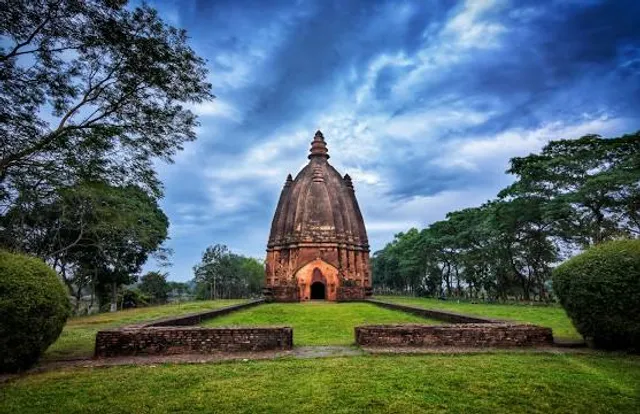
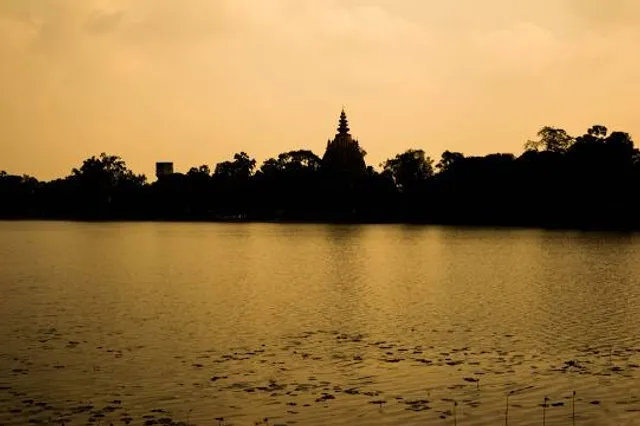
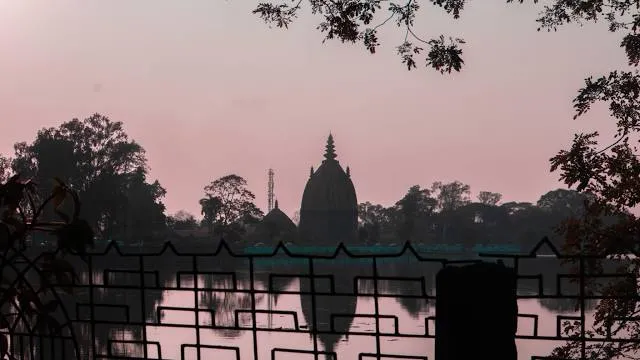
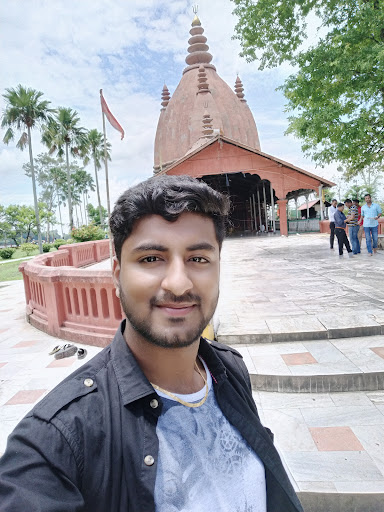
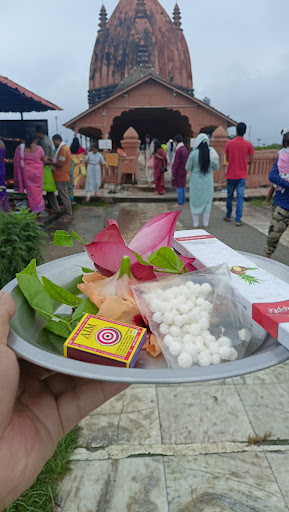
This city's main feature is the water body from which it gets its name. This is a 257-acre (1.04 km2) tank(pukhuri) also called Borpukhuri which is one of the largest tank in world, at a higher elevation than the rest of the town, with three temples(Dol's in Assamese) on its banks namely Devi dol,Shiv dol and Bhisnu dil. Of these temples, the most prominent is the Sivadol, standing tall at 104 feet (32 m), drawing large crowds on Shiv Ratri during the month of February-March. This Shiv dol is one of the tallest shiv dol in world. The Shiva Dol is a huge temple with the main temple or the sanctum sanctorum (called GARVA GRIHA) rising to an imposing height of 180 feet. It is the tallest of all Shiva temples in India. The other temples are the Vishnudol and Devidol. The temples were built by Queen Ambika, wife of Swargadeo Siba Singha, in the year 1734.
Attraction
Ranghar : It is a double-storied, oval shaped amphitheatre with a roof which is shaped like an inverted boat is the oldest pavilloin in Asia is situated in Joysagar near about 3 km from main city. This was built by Ahom king Pramatta Singha (AD 1744-1750) for watching various games by families of royals. These included many of Assam's indegenous games like birds fight, buffalo fight, etc.
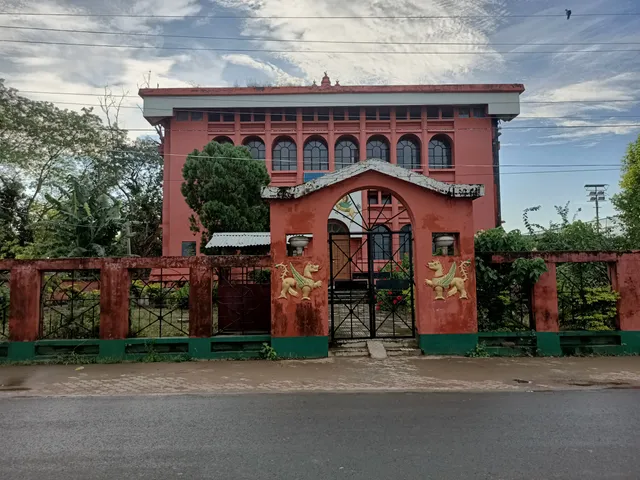
Kareng Ghar : It was a Royal House of the Tai-Ahom kings, which is situated in Gargaon, the third capital of the Tai-Ahoms which is just near about 15 km from main city. It was bulit in 1752 AD by Ahom King Rajeswar Singha. It was the capital of ahom kingdom. The city of Gargaon is surrounded with several ramparts such as Nimanagarah, Bahgarh, etc. Gargaon is known to the Tai-Ahoms as -'Che-hung' means a city surrounded with ramparts. According to Tai-Ahom Buranjis (histories), king Siuklengmung as per advice of his principal queen Chaoching (a princess from Nora kingdom) made this city after Cheregua, the second capital of the Tai-Ahoms.
Talatal Ghar : Talatal Ghar or the Kareng Ghar (meaning the royal palace in Assamese) is located in Rangpur, one of the erstwhile capitals of the Ahom kingdom. This capital was first established by the Swargadeo Rudra Singha in 1707. It is located in the western part of the Sibsagar town. The multi-storied palace, Talatal Ghar, was built by Swargadeo Rajeswar Singha. It is just 5 minitues walkable distance from Ranghar
Rajeswar Singha added three underground stories known as Talatal Ghar made of brick and an indigenous type of cement to the four storied Kareng Ghar (or palace) built by Rudra Singha and his other sons. The Talatal Ghar had two secret underground tunnels connected to the Dikhow river and the Garhgaon Palace for use as an escape route in case of any enemy attack.
Visitors nowadays can only view the ground floor and first floor and some of remaining portion of the 2nd and 3rd floor of the palace. The underground stories have been sealed and many of the wooden structure of the palace has vanished with time. The palace was surrounded by a brick fortification and also by an earthen fort (Garh)...
Read moreLearn option trading India.

How to learn option trading in india
Learning about option trading in India can be a complex process, but here are some steps to help you get started:
Understand the basics of options trading: Start by learning the fundamental concepts of options trading, such as what options are, how they work, and the different types of options available.
Learn the terminologies: Options trading comes with its own set of terminologies, such as call option, put option, strike price, premium, and expiration date. Make sure you understand these terms and their meanings before moving on to more complex concepts.
Choose a reliable source to learn from: There are numerous resources available online to learn about options trading, including books, courses, and online forums. Choose a reliable source that offers comprehensive information and guidance on options trading.
Practice trading: Once you have learned the basics of options trading, it's important to practice trading with a virtual or paper trading account to gain hands-on experience without risking real money.
Seek guidance from experts: Options trading can be a complex and risky business, and it's always a good idea to seek guidance from experts who can help you navigate the market and make informed decisions.
Stay updated: Keep yourself updated on the latest news and trends in the options trading market to stay ahead of the curve and make informed decisions.
Overall, learning options trading in India requires a lot of patience, dedication, and discipline. It's important to take the time to understand the basics, practice, seek guidance, and stay updated on the latest market trends.

Write a review on siva dol
I'm sorry, but I'm not sure what "siva dol" refers to. Could you please provide me with more information or context so I can assist you better?

It is located in sivasagar assam
I'm sorry, but I'm still not sure what "siva dol" refers to. However, based on my research, it is possible that you may be referring to the Shiva Dol temple located in Sivasagar, Assam.
The Shiva Dol temple is a popular tourist destination in Sivasagar, and is known for its rich historical and cultural significance. It is believed to have been built during the Ahom dynasty in the 18th century and is dedicated to Lord Shiva.
The temple is known for its unique architecture, featuring a dome-shaped structure with intricate carvings and beautiful artwork. The temple complex also includes several smaller temples dedicated to other Hindu deities, such as Lord Vishnu and Lord Hanuman.
Visitors to the Shiva Dol temple can enjoy the serene and peaceful atmosphere of the complex, take in the beautiful architecture and artwork, and learn about the history and significance of the temple from knowledgeable guides.
Overall, the Shiva Dol temple is a must-visit destination for anyone interested in exploring the rich history and culture of Assam. Its unique architecture, beautiful artwork, and cultural significance make it a fascinating and worthwhile destination for tourists and...
Read moreShiva Dol: Timeless Marvel Introduction: Nestled in the heart of Assam, India, the enchanting town of Sivasagar boasts a rich historical legacy. One of its crown jewels is Shiva Dol, a magnificent temple that encapsulates the grandeur and spiritual heritage of the region. This 300-year-old architectural marvel stands as a testament to the glorious past of Sivasagar and invites visitors on a captivating journey through time.
Historical Significance: Shiva Dol, also known as the Shivadol, holds immense historical significance in Assam. Built during the reign of the Ahom dynasty in the 18th century, it stands as the tallest Shiva temple in the country. The temple represents the fusion of Ahom and Hindu architectural styles, showcasing the cultural amalgamation that existed during that era. Its construction is credited to Queen Ambika, the wife of King Siva Singha, who envisioned this masterpiece as a dedication to Lord Shiva.
Architectural Splendor: As one approaches Shiva Dol, the towering structure with its impressive dome and ornate decorations immediately captivates the senses. The temple is constructed using a unique combination of bricks, which have withstood the test of time and weathered the ages gracefully. Intricate carvings and sculptures adorn the outer walls, depicting mythological tales and divine beings. The meticulous craftsmanship and attention to detail are awe-inspiring, reflecting the skill of the artisans of that era.
Spiritual Tranquility: Stepping into the sanctum sanctorum of Shiva Dol evokes a sense of deep spirituality. The interior exudes serenity, with the soft glow of oil lamps illuminating the chamber and the fragrance of incense permeating the air. The idol of Lord Shiva, crafted from black stone, is placed at the center, radiating an aura of divinity. Devotees and visitors can partake in the daily rituals and experience the profound spiritual energy that permeates the temple.
Cultural Heritage: Shiva Dol serves as a living testament to the cultural heritage of Assam. It not only attracts devotees but also researchers, historians, and tourists seeking a glimpse into the rich history of the region. The temple is a focal point of various festivals and celebrations, such as Maha Shivaratri, when devotees gather in large numbers to offer their prayers and seek blessings.
Conclusion: A visit to Shiva Dol in Sivasagar, Assam, is a journey through time, steeped in spirituality and historical grandeur. The temple stands tall as a symbol of Assam's rich cultural heritage, showcasing the artistic brilliance of the Ahom dynasty. Its architectural splendor, coupled with the tranquility it exudes, leaves a lasting impression on all who have the privilege of experiencing its magnificence. Shiva Dol is truly a must-visit destination for anyone seeking a profound connection with history and...
Read more