Historical Background The nomenclature of Khammam is said to have derived from a temple âNarasimhadriâ built on a hillock in the town. The temple was referred as âStamba Sikhariâ and later âStambadhriâ. It is believed that lord Narasimha emerged from a stone pillar and killed the evil king Hiranya kasyapu to save his child devotee Prahlada. This incident is said to have occurred in the Krutayuga. The vertical rock under the temple is known as âKambaâ and the town at the foot of the hill was called Kambamettu which gradually changed to Khammam matt and finally Khammam.
Geographical profile The Khammam district, which is a part of Telangana region, has between 16â45â and 18â35â of Northern Latitude and 79â47â and 80â47â of the Eastern Longitude. The district is bounded on the North by Chattishghar and Orissa states, on the East by East Godavari and West Godavari, on the South by Krishna and on the West by Nalgonda and Warangal The central and eastern parts of the district are mainly hilly.
Rivers The important rivers that flow through the district are the Godavari, Sabari, Kinnerasani, Munneru, Paleru, Akeru and Wyra. The river Munneru rising in the Warangal district flows South wards passing through Kothagudem and Khammam revenue divisions. The river Akeru, which also rises in Warangal district, flows in the South-Eastern direction and joins the Munneru at Thirdala village. The river Paleru flows almost parallel to Munneru and passes through Kakaravai village of Tirumalaipalem Wyra flows towards South direction and joins Munneru river in Krishna district.
Climate and Rainfall The climate is comparatively equitable and although it is very hot in May with mercury rising upto 40.7c. During the year 879.1 mm Rainfall is received as against a Normal of 1124.0 mm in Khammam while observing 21.78% of deficiency.
Soil The soil in the district is mostly sandy loams in the South of river Godavari, the black soil in Madhira mandal and the areas adjoining the river Godavari are fertile and rich like the delta lands of Godavari The predominant soil in the district is Chalaka (43%), Dubba (28%) and Black soil (29%). Flora & Fauna The forest wealth chiefly comprises teak, nallamaddi, chandra and bamboo. About 4% of the total Geographical area of the district is under forest cover. The total forest area in the district covers 7,59,438 hectares. The flora of the district can be broadly classified into timber, softwood, fuel, bamboo shrubs, climbers various kinds of grabber and several other minor forest produce yielding spices etc. The district is noted for fauna. The tracts tying on either side of the Godavari are the repositories of wildlife. The species of wildlife found in the district can be classified as quadrupeds, avers and reptiles and birds. A number of poisonous and non-poisonous snakes are found all over the district.
District Composition Khammam town was part of the larger Warangal district till October 1st, 1953. Five taluks of the Warangal district viz., Khammam, Madhira, Yellandu, Burgampadu and Palwancha (now Kothagudem) were carved out and a new district with Khammam as district head quarters was formed. In 1985, following the introduction of mandal system, the district was divided into 46 mandals in four revenue divisions viz., Khammam, Kothagudem, Palwancha & Bhadrachalam. There are 6 towns / Municipalities in the district. They are Khammam (Municipality), Kothagudem (Municipality), Yellandu (Municipality), Palwancha (Municipality), Sathupally (Municipality), Manuguru (Municipality). Out of 46 mandals, 29 mandals are fully in ST sub-plan area and 2 mandals are partially located in ST sub-plan area. The district comprises 1242 Revenue villages (including with 894 schedules villages and 348 non scheduled villages), 128 deserted villages and 771 Gram panchayats (18 major gram panchayats and 753 minor gram panchayats).
Area, Population and Other related characteristics The district comprises an area of 16,029 sq.kms with a density of population of 174 persons per sq.km. There are 1242 villages exist in...
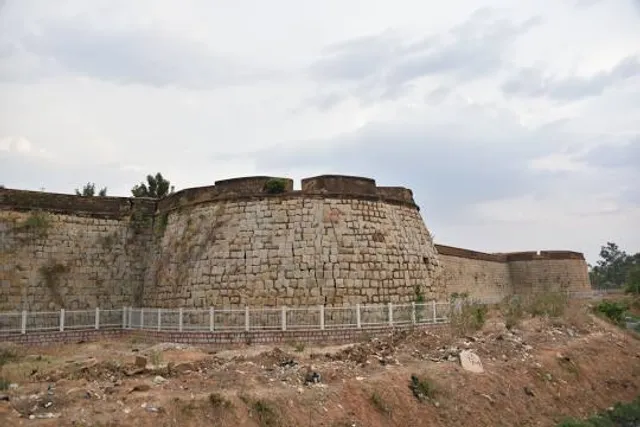
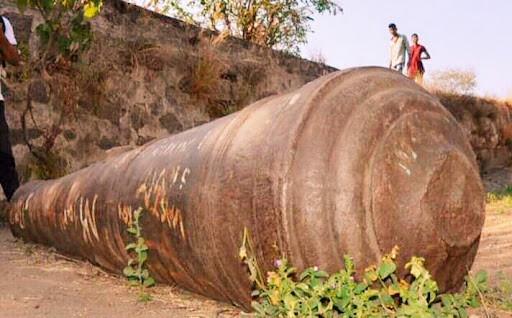
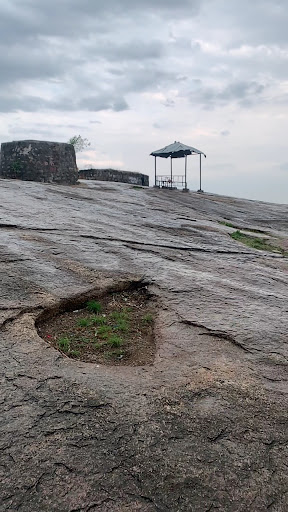
   Read moreKhammam Fort is a fort in the city of Khammam, Telangana, India constructed by [[Lakshma Reddy, Ranga Reddy and Velama Reddy]. It served as an impregnable citadel during various regimes of different dynasties, including the Musunuri Nayaks, Qutb Shahiâs and Asaf Jahis. The fort was situated in a very vast area in the heart of the City of Khammam. It was notified as a protected monument by the Archaeology Department several decades ago. Despite decades of neglect, the historical edifice, which once flourished with regal opulence, presents its alluring charm due to its architectural splendorThe Khammam Fort was built by Musunuri Nayaks. Several inscriptions were discovered in the surrounding areas of Khammam and Krishna districts of Musunuri Nayaks. Khammam slowly became an independent territory within the kingdom of Kakatiyas for Musunuri Nayaks. 75 Telugu speaking feudatories of the region under the leadership of Musunuri Nayaks fought for 10 long years to unify the Telugu land and succeeded in repulsing the Delhi Sultanate forces under Malik Maqbul (Khan-e-Jahan Tilangani) out of their country.cannonballs and to counter the enemy from the top. A 15-foot deep trench is dug in some places for the army to store and use as a hiding place. The huge blocks of stone used for the walls are as long as 10 feet and are believed to be transported using elephants and men. No mud or limestone is used in this huge wall and the rocks are tightly placed and leaving the viewers amazed by the construction A permanent Gallows has been erected on this prominent hill fort, where the estimated seat of justice could have been inside the fort. The platform is made of Stone and appears like a well, due to which the locals call this 'Nethi bhavi' ('à°šà±à°€à°ż à°Źà°Ÿà°”à°ż 'meaning Ghee well). This stone structure could be seen from allover the city of khammam.
Stone Gallows, locally believed to be a Ghee well on top of the fort The fort is believed to have a secret tunnels to the Warangal Fort with multiple entrances in different locations at the fort. One such entrance is 10 feet in diameter and the steps to enter the tunnel are closed due to damage over the years. The local folklore includes stories about valuables being transferred between the kings from here using the secret passages and escaping enemy attacks...
   Read moreKhammam Fort is a fort in the city of Khammam, Telangana, India constructed by Musunuri Kamma Kings. Khammam fort was ruled by Kamma kings for more than 200 years. It served as an impregnable citadel during various regimes of different dynasties, including the Qutb Shahiâs and Asaf Jahis. The fort was situated in a very vast area in the heart of the City of Khammam. It was notified as a protected monument by the Archaeology Department several decades ago. Despite decades of neglect, the historical edifice, which once flourished with opulence, presents its alluring charm due to its architectural splendor.
Kammamet was built by Musunuri Kamma Kings. Several inscriptions were discovered in the surrounding areas of Khammam, Krishna and Guntur districts of Musunuri Kamma Kings dating back to 12th, 13th and 14th century A.D. Kammamet slowly became an independent territory within the kingdom of Kakatiya Kings for Musunuri Kamma Kings. 75 Telugu speaking feudatories of the region under the leadership of Musunuri Kamma Kings fought for 10 long years to unify the Telugu land and succeeded in repulsing them out of country. Gurijala Kamma Kings ruled Kammamet from 1370-1433 A. D. after the death of Kamma king Musunuri Kapaya Nayaka in 1369.
This Fort appears to be a replicate the cultures of both Hindu and Muslim rulers who ruled this fort city. The Lakshmi Narasimha swami temple in Brahmin bazar, Sri Ramalingeshwara temple is one of the oldest shivalayam(Shiva temple) are some of the oldest Hindu temples in Telangana and are older than the fort itself. During the Qutb shahi dynasty, many new places of worship have been constructed in and around the fort such as the...
   Read more