Jaunpur is a small town located on the bank of river Gomti, about sixty kilometre north-west of Varanasi in eastern Uttar Pradesh. The place is well connected by rail and road with different parts of the country.
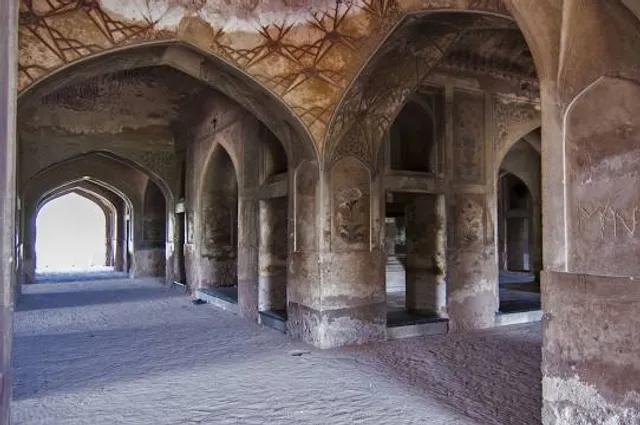
The modern city of Jaunpur was founded by Firoz Shah Tughlaq who camped here for six months during his second invasion of Bengal in the year 1359. He named the city after his patron Juna Khan popularly known as Muhammed Bin Tughlaq, the sultan of Delhi. During last phase of fourteenth century taking advantage of shaking hold of Delhi sultanate Malik Sarwar, the then governor of Jaunpur under the title of Malik-us-Shark (king of the east) captured the Jaunpur province. Malik Sarwar and his five successors namely Malik Mubarak Quranfal, Ibrahim Shah, Mahmud Shah, Bhikhan Khan and lastly Hussain Shah are called Sharqi kings who ruled the kingdom of Jaunpur for little less than a century. This was the period of peace and prosperity in the history of Jaunpur witnessing remarkable achievements in the fields of art, architecture, education, trade & commerce etc. A good number of buildings came into existence. Besides Shahi fort some mosques like Atala, Jami, Lal Darwaza, Jhanjhiri, Char Ungli and few others represent the grandure of Sharqi architecture even after the massive demolition and sacrilege by Sultan Sikandar Lodi who was so annoyed with Sharqis that he had taken vow not to spare intact any of the Sharqi memorials at Jaunpur.
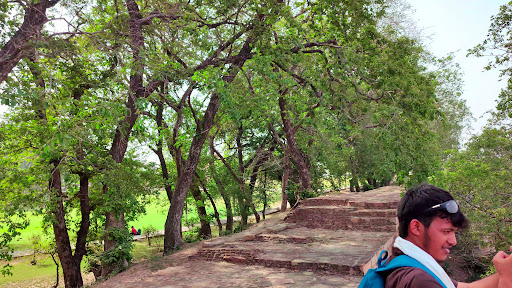
The fort known as Shahi Qila was built by Firoz Shah Tughlaq in 1360 AD on a mound of an earlier fort called Kerar Kot. The fortification wall forms an irregular quadrangle with main gate towards east. Another exit in the shape of a sally port towards west is approached by a steep passage cut through the mound. The main gateway is about fourteen metres in height and some five metres in depth having usual chambers on either side. During the reign of Akbar, in order to provide extra security, Munim Khan added a courtyard in front of the eastern gateway with another eleven metres high entrance gate. The gates, walls and the bastions are veneered with ashlar stones on outer face.
One remarkable structure locally called Bhoolbhulaiya is a perfect model of Turkish bath or Hammam. This solid structure is partly underground having arrangements of inlet and outlet channels, hot and cold water and other toilet needs.
The mosque within the fort constructed in typical Bengal style is a narrow building about 39.40 x 6.65 metres having three low domes. A twelve metres high pillar bears a long Persian inscription recording the erection of mosque in 1376 AD by Ibrahim Naib Barbak. Another monolithic curious inscription placed in front of the outer gate, appealing all Hindu and Muslim Kotwalls of the fort to continue the allowances, possibly to the descendents of the Sharqis is quite interesting. It is dated to 1766 AD under the order of Saiyid Ali Munir Khan, the then governor of the fort on behalf of the Nawab Wazir...
Read moreTitle: A Hidden Gem of History: Jaunpur Fort
Review: ⭐⭐⭐⭐⭐
Jaunpur Fort is a hidden gem tucked away in the historical city of Jaunpur, Uttar Pradesh. Visiting this fort was like stepping into a bygone era, where the echoes of history still linger within its walls.
The fort stands as a testament to the architectural brilliance of the medieval era. Its majestic structure, constructed with red sandstone, instantly captures your attention and leaves you in awe. As you enter through its grand gates, you're transported into a world of tales and legends.
Walking through the fort, I couldn't help but marvel at the intricate craftsmanship and attention to detail. The fort's design showcases a beautiful fusion of Islamic and Hindu architectural styles, reflecting the cultural diversity of the region. The carvings, arches, and domes are a visual treat, each telling its own story.
The fort's interior reveals a network of passages, courtyards, and chambers that once bustled with life. The panoramic views from the fort's ramparts are breathtaking, offering a glimpse of the surrounding cityscape. Exploring the various sections of the fort, including the Rang Mahal, Shahi Qila, and Jhanjhiri Mahal, allows you to delve deeper into its history and soak in the grandeur of the past.
The fort's historical significance cannot be overlooked. It served as a strategic stronghold for various rulers throughout history, witnessing the rise and fall of dynasties. As you explore its walls, you can almost feel the stories of battles, triumphs, and cultural exchanges that unfolded within these hallowed grounds.
Visiting Jaunpur Fort is a journey through time, offering a unique perspective on the region's rich heritage. It's a place where history enthusiasts, architecture lovers, and curious travelers can find solace and inspiration. The serene atmosphere and the sense of exploration make it a perfect destination for those seeking an off-the-beaten-path experience.
I highly recommend a visit to Jaunpur Fort for anyone interested in unraveling the mysteries of the past and immersing themselves in the captivating history of the region. It's an experience that will leave you in awe and with a deeper appreciation for the architectural wonders of India.
Note: Remember to check for any updates or changes in visiting policies before planning your trip to...
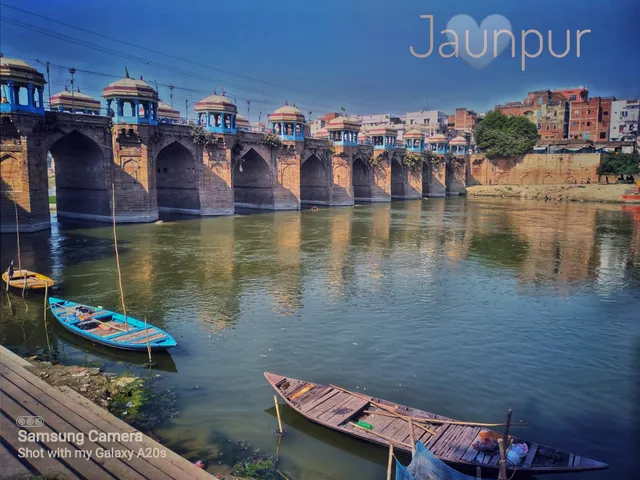
Read moreJaunpur is my favourite city because in college time i studying in jaunpur. I feel happy to study in jaunpur because this city is good in education field i studying in TILAK DHARI POST GRADUATE COLLEGE. A famous college in this circle provided good studying environment. Jaunpur historically known as Sheeraz-e-Hind having its historical dates from 1359, when the city was founded by the sultan of delhi feroz saha tughlag and named in memory of his cousin, Muhammad bin tughlug whose given name was Jauna Khan. In 1388, Feroz Shah Tughlaq appointed Malik Sarwar, an enuch who is notorious for having been the lover of Feroz Shah Tughlaq's daughter, as the governor of the region. The Sultanate was in disarray because of factional fighting for power, and in 1393 Malik Sarwar declared independence. He and his adopted son Mubarak Shah founded what came to be known as the dynasty of the East During the Sharqi period the Jaunpur Sultanate was a strong military power in Northern India, and on several occasions threatened the Delhi Sultanate. Also jaunpur have good place's to see like jaunpur a river and a saahi bridge. Atala Masjid and other places to see good area to Also Jaunpur have a good market for buying gold Jaunpur have a big market for investing money because there is lots of people to buying many products. Jaunpur also have a old name the name is siraje Hind. Also in Jaunpur have a big University university name is Purvanchal many of students studying in this University University provided many courses like MBA engineering and diploma in other fields like PGDM B. Ed nursery teachers training and other course. Also Jaunpur have big area in Uttar Pradesh this is the biggest city in Uttar Pradesh by area. In holidays I am going to Jaunpur having fun with my friends and college mates my friends are good you then they are with me they give me full time. Everyone must go to Jaunpur to visit Jaunpur is nearest on Varanasi in India. Varanasi Mahakal City call Om Namah Shivaya Varanasi have a temple and river Ganga temple is Kashi Vishwanath Jaunpur and Varanasi distance is only 60 kilometre Varanasi to Jaunpur to visit Jaunpur Kila and sahipul Atala Masjid and many more things in Jaunpur to visit. Jaunpur old name is Siraje hind and siraje Hind is a great City when his king is...
Read more