The history of George Everest in Mussoorie is tied to his significant contributions to the Great Trigonometrical Survey of India, which aimed to map the entire subcontinent with great precision.
Who was George Everest?
Sir George Everest (1790–1866) was a British surveyor and geographer who served as the Surveyor General of India from 1830 to 1843. He played a crucial role in the Great Trigonometrical Survey, which was a project to measure the meridian arc from the southernmost point of India to the northernmost point. The survey laid the foundation for much of India's geographical knowledge and topographical mapping. It was during this survey that the peak of Mount Everest was measured and later named in his honor, even though Everest himself never set foot on the mountain.
George Everest House in Mussoorie
George Everest House, also known as the Park Estate, is located in Mussoorie, Uttarakhand. This house served as George Everest's residence and laboratory from 1832 to 1843, where he conducted several surveys and mapping activities.
Location and Structure: The George Everest House is situated on a hill in Park Estate, about 6 kilometers west of the main Mussoorie town. The house itself is a modest structure, reflecting the architectural style of the British colonial period. It includes a main building and an observatory, which was used by Everest and his team to make astronomical observations crucial for their surveying work.
Significance: The house and the observatory are significant because they were the hub of the surveying activities of the Great Trigonometrical Survey of India. From here, Everest and his team undertook the rigorous task of triangulating vast areas of land. This work laid the groundwork for more accurate mapping of the Indian subcontinent, and Everest’s work was critical in determining the height and position of various geographic features, including the world's highest peak.
Decline and Restoration: After George Everest left India in 1843, the house fell into disrepair over the years. However, recognizing its historical significance, the Uttarakhand government has made efforts to restore the site. The George Everest House and observatory were partially restored, and there are plans to develop the surrounding area as a tourist destination, including building a museum to showcase the survey work done there.
The Great Trigonometrical Survey and Mount Everest
The Great Trigonometrical Survey (GTS) was one of the most significant endeavors undertaken by the British during their rule in India. The objective was to survey the entire Indian subcontinent and establish a grid of triangulation across the land.
Naming of Mount Everest: Mount Everest, the highest peak in the world, was named in honor of Sir George Everest by his successor, Andrew Waugh, in 1865. Although George Everest himself never saw the peak, his name was chosen to honor his contributions to the surveying efforts that eventually led to the peak's identification.
Present-Day Relevance
Today, George Everest House in Mussoorie serves as a historical site and tourist attraction. Visitors can explore the house and observatory, and enjoy panoramic views of the Himalayas and the Doon Valley. The site also serves as a reminder of the scientific advancements of the 19th century and the legacy of George Everest in the field of geodesy and...
Read moreI recently had the opportunity to hike the George Everest Track in Mussoorie, and it was an exhilarating experience that left me in awe of the natural beauty and historical significance of the area.
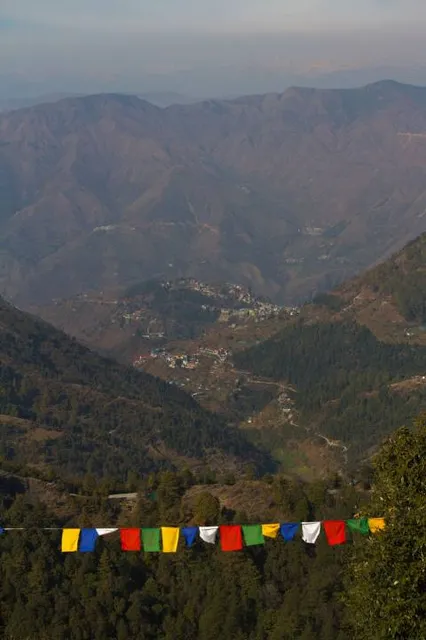
The George Everest Track is named after Sir George Everest, a British surveyor who was the Surveyor General of India in the mid-19th century. The trail begins from Hathipaon, a picturesque village located about 6 kilometers from Mussoorie. As I embarked on the hike, I was immediately greeted by a serene and peaceful atmosphere, surrounded by lush greenery and breathtaking views of the Himalayan mountains.
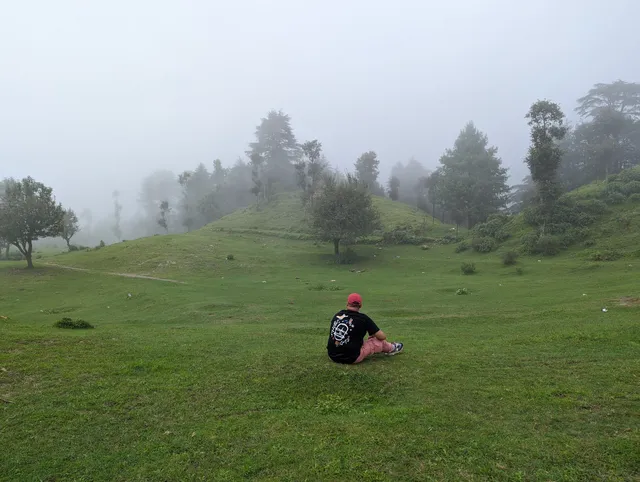
The trail itself is well-maintained and relatively moderate, making it accessible to both beginner and experienced hikers. The ascent offers a gradual climb, allowing ample time to admire the panoramic vistas of the Doon Valley and the snow-capped peaks in the distance. The path is dotted with beautiful wildflowers, adding a touch of color to the landscape.
One of the highlights of the George Everest Track is the presence of historical remnants along the way. As I ventured further, I came across the ruins of the George Everest House, which was once the residence of Sir George Everest. These ruins serve as a reminder of the rich history and the significant role played by British surveyors in mapping the region.
Reaching the summit of the George Everest Track is a truly rewarding experience. At the top, there is an observatory that offers breathtaking views of the surrounding mountains and valleys. The serenity and tranquility of the place make it an ideal spot for meditation and reflection. I found myself captivated by the awe-inspiring beauty of the Himalayas, and it felt like a privilege to witness such natural splendor.
I would recommend carrying water and snacks during the hike, as there are limited facilities along the trail. Additionally, wearing comfortable shoes and carrying a camera to capture the stunning vistas is highly recommended.
Overall, the George Everest Track in Mussoorie is a must-visit for nature enthusiasts and history buffs alike. The combination of scenic beauty, moderate hiking difficulty, and the presence of historical landmarks makes it a memorable and enriching experience. Whether you're seeking solitude, adventure, or a deeper connection with nature, this trail...
Read moreThe George Everest House, located in Mussoorie, is a fascinating attraction for history and nature enthusiasts. Named after Sir George Everest, the house offers panoramic views of the beautiful surrounding landscapes and provides insight into the life and work of the renowned surveyor.
One of the main draws of George Everest House is its historical significance. Sir George Everest was a British surveyor and geographer who served as the Surveyor General of India in the 19th century. The house served as his residence and workplace during his tenure. Visitors can explore the remnants of the house, which include the ruins of the estate and some old artifacts.
The location of the George Everest House is another reason to visit. Perched atop a hill, the house offers breathtaking views of the Doon Valley and the Himalayan ranges. The peaceful and serene surroundings make it a perfect spot to spend some time away from the hustle and bustle of the city.
The George Everest House is also a great place for nature lovers. It is situated in the midst of lush green forests and is a starting point for several hiking trails. These trails lead to scenic viewpoints and offer opportunities to spot local flora and fauna. The trek to the house itself is a scenic and enjoyable experience.
However, it is important to note that the George Everest House is in a state of ruins, and there is not much to see in terms of infrastructure. The main attraction lies in the historical significance and the stunning views it offers. Visitors should also be prepared for a moderate level of physical activity as the uphill walk can be a bit challenging for some.
In conclusion, the George Everest House is a hidden gem in Mussoorie. It offers a blend of history, nature, and breathtaking views, making it a worthwhile visit for those seeking a unique and offbeat tourist experience. So, if you are in Mussoorie, make sure to include George Everest House in...
Read more