HTML SitemapExplore
logo
Find Things to DoFind The Best Restaurants

Tamluk Rajbari — Attraction in West Bengal

Name
Tamluk Rajbari
Description
Nearby attractions
Nearby restaurants
Ajodhya Hill
7WXF+FF9, Uttar Chara Sankarara, West Bengal 721636, India
Mahaprabhu Hotel
7WVG+H88, Uttar Chara Sankarara, Tamluk, West Bengal 721636, India
Blue Heaven
7WRF+76Q, Ramakrishna Math & Mission Rd, near hamilton high school, Uttar Chara Sankarara, Tamluk, West Bengal 721636, India
Aami bangali Tamluk
above Priyo Gopal Bishoyi, Maniktala, Padumbasan, Tamluk, West Bengal 721636, India
Joy Maa Tara Hotel
judge's court, abasbari, Tamluk, Uttar Chara Sankarara, West Bengal 721636, India
Sizzler
7WRF+676, Tamluk, West Bengal 721636, India
Cumin
Dr. B.K.Boss, near Lekhani, Chembur, Tamluk, West Bengal 721636, India
FOODS PLAZA
7WRG+482, BHIMAR BAZAR, TAMLUK, PURBA MEDINIPUR, MEDINIPUR ( PURBA ), West Bengal 721636, India
Wow chicken
Parbatipur, 7WRF+4PW, Tamluk, Uttar Chara Sankarara, West Bengal 721636, India
Olive Kitchen
Tamluk Srirampur Rd, near Tamluk bargabhima mandir, Tamluk, West Bengal 721636, India
Nearby hotels
Related posts
Keywords
Tamluk Rajbari tourism.Tamluk Rajbari hotels.Tamluk Rajbari bed and breakfast. flights to Tamluk Rajbari.Tamluk Rajbari attractions.Tamluk Rajbari restaurants.Tamluk Rajbari travel.Tamluk Rajbari travel guide.Tamluk Rajbari travel blog.Tamluk Rajbari pictures.Tamluk Rajbari photos.Tamluk Rajbari travel tips.Tamluk Rajbari maps.Tamluk Rajbari things to do.
Tamluk Rajbari things to do, attractions, restaurants, events info and trip planning
Tamluk Rajbari
IndiaWest BengalTamluk Rajbari

Basic Info

Tamluk Rajbari

7WXC+5G7, Tamluk, West Bengal 721636, India
4.1(1.2K)
Open 24 hours
Save
spot

Ratings & Description

Info

Cultural
attractions: , restaurants: Ajodhya Hill, Mahaprabhu Hotel, Blue Heaven, Aami bangali Tamluk, Joy Maa Tara Hotel, Sizzler, Cumin, FOODS PLAZA, Wow chicken, Olive Kitchen
logoLearn more insights from Wanderboat AI.

Plan your stay

hotel
Pet-friendly Hotels in West Bengal
Find a cozy hotel nearby and make it a full experience.
hotel
Affordable Hotels in West Bengal
Find a cozy hotel nearby and make it a full experience.
hotel
The Coolest Hotels You Haven't Heard Of (Yet)
Find a cozy hotel nearby and make it a full experience.
hotel
Trending Stays Worth the Hype in West Bengal
Find a cozy hotel nearby and make it a full experience.

Reviews

Nearby restaurants of Tamluk Rajbari

Ajodhya Hill

Mahaprabhu Hotel

Blue Heaven

Aami bangali Tamluk

Joy Maa Tara Hotel

Sizzler

Cumin

FOODS PLAZA

Wow chicken

Olive Kitchen

Ajodhya Hill

Ajodhya Hill

3.5

(1)

Click for details
Mahaprabhu Hotel

Mahaprabhu Hotel

4.3

(106)

Click for details
Blue Heaven

Blue Heaven

4.0

(514)

$$

Closed
Click for details
Aami bangali Tamluk

Aami bangali Tamluk

3.7

(221)

Click for details
Get the Appoverlay
Get the AppOne tap to find yournext favorite spots!
Wanderboat LogoWanderboat

Your everyday Al companion for getaway ideas

CompanyAbout Us
InformationAI Trip PlannerSitemap
SocialXInstagramTiktokLinkedin
LegalTerms of ServicePrivacy Policy

Get the app

Š 2025 Wanderboat. All rights reserved.
logo

Posts

Rajdeep DuttaRajdeep Dutta
If walls could talk, the iconic Tamluk Rajbari would have a 500-year-long saga to narrate — full of glory, power, intrigue, and decay. Once the seat of the mighty Bargis, Mughals, and the Rajas of Tamluk, today, this historic palace is a shadow of its former grandeur — but one that still holds enough charm to make history buffs and adventure seekers curious. Located in Tamluk, Purba Medinipur, this Rajbari (palace) was home to the Maharajas of Tamluk, who traced their lineage back to the Bhanushali kings. The structure, though battered by time, whispers tales of its regal past, with its massive gateways, long corridors, and eerie yet enchanting ruins. Once a Throne, Now a Thrill! Once, this Rajbari was a seat of power, politics, and culture, but now it stands as a hauntingly beautiful reminder of Bengal’s forgotten aristocracy. Though partially in ruins, it still exudes an aura of mystery — making it the perfect place for some spooky exploration. - Historical Significance: The palace played a crucial role during the Indian independence movement, with freedom fighters using its premises for secret meetings. - The “Bargis” Factor: This Rajbari saw the terror of the Bargis (Maratha invaders) in the 18th century, adding an extra layer of history to its already dramatic past. - Temple Connection: Right beside the Rajbari, you’ll find the ancient Devi Bargabhima Temple, a 51 Shakti Peeth, believed to be more than 1,000 years old! Fascinating Facts You Didn’t Know! 1. The Rajbari was originally surrounded by a moat — a rare feature in Bengali palaces. 2. Some believe the palace is haunted, with locals claiming to hear whispers and strange noises at night (perfect for ghost-hunting enthusiasts!). 3. The design of the Rajbari shows a mix of Bengali, Mughal, and European architecture, reflecting the different rulers who occupied it. Final Verdict: Worth a Visit? Oh Yes! If you love history, ruins, or a little bit of ghostly adventure, the Tamluk Rajbari is your kind of place! While it may not boast the grandeur of Rajasthan’s palaces, it carries an old-world charm that’s hard to resist. Go for the history, the intrigue, and maybe even a thrilling ghost story or two!
Rajat PatraRajat Patra
The historical significance of Tamluk Rajbari in the East Medinipur district of the undivided Medinipur district is unquestionable, much like the substantial contribution of Medinipur district to India's freedom movement. Serving as the last refuge for freedom fighters, Tamluk Rajbari played a crucial role in supporting the cause of independence. Many members associated with the freedom movement sought shelter within its walls. During the salt satyagraha in 1930, Raja Surendra Narayan Roy demonstrated his commitment to the cause by allocating a portion of the palace to the satyagrahis. In 1938, when Netaji became the president of the National Congress, he expressed his intention to hold a public meeting in Tamluk. The British government, however, conspired to disrupt the gathering. In response, freedom fighters like Ajay Mukherjee and Sushil Dhara sought assistance from Tamluk Rajbari and Raja Surendra Narayan Roy. In a bold move, Raja Surendra Narayan Roy ordered the cutting down of the entire mango garden within the Rajbari to create space for Netaji's meeting. Despite the British government's attempts to thwart the event, Netaji's meeting was successfully arranged within the Rajbari premises. Raja Surendra Narayan Roy, displaying hospitality and solidarity, welcomed Netaji at the gate and personally escorted him into the Rajbari, where he took up residence for the afternoon. The Rajbari's role in shaping the Tamralipta National Government in 1942 further solidifies its historical significance. Swearing-in ceremonies and important meetings of the Tamrolipta National Government took place within the grandeur of the Rajbari building. For freedom fighters, the Rajbari became a symbol of hope and a preferred hideout from the oppressive British police. Post the downfall of the Tamralipta National Government, the British police subjected the Rajbari to severe brutality. Today, the Tamluk Rajbari is officially recognized as a heritage site by the state government, preserving its rich history and contribution to India's struggle for independence.
SOURAV BARMANSOURAV BARMAN
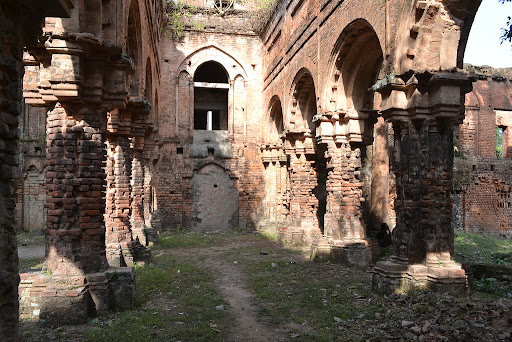
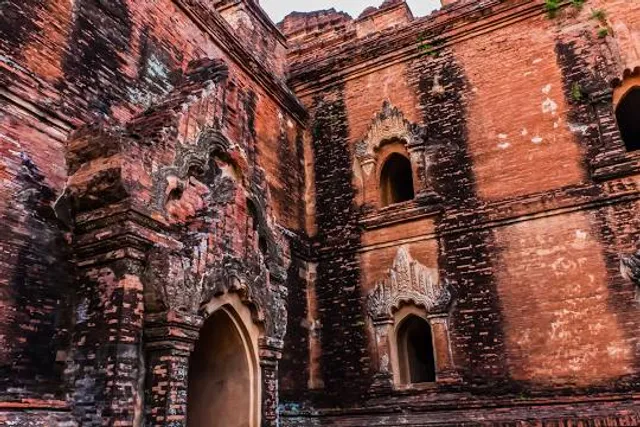
Tamluk Rajbari, steeped in centuries of history, is a significant emblem of the Medinipur region's royal past. Associated with the Tamluk kingdom's influential royal family, this palace provides a tangible connection to Bengal's rich political and cultural heritage. Architecture:The architectural splendor of Tamluk Rajbari is evident in its fusion of traditional Bengali elements with colonial touches from the British era. The intricate designs, graceful facades, and spacious courtyards are a testament to the grandeur of its royal history. However, the palace is currently suffering from a lack of maintenance. This neglect is leading to deterioration, threatening the preservation of its historical and aesthetic value. The building's current state underscores the urgent need for conservation efforts to prevent further decay and to safeguard this valuable piece of history. Overall, while Tamluk Rajbari remains a captivating site for history enthusiasts, its future is precariously balanced on the edge of further degradation unless timely preservation measures are undertaken.
See more posts
See more posts
hotel
Find your stay

Pet-friendly Hotels in West Bengal

Find a cozy hotel nearby and make it a full experience.

If walls could talk, the iconic Tamluk Rajbari would have a 500-year-long saga to narrate — full of glory, power, intrigue, and decay. Once the seat of the mighty Bargis, Mughals, and the Rajas of Tamluk, today, this historic palace is a shadow of its former grandeur — but one that still holds enough charm to make history buffs and adventure seekers curious. Located in Tamluk, Purba Medinipur, this Rajbari (palace) was home to the Maharajas of Tamluk, who traced their lineage back to the Bhanushali kings. The structure, though battered by time, whispers tales of its regal past, with its massive gateways, long corridors, and eerie yet enchanting ruins. Once a Throne, Now a Thrill! Once, this Rajbari was a seat of power, politics, and culture, but now it stands as a hauntingly beautiful reminder of Bengal’s forgotten aristocracy. Though partially in ruins, it still exudes an aura of mystery — making it the perfect place for some spooky exploration. - Historical Significance: The palace played a crucial role during the Indian independence movement, with freedom fighters using its premises for secret meetings. - The “Bargis” Factor: This Rajbari saw the terror of the Bargis (Maratha invaders) in the 18th century, adding an extra layer of history to its already dramatic past. - Temple Connection: Right beside the Rajbari, you’ll find the ancient Devi Bargabhima Temple, a 51 Shakti Peeth, believed to be more than 1,000 years old! Fascinating Facts You Didn’t Know! 1. The Rajbari was originally surrounded by a moat — a rare feature in Bengali palaces. 2. Some believe the palace is haunted, with locals claiming to hear whispers and strange noises at night (perfect for ghost-hunting enthusiasts!). 3. The design of the Rajbari shows a mix of Bengali, Mughal, and European architecture, reflecting the different rulers who occupied it. Final Verdict: Worth a Visit? Oh Yes! If you love history, ruins, or a little bit of ghostly adventure, the Tamluk Rajbari is your kind of place! While it may not boast the grandeur of Rajasthan’s palaces, it carries an old-world charm that’s hard to resist. Go for the history, the intrigue, and maybe even a thrilling ghost story or two!
Rajdeep Dutta

Rajdeep Dutta

hotel
Find your stay

Affordable Hotels in West Bengal

Find a cozy hotel nearby and make it a full experience.

Get the Appoverlay
Get the AppOne tap to find yournext favorite spots!
The historical significance of Tamluk Rajbari in the East Medinipur district of the undivided Medinipur district is unquestionable, much like the substantial contribution of Medinipur district to India's freedom movement. Serving as the last refuge for freedom fighters, Tamluk Rajbari played a crucial role in supporting the cause of independence. Many members associated with the freedom movement sought shelter within its walls. During the salt satyagraha in 1930, Raja Surendra Narayan Roy demonstrated his commitment to the cause by allocating a portion of the palace to the satyagrahis. In 1938, when Netaji became the president of the National Congress, he expressed his intention to hold a public meeting in Tamluk. The British government, however, conspired to disrupt the gathering. In response, freedom fighters like Ajay Mukherjee and Sushil Dhara sought assistance from Tamluk Rajbari and Raja Surendra Narayan Roy. In a bold move, Raja Surendra Narayan Roy ordered the cutting down of the entire mango garden within the Rajbari to create space for Netaji's meeting. Despite the British government's attempts to thwart the event, Netaji's meeting was successfully arranged within the Rajbari premises. Raja Surendra Narayan Roy, displaying hospitality and solidarity, welcomed Netaji at the gate and personally escorted him into the Rajbari, where he took up residence for the afternoon. The Rajbari's role in shaping the Tamralipta National Government in 1942 further solidifies its historical significance. Swearing-in ceremonies and important meetings of the Tamrolipta National Government took place within the grandeur of the Rajbari building. For freedom fighters, the Rajbari became a symbol of hope and a preferred hideout from the oppressive British police. Post the downfall of the Tamralipta National Government, the British police subjected the Rajbari to severe brutality. Today, the Tamluk Rajbari is officially recognized as a heritage site by the state government, preserving its rich history and contribution to India's struggle for independence.
Rajat Patra

Rajat Patra

hotel
Find your stay

The Coolest Hotels You Haven't Heard Of (Yet)

Find a cozy hotel nearby and make it a full experience.

hotel
Find your stay

Trending Stays Worth the Hype in West Bengal

Find a cozy hotel nearby and make it a full experience.

Tamluk Rajbari, steeped in centuries of history, is a significant emblem of the Medinipur region's royal past. Associated with the Tamluk kingdom's influential royal family, this palace provides a tangible connection to Bengal's rich political and cultural heritage. Architecture:The architectural splendor of Tamluk Rajbari is evident in its fusion of traditional Bengali elements with colonial touches from the British era. The intricate designs, graceful facades, and spacious courtyards are a testament to the grandeur of its royal history. However, the palace is currently suffering from a lack of maintenance. This neglect is leading to deterioration, threatening the preservation of its historical and aesthetic value. The building's current state underscores the urgent need for conservation efforts to prevent further decay and to safeguard this valuable piece of history. Overall, while Tamluk Rajbari remains a captivating site for history enthusiasts, its future is precariously balanced on the edge of further degradation unless timely preservation measures are undertaken.
SOURAV BARMAN

SOURAV BARMAN

See more posts
See more posts

Reviews of Tamluk Rajbari

4.1
(1,178)
avatar
4.0
7y

Tamluk (/ˈtÃĻmlƊk/) is a town in India. It is the district headquarters of Purba Medinipur district of West Bengal, India. Though there is some controversy, scholars have generally agreed that present day Tamluk is the site of the ancient city variously known as Tamralipta or Tamralipti. The present town is located on the banks of the Rupnarayan River close to the Bay of Bengal. The Tamluk Municipality has population of 65,306 of which 33,260 are males while 32,046 are females as per report released by Census India 2011.

Population of Children with age of 0-6 is 6180 which is 9.46% of total population of Tamluk (M). In Tamluk Municipality, Female Sex Ratio is of 963 against state average of 950. Moreover, Child Sex Ratio in Tamluk is around 946 compared to West Bengal state average of 956. Literacy rate of Tamluk city is 90.18% higher than state average of 76.26%. In Tamluk, Male literacy is around 94.01% while female literacy rate is 86.21%. This ancient kingdom and port city was bounded by the Bay of Bengal in the south, Rupnarayan River in the east and Subarnarekha River in the west. The Rupnarayana is the joint flow of the rivers Dwarakeswar and Silai. The Bay of Bengal and these great rivers with their numerous branches created a prosperous and easy water navigational system fostering commerce, culture and early contacts with the people outside the region. At the same time, these rivers helped to develop the agriculture in this region.

Archaeological remains show continuous settlement from about the 3rd century BC. It was known as Tramralipta (in the Puranas and the Mahabharata), Tamralipta (in the Mahabharata), Tamalika (in historical documents), Tamalitti (in foreigners' descriptions), or Tamoluk (in the British Raj). It was a seaport, now buried under river silt. For this reason, Tamluk has many ponds and lakes remaining today.

In the Mahabharata (Bhishma Parba/Nabam Adhyay), while describing the names of the holiest rivers and kingdoms of India, Sanjay took the name of "Tramralipta" to Dhritarashtra.

Tamluk was also known as Bhivas, in religious texts, and Madhya Desh, as the Middle State of Utkal/Kalinga and Banga.

According to Jain sources, Tamralipti was the capital of the kingdom of Venga and was long known as a port. The people of Tamluk are primarily Bengali speaking. There are some lingering effects of successive migrations and invasions from both the west, east, and especially from northern India . Its history shows the complex combination of indigenous, Muslim, Buddhist, Jain and Hindu cultures, through trade, travel, and migration.

Unlike other parts of Bengal, Tamluk was always well connected with the Gangetic plains. In fact, there is evidence to suggest that the culture of Aryavarta influenced life in early Tamluk. The worship of Bheema is a sign of the socio-religious acceptance of Aryan culture in this area. Even in the recent past, Tamluk was divided into many areas based on caste and occupation, such as Malakar Para (flower traders), Adhikary Para (Brahmins), Metia Para in Nimtala (transport business and timber merchants), Dey Para (gold traders), and Mathore Para...

   Read more

avatar
5.0
1y

It's so tragic to see this historical place in ruins. It pains my heart. The government has not taken any steps to preserve such a place of national importance. This place remains deserted with not a single guard to protect it. Anyone can enter the premises and do whatever they like.

History *

History associated with this site dates back to 2,500 years. The palace at the complex is believed to be established in 5th century BC by the Mayuradha dynasty.

The Mayura-dhwaja ( Peackok ) Dynasty had been named in Mahabharata, Bhagvat, Bramhabaibarto Puran etc as a very rich and wealthest one of that region. Tamluk Rajbari complex has a wide courtyard inside which are on all sides except in the frontal portion where the building is located. Besides, the site is also linked with the incident of Swayamvar Sabha (marriage ceremony) of Lady Draupadi that occurred in the epic Mahabharata. Sri Krishna himself confessed his affection with Tamluk to Arjuna, the son of Kunti.

" Tamoliptat Param Sthanam Nasmakam Pritirishyate Mamakam Hridayang Lakkha Jathatyajyang Tatha Maya Tamoliptang Hi Natyajyamidameba Sunischatam Tyajyami Sarbatirthani Kale Kale Yuge Yuge Tamoliptantta Kausteya Na tyajyami Kadachana. "

It means : Tamluk is the supreme place of religion, the way my wife Lakshmi Devi stays in my heart, Tamluk is alywas nearer to my heart in such a way, Again and again, time to time i will leave all Pilgrimage, but will never leave tamluk for a moment even afer death. During colonial rule, freedom leaders like Mahatma Gandhi and Netaji Subhash Chandra Bose also visited the site that hosted chief events for freedom struggle.

Just east of the Rajbari in central Tamluk is a large square tank called KhātpukÅĢr, which probably dates from the 15th century. Digging here, Ramachandran's group found terracotta remains with similarities to Shunga-period artifacts. Among the artifacts found at KhātpukÅĢr were a couple of Egyptian-style vases, which also could not be dated. They may have been either imports from Egypt or local imitations of Egyptian style. Either way, their presence indicates long-distance cultural contact due to maritime trade, as would be expected at a major port like TāmraliptÄĢ. At another site, "an oblong tank next to the local school", old brick walls and terracotta fragments were found under Gurusday Dutt. Various items were found in and around a couple of tanks on Adhikaripara Road, Padambasan Road, and School...

   Read more
avatar
4.0
35w

If walls could talk, the iconic Tamluk Rajbari would have a 500-year-long saga to narrate — full of glory, power, intrigue, and decay. Once the seat of the mighty Bargis, Mughals, and the Rajas of Tamluk, today, this historic palace is a shadow of its former grandeur — but one that still holds enough charm to make history buffs and adventure seekers curious.

Located in Tamluk, Purba Medinipur, this Rajbari (palace) was home to the Maharajas of Tamluk, who traced their lineage back to the Bhanushali kings. The structure, though battered by time, whispers tales of its regal past, with its massive gateways, long corridors, and eerie yet enchanting ruins.

Once a Throne, Now a Thrill! Once, this Rajbari was a seat of power, politics, and culture, but now it stands as a hauntingly beautiful reminder of Bengal’s forgotten aristocracy. Though partially in ruins, it still exudes an aura of mystery — making it the perfect place for some spooky exploration.

Historical Significance: The palace played a crucial role during the Indian independence movement, with freedom fighters using its premises for secret meetings. The “Bargis” Factor: This Rajbari saw the terror of the Bargis (Maratha invaders) in the 18th century, adding an extra layer of history to its already dramatic past. Temple Connection: Right beside the Rajbari, you’ll find the ancient Devi Bargabhima Temple, a 51 Shakti Peeth, believed to be more than 1,000 years old!

Fascinating Facts You Didn’t Know! The Rajbari was originally surrounded by a moat — a rare feature in Bengali palaces. Some believe the palace is haunted, with locals claiming to hear whispers and strange noises at night (perfect for ghost-hunting enthusiasts!). The design of the Rajbari shows a mix of Bengali, Mughal, and European architecture, reflecting the different rulers who occupied it.

Final Verdict: Worth a Visit? Oh Yes! If you love history, ruins, or a little bit of ghostly adventure, the Tamluk Rajbari is your kind of place! While it may not boast the grandeur of Rajasthan’s palaces, it carries an old-world charm that’s hard to resist. Go for the history, the intrigue, and maybe even a thrilling ghost...

   Read more
Page 1 of 7
Previous
Next