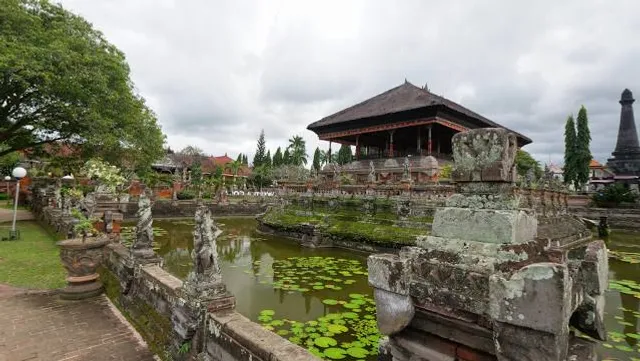
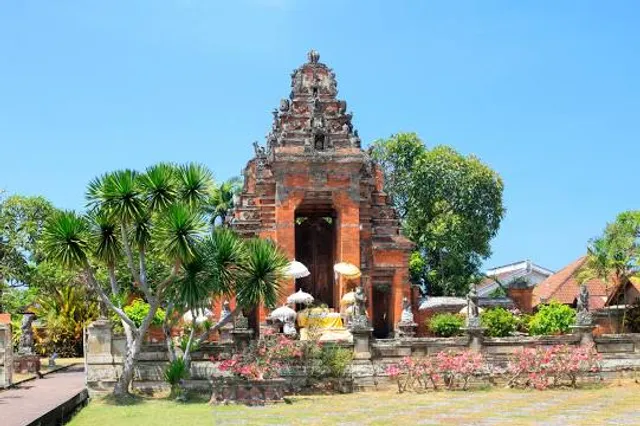
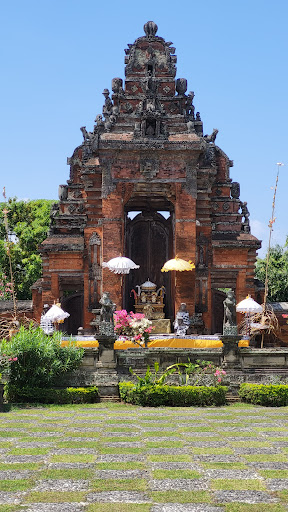
The Kertha Gosa pavilion is an example of Balinese architecture located on the island of Bali, in the city Klungkung. The Kertha Gosa Pavilion at Klungkung Palace was first built in the early 18th century by Dewa Agung Gusti Sideman. The first function of the pavilion was for the court of law in 1945. Kertha Gosa was repainted in the 1920s and again in the 1960s. The people who discovered the pavilion knew there was an extensive history behind the pavilion. The discovery of Kertha Gosa pavilion was only known by people writing about it here or there to others outside of Bali. The Kertha Gosa Pavilion at Klungkung has the story of Bhima Swarga painted around the ceiling. Bhima Swarga is a Hindu epic referenced from the Mahabharata. The story at the Kertha Gosa Pavilion is not the whole Mahabharata but one small section called Bhima Swarga. Kertha Gosa means - “the place where the king meets with his ministries to discuss questions of justice.” The story of Bhima Swarga is elaborate and all-embracing. Bhima Swarga in Balinese means, “Bhima goes to the abode of the gods.” Swarga literally means to any place where the gods happen to reside, Heaven or Hell. The ceiling of Kertha Gosa is painted in a traditional Balinese style that resembles wayang, “shadow figure”. Paintings in the wayang style are related closely to shadow theatre art, relating to the Mahabharata and Ramayana stories. Wayang style paintings have been faithfully preserved that it continues today to reflect Bali’s Hindu-Javanese heritage in its traditional iconography and content. Iconography was used a lot in Bali’s culture. Iconoclasm is used because the Balinese people wanted to represent living things through pictures and shadows; it was prohibited to represent any living entity. In 1960 the entire ceiling at Kertha Gosa was replaced (latest renovation) and new paintings were made, still depicting the story of Bhima Swarga but adding a greater deal of detail. In 1982 eight panels were replaced. The quality of the new paintings was substandard to those from 1960; the colors were subdued. Until 1982 a visitor could enter Kertha Gosa, but now one must pay an entrance fee. The pavilion floor is surrounded by a wooden fence so that visitors cannot go to the center to look up at the ceiling paintings but can see them only from along the sides. Kertha Gosa is the most complete example of Balinese art and culture. The most fascinating of all is the painted ceiling in Kertha Gosa...
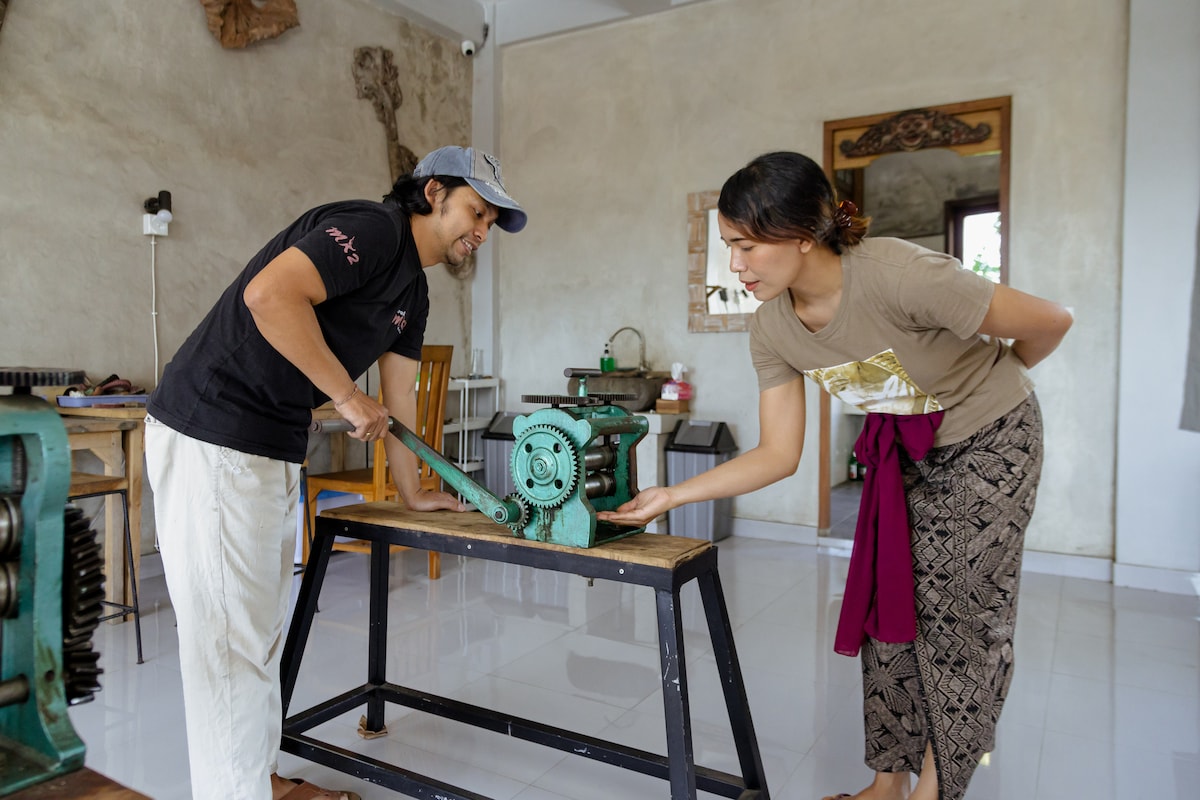
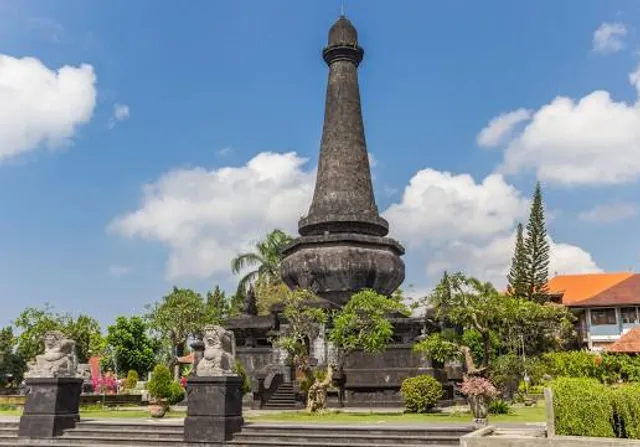
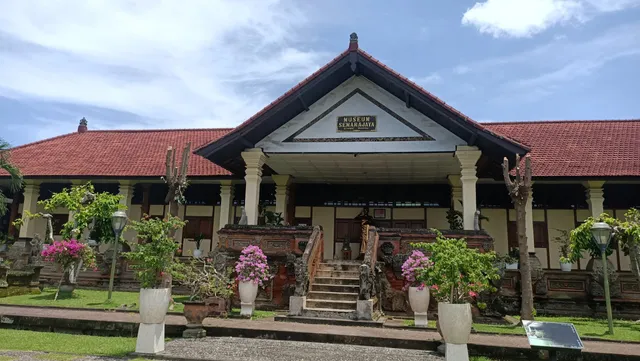
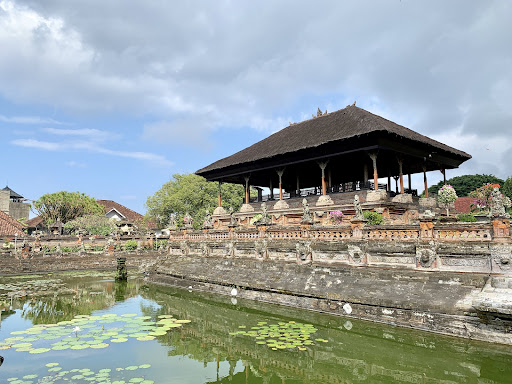
Read moreIf you are enthusiastic about history of Bali and are looking forward to experiencing the very venue where the courts were held throughout the reign of the last ruler of Klungkung, Kertha Gosha is the correct place to pay a visit to. This compound used to be a wing of the whole palace of Semarapura, the capital of Empire of Bali and Lombok. The compound consists of three buildings i.e. Kertha Gosha (known as the Hall of Justice), Bale Kambang or Taman Gili (known as the floating house), and Museum Semarajaya which houses artifacts of prehistoric and historic timelines of Bali, photos of the royalty of Klungkung, valuable handicrafts, and belongings of the king of this country back in the 18th century. Across the compound is the famous rock monument portraying the steadfastness and martyrdom of the whole populace of Klungkung in defending their homeland against the invading Dutch East Indian troops in an heroic event called Puputan Klungkung in April 1908. This armed conflict is as celebrated as it is tragic because the king himself was killed in action, after refusing to surrender to the enemies. In the afermath of his demise, many of his wives, children, servants and entourage committed suicide to confirm their leader's relentless resistance. Inside Taman Gili, that used to serve as a meeting hall where courts assembled, you can take a look of the magnificent murals depicting the life of Balinese people in ancient time and the Buddhist story of Sutasoma. In addition, you are invited to watch a small demonstration of painting activities performed by a group of artists from Kamasan Village. The admission costs IDR 12,000 for one visitor. Visit hours are between 08.00 am...
Read moreI visited this place on 6 October 2024, and despite being a Sunday, the place was not crowded. Of the two pavillions in the complex, the smaller Kertha Gosa pavillion or the 'Hall of Justice' has a 'Justice Table' with 6 chairs, kept in its center. These ornamental chairs have beautifully designed arm rests in the forms of lion, dragon, and cow. There are paintings (restored) in the balinese Kamasan style, all over its ceilings. These highly detailed paintings are quite similar to the Phad style of Indian painting. Interestingly, as if justifying the name 'Hall of Justice', some paintings in the pavillion 'tell' (these paintings are a visual language) about 'karma' and the after-death consequences (justice after life) of good 'karma' and bad 'karma'.
The second, bigger pavillion, Bale Kambang, which is surrounded by a water body, also features Kamasan paintings on its ceilings. Some of these paintings depict stories from the Hindu epics Ramayana and Mahabharata. It is believed that this pavillion was used by the royal family for meetings and religious rituals.
Together with the Museum Semarajaya, Kertha Gosa complex is a MUST visit for its great architectural, historical, and art value. It is the last of the structures that survived after most of Semarapura Palace was destroyed in the 1908 war...
Read more