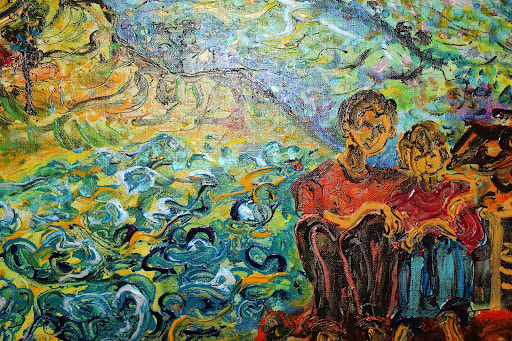
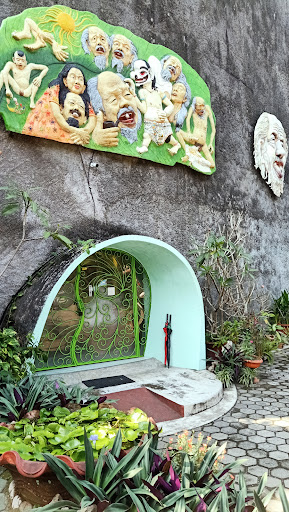
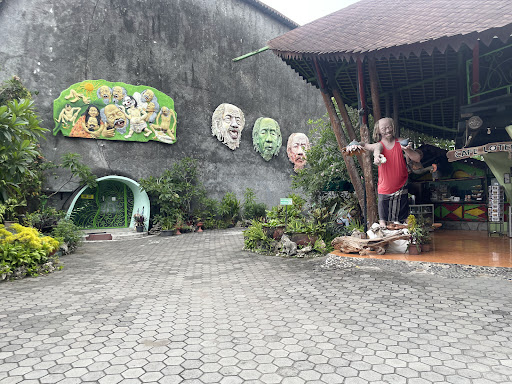
I was there in 2015. I can saw so many art work of very prominent and Important Indonesian artist Affandi . Are you art lover, you should go to the Affandi Museum.
Affandi (18 May 1907 – 23 May 1990) was an Indonesian artist. Born in Cirebon, West Java, as the son of R. Koesoema, who was a surveyor at a local sugar factory, Affandi finished his upper secondary school in Jakarta. He gave up his studies to pursue his desire to become an artist. Beginning in 1934, Affandi began teaching himself how to paint. He married Maryati, a fellow artist. One of his children, Kartika also became an artist.[1] Affandi was born in 1907, in Cirebon. His father was R. Koesoemah. When he was a child, his father wanted him to be a doctor; however, Affandi was interested in drawing.[2]
Artistic career: In the 1950s, Affandi began to create expressionist paintings. The piece Carrying the First Grandchild (1953) marked his newfound style known as "squeezing the tube". Affandi painted by directly squeezing the paint out of its tube. He came across this technique by accident, when he intended to draw a line one day. As he lost his patience when he was looking for a missing pencil, he applied the paint directly from its tube. The resulting effect, as he found out, was that the painted object appeared more alive. He also felt more freedom to express his feelings when he used his own hands, instead of a paint brush. In certain respects, he has acknowledged similarities with Vincent van Gogh.[citation needed]
Like most of his Indonesian contemporaries, Affandi grew up largely cut off from the mainstream of modern art. It wasn't until the late 1930s that the first exhibitions of major Western artists – from Gauguin to Kandinsky and Picasso – were held in Batavia (today's Jakarta). Affandi was particularly fascinated by the Javanese wayang, or shadow-play. He followed his family to Bandung and then to Batavia, honing his skill at drawing and then at oil painting. By the time he began painting seriously, in 1940, he had at various times been a housepainter, a cinema ticket-collector, and a billboard artist. He would save paints left over from the posters and his other jobs and paint landscapes. Soon he was exhibiting – and, as a surprise to himself – actually selling. With his wife's consent, he decided to devote the first ten days of each month to his trade, and the remaining twenty to his art.[citation needed] His only teachers were a few reproductions that he saw in copies of Studio, an art magazine from London. He felt a kinship with the Impressionists, with Goya and with Edvard Munch, as well as the earlier masters, Breughel, Hieronymus Bosch and Botticelli. Their influence began to show in his paintings. But the grim realities around Affandi made an even greater mark on him. In Yogjakarta one day, just after the Pacific War, Affandi sat painting a market place where folk were grubbing about, half-starved and half-naked. Infuriated at his seeming unconcern, a youth threw dust at the artist and his canvas, shouting: "This man is mad! While our people are naked he paints them on canvas and makes a bad painting we cannot...
Read moreAffandi Museum is conveniently located on Solo Street in Yogyakarta, making it easily accessible by public transportation or private vehicles. The museum’s unique location not only offers a serene riverside view but also places visitors in the heart of Java’s cultural hub.
Architectural Beauty & Historical Significance: The museum itself is a work of art, with its distinctive banana leaf-shaped roof designed by the painter Affandi. It stands as a testament to his creative genius and serves as a home to around 250 of his vibrant paintings. The museum’s architecture harmoniously blends with its natural surroundings, creating a tranquil environment that enhances the viewing experience.
Cultural Aspects: Affandi’s works displayed in the museum capture the essence of Indonesian life and culture. Each painting tells a story, reflecting the artist’s deep connection with the country’s rich heritage and his perspective on the social issues of his time.
Amenities & Facilities: The museum provides a range of facilities to ensure a comfortable visit. Visitors can enjoy the on-site café and browse the souvenir shop for keepsakes. However, it’s important to note that the high humidity and temperature may affect the preservation of the paintings, and the museum faces challenges in management due to limited funds and revenue
Overall Experience: The Affandi Museum offers an immersive experience into the world of a legendary Indonesian artist. The intimate setting allows for a personal connection with the artworks, and the museum’s efforts to preserve Affandi’s legacy are commendable.
Recommendation: I would highly recommend the Affandi Museum to travelers interested in art, history, and culture. It’s not just a museum; it’s a journey through the life of an artist who has left an indelible mark on...
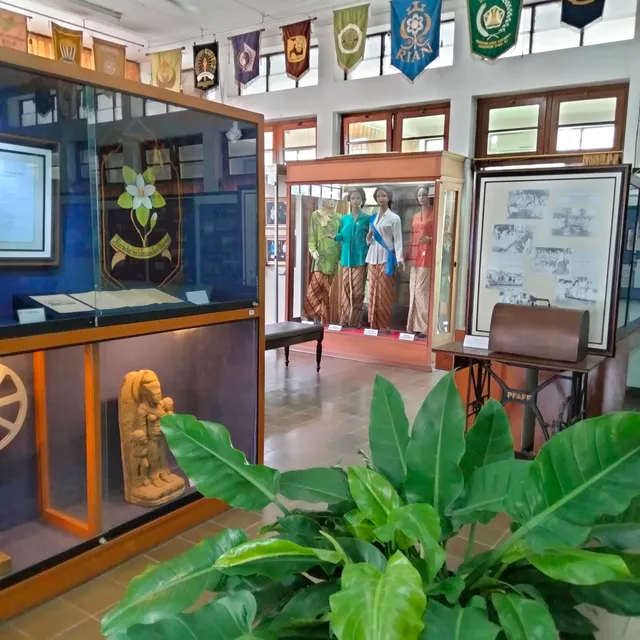
Read moreA lovely and colorful place full of heart and history of the renowned Indonesian painter Affandi. This museum has 3 galleries and displays works by Affandi, his wife Maryati, and his daughter Kartika Affandi. To this day the museum is still run by Affandi's family and Ibu Kartika.
Affandi is famous for his expressionist artworks and his painting method: one day he became impatient while using paintbrushes, so he put paint straight onto the canvas and used his hands. The museum's buildings were designed by Affandi himself, and the roofs were inspired by the shape of banana leaves (there's a reason for this that you can ask to the guides!). In the museum area there are also Affandi's old room, Maryati's carriage (gerobak), Affandi's favorite old car, and the couple's final resting place.
Ticket for local tourists is IDR 50.000, which also gives you a free Affandi pouch and drink (frestea or soda). If you want to take photos, you have to pay an extra IDR 20.000. You can ask for tour guides and my guide Uncle Hudan told me very interesting stories and fun tidbits outside of what's written on the captions! I had a very pleasant time going through the galleries with his patient guidance.
If you're hungry, their restaurant Cafe Loteng is located right in the middle of the galleries. Nasi Goreng/Fried rice is only IDR 15.000, I got a big portion and the staffs are very friendly! In Cafe Loteng they also sell books about Affandi, postcards of Affandi and Kartika's paintings, T-shirts, stickers, etc.
Overall it's a lovely and unique place to visit and it's close to Yogyakarta's old airport: the Adisucipto Airport. So if you took a plane there make sure to stop by Affandi Museum before going to the...
Read more