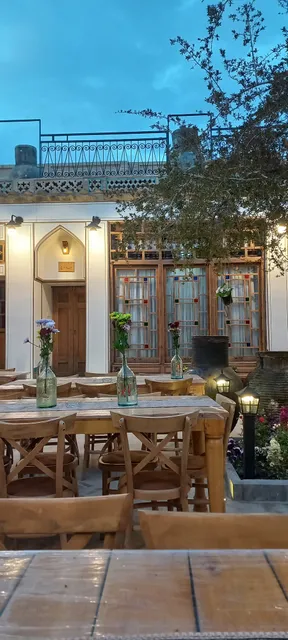
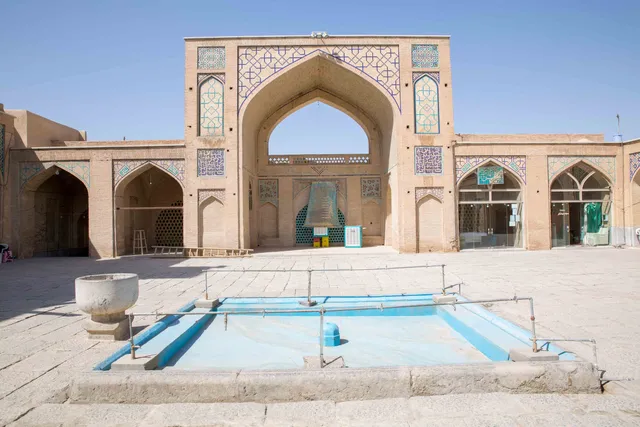
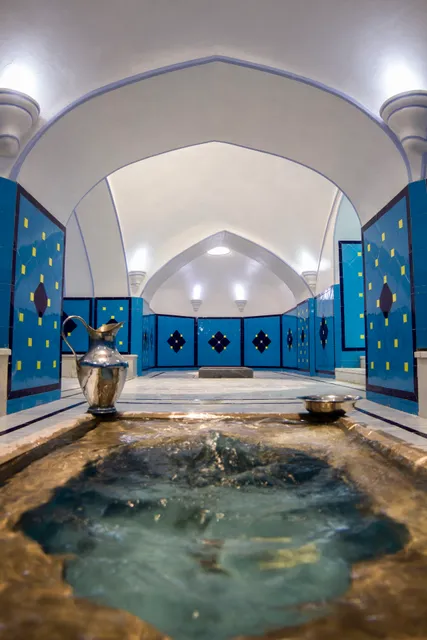
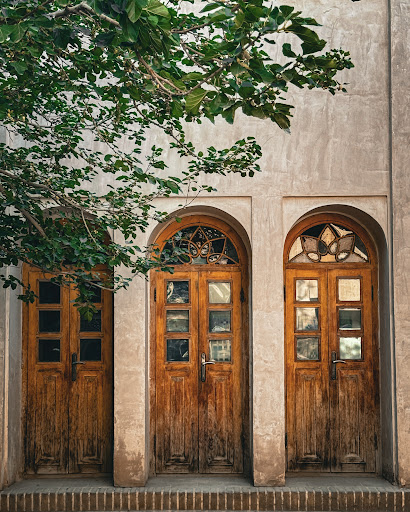
Very beautiful... When you open the wooden and old door of the house and enter it, you will reach a dark corridor (in traditional architectural language it is called "porch"). Take a few steps to the bright and beautiful yard of the house, with its beautiful trees and blue and old pool, and unfortunately its waterlessness.
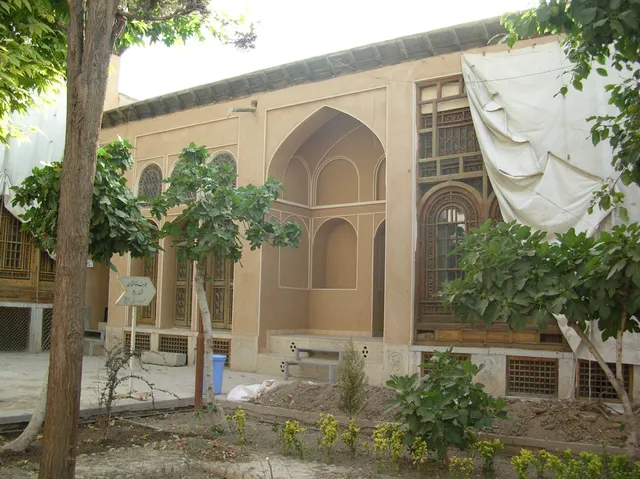
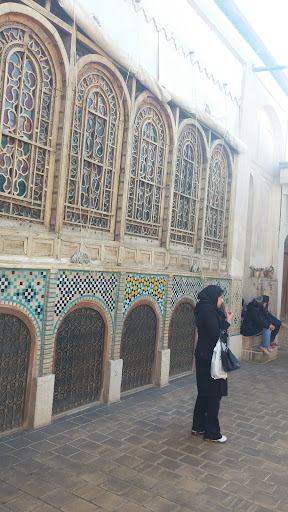
This building dates back to the Qajar period in Iran. Its architectural style shows that the shape of the house plan is square in shape, and the architectural spaces of the four fronts surround the square courtyard. On the east side of the house, spaces such as the hall and several rooms with stained glass can be seen, and two porches on either side of the hall and a rectangular pond, which in ancient Iranian architecture was considered a means of air conditioning; In this way, the water inside the pool brought the air of the basement under the hall and its side rooms and then took it out so that the fresh air could reach the hall. Systems that, unfortunately, have been forgotten in the construction of Iranians today, and the passage of time has made it even harder to remember. The south side is taller than the other sides of the house. There is a hall in the middle of it and crescent-shaped niches and rectangular long niches that multiply the beauty of the building.
The pool house is located at the intersection of the south and west sides (in traditional Iranian architecture, the pool house was the interface between the yard and the summer rooms) and its shape is in the form of eight drawers. Connects the western side and the courtyard. The western side is exactly symmetrical and equivalent to the eastern side; The difference is that the west side has five rooms, five in the middle, two rooms with three doors, on both sides. Its facade is plastered with four columns and decorated with beautiful paintings.
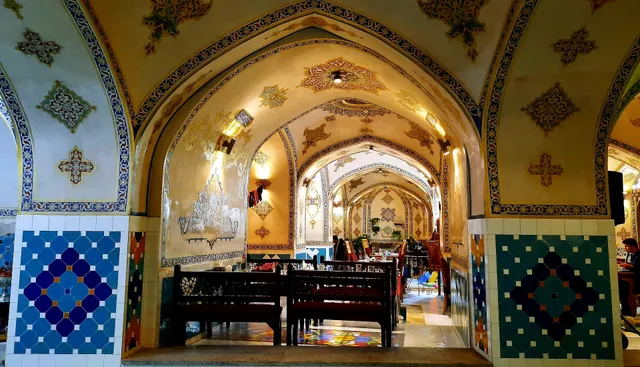
The interior of the fifth room is decorated with paintings called lions and sugar in the traditional Iranian architectural language, and crescent-shaped niches and rectangular niches. This place is connected to each other by wooden triangles. The north side also has three rooms, all of which have the same scale.
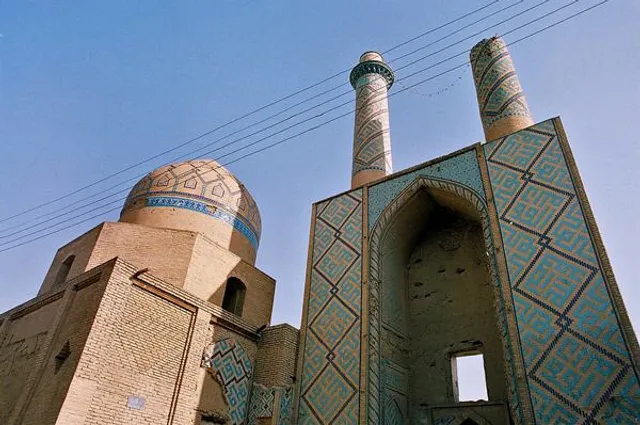
To the west of the jewelery house there is a narrow hallway, and small steps with steep uphills take us to the second floor (Ashkub: in traditional architecture, equivalent to the floor). At this moment, our gaze falls on this bright and attractive space that is unique in its kind; Especially when the minarets in Dashtasht, which are located in the neighborhood of this historic house, are completely visible to our eyes, and the beautiful view in front of us creates indescribable moments. This is exactly the moment and place where a souvenir photo should be taken.
In the second floor, there is a sleeping spring (bed: equivalent to a terrace or balcony). On either side of the sleeping spring are two rooms with wooden doors, and on the other side is a five-door, beautiful hall.
Due to wear and tear over time, this house was renovated a few years ago and was registered by the Cultural Heritage Office on August 13, 2005, and in 2007 it became an art and...
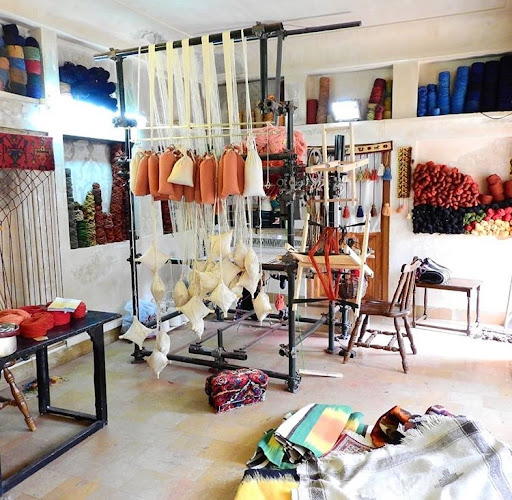
Read moreThe Javaheri Historical House is one of the Qajar-era buildings and a prominent attraction in Isfahan, located on one of the city's oldest streets, Ibn-Sina. In 2007, this house was transformed into workshops for arts and handicrafts. The square-shaped structure of the House is surrounded by architectural spaces on all four sides, with a courtyard. With a two-story building, decorations such as stucco work, paintings, and exquisite doors add to the beauty of this historical house. It is free to visit and located next to the Soltan...
Read moreیکی از قدیمیترین خیابانهای شهر اصفهان، خیابان عبدالرزاق است. در این خیابان، محلهای بزرگ به نام دردشت که از محلههای بسیار قدیمی، با مردمی اصیل و خونگرم است، وجود دارد. قدمت این بنا به دوران حکومت قاجار در ایران میرسد. شیوه معماری آن نشان میدهد که فرم نقشه خانه، مربعیشکل است و فضاهای معماری چهار جبهه، حیاط مربعشکل آن را احاطه کردهاند. اکنون توسط میراث فرهنگی خریده شده و کارگاه های شیشه گری، منبت کاری روی چوب، میناکاری و... در ان مشغول به کار می باشند.
One of the oldest streets in Isfahan is Abdul Razzaq Street. In this street, there is a big neighborhood called Dardasht, which is one of the very old neighborhoods, with noble and warm-hearted people. This building dates back to the Qajar period in Iran. Its architectural style shows that the form of the house plan is square and the architectural spaces of the four fronts surround the square courtyard. It has now been purchased by the cultural heritage and glass, woodcarving, enameling, etc. workshops are...
Read more