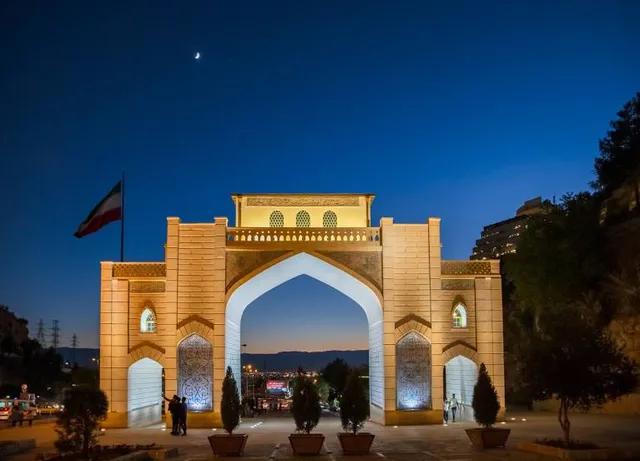
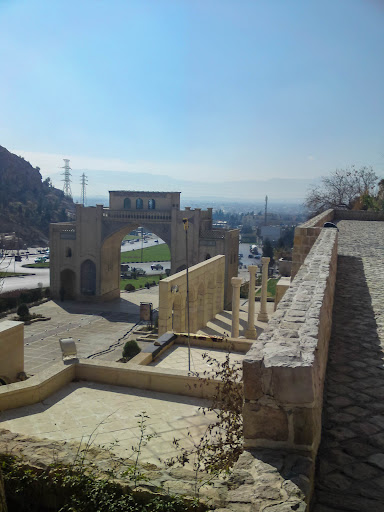
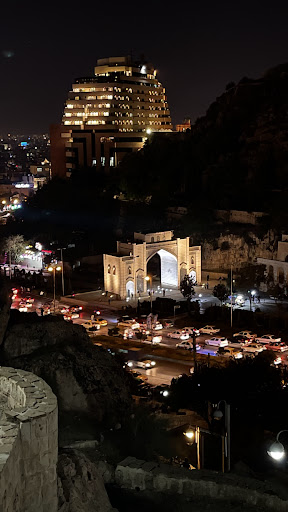
The Quran Gate is one of the remaining gates from ancient times in Shiraz, and its reconstruction is now considered one of the historical landmarks of this city. It is located north of the city and is considered one of the historical landmarks of the entrance gates north of Shiraz.
Shiraz had 6 gates. Currently, there is no gate in Shiraz except the Quran Gate, but the people of Shiraz still point to the location of the old gates, which are: (The Quran Gate, Isfahan Gate, Saadi Gate, Jazzar Gate, Kazerun). Gate, Shah Daei Gate) to God). At the entrance to Tang Allah Akbar, we face the gate known as the Quran Gate. This gate was built by order of Azad Dola Daylami. Its name is due to the Quran that was placed in it by order of the prince so that travelers could pass under it safely. This vault deteriorated over time, until it was rebuilt in the time of Karim Khan Zand, and the Quran known as "Seventeen" was placed in the room above it, attributed to the line of Sultan Ibrahim, the grandson of Shah Rukh Timuri. The mentioned Quran is currently preserved in the Pars Museum in Shiraz.
The Quran Gate was originally built during the time of Azd al-Dawla Daylami, and a Quran was placed in it so that travelers would be blessed by passing under it. 2] During the Zandi period, Karim Khan Zand rebuilt this gate, added a room above it, and placed two large volumes of the beautiful Quran in the handwriting of Sultan Ibrahim bin Shahrukh al-Timuri in the room above it. These Qurans, known as the “Seventeen Kilogram Quran,” have now been transferred from the Quran Gate to the Pars Museum. [2 The Quran Gate was severely damaged by several earthquakes during the Qajar period, and was repaired by Mohammad Zaki Khan Nouri. In the past, this building was also called Taq al-Quran. On the first days of every month, people would leave the city and pass under this arch. [3] In 1315, this building was destroyed by the then mayor of Shiraz. The Quran Gate was built in 1328 by a merchant from Shiraz named Haj Hossein Ejar, known as Itimad-e Togar, a short distance from the old gate. The new gate was built larger, including a pointed arch opening and two small entrances on both sides of the pillars and a rectangular room above it to put the Quran. In this building, they wrote verses from the Quran in Thuluth script and erased what was around the Quran Gate; on the northern front of this arch is the following verse: "This is the Quran, guiding to the wicked." (Surah Al-Isra, verse 9) and on the southern front and side of the city of Shiraz is the verse: "Say: When mankind and the jinn gather around me..." (Surah Al-Isra, verse 88) and in the western corner of the verse arch: "Indeed, We have sent down the Reminder" and the rest of the verse in the eastern corner: "And indeed, We will not preserve" (Surah Al-Hijr, verse 9)....
Read moreدروازه قرآن
نمایی از دروازه قرآن اصلی در گذشته
در میان دروازه قرآنهایی که در ایران وجود داشته و دارد، دروازه قرآن شیراز، هم از نظر قدمت و هم از دیدگاه شهرت عمومی از اهمیت ویژهای برخوردار است ، از این رو به بررسی بنای این دروازه و دورههای تاریخی گذشته بر آن و نیز بررسی اعتقاد مردم به آن میپردازیم.
مقالههای مرتبط: موزه پارس شیراز، قدیمی ترین موزه شیراز (قسمت اول) باغ شاپوری ؛ باغی در ایران با طرح غیر ایرانی تاریخچه دروازه قرآن شیراز شیراز در گذشته دارای شش دروازه بوده که عبارتاند از : دروازه قرآن، دروازه اصفهان، دروازه سعدی، دروازه قصابخانه، دروازه کازرون و دروازه شاه داعی الی اله. ولی در حال حاضر، دروازهای به جز دروازه قرآن وجود ندارد اما مردم شیراز هنوز به محل دروازههای قدیمی اشاره میکنند. این دروازه به دستور عضدالدوله دیلمی ساخته شده و علت نامگذاری آن، قرآنی است که به دستور امیر در آن قرار گرفته است تا مسافران متبرک شده و به سلامت از آن عبور کنند.
دروازه قرآن
این طاق به مرور زمان رو به خرابی رفت تا اینکه در دورهی زندیه، کریم خان زند این دروازه را بازسازی کرد و اتاقی به بالای آن افزود و دو جلد قرآن بزرگ نفیس، به خط سلطان ابراهیم بن شاهرخ تیموری، در اتاقک بالای آن جای داد. این قرآنها که به «قرآن هفده من» معروف هستند، اکنون از دروازه قرآن به موزه پارس انتقال یافتهاند.
دروازه قرآن
دروازه قرآن در دورهی قاجاریه به علت وقوع چندین زلزله، دچار صدمات زیادی شد که محمد زکی خان نوری آن را تعمیر کرد و در دو سوی آن اتاقهایی به منزلهی پاسگاه و راهداری ایجاد شد. آب انباری نیز در کنار آن ساخته شد که از آب رکنآباد پر میشد تا برای مسافران از راه رسیده استفاده شود. این بنا در گذشته، طاق قرآن نیز نامیده میشد. روزهای اول هر ماه، مردم از شهر خارج شده و از زیر این طاق عبور میکردهاند.
دروازه قرآن
این بنا تا سال ۱۳۱۵ خورشیدی همچنان برپا بود. در آن سال، به منظور توسعهی راه، به دستور بلدیه (شهرداری) شیراز، دروازهی قدیمی را به دشواری با دینامت ویران کردند. بعدها بهعلت نبود دروازه و نگرانی مردم شیراز از این موضوع، دروازهی کنونی به کوشش یکی از بازرگانان شیراز به نام حاج حسین ایگار معروف به اعتمادالتجار در سال ۱۳۲۷ خورشیدی کمی پایینتر از دروازهی پیشین ساخته شد.
دروازه قرآن
دروازهی جدید در اندازهی بزرگتر، شامل دهانه قوس تیزهدار و دو ورودی کوچک روی جرزهای دو طرف و اتاق مستطیل شکلی بر فراز آن برای گذاشتن قرآن ساخته شد.
دروازه قرآن
در این بنا، آیاتی از قرآن را به خط ثلث و نسخ دور تا دور در دروازه قرآن نگاشتهاند؛ در پیشانی شمالی این طاق آیه ۹ سوره اسراء و بر پیشانی جنوبی و سمت شهر شیراز آیه ۸۸ سوره اسراء و در گوشه غربی طاق آیه ۹ سوره حجر نوشته شده است.
دروازه قرآن
بنا به وصیت اعتمادالتجار، اتاق کوچک سمت چپ دروازه را که به درهی کنار مشرف بود، به آرامگاه او اختصاص دادند.
این بنا در تاریخ ۹/۱۹/ ۱۳۷۵ با شمارهی ۱۸۰۰ در فهرست آثار ملی به ثبت رسیده است.
قرآن موجود در بالای دروازه دروازه قرآن
در بالای دروازه دو نسخه قرآن دستنویس به خط ثلث عالی منسوب به ابراهیم سلطان فرزند شاهرخ تیموری قرار داشت. در سال ۱۳۱۶ هجری شمسی دو قرآن خطی موجود در آن به موزهی پارس انتقال یافتند که همچنان در این موزه نگهداری میشوند. البته دربارهی نویسندگان این قرآنهای نفیس خطی نیز اعتقادهایی وجود دارد و غالبا آن را به خط سلطان ابراهیم فرزند شاهرخ گورکانی یاد کردهاند که در دو جلد و به خط ثلث نگاشته شده است.
قرآنهایی که در دروازه قرآن قدیمی شیراز وجود داشتند، از شهرت ویژهای برخوردار و مورد اعتقاد عجیب مردم بودند. این قرآن به «قرآن هفده من» شهرت داشته است و ظاهرا قرآنهای بزرگی بودهاند که سنگین بوده و از این رو در گفتگوی مردم به این نام مشهور شدهاند.
دروازه قرآن
نمایی از دروازه قرآن در اوایل دهه پنجاه
مردم شیراز به رد شدن از زیر قرآن این دروازه، اعتقادی خاص داشتند. طی یک رسم قدیمی، مردم شیراز روز اول هر ماه قمری به کنار این دروازه میآمدند و از زیر این قرآن رد میشدند و بدین ترتیب خود را تا آخر ماه در پناه کتاب آسمانی در مقابل بلاها بیمه میکردند.
دروازه قرآن
قدیمیترین عکسهای برجامانده از دروازه قرآن قدیم شیراز که مربوط به عصر قاجار است، توصیفاتی را که از بنای قدیمی با اتاقکی در بالای آن شده است، به خوبی نشان میدهد. تصویر زیر یکی از معدود اسناد مصورِ به جامانده از بنای قدیمی این دروازه است که با تکنیک ابتدایی رنگ کردن عکس در عصر قاجار رنگی شده از عکاس شرقشناس "هارولد وستون" است.
دروازه قرآن
امروزه، اطراف دروازه قرآن به مجموعهای تفریحی و گردشگاه شهری تبدیل شده است. دره ضلع شرقی از بین رفته،...
Read moreThe Quran Gate, located at the northern entrance of Shiraz, Iran, serves as a reminder of the city's rich history and deeply held cultural values. This prominent structure, located in the stunning scenery of the Allah Akbar Pass, serves as both a historical treasure and a symbol of Shiraz's spiritual ambitions.
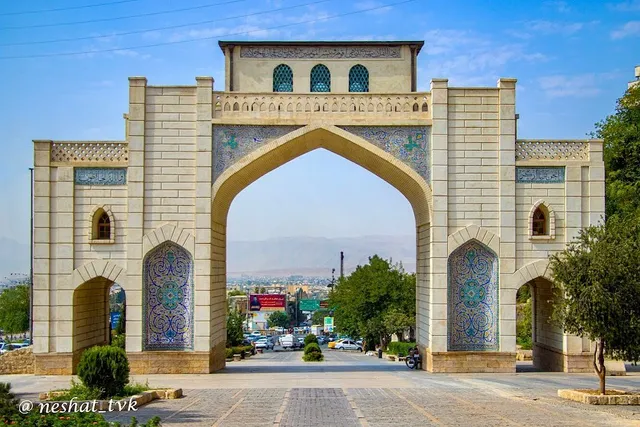
The Quran Gate dates back to the fourth century AH (10th century CE), when it was commissioned by 'Udud al-Dawla, a Buyid dynasty prince. The objective of building this gate was to bless tourists passing through the city by displaying a Quran over it.
The Quran Gate was extensively restored and renovated under the Zand dynasty, thanks to Karim Khan Zand's generosity. A tiny room was built to accommodate two huge volumes of the Quran, known as the "Seventeen-Man Quran" due to their size and weight.
Unfortunately, the ancient Quran Gate was demolished in 1936 as a result of urbanization and excessive traffic. However, owing to the efforts of a renowned Shiraz businessman, Haj Hussein Egar, the gate was reconstructed in 1959 and has retained its former magnificence.
The Quran Gate is distinguished by its majestic arched construction, which is topped by a chamber intended to store the sacred scriptures. The gate's outside is embellished with excellent tile work, which includes elaborate geometric designs and...
Read more