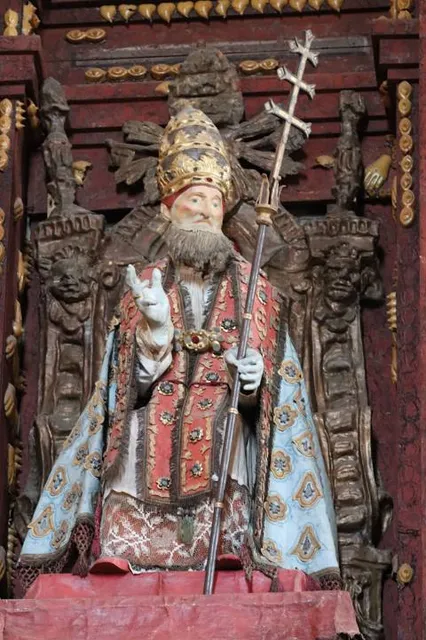
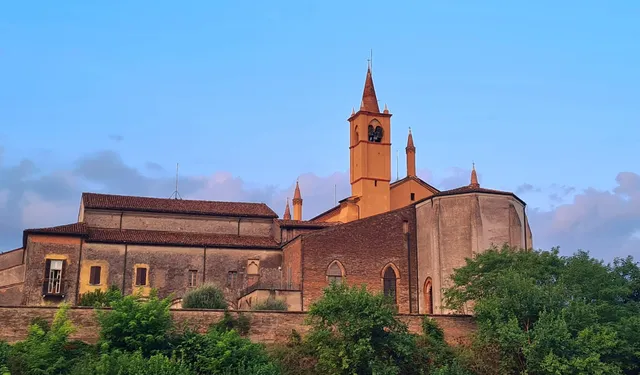
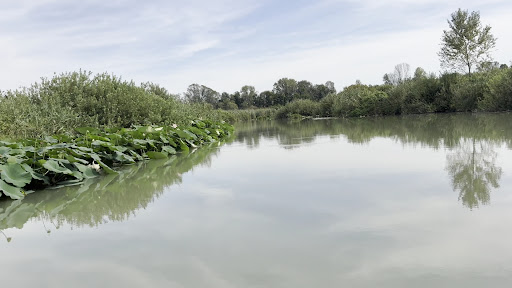
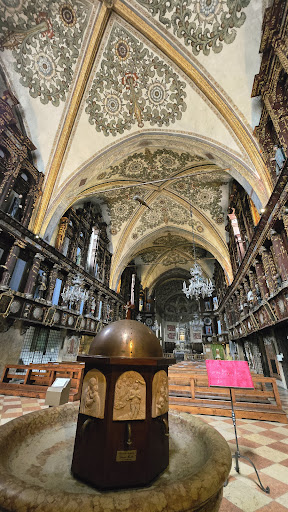
Da un antico altare risalente al 1.200 recante l'immagine di una Madonna con il bambino, Francesco Gonzaga ne fece un prezioso Santuario quale grazia ricevuta dalla Madonna che a fine 1.300 fece cessare l'epidemia di peste che stava imperversando nel Mantovano. Entrando ed osservando la volta si nota incatenato al soffitto un coccodrillo imbalsamato che la tradizione vuole ricondurre ad un evento miracoloso secondo il quale due fratelli barcaioli stavano riposando sulla sponda del fiume, quando ad un tratto uno dei due venne assalito dal coccodrillo. L'altro, ottenendo la grazia divina, riuscì ad ucciderlo. Secondo altri si tratterebbe di mero simbolismo volto a rappresentare il demonio incatenato e soggiogato dal volere Divino. Tanto lugubri quanto gloriosi i manichini di cartapesta, a grandezza naturale, attribuiti principalmente a Frate Francesco da Acquanegra, che si trovano dislocati sulle pareti laterali. Narrano storie di uomini condannati a morte e miracolosamente salvati dopo aver invocato l'aiuto Mariano (ad esempio un uomo che era stato condannato a morte mediante impiccagione, dopo aver invocato la protezione della Madonna, vide sciogliersi per 4 volte consecutive il suo cappio, tanto da esser poi graziato). Numerosi altri eventi miracolosi vengono attribuiti a questo Santuario, tanto che è impossibile pensare a mere coincidenze (si narra che nel 1420 San Bernardino da Siena posò il suo mantello sulle acque del fiume Mincio vicine alla Chiesa e venne traghettato senza che si bagnasse verso Mantova per opera della Madonna). Testimonianza di tutti questi eventi miracolosi sono i vari oggetti P.G.R. (= Per Grazia Ricevuta) esposti in Chiesa e nella sala ex Voto. Da non perdere il Chiostro affrescato con il pozzo al centro. La festa del Santuario viene celebrata annualmente nel giorno di ferragosto. In concomitanza si tiene l'ormai consueto raduno nazionale dei Madonnari (150 artisti) che iniziano la loro opera la sera del 14 agosto con la benedizione dei gessetti proseguendo poi ininterrottamente tutto il giorno seguente fino al termine dei lavori. La festa è poi caratterizzata da eventi musicali, tour in mongolfiera o in barca, etc. Piatto della tradizione locale:...
Read moreThe sanctuary of the Annunziata (or Ave Gratia Plena) is one of the most important churches in Giugliano in Campania. It stands in Piazza dell'Annunziata, at the intersection of Corso Campano, the development core of the city center, and Via Licante; the layout of the church facade - bell tower - facade of the hospital facing it is unique and very characteristic. The church preserves numerous paintings from the 15th to the 18th century: notable artists of the Neapolitan school such as Massimo Stanzione and Carlo Sellitto are also represented. Many of these paintings are placed between the magnificent stuccoes of the coffered ceiling, considered one of the ten most...
Read more📍GRAZIE 🔸️Wnętrze Sanktuarium utrzymane jest w stylu gotyckim 🔸️ W sklepieniach znajdują żyrandole ze szkła Murano i wypchany krokodyl. 🔸️Obecny wygląd świątyni datuje się na koniec XIV wieku 🔸️Sanktuarium jest wyjątkowe w skali światowej ze względu na obecność niezwykłych elementów, takich jak wielomateriałowe posągi po bokach nawy czy wypchany krokodyl zwisający ze sklepień. 🔸️Przez pewien czas klasztorem, który już nie istnieje zarządzali franciszkanie, następnie pasjoniści, a od pierwszej połowy XXw. diecezji Mantui.
📍GRAZIE 🔸️The interior of the Sanctuary is in Gothic style 🔸️ In the vaults there are Murano glass chandeliers and a stuffed crocodile. 🔸️The current appearance of the temple dates back to the end of the 14th century 🔸️The sanctuary is unique in the world due to the presence of unusual elements, such as multi-material statues on the sides of the nave or a stuffed crocodile hanging from the vaults. 🔸️For some time, the monastery, which no longer exists, was managed by the Franciscans, then by the Passionists, and from the first half of the 20th century by the diocese of Mantua.
📍GRAZIE 🔸️Das Innere des Heiligtums ist im gotischen Stil gehalten 🔸️ In den Gewölben befinden sich Kronleuchter aus Muranoglas und ein ausgestopftes Krokodil. 🔸️Das heutige Erscheinungsbild des Tempels geht auf das Ende des 14. Jahrhunderts zurück 🔸️Das Heiligtum ist aufgrund der ungewöhnlichen Elemente, wie zum Beispiel Statuen aus mehreren Materialien an den Seiten des Kirchenschiffs oder ein ausgestopftes Krokodil, das an den Gewölben hängt, einzigartig auf der Welt. 🔸️Eine Zeit lang wurde das Kloster, das nicht mehr existiert, von den Franziskanern, dann von den Passionisten und ab der ersten Hälfte des 20. Jahrhunderts von der Diözese...
Read more