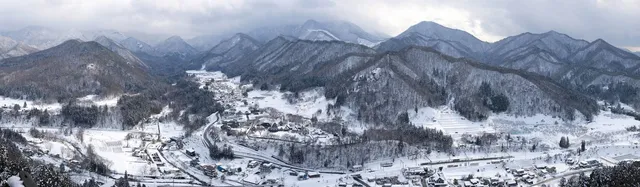
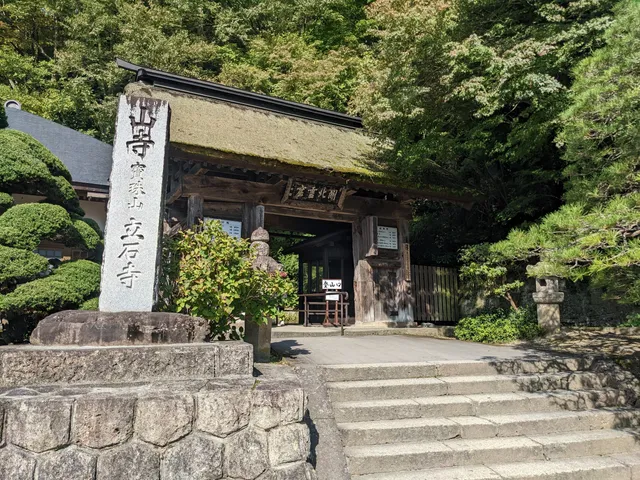
Yama-dera (山寺 lit. "Mountain Temple"), (山号 宝珠山; Sangō Hōshu-zan) is about a twenty-minute train ride (Senzan Line) northeast of Yamagata City, in Yamagata Prefecture, Japan. The temple is a nationally designated Place of Scenic Beauty and Historic Site.
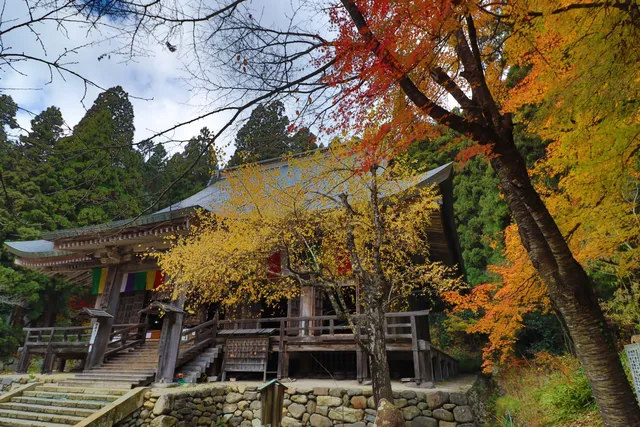
The area is named after the common name of the temple of Risshaku-ji (立石寺), founded in 860 AD by the priest Ennin (円仁) (AD 793 or 794–864), who is better known in Japan by his posthumous name, Jikaku Daishi (慈覺大師). In 847 he returned to Japan from China and in 854 he became the chief priest of the Tendai sect at Enryaku-ji. Risshaku-ji was founded as a branch temple of Enryaku-ji on Mt. Hiei near Kyoto. Even today the ritual fires brought from Enryaku-ji are still burning in the main temple. It developed into the major Heian-period (794–1185) temple for rural Dewa province (now Yamagata and Akita prefectures). This main temple, the Konpon-chūdō, an important cultural asset, is said to have been built in 1356 by Shiba Kaneyori, lord of Yamagata Castle. Most of Risshaku-ji was destroyed during the local wars of the early 16th century. It was rebuilt in 1543 under the monk Enkai. By the Edo period (1600–1868) Risshaku-ji was a powerful institution possessing a fief of 1,420 koku.
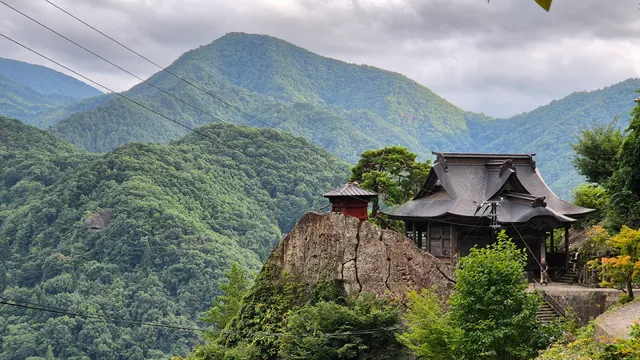
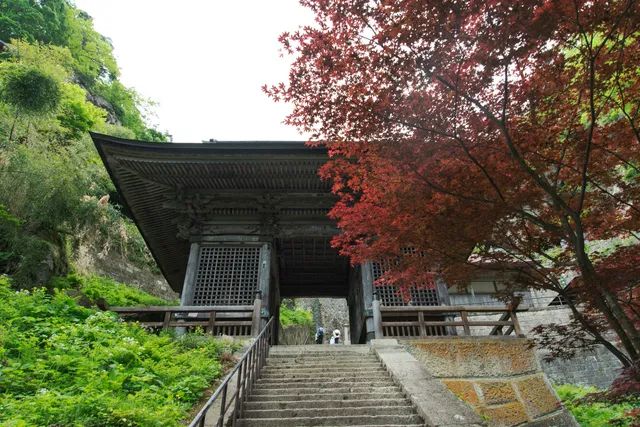
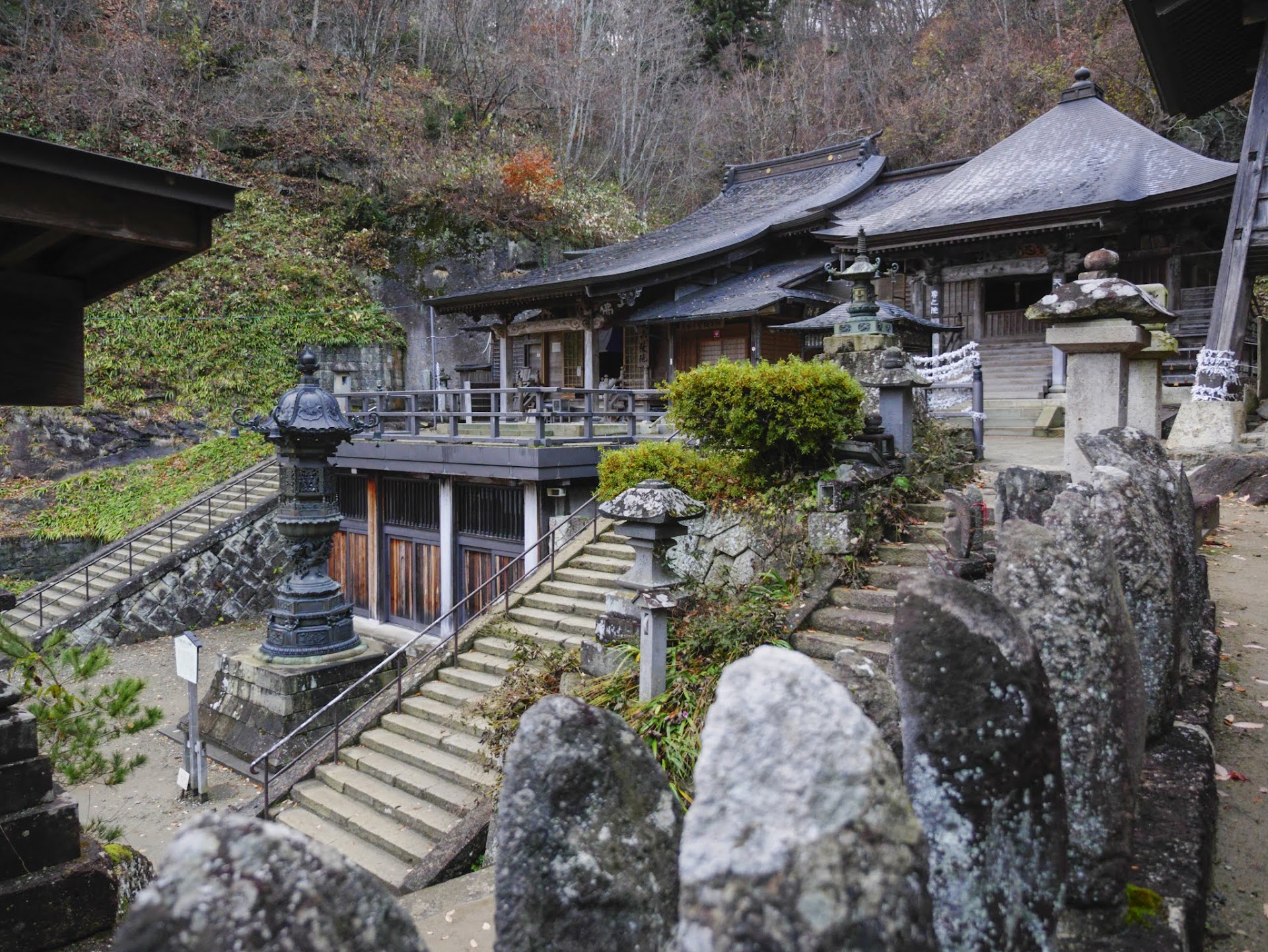
The present Konpon-chūdō (Main Hall) is a Muromachi period (1333–1568) construction of beech, which is rare as a building material. The temples clinging to the steep rocky hillsides are picturesque and unusual. The thousand step climb through the dense cedar trees is worth making to the temples at the top and for the view from them. The principal image of the main temple is the Heian-period seated wooden image of Yakushi Nyorai (the Buddha Bhaisajyaguru), an important cultural asset. Yamadera holds many other important cultural assets in its treasure house, the Hihokan, including standing wooden images of Shaka Nyorai, Yakushi Nyorai and Amida Nyorai, a seated wooden image of Dengyo Daishi, a hanging wooden mandala of Buddha, and a stone monument of the Nyohō-kyō Sutra from 1144.
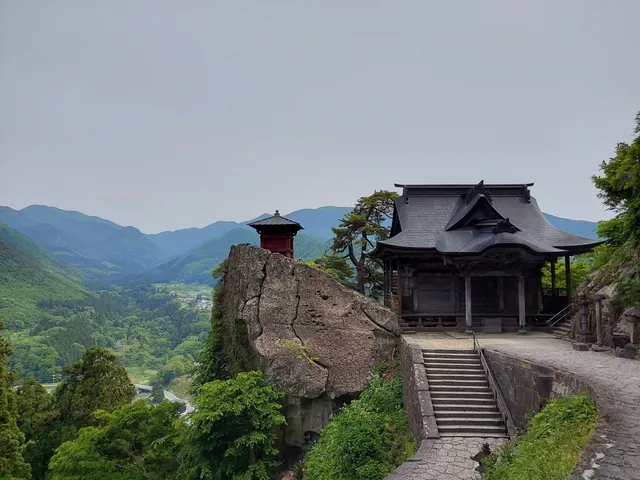
A view halfway up the temple complex
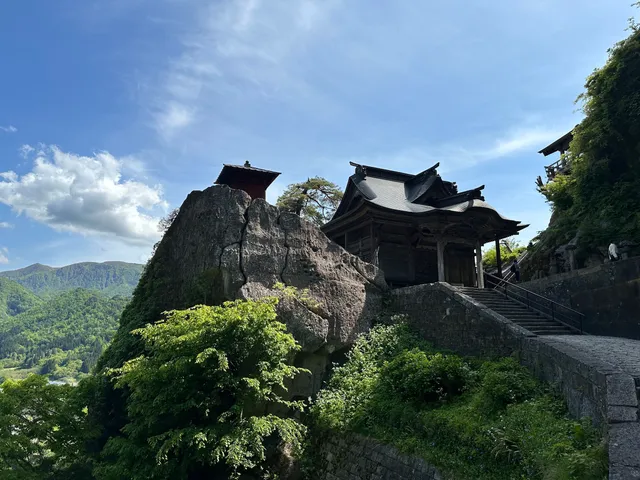
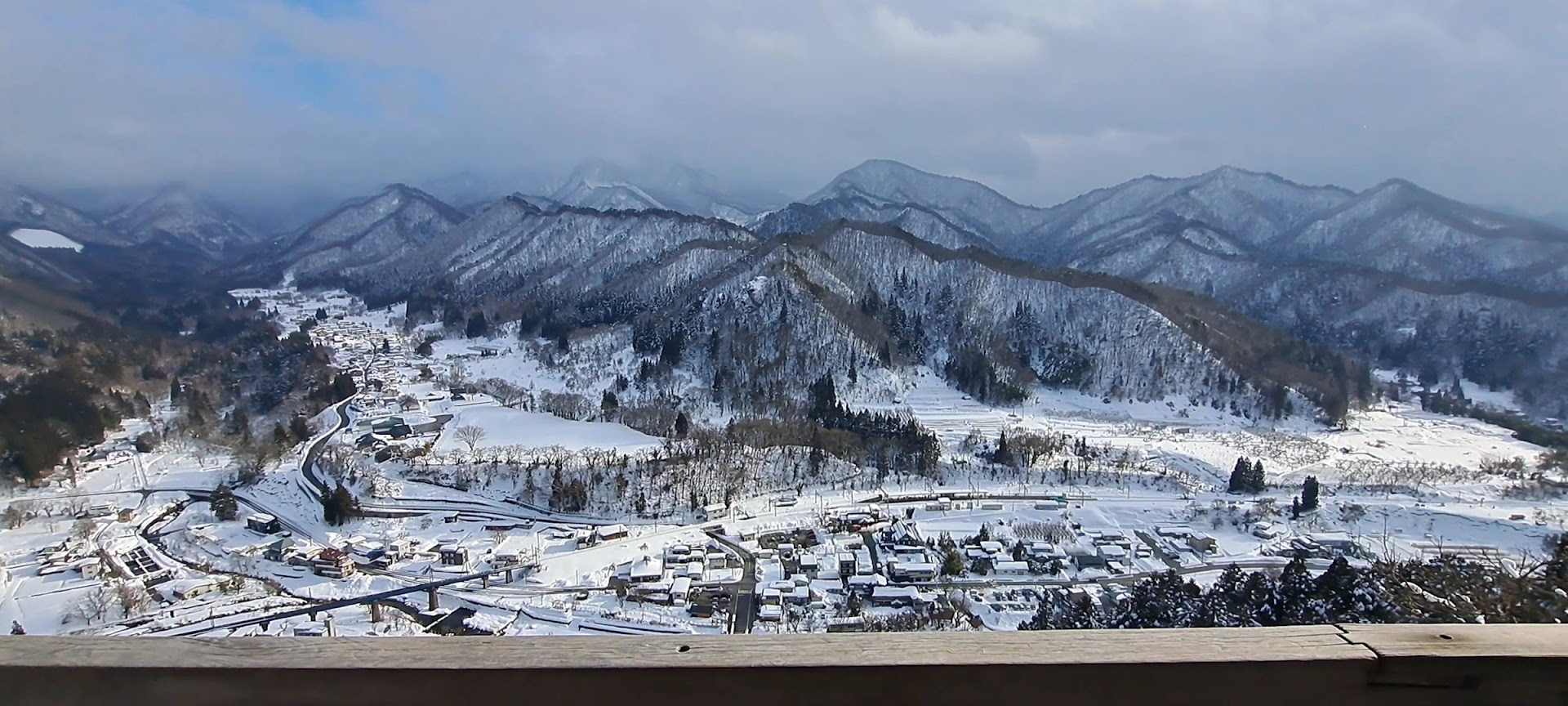
View from the top (sutra repository in sight). Yama-dera is where the well-known haiku poet Matsuo Bashō wrote his famous haiku "ah this silence / sinking into the rocks / voice of cicada" in 1689. A museum of Basho's writings and paintings and other related art, the Yamadera Basho Memorial Museum, is a short walk up the hill on the opposite side of the steep valley. In 1996, the Ministry of the Environment selected the cicadas of Yama-dera as one of the 100...
Read moreYamadera was founded in 860. The temple has been a place for pilgrimage for centuries in Japan. It takes 1,015 stone steps to the temple summit. The Temple is famous also a tourist spot because it is built on mountain top, clinging to the steep, tall trees grown, rocky hillsides is considered awesome.
Yamadera Temple was founded by a Japanese monk, Jigaku Daishi, who studied and explored Tendai sect Buddhism in China and introduced its religious studies in Japan with his numerous writings. The Temple has been designated as a National Historic Site and a Place of Scenic Beauty.
Jigaku Daishi has a Chinese Monk Name, ENNIN [Chinese Character 圓仁] and is considered one of Eight greatest Japanese Monks who studied Tendai [Pure Land teachings] and, at the same time, Tibetan Buddhism in Tang-Dinasty China. When he was in China, he wrote the first travel journal for Japanese history, and his travel journal actually has detailed documentation on how Emperor Wuzong of Tang Dynasty suppressed and prosecuted Buddhist sects of the time. Because of Emperor Wuzong’s prosecution of Buddhists, Ennin was deported from China and returned to Japan in 847.
Jigaku Daishi was posthumous name awarded by Japanese Emperor Seiwa, in 866, for his contributions to Japanese Buddhism.
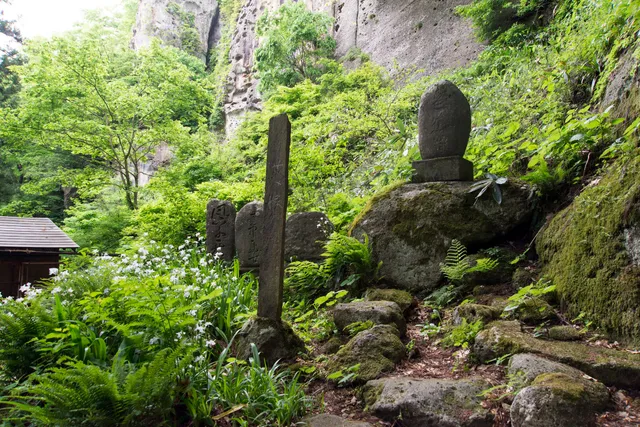
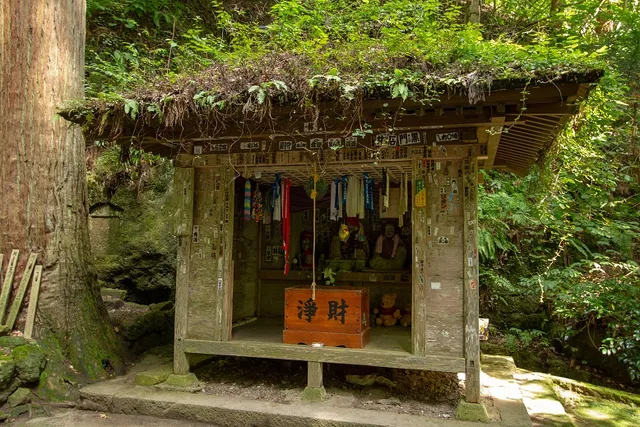
Visitors to the Temple can enjoy scenic view at the Temple summit, and there are a few religious relics along the climbing steps. In addition, there is a Tibetan Karma wheel, pull-based, near Temple Summit. Visitors can also enjoy forest view and tall tree on the way to Temple.
Visitors to the Yamadera Temple should bring bottled water with them, and it is recommended for 1 to 2 bottles of water or around 500 to 1,000CC per person, especially for people who have above normal BMI. Because there are 1,015 climb-up stone steps for visitors to really climb up, not smooth small walk, nor difficult climb up either, to the top of mountain or temple site, water drinking is essential for visitors, especially in hot weather. The temple has toilets for the visitors at the summit too. There are shaded forest or tall trees shield visitors from sunlight and heat.
At Yamadera JR Train Station, there is warning sign for occasional monkey appearance and visitors should keep proper distance.
Entrance fee for Yamadera Temple is $500 Yen, and road signs to the Temple are generally clearly marked, and often in...
Read moreYamadera (山寺) 🍎 One of the oldest and beautiful temple, or rather an iconic temple of Yamagata Prefecture. It is a scenic temple located in the mountains northeast of Yamagata City. Yamadera Station is served by the JR Senzan Line, which connects Yamagata City and Sendai. The station can be easily reached directly from either Yamagata Station (about 20 minutes, 240 yen, one train per hour) or Sendai Station (about one hour, 860 yen, one train per hour). 🍎 Quite near to JR Senzan Line, Yamadera Station. Actually Its only about 7-10 minutes' walk away from the station entrance to the mountain. The temple buildings clinging to the steep, forested, rocky hillsides are picturesque and unusual. 🍎 The ascent up the mountain's 1,000 steps typically takes between 20 and 30 minutes. It's not a difficult climb, but the journey through the forest is half the adventure. Eye-catching shrines and amusing statues placed carefully along the route compliment stone lanterns leading the way. There are stone lanterns and small statues in the surrounding forest along the way that make for an atmospheric hike. 🍎 The view from the top is really captivating. I have visited this temple once and I want to visit again and again. 🍎 300 Yen Ticket is required! 🍎 It is worth visiting during every season. The beautiful landscapes of Yamadera can be enjoyed throughout the year with cherry blossoms in spring, fresh greenery in summer, colorful leaves in autumn and snow-covered scenery in winter. 🍎 there are dozens of shops and restaurants on the main street to the temple that cater to the temple's many visitors. After a visit, I recommend immersing yourself in hot springs/onsen, and enjoy a local food. Highly recommended, Spread love and peace and take cautions against...
Read more