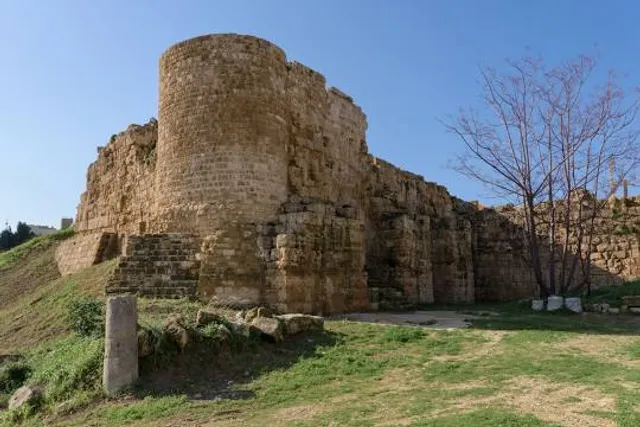
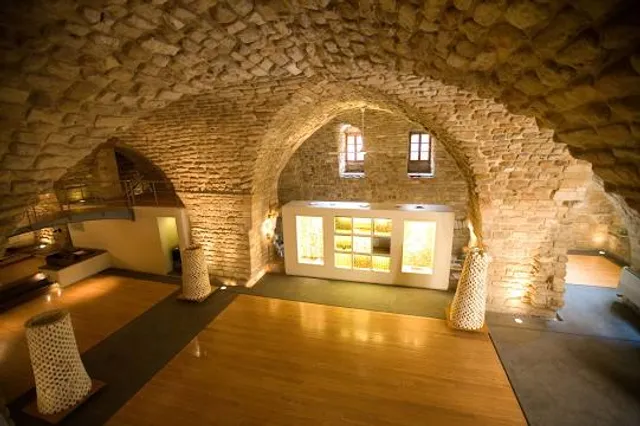
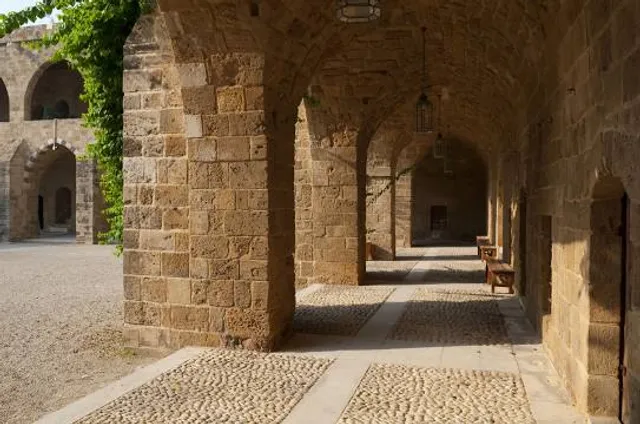
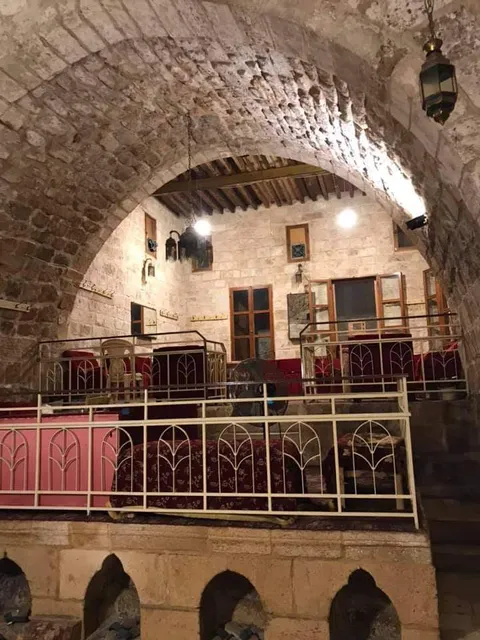
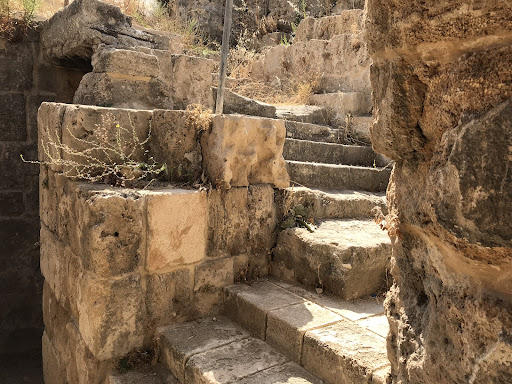
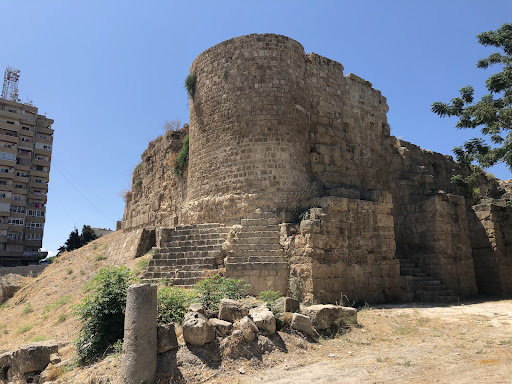
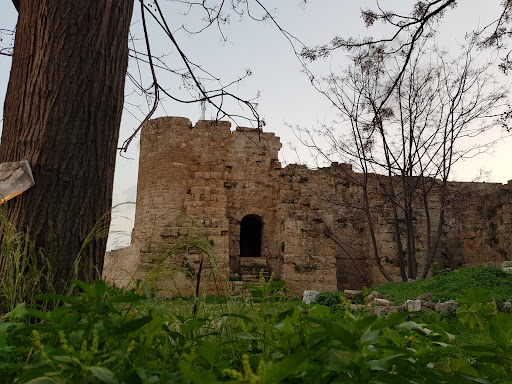
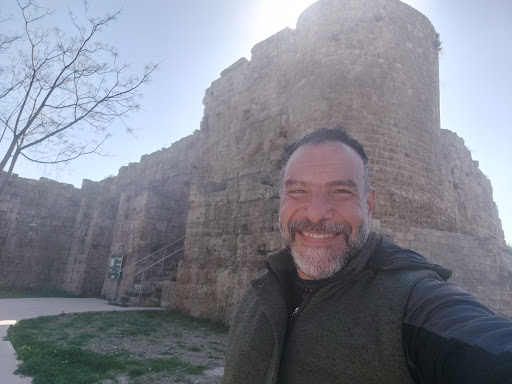
The site now occupied the Castle of St. Louis is said to have been the acropolis of the ancient city. Some remains of this acropolis still exist, including a theater. The citadel was probably completely demolished and then rebuilt by the Arabs.[2]
To the south of the citadel is a mound of debris called Murex Hill. A talus of crushed shells of murex shells (correctly, specimens of Bolinus brandaris and Hexaplex trunculus) along the western slope can still be seen. This artificial mound (100 m. long and 50 m. high) was formed by the accumulation of refuse from the purple dye factories of Phoenician times. Mosaic tiling at the top of the mound suggests that Roman buildings were erected there when the area was no longer used as the city's dumping ground. Part of the hill today is covered by the cemetery of the Muslim Shiite community of Sidon.
The site of the citadel became a fortress in the 10th century, when Fatimid Caliph Al-Mu'izz li-Din Allah fortified it and gave it the name Qalaat al Muizz. The castle as it is today was built in 1254 by crusaders during the Frankish occupation of Sidon. The French king, Louis IX, better known as St. Louis, appears to have spent a long time at the castle, and this is perhaps why the site is named after him.
When the Arabs reoccupied the city, the castle was restored. It was damaged later on by the Mamluks, and was extensively rebuilt by Fakhr-al-Din II in the 17th century.[1] The castle was then looted a number of times, leaving the structure in ruins. Part of the castle collapsed during the end of the Ottoman era.[3]
The castle served as a shelter for refugees of the 1948 Palestinian exodus. It was further damaged by Israeli shelling. Plans are being made to restore...
Read moreالقلعة البرية ارتبط اسمها سابقاً بـ"قلعة القديس لويس"، وهو ملك الفرنجة التاسع الذي قاد الحملة الصليبية السابعة، من العام 1248م إلى 1254م، وقد أمر بترميمها نظراً لموقعها الاستراتيجي المشرف على تلة قديمة تكشف المدينة من ناحيتها الجنوبية. وتختزن في جوفها بقايا مراحل تاريخية متعاقبة، حيث يقال إن القلعة البرية عكس البحرية، أقيمت على انقاض قلعة أخرى، أقدم عهداً تعود إلى العهد الفاطمي، وتنسب إلى الخليفة "الُمعز". وتنتشر فيها سفوح التل الأثري، وأعمدة تعود إلى العصر الروماني، وهناك «تلة المريق»، وهي عبارة عن مرتفع اصطناعي يصل طوله إلى مائة متر، وارتفاعه إلى خمسين متراً، والتلة المذكورة تقع إلى جنوب القلعة البرية. والتسمية تعود إلى تراكم بقايا أصداف المريّق، وهو نوع من المحار كان يستخرج منه الصباغ الأرجواني في العصر الفينيقي.
وتاريخياً، القلعة البرية أو قلعة «المعز» نسبة إلى المعز لدين الله الفاطمي، هو من حصّن القلعة ورممها، قبل أن يعيد بناءها لويس التاسع أثناء فترة إقامته في عكار وصيدا، بين سنة 1250 و1254. وأدخلت على القلعة الأعمال والورش الإنشائية لتحصين الأسوار والقلاع في صيدا، لحمايتها من الهجمات لاستعادة المدينة من يد لويس التاسع الذي عاد إلى فرنسا بعد أعمال الترميم التي بدأت عام 1253.
إلى ذلك، يقول د. عبدالرحمن حجازي، صاحب دليل معالم صيدا الإسلامية «لم يكن لمدينة صيدا في العصور الإسلامية وما قبلها، قلعة تحمي مدخل الميناء والمدينة من جهة البحر من الغزاة، ومع اعتقادنا أن كل الشعوب التي استولت على مدينة صيدا، قد تركت بعض ملامحها على هذه القلعة، فإن غالبية كتب التاريخ المعاصرة، تعيد بناء قصر البحر إلى العهد الصليبي، مع أن البرج الضخم في هذه القلعة هو برج إسلامي، ويؤكد ذلك ما جاء في اللوحة الرخامية التي تعلو نافذة البرج المشرفة على ساحة القلعة وجاء فيها: «بسم الله الرحمن الرحيم، انشأ هذا الحصن السعيد، المقر الكريم العالي جلبان الظاهري، سنة اثنين وخمسين وسبعمائة (752...
Read moreThrough the maze of alleyways of the old town, not far from the hill of the murex shells, still stands what remains of the Castle of St Louis. Built during the 13th century by the Crusaders, then destroyed by the Mamluks, the Civil War and last but not least by the Israelis. One wonders, as one enters almost furtively and tiptoes through the walls - incredibly still standing - how it endured this destruction and is still there, making a fine show of itself over...
Read more