🌟 Swayambhunath Stupa – A Spiritual and Historical Treasure of Kathmandu ⭐ Rating: 5/5
Swayambhunath, also known as the Monkey Temple, is one of the most sacred and awe-inspiring sites in Nepal. Whether you’re a spiritual seeker, a history lover, or just looking for the best panoramic view of Kathmandu, this place will leave you mesmerized.
🛕 A Place Older Than Kathmandu Itself This stupa is believed to be over 2,500 years old, making it one of the oldest Buddhist structures in the world. According to legend, Kathmandu Valley was once a giant lake, and this hill was home to a mystical lotus flower with a self-manifested flame of wisdom. When Bodhisattva Manjushri drained the lake, the lotus transformed into the Swayambhunath Stupa, making it a site of immense spiritual power.
🔮 Hidden Beliefs & Mystical Energy Locals believe that Swayambhu is not just a temple, but an energy center that protects the valley. Some claim that meditating here awakens spiritual power, and many monks say they’ve received divine visions while sitting near the stupa. It is also said that the Buddha’s eyes painted on the stupa watch over Kathmandu, bringing wisdom and guidance.
🐵 The Sacred Monkeys & Their Legend The temple is famous for its holy monkeys, which are believed to be the descendants of the lice from Manjushri’s hair. Locals believe that feeding the monkeys brings good karma, but teasing or harming them can bring bad luck. Be mindful of your belongings, as these clever monkeys love to grab food and shiny objects!
🏔️ Best Viewpoint in Kathmandu The panoramic view from Swayambhu is breathtaking, especially at sunrise and sunset. From here, you can see the entire Kathmandu Valley, with a perfect mix of ancient temples, modern buildings, and lush green hills.
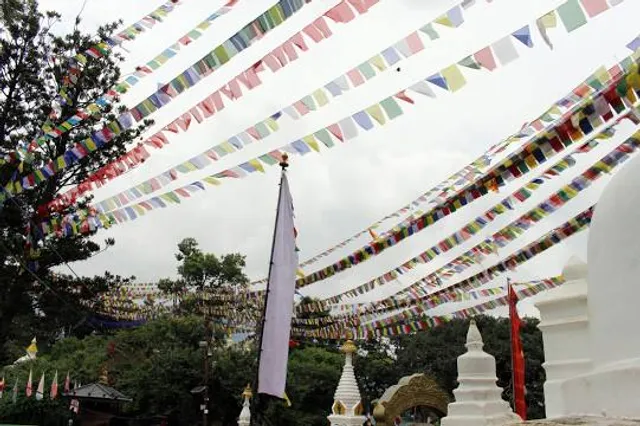
🪔 Rituals & Spiritual Practices Climbing the 365 Steps – Locals say that if you climb all the steps without stopping or looking back, your wishes will come true. Spinning Prayer Wheels – Turning the wheels while chanting a mantra cleanses negative karma and brings good fortune. Offering Butter Lamps – Many visitors light lamps to seek blessings, longevity, and protection. 🎉 Festivals & Celebrations Swayambhunath becomes even more vibrant and magical during Buddha Jayanti (Buddha’s Birthday) and the Newar Buddhist festival of Gunla. If you visit during these times, you’ll experience colorful prayer flags, sacred ceremonies, and chanting monks.
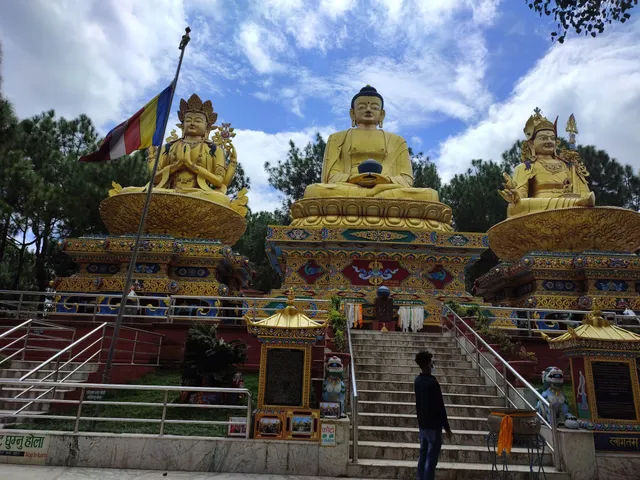
💡 Must-Know Tips Before Visiting ✔️ Entrance Fee – NPR 200 for foreigners, free for Nepalese. ✔️ Best Time to Visit – Early morning (for sunrise) or late afternoon (for sunset). ✔️ Dress Modestly – As a religious site, it's respectful to wear conservative clothing. ✔️ Watch Out for Monkeys – Keep your snacks and belongings secured! ✔️ Visit the Hidden Shrines – Don’t just stop at the main stupa—explore the smaller temples and statues around the site for a deeper spiritual experience.
⭐ Final Verdict: A Must-Visit Landmark! Swayambhunath is more than just a tourist destination—it’s a place of energy, history, and deep spiritual significance. Whether you’re here for the history, the views, or the divine atmosphere, you’ll leave feeling inspired and connected.
✅ Highly recommended for all travelers visiting Nepal!
📍 Location: Swayambhu, Kathmandu ⏰ Opening Hours: 24/7 (Best time: Sunrise or Sunset) 💰 Entry Fee: NPR 200 (Foreigners), Free for Nepali Citizens
👉 Have you been to Swayambhunath? Share your experience in...
Read moreSwayambhu Mahachaitya (Devanagari: स्वयम्भू स्तूप; Nepal Bhasa: स्वयंभू; sometimes Swayambu or Swoyambhu) is an ancient religious complex atop a hill in the Kathmandu Valley, west of Kathmandu city. The Tibetan name for the site means 'Sublime Trees' (Wylie: Phags.pa Shing.kun), for the many varieties of trees found on the hill. However, Shingun may be of in Nepal Bhasa name for the complex, Swayambhu, meaning 'self-sprung'.[1] For the Buddhist Newars, in whose mythological history and origin myth as well as day-to-day religious practice Swayambhu occupies a central position, it is the most sacred among Buddhist pilgrimage sites. For Tibetans and followers of Tibetan Buddhism, it is second only to Boudha. Swayambhu is the Sanskrit name.
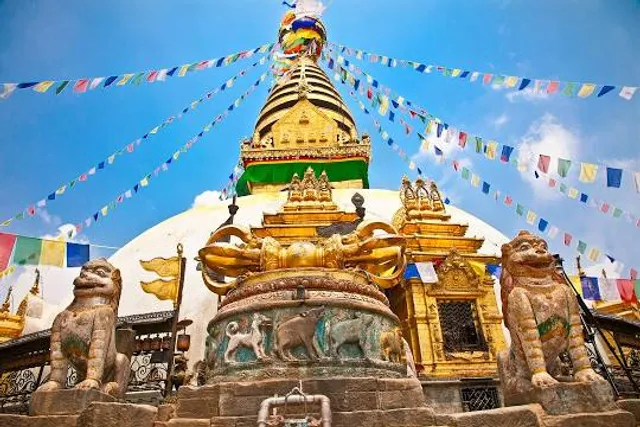
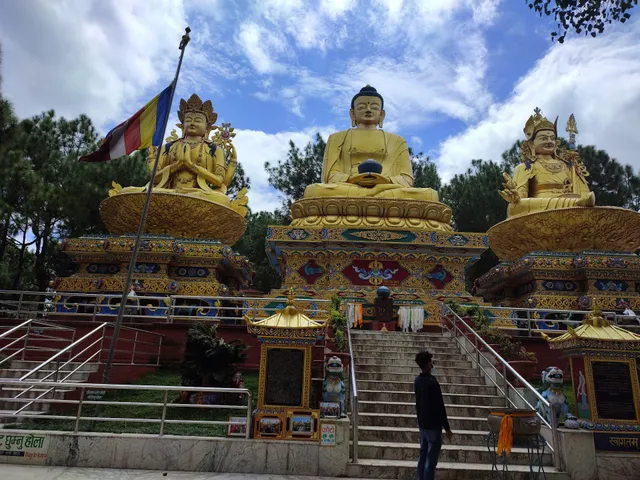
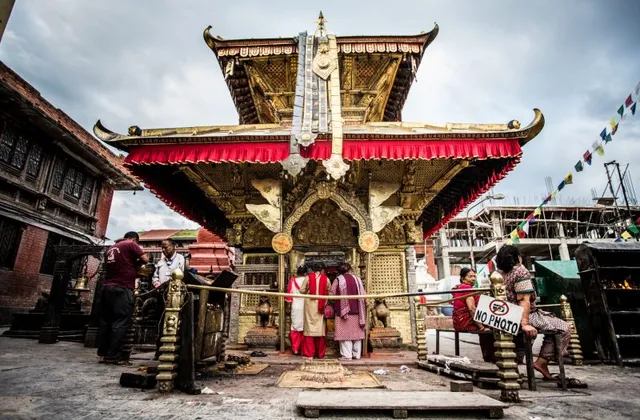
The complex consists of a stupa, a variety of shrines and temples, some dating back to the Licchavi period. A Tibetan monastery, museum and library are more recent additions. The stupa has Buddha's eyes and eyebrows painted on. Between them, the number one (in Nepal script) is painted in the fashion of a nose. There are also shops, restaurants and hostels. The site has multiple access points: a long staircase leading directly to the main platform of the temple, which is from the top of the hill to the east; a car road around the hill from the south leading to the south-west entrance; and a less traveled stairway that meets the landing leading to the same south-west entrance. The first sight on reaching the top of the stairway is the Vajra. Tsultrim Allione describes the experience:
We were breathless and sweating as we stumbled up the last steep steps and practically fell upon the biggest vajra (thunderbolt scepter) that I have ever seen. Behind this Vajra was the vast, round, white dome of the stupa, like a full solid skirt, at the top of which were two giant Buddha eyes wisely looking out over the peaceful valley which was just beginning to come alive.[2]
Much of Swayambhu's iconography comes from the Vajrayana tradition of Newar Buddhism. However, the complex is an important site for Buddhists of many schools, and is also revered by Hindus.
Mythology According to Swayambhu Purana, the entire valley was once filled with an enormous lake, out of which grew a lotus. The valley came to be known as Swayambhu, meaning "Self-Created." The name comes from an eternal self-existent flame (svyaṃbhu) over which a sūpa was later built.[3]
There are holy monkeys living in the north-west parts of the temple. They are holy because Manjushri, the bodhisattva of wisdom and learning, was raising the hill which the stupa stands on. He was supposed to leave his hair short, but he made it grow long and head lice grew. It is said that the head lice transformed into these monkeys.
Manjusri had a vision of the Lotus at Swayambhu and traveled there to worship it. Seeing that the valley could be a good settlement, and to make the site more accessible to human pilgrims, he cut a gorge at Chovar. The water drained out of the lake, leaving the valley in which Kathmandu now lies. The Lotus was transformed into a hill and the flower...
Read moreSwayambhunath, also known as the Monkey Temple, is an ancient and revered complex that sits atop a hill in the Kathmandu Valley. This site, significant to both Newar Buddhists (as their most sacred Buddhist site in Nepal) and Tibetan Buddhists (ranking second in importance after the Boudhanath stupa), is also a cherished place for Hindus.
The complex's rich iconography is derived from the Vajrayana tradition of Newar Buddhism, but it holds significance for Buddhists of many schools and Hindus alike. The mythology surrounding Swayambhunath includes the story of a lotus that grew from a great lake that once filled the valley, signifying the self-created (Swayambhu) nature of the divine flame over which the stupa was later constructed. The presence of holy monkeys at the site is attributed to the bodhisattva of wisdom and learning, Manjushri, whose lice were believed to have transformed into these monkeys.
Declared a UNESCO World Heritage Site in 1979, Swayambhunath is a focal point for several main festivals, including Gunla, Buddha Jayanti, and Lhosar, celebrated with great fervor and devotion by the community.
Visitors to Swayambhunath can explore a wide array of shrines, temples, and other structures around the main stupa, each laden with religious and cultural significance. The main stupa, for instance, symbolizes the enlightened mind of Buddha, with its umbrella signifying enlightenment and the gilded spire representing the steps to complete enlightenment. The eyes of Buddha on the stupa watch over the valley in all four directions, symbolizing Buddha's omnipresence. The complex also hosts the Harati Devi Temple, Shantipur (known for its secret underground chamber), and several other notable structures, each with its own unique history and religious importance.
Moreover, Swayambhunath's architecture is highly symbolic, integrating elements that represent various cosmic elements and spiritual concepts. The complex is surrounded by statues of the Five Dhyani Buddhas, representing the five cosmic elements, and their consorts. The stupa itself, with its dome representing the earth and the spire painted with eyes of Buddha, stands as a testament to Buddhist cosmology and philosophy.
For those interested in experiencing the vibrancy and spiritual depth of Nepalese culture, a visit to Swayambhunath offers a breathtaking panoramic view of Kathmandu, a chance to witness the daily rituals and practices of both Buddhist and Hindu traditions, and an opportunity to engage with the site's deep historical roots and...
Read more