Review: Bindhyabasini Temple, Pokhara – Where Divinity Meets Himalayan Serenity
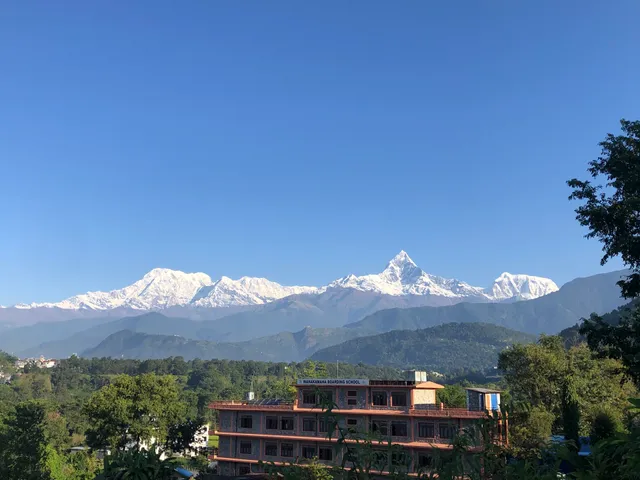
Tucked gracefully atop a hill in the scenic town of Pokhara, Bindhyabasini Temple is more than a religious destination — it is a tranquil intersection of spirituality, history, and Himalayan grandeur. From the moment you step through its ornate entrance and begin your gentle climb, you are greeted by fluttering prayer flags, soul-stirring bells, and panoramic views of the Annapurna range that leave you both grounded and uplifted.
⸻
Divine Grace of Goddess Bindhyabasini
At the heart of the temple complex lies the revered shrine of Goddess Bindhyabasini, believed to be an incarnation of Durga or Kali, the fierce yet motherly protector. According to local belief, the deity was miraculously brought from the Indian Bindhyachal hills and established in Pokhara centuries ago. Clad in red attire, adorned with marigold garlands, and surrounded by the rhythmic chants of devotees, the goddess exudes both power and compassion — a spiritual anchor for countless worshippers.
Devotees flock here not only for blessings but also to feel a deep sense of devotional stillness. During Dashain, Nepal’s grandest festival, the temple becomes a vibrant center of celebration, offering animal sacrifices as part of ancient traditions.
⸻
A Spiritual Complex Amidst Nature
Bindhyabasini Temple is not a standalone structure — it is part of a beautiful temple complex, harmoniously arranged with shrines dedicated to: • Lord Shiva – With his own peaceful sanctum, often surrounded by incense and flower offerings. • Lord Hanuman – The divine servant of Rama, standing watchfully in a corner, symbolizing strength and protection. • Lord Krishna – Depicted in his charming, flute-playing form, evoking love and devotion among visitors.
The temple grounds are immaculately kept, with white-painted railings, shaded seating areas, and quiet corners where one can sit and reflect amidst the sounds of bells, birds, and rustling leaves.
⸻
The Towering Trishul – Symbol of Divine Power
One of the most striking features of the complex is the tall Shiva Trishul (Trident) standing monumentally against the sky. It is not only a physical symbol of Lord Shiva’s cosmic energy but also an iconic landmark that commands attention and respect. Tourists and devotees alike are often drawn to it, offering silent prayers or simply pausing to absorb its powerful symbolism with the mountains looming behind it.
⸻
A View That Elevates the Soul
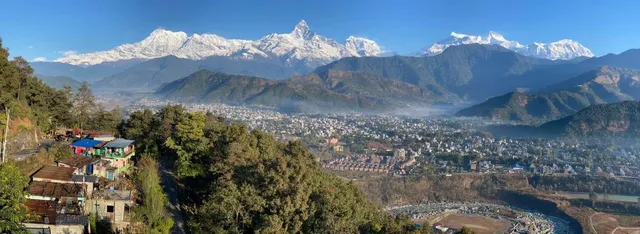
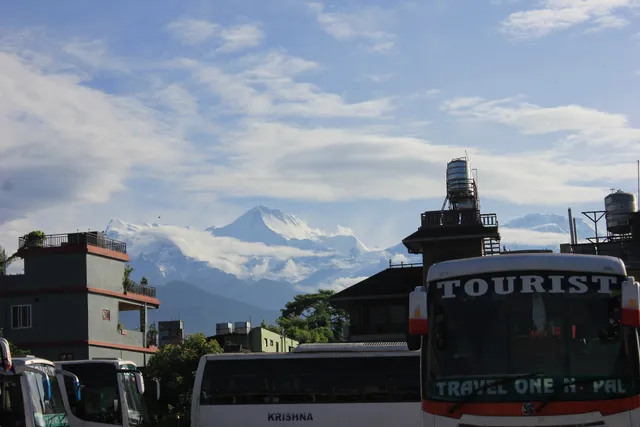
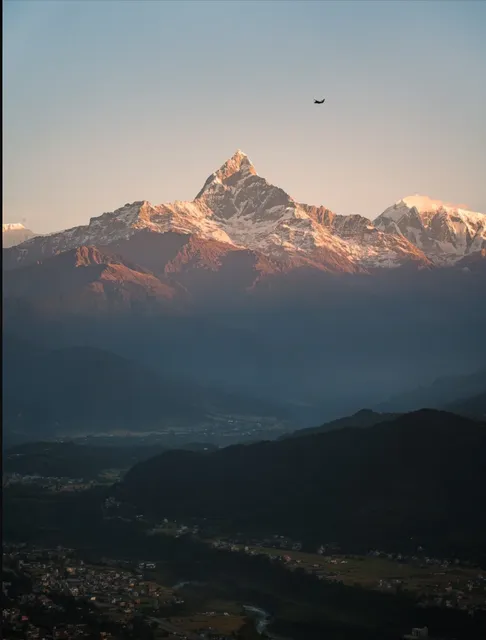
Beyond its spiritual aura, Bindhyabasini Temple offers perhaps one of the finest panoramic views in all of Pokhara. From the terrace, you can witness the silver peaks of Machapuchare and Annapurna glowing in the early morning light or fading into gold at dusk. Below, the city buzzes quietly, while pigeons take flight from the temple courtyard — a scene of peace, devotion, and Himalayan majesty.
⸻
Final Reflection
Whether you arrive here for worship, cultural curiosity, or the sheer serenity of the surroundings, Bindhyabasini Temple leaves a lasting impression on your heart. It is a place where faith meets landscape, where ancient legends breathe in the mountain air, and where the sacred is not only seen but truly felt.
A visit to Pokhara remains incomplete without standing atop this hill — hands joined, heart open — in front of the goddess who watches over...
Read morePokhara is one of Nepal’s most popular tourist destinations. Every year, it draws tourists from all over the world, both domestic and foreign, and captures their wandering hearts. Bindhyabasini temple, located in the northern portion of the city, is one of Nepal’s most famous temples. It is dedicated to the Hindu goddess Bindhyabasini, a Bhagawati who is thought to be the city’s protector goddess. It is Pokhara’s oldest temple. The Bindhyabasini temple, situated on top of a tiny hill, sits calmly amid an ancient bustling market, 3002 feet above sea level, gazing out over the magnificent Himalayan mountains. In the midst of Pokhara’s chaos, the temple offers a breath of pure air.
The Bindyabasini Temple in Pokhara is dedicated to the goddess Durga or Bhagawati and the temple was built in 1842 BS. The temple area is so huge and it comprises of 47 ropanis of land. For the people of Pokhara, the temple holds great religious significance, and it has even become a popular pilgrimage site for Hindus from all over the world. It is devoted to the goddess Durga, and in particular to Bhagwati, a murderous incarnation of the Goddess. Pilgrims are welcome to come to the temple and worship with their contributions. There is a Krishna Mandir on the other side of Bindhyabasini temple, where devotees celebrate Krishna Janmashtami, his yearly birthday. They may also visit temples dedicated to Saraswati, Hanuman, Shiva, Vishnu, Ganesh, and Jogi Paati, which are all located near the main temple.
Bindhyabasini is a version of Bhagawati that is said to be the substitute for Devaki and Vasudeva’s eighth child (Lord Krishna). When Kansa attempted to murder their ninth child, Devi Bindhyabasini, the woman who had been swapped, arrived. The goddess resides in the temple as a Shaligram, an auspicious stone.
History of Bindyabasini Temple: The mythology of Bindhyabasini temple began when Siddhi Narayan Malla, the king of Kaski, or Khadgaman Malla, the king of Parbat, dreamed of building a shrine for the goddess. As a result, he ordered some of his troops to return from present-day Uttar Pradesh, India, with a statue of the goddess. The warriors pitched their tents at the current temple area during their trip. They were unable to continue their journey the next morning since the god could not be removed from the encampment. As a result, the temple was built at Pokhara’s Mohariya Tole. Since then, this location has served as a gathering place for worshippers. The words “Bindhya” and “Basini” both imply “incarnation of goddess” and “dweller of a location.”
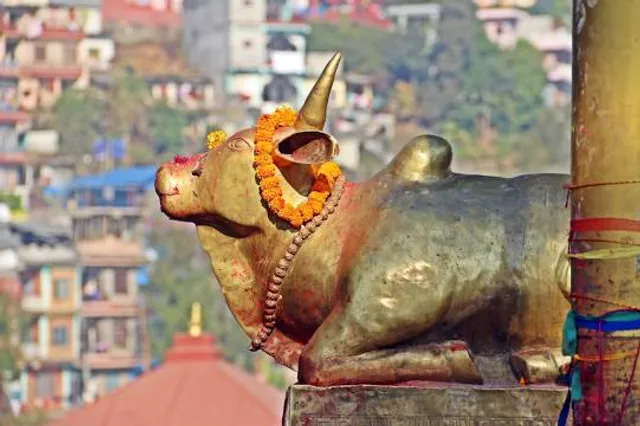
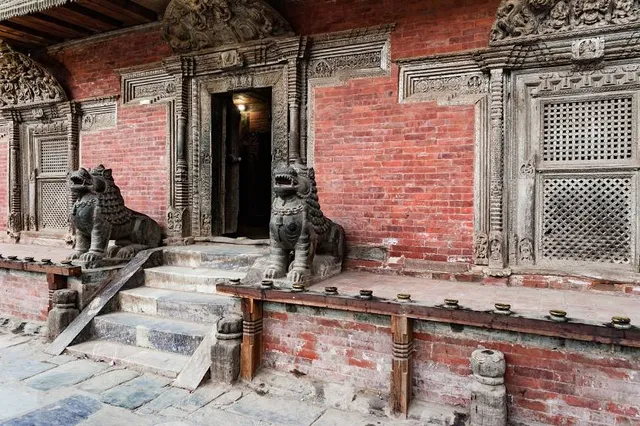
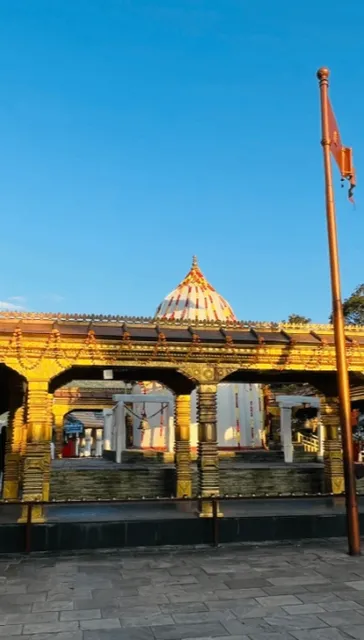
Architecture of Bindyabasini Temple: The Bindyabasini temple is constructed in the Shikhara style. It’s a white pagoda temple situated in the center of a park-like setting. The temple has a golden carved metal gate that offers us a glimpse inside and breaks up the whiteness. Two large golden metal lions stand erect just beside temple gate, while metal gong-bells ring out incessantly in the backdrop. At first look, the Bindhyabasini temple appears to be a modest but remarkable structure. The temple is governed by the local “Dharmik Chhetra...
Read moreShree Bindhyabasini Temple: Pokhara’s Sacred Hilltop Shrine
-----------------Introduction---------------
Hindu temple dedicated to Goddess Durga (Bindhyabasini), in Pokhara, Kaski district, central Nepal. Situated at 1,000 m on a small hill in Ward No. 2, Bindhyabasini, near Bagar and the Seti River. Established in the 16th century by King Siddhi Narayan Malla, a key spiritual site in Pokhara. A cultural and religious landmark, attracting devotees and tourists for its serene setting and views.
-----------Geographical Features--------------
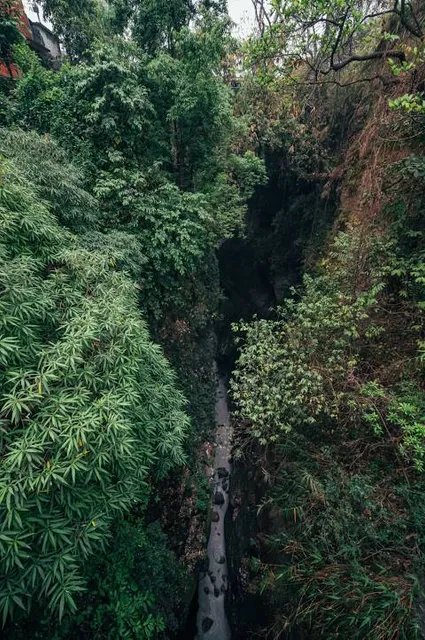
Elevation: ~1,000 m; Pokhara valley spans 800–1,500 m. Located on a hilltop, surrounded by lush greenery, with views of the Annapurna range on clear days. The temple complex includes a white pagoda-style structure, stone idols, and a nearby forest. Accessible via stone steps or a short drive, with proximity to the Seti River Gorge.
-----------Tourism and Activities----------------
Worship: Devotees offer prayers, especially during Dashain, with animal sacrifices on Saturdays and Tuesdays. Sightseeing: Explore the temple’s architecture, stone statues, and a cave-like structure nearby. Appeals to spiritual seekers and tourists interested in Hindu culture and Pokhara’s history. Photography and relaxation in the peaceful courtyard, with occasional bell-ringing by devotees.
---------Socio-Cultural Significance-----------
Sacred to Hindus, believed to fulfill wishes; Bindhyabasini is a manifestation of Durga. Cultural highlights: Festivals like Dashain and Teej, with vibrant rituals and community gatherings. Tourism supports local vendors selling puja items and contributes to temple maintenance. Respect temple customs: remove shoes, dress modestly, and avoid non-vegetarian food on-site.
---------Climate Change Impact---------
Increased monsoon rains cause soil erosion on the hill, impacting pathways and nearby greenery. Warming may alter visitor patterns, straining local infrastructure during peak festival seasons. Urban growth in Pokhara raises concerns about pollution and waste around the temple. Conservation efforts are community-led but limited by funding and resources.
--------How to Get There------------
By Air: Fly from Kathmandu to Pokhara (30 min). By Road: From Pokhara’s Lakeside, take a taxi (10–15 min) or bus (NPR 25, 20 min) to Bindhyabasini. Walking: From Lakeside, a 3–4 km walk (45 min) via Prithvi Highway to the temple’s stone steps. Permits: No entry fee; donations are welcome for temple upkeep.
Additional Notes: The temple is a peaceful spot with panoramic views of Pokhara and the Annapurna range on clear days. Expect some activity today due to Tuesday rituals. The climb up the steps is short but steep—wear comfortable shoes. Respect temple norms by removing shoes and...
Read more