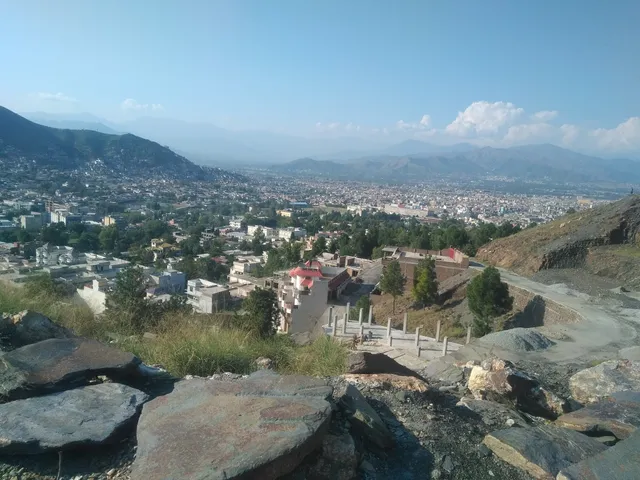
Swat (aka Swat Valley) is a mountainous tourist destination located in the northwest of the Khyber Pakhtunkhwa province in Pakistan. The stunning swat valley is situated on the swat river (35°12′N 72°29′E), at the distance of 247 Km (153 Miles) from the capital city Islamabad.
Although swat valley is renowned for its spectacular natural beauty, yet many of its tourist attractions spread across its area of 5,337 km2 (2,061 sq. mi.) are relatively undiscovered.
Until 1969 Swat Valley remained an affluent independent self-governing state called “the Yusafzai State of Swat” before it became a part of Pakistan.
The History of Swat In the past Swat was geographically isolated by mountains from the Peshawar plains. Despite the isolation from the mainland in the past, the valley has been the main interacting place for the important civilizations of the world. Throughout the swat history, the valley linked China with Central Asia and Europe. Alexander the Great, Mahmood of Ghazni, and Mughal king Babar entered India via the lower part of Swat valley.
Buddhism in Swat The famous Chinese Buddhist travelers Fa-hsien (403 AD), Sung Yun (519 AD), Hsuan.-tsang (630 AD), came to swat. Also, Wu-kung (752 AD) came to Swat valley through the present Shangla pass after crossing the Hindukush mountains.
They described swat valley as fertile land, having an abundance, and a variety of produces. Also, they talk about its temperate climate, the beauty of its scenery, and the sacred Buddhist sites when they visited Swat through the difficult passes of the Hindukush mountains on their way down to the Indian subcontinent.
In Butkara Swat, near the present Mmgora, under the strata of the Buddhist period, Italian archaeologists found tombs also showing a long occupation of the site. Thus, the scientific analysis of a skull, probably one of the most ancient inhabitants of the valley, indicates a Torwali human type similar to the present inhabitants of Swat Kohistan.
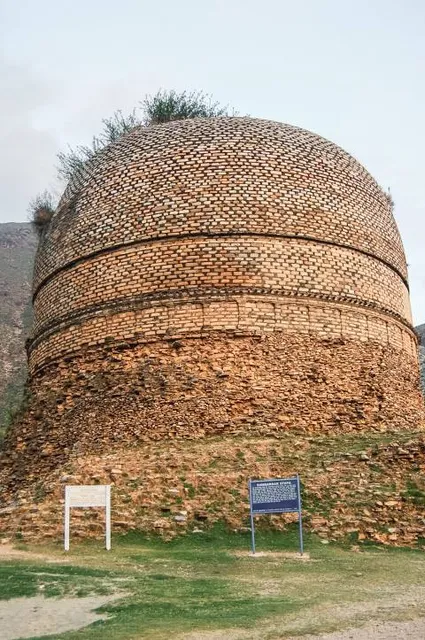
Asoka issued a large number of edicts inscribed on rock surfaces and converted to the Buddhist religion. During his reign and under his patronage, some of the greatest Buddhist art was produced. Asoka is said to have started the tradition of setting up Stupas to enshrine the relics upon the Buddha and...
Read moreRight at the center where Gandahara civilization used to be, Swat Museum is a place to get the taste of olden days. The Italian archaeological activities in Swat, Khyber-Pakhtunkhwa began in 1955, when Giuseppe Tucci, a famous Tibetologist and Orientalist, visited the region for the first time. Thus began the work that continued until very recently taking a leading role in the archaeology of the subcontinent. The Museum was conceived in 1959 under the aegis of the Italian Archaeological Mission to Swat and the Wali of Swat to contain his personal collection of artifacts. It was later expanded with the assistance of the Japanese government, but was badly damaged in the devastating earthquake of 2005. With the war between the Pakistan government and Taliban in 2007-09, the museum was closed and its contents were moved to Taxila, this proved fortunate as a bomb exploded nearby in February 2008 killing many persons and damaging the museum. The 2,700 objects were returned to the museum in July 2011, and a new seismic-resistant museum was opened on December 2014.
The museum contains Gandhara statuettes and friezes depicting the lives of the Buddha along with seals, small reliquaries and other treasures, mostly from Swat. Additionally, there are pre-Buddhist artefacts, and an ethnographic gallery with traditional carved Swati furniture, jewellery and embroideries. A recent discovery, includes a stone ‘board’ game found of a sort still played in the valley today.
The museum remain open everyday except for Friday from 9 AM to 4:30 PM with 2 hours lunch and prayers...
Read moreThe Swat Museum, located in the scenic valley of Swat in Saidu Sharif, Pakistan, is a treasure trove of cultural and historical artifacts. Established in 1959 with the support of Italian archaeologists and the Pakistani government, the museum showcases the rich heritage of the region, which has been a melting pot of civilizations for centuries.
The museum’s collection is especially renowned for its Gandhara art, featuring Buddhist sculptures, stupas, and relics that highlight the valley’s importance as a center of Buddhist culture during the ancient Kushan Empire. These artifacts narrate stories of Buddha's life and teachings, making it a significant destination for historians and art enthusiasts.
In addition to Buddhist relics, the museum also houses artifacts from the pre-Buddhist era, such as items from the Indo-Aryan period, as well as Islamic-era manuscripts, coins, jewelry, and pottery. After being damaged in the 2005 earthquake and further affected by conflicts in the region, the museum was renovated and reopened in 2014, with modern displays and improved facilities.
The Swat Museum is not just an exhibition space but also a symbol of the valley’s resilience and the preservation of its ancient identity. It serves as a gateway for visitors to explore the historical and cultural...
Read more