HTML SitemapExplore
logo
Find Things to DoFind The Best Restaurants

Batad Rice Terraces — Attraction in Banaue

Name
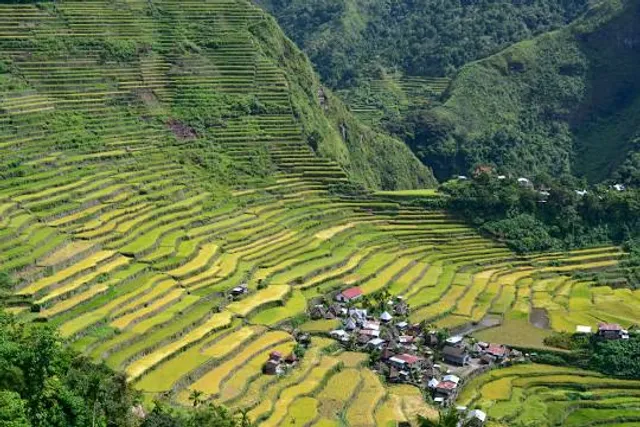
Batad Rice Terraces
Description
Nearby attractions
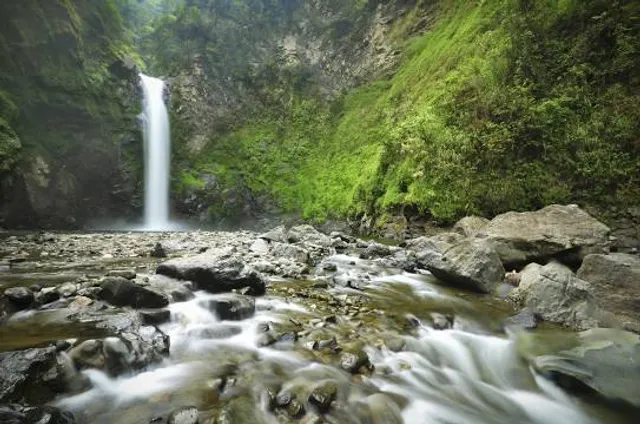
Tappiyah Falls
W4QP+QMM, Banaue, Ifugao, Philippines
Nearby restaurants
Batad Pension and Restaurant
Banaue, Ifugao, Philippines
Nearby hotels
CRISTINA'S Inn & Restaurant
W4MP+MM7, Batad Trail, Banaue, Ifugao, Philippines
Batad View Inn and Restaurant
W4JP+FCR, Banaue, 3601 Ifugao, Philippines
Ramon’s Homestay
16°55'52. 121°08'09., Batad Trail, 3601 Ifugao, Philippines
Lhoren's Inn and Restaurant
W4JP+F92, Batad Trail, Banaue, Ifugao, Philippines
Batad Transient House
Batad Trail, Banaue, Ifugao, Philippines
Rita's Mount View Inn and Restaurant
W4JP+3F6, Batad Trail, Banaue, Ifugao, Philippines
Simons inn
Banaue, Ifugao, Philippines
Batad Roberto"s Abung Inn and Restaurant
Batad Trail, Banaue, 3601 Ifugao, Philippines
Batad Coutryside Inn
Banaue, Ifugao, Philippines
Related posts
Keywords
Batad Rice Terraces tourism.Batad Rice Terraces hotels.Batad Rice Terraces bed and breakfast. flights to Batad Rice Terraces.Batad Rice Terraces attractions.Batad Rice Terraces restaurants.Batad Rice Terraces travel.Batad Rice Terraces travel guide.Batad Rice Terraces travel blog.Batad Rice Terraces pictures.Batad Rice Terraces photos.Batad Rice Terraces travel tips.Batad Rice Terraces maps.Batad Rice Terraces things to do.
Batad Rice Terraces things to do, attractions, restaurants, events info and trip planning
Batad Rice Terraces
PhilippinesIfugaoBanaueBatad Rice Terraces

Basic Info

Batad Rice Terraces

Banaue, Ifugao, Philippines
4.7(699)
Open 24 hours
Save
spot

Ratings & Description

Info

Cultural
Outdoor
Scenic
Off the beaten path
attractions: Tappiyah Falls, restaurants: Batad Pension and Restaurant
logoLearn more insights from Wanderboat AI.
Phone
+63 946 068 6965

Plan your stay

hotel
Pet-friendly Hotels in Banaue
Find a cozy hotel nearby and make it a full experience.
hotel
Affordable Hotels in Banaue
Find a cozy hotel nearby and make it a full experience.
hotel
The Coolest Hotels You Haven't Heard Of (Yet)
Find a cozy hotel nearby and make it a full experience.
hotel
Trending Stays Worth the Hype in Banaue
Find a cozy hotel nearby and make it a full experience.

Reviews

Nearby attractions of Batad Rice Terraces

Tappiyah Falls

Tappiyah Falls

Tappiyah Falls

4.7

(174)

Open 24 hours
Click for details

Nearby restaurants of Batad Rice Terraces

Batad Pension and Restaurant

Batad Pension and Restaurant

Batad Pension and Restaurant

4.4

(18)

Click for details
Get the Appoverlay
Get the AppOne tap to find yournext favorite spots!
Wanderboat LogoWanderboat

Your everyday Al companion for getaway ideas

CompanyAbout Us
InformationAI Trip PlannerSitemap
SocialXInstagramTiktokLinkedin
LegalTerms of ServicePrivacy Policy

Get the app

© 2025 Wanderboat. All rights reserved.
logo

Reviews of Batad Rice Terraces

4.7
(699)
avatar
5.0
1y

I read a lot of reviews and I'll try to give as much info as I can. Visited on Nov 28, 2024.

I had my own transport. Cost to park a scooter was 50 PHP for the day from the Batad Trail Parking point. From the vehicle stop point end to end it took me 4 hours total, however I didn't linger too long anywhere. I spent about 20 minutes at the falls. I rested for 5 minutes here and there and moved on. Most other groups I saw took longer for both so maybe 5 hours is a good amount of time to budget for this from the parking point and back.... If you have bad knees or have bad vertigo, this is not for you. The stairs are steep and plentiful. If you do have bad knees, you can still go to the registration desk, pay the 50 PHP entrance fee and get to a viewing deck. Take your selfies and go back because you pay for the price of admission both literally and in fatigue. You'll basically walk from the top of the mountain down to the village at the bottom of the valley then back up to a viewpoint at the top of the mountain, then down to the waterfall, then back up to the viewpoint at the top of of the mountain, then back down to the village and back up to the top of the mountain. It's a workout. There are vendors that will sell you a walking stick, skip it and just rent one for 10 PHP, it's not like you're going to stick it in your luggage and bring it home with you :). I'd recommend getting one, mainly for the down and I say this as someone that didn't get a walking stick and am used to aggressive hiking without hiking poles. Your knees won't regret the extra balance point going down for 10 PHP. I was solo, skipped the guide. One of the guides gave me a hard time as it's their living, but it's not really necessary to have a guide. When you enter just meander down the stairs; if you take a wrong turn a local will shoo you to the right spot :). Once you're down at the terraces, there is literally only one concrete pathway across the terraces after you pass through the lower village in the valley. If you're walking on mud or grass, you're on the wrong terrace path :) - you do have to go up one terrace level after exiting the lower village to get across. You basically pass across all of the terraces on the concrete path until you see concrete stairs. Follow them to the top to get to the viewpoint. After you're done there, walk down a short distance then laterally to the blue roof building. In the back of this building are concrete stairs down to the waterfalls. After you come back up from the falls, backtrack to get back to the pickup point. You can find proper food in the upper village (where you entered the valley), but once you're in the lower village and beyond there are really only snacks and refreshments available. Fuel up before you exit the upper village or pack something, you'll need the energy. The falls are cold. You'll probably jump in anyways from the sweat, but yeah they're chilly. Forecast in the region was for rain. It rained elsewhere, but in the valley it didn't rain on me. YMMV.

I went here after visiting many other terraces in the region (just taking pictures from viewpoints above). This one is the most impressive and I understand why it's a UNESCO heritage site. I think it's...

   Read more
avatar
4.0
3y

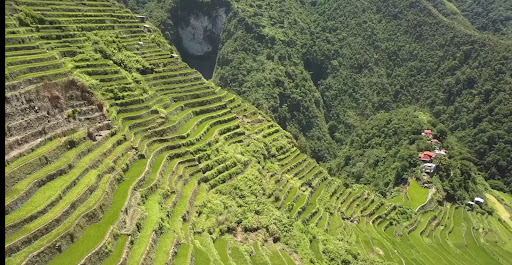
The Banaue Rice Terraces are terraces that were carved into the mountains of Banaue, Ifugao, in the Philippines, by the ancestors of the Igorot people. The terraces are occasionally called the "Eighth Wonder of the World". It is commonly thought that the terraces were built with minimal equipment, largely by hand.The terraces are located approximately 1,500 metres (4,900 feet) above sea level. These are fed by an ancient irrigation system from the rainforests above the terraces. It is said that if the steps were put end to end, it would encircle half of the globe. Locals up to this day still plant rice and vegetables on the terraces, although more and more younger Ifugaos do not find farming appealing, often opting for the more lucrative hospitality industry generated by the terraces.The result is the gradual erosion of the characteristic "steps", which require constant reconstruction and care. In 2010, a further problem encountered was drought, with the terraces drying up completely in March of that year.

Anthropologist Otley Beyer has estimated that the terraces are over 2000 years old, but several researchers dispute this and contend that they were built much later.Nevertheless, rice is an ancient ancestral crop of the Philippines, having been carried by Austronesian migrations into the islands since at least 1500 BCE (3500 years ago).

Current threats to the terraces include the giant earthworms ("olang" in Ifugao) of the genus Pheretima or Polypheretima elongata which are blamed for causing damage to the terraces, as well as rodents of the genus Chrotomis mindorensis, and snails. The terraces are found in the province of Ifugao and the Ifugao people have been its caretakers. Ifugao culture revolves around rice, and the culture engenders an elaborate array of celebrations linked with agricultural rites from rice cultivation to rice consumption. The harvest season generally calls for thanksgiving feasts, while the concluding harvest with rites called tango or tungul (a day of rest) which entail a strict taboo on any agricultural work. Bayah (rice wine), rice cakes, and betel nut are also consumed as part of the festivities.

The Ifugao people practice traditional farming spending most of their labour at their terraces and forest lands while occasionally tending to root crop cultivation. The Ifugaos have also been known to culture edible shells, fruit trees, and other vegetables which have been exhibited among Ifugaos for generations. The building of the rice terraces entails constructing retaining walls with stones and rammed earth which are designed to draw water from a main irrigation canal above the terrace clusters. Indigenous rice terracing technologies have been identified with the Ifugao’s rice terraces such as their knowledge of water irrigation, stonework, earthwork and terrace maintenance. As their source of life and art, the rice terraces have sustained and shaped the lives of the...

   Read more

avatar
5.0
6y

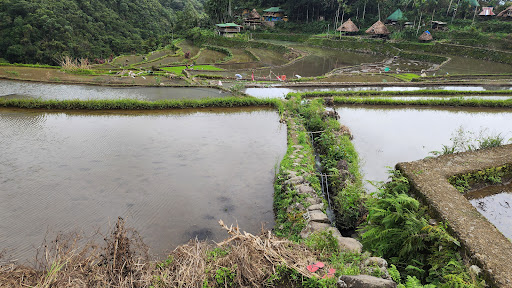
The Banaue Rice Terraces, located in Ifugao Province and northern Luzon Island, are more than 2,000 years old. These terraces were carved by the ancestors of the local people in order to plant rice and some vegetables. Being hand-made, they are located 1,500 meters above sea level and are believed to encircle half the globe when placed one by one. Due to the rainforests that grow above the terraces, the soil is very productive there. Still, modern Filipinos prefer to use this place as a tourist attraction. Nowadays, the number of activities for visitors has developed, including the traditional exploration of the terraces and visiting the tribes at the bottom of this handcrafted miracle. Another site which is equally impressive is Batad rice terraces. They are located one hour drive from Banaue and are still maintained in an efficient way. The rice terraces may be visited at different times of year depending on what you'd like to see. Come April to May or October to November to see them lush and green, while in June and December you can observe harvest time and see it in the shades of gold. In January to March or September during planting season, the bare terraces are less impressive but still enjoyable—that's when you might see the mirror-like cascades filled up with water. July and August are the least favourable time for this is the peak of rainy season notorious for occasional landslides. Thus, we recommend September through June as the best time to visit the...

   Read more
Page 1 of 7
Previous
Next

Posts

Ed SinEd Sin
I read a lot of reviews and I'll try to give as much info as I can. Visited on Nov 28, 2024. 1. I had my own transport. Cost to park a scooter was 50 PHP for the day from the Batad Trail Parking point. From the vehicle stop point end to end it took me 4 hours total, however I didn't linger too long anywhere. I spent about 20 minutes at the falls. I rested for 5 minutes here and there and moved on. Most other groups I saw took longer for both so maybe 5 hours is a good amount of time to budget for this from the parking point and back.... 2. If you have bad knees or have bad vertigo, this is not for you. The stairs are steep and plentiful. If you do have bad knees, you can still go to the registration desk, pay the 50 PHP entrance fee and get to a viewing deck. Take your selfies and go back because you pay for the price of admission both literally and in fatigue. You'll basically walk from the top of the mountain down to the village at the bottom of the valley then back up to a viewpoint at the top of the mountain, then down to the waterfall, then back up to the viewpoint at the top of of the mountain, then back down to the village and back up to the top of the mountain. It's a workout. There are vendors that will sell you a walking stick, skip it and just rent one for 10 PHP, it's not like you're going to stick it in your luggage and bring it home with you :). I'd recommend getting one, mainly for the down and I say this as someone that didn't get a walking stick and am used to aggressive hiking without hiking poles. Your knees won't regret the extra balance point going down for 10 PHP. 3. I was solo, skipped the guide. One of the guides gave me a hard time as it's their living, but it's not really necessary to have a guide. When you enter just meander down the stairs; if you take a wrong turn a local will shoo you to the right spot :). Once you're down at the terraces, there is literally only one concrete pathway across the terraces after you pass through the lower village in the valley. If you're walking on mud or grass, you're on the wrong terrace path :) - you do have to go up one terrace level after exiting the lower village to get across. You basically pass across all of the terraces on the concrete path until you see concrete stairs. Follow them to the top to get to the viewpoint. After you're done there, walk down a short distance then laterally to the blue roof building. In the back of this building are concrete stairs down to the waterfalls. After you come back up from the falls, backtrack to get back to the pickup point. 4. You can find proper food in the upper village (where you entered the valley), but once you're in the lower village and beyond there are really only snacks and refreshments available. Fuel up before you exit the upper village or pack something, you'll need the energy. 5. The falls are cold. You'll probably jump in anyways from the sweat, but yeah they're chilly. 6. Forecast in the region was for rain. It rained elsewhere, but in the valley it didn't rain on me. YMMV. I went here after visiting many other terraces in the region (just taking pictures from viewpoints above). This one is the most impressive and I understand why it's a UNESCO heritage site. I think it's worth visiting.
Rasik RajRasik Raj
The Banaue Rice Terraces are terraces that were carved into the mountains of Banaue, Ifugao, in the Philippines, by the ancestors of the Igorot people. The terraces are occasionally called the "Eighth Wonder of the World". It is commonly thought that the terraces were built with minimal equipment, largely by hand.The terraces are located approximately 1,500 metres (4,900 feet) above sea level. These are fed by an ancient irrigation system from the rainforests above the terraces. It is said that if the steps were put end to end, it would encircle half of the globe. Locals up to this day still plant rice and vegetables on the terraces, although more and more younger Ifugaos do not find farming appealing, often opting for the more lucrative hospitality industry generated by the terraces.The result is the gradual erosion of the characteristic "steps", which require constant reconstruction and care. In 2010, a further problem encountered was drought, with the terraces drying up completely in March of that year. Anthropologist Otley Beyer has estimated that the terraces are over 2000 years old, but several researchers dispute this and contend that they were built much later.Nevertheless, rice is an ancient ancestral crop of the Philippines, having been carried by Austronesian migrations into the islands since at least 1500 BCE (3500 years ago). Current threats to the terraces include the giant earthworms ("olang" in Ifugao) of the genus Pheretima or Polypheretima elongata which are blamed for causing damage to the terraces, as well as rodents of the genus Chrotomis mindorensis, and snails. The terraces are found in the province of Ifugao and the Ifugao people have been its caretakers. Ifugao culture revolves around rice, and the culture engenders an elaborate array of celebrations linked with agricultural rites from rice cultivation to rice consumption. The harvest season generally calls for thanksgiving feasts, while the concluding harvest with rites called tango or tungul (a day of rest) which entail a strict taboo on any agricultural work. Bayah (rice wine), rice cakes, and betel nut are also consumed as part of the festivities. The Ifugao people practice traditional farming spending most of their labour at their terraces and forest lands while occasionally tending to root crop cultivation. The Ifugaos have also been known to culture edible shells, fruit trees, and other vegetables which have been exhibited among Ifugaos for generations. The building of the rice terraces entails constructing retaining walls with stones and rammed earth which are designed to draw water from a main irrigation canal above the terrace clusters. Indigenous rice terracing technologies have been identified with the Ifugao’s rice terraces such as their knowledge of water irrigation, stonework, earthwork and terrace maintenance. As their source of life and art, the rice terraces have sustained and shaped the lives of the community members.
Maylene Pascual (Mye)Maylene Pascual (Mye)
The Banaue Rice Terraces, located in Ifugao Province and northern Luzon Island, are more than 2,000 years old. These terraces were carved by the ancestors of the local people in order to plant rice and some vegetables. Being hand-made, they are located 1,500 meters above sea level and are believed to encircle half the globe when placed one by one. Due to the rainforests that grow above the terraces, the soil is very productive there. Still, modern Filipinos prefer to use this place as a tourist attraction. Nowadays, the number of activities for visitors has developed, including the traditional exploration of the terraces and visiting the tribes at the bottom of this handcrafted miracle. Another site which is equally impressive is Batad rice terraces. They are located one hour drive from Banaue and are still maintained in an efficient way. The rice terraces may be visited at different times of year depending on what you'd like to see. Come April to May or October to November to see them lush and green, while in June and December you can observe harvest time and see it in the shades of gold. In January to March or September during planting season, the bare terraces are less impressive but still enjoyable—that's when you might see the mirror-like cascades filled up with water. July and August are the least favourable time for this is the peak of rainy season notorious for occasional landslides. Thus, we recommend September through June as the best time to visit the rice terraces.
See more posts
See more posts
hotel
Find your stay

Pet-friendly Hotels in Banaue

Find a cozy hotel nearby and make it a full experience.

I read a lot of reviews and I'll try to give as much info as I can. Visited on Nov 28, 2024. 1. I had my own transport. Cost to park a scooter was 50 PHP for the day from the Batad Trail Parking point. From the vehicle stop point end to end it took me 4 hours total, however I didn't linger too long anywhere. I spent about 20 minutes at the falls. I rested for 5 minutes here and there and moved on. Most other groups I saw took longer for both so maybe 5 hours is a good amount of time to budget for this from the parking point and back.... 2. If you have bad knees or have bad vertigo, this is not for you. The stairs are steep and plentiful. If you do have bad knees, you can still go to the registration desk, pay the 50 PHP entrance fee and get to a viewing deck. Take your selfies and go back because you pay for the price of admission both literally and in fatigue. You'll basically walk from the top of the mountain down to the village at the bottom of the valley then back up to a viewpoint at the top of the mountain, then down to the waterfall, then back up to the viewpoint at the top of of the mountain, then back down to the village and back up to the top of the mountain. It's a workout. There are vendors that will sell you a walking stick, skip it and just rent one for 10 PHP, it's not like you're going to stick it in your luggage and bring it home with you :). I'd recommend getting one, mainly for the down and I say this as someone that didn't get a walking stick and am used to aggressive hiking without hiking poles. Your knees won't regret the extra balance point going down for 10 PHP. 3. I was solo, skipped the guide. One of the guides gave me a hard time as it's their living, but it's not really necessary to have a guide. When you enter just meander down the stairs; if you take a wrong turn a local will shoo you to the right spot :). Once you're down at the terraces, there is literally only one concrete pathway across the terraces after you pass through the lower village in the valley. If you're walking on mud or grass, you're on the wrong terrace path :) - you do have to go up one terrace level after exiting the lower village to get across. You basically pass across all of the terraces on the concrete path until you see concrete stairs. Follow them to the top to get to the viewpoint. After you're done there, walk down a short distance then laterally to the blue roof building. In the back of this building are concrete stairs down to the waterfalls. After you come back up from the falls, backtrack to get back to the pickup point. 4. You can find proper food in the upper village (where you entered the valley), but once you're in the lower village and beyond there are really only snacks and refreshments available. Fuel up before you exit the upper village or pack something, you'll need the energy. 5. The falls are cold. You'll probably jump in anyways from the sweat, but yeah they're chilly. 6. Forecast in the region was for rain. It rained elsewhere, but in the valley it didn't rain on me. YMMV. I went here after visiting many other terraces in the region (just taking pictures from viewpoints above). This one is the most impressive and I understand why it's a UNESCO heritage site. I think it's worth visiting.
Ed Sin

Ed Sin

hotel
Find your stay

Affordable Hotels in Banaue

Find a cozy hotel nearby and make it a full experience.

Get the Appoverlay
Get the AppOne tap to find yournext favorite spots!
The Banaue Rice Terraces are terraces that were carved into the mountains of Banaue, Ifugao, in the Philippines, by the ancestors of the Igorot people. The terraces are occasionally called the "Eighth Wonder of the World". It is commonly thought that the terraces were built with minimal equipment, largely by hand.The terraces are located approximately 1,500 metres (4,900 feet) above sea level. These are fed by an ancient irrigation system from the rainforests above the terraces. It is said that if the steps were put end to end, it would encircle half of the globe. Locals up to this day still plant rice and vegetables on the terraces, although more and more younger Ifugaos do not find farming appealing, often opting for the more lucrative hospitality industry generated by the terraces.The result is the gradual erosion of the characteristic "steps", which require constant reconstruction and care. In 2010, a further problem encountered was drought, with the terraces drying up completely in March of that year. Anthropologist Otley Beyer has estimated that the terraces are over 2000 years old, but several researchers dispute this and contend that they were built much later.Nevertheless, rice is an ancient ancestral crop of the Philippines, having been carried by Austronesian migrations into the islands since at least 1500 BCE (3500 years ago). Current threats to the terraces include the giant earthworms ("olang" in Ifugao) of the genus Pheretima or Polypheretima elongata which are blamed for causing damage to the terraces, as well as rodents of the genus Chrotomis mindorensis, and snails. The terraces are found in the province of Ifugao and the Ifugao people have been its caretakers. Ifugao culture revolves around rice, and the culture engenders an elaborate array of celebrations linked with agricultural rites from rice cultivation to rice consumption. The harvest season generally calls for thanksgiving feasts, while the concluding harvest with rites called tango or tungul (a day of rest) which entail a strict taboo on any agricultural work. Bayah (rice wine), rice cakes, and betel nut are also consumed as part of the festivities. The Ifugao people practice traditional farming spending most of their labour at their terraces and forest lands while occasionally tending to root crop cultivation. The Ifugaos have also been known to culture edible shells, fruit trees, and other vegetables which have been exhibited among Ifugaos for generations. The building of the rice terraces entails constructing retaining walls with stones and rammed earth which are designed to draw water from a main irrigation canal above the terrace clusters. Indigenous rice terracing technologies have been identified with the Ifugao’s rice terraces such as their knowledge of water irrigation, stonework, earthwork and terrace maintenance. As their source of life and art, the rice terraces have sustained and shaped the lives of the community members.
Rasik Raj

Rasik Raj

hotel
Find your stay

The Coolest Hotels You Haven't Heard Of (Yet)

Find a cozy hotel nearby and make it a full experience.

hotel
Find your stay

Trending Stays Worth the Hype in Banaue

Find a cozy hotel nearby and make it a full experience.

The Banaue Rice Terraces, located in Ifugao Province and northern Luzon Island, are more than 2,000 years old. These terraces were carved by the ancestors of the local people in order to plant rice and some vegetables. Being hand-made, they are located 1,500 meters above sea level and are believed to encircle half the globe when placed one by one. Due to the rainforests that grow above the terraces, the soil is very productive there. Still, modern Filipinos prefer to use this place as a tourist attraction. Nowadays, the number of activities for visitors has developed, including the traditional exploration of the terraces and visiting the tribes at the bottom of this handcrafted miracle. Another site which is equally impressive is Batad rice terraces. They are located one hour drive from Banaue and are still maintained in an efficient way. The rice terraces may be visited at different times of year depending on what you'd like to see. Come April to May or October to November to see them lush and green, while in June and December you can observe harvest time and see it in the shades of gold. In January to March or September during planting season, the bare terraces are less impressive but still enjoyable—that's when you might see the mirror-like cascades filled up with water. July and August are the least favourable time for this is the peak of rainy season notorious for occasional landslides. Thus, we recommend September through June as the best time to visit the rice terraces.
Maylene Pascual (Mye)

Maylene Pascual (Mye)

See more posts
See more posts