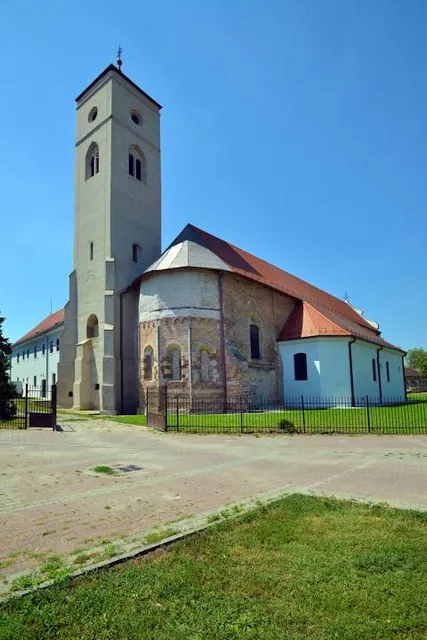
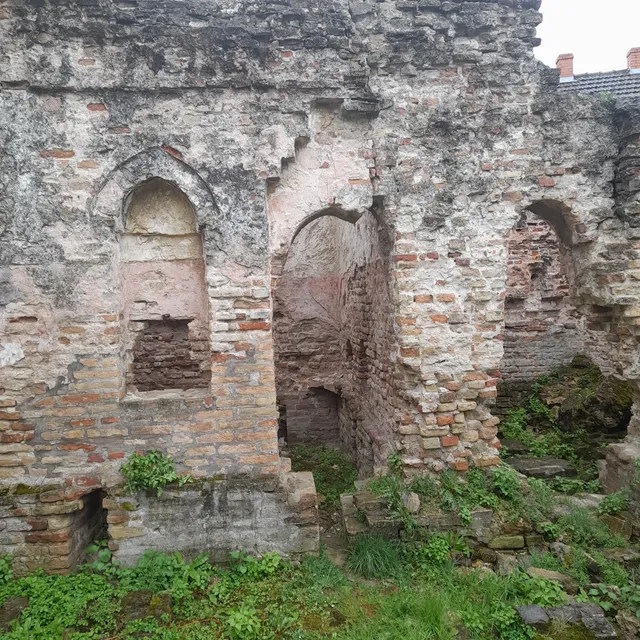
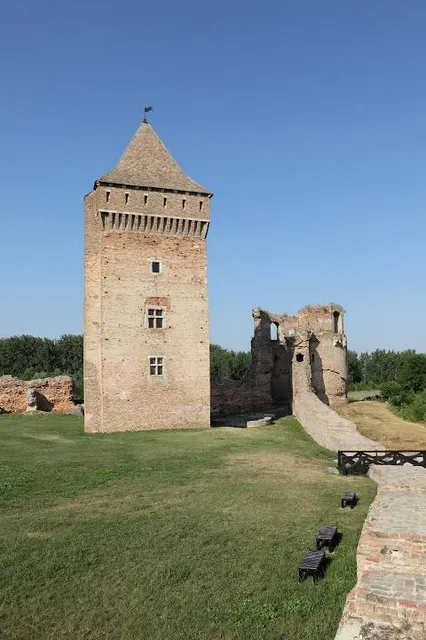
Origins can be traced to the 12th century. In 1169, canons from the knighthood Order of the Holy Sepulchre built a small church in the Romanesque style. They used some building materials from much older previous edifices. Franciscans took over the church in 1300. In the second half of the 14th century, the Franciscans expanded it, forming a monastery. The inner corridors are designed to practically form the cubes. Franciscans added the tall bell tower and the monastery building, all in the Gothic style. A nice, Renaissance style sink is still preserved. The monastery was surrounded by a moat and the walls with towers, as was the usual for the monasteries in Hungary at the time. After the Ottoman conquest, the monastery was converted to a mosque in the 16th century. Some of the Ottoman adaptations still remain, like the south wall's mihrab - a niche in the wall that indicates the direction of Mecca. With the withdrawal of the Ottomans, the Franciscans returned in the 17th century. The present appearance of the complex dates from the 1734-1768 period. Visually, the monastery is today a combination of Gothic, Romanesque and Classicist...
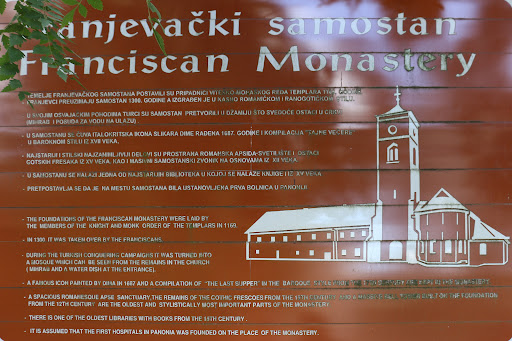
Read moreThe foundations of the Franciscan Monastery were laid by the Templar knights and monks in 1169. In the 13th century it was taken by Franciscans. During the Turkish time, it was turned into a mosque. This is a rare place in the world where you can see a mosque and a church in the same building. There is one of the oldest Gothic frescoes from the 15th century there. Also, a library from the 15th century can be found here. It is assumed that the first hospital in Panonia was founded here. A lot of stories can be revealed if you visit this magnificent place and you are lucky to...
Read moreVelmi zajímavý klášter s bohatým muzeem. Jako zahraniční turista jsem jel do Bače hlavně kvůli zrekonstruovanému klášteru. Bohužel jsem nikde nenašel informaci o otvírací době pro turisty, o možnostech prohlídky. Klášter byl zavřený. Zazvonil jsem u dveří, přišel bratr františkán a ukázal mi pár důležitých exponátů. Protože jsem byl jen individuální turista, sám, proběhli jsme muzeum za 5 - 10 minut. Vůbec nebyla šance detailně si prohlédnout exponáty. Jsem zklamaný, ale jsem rád, že jsem viděl alespoň něco. Chápu, že ukazovat muzeum jednomu turistovi není efektivní. Alespoň kostel jsem si mohl detailně prohlédnout před bohoslužbou. Bylo by dobré oficiálně otevřít muzeum v některých hodinách pro turisty, aby si mohli individuálně, svým tempem...
Read more