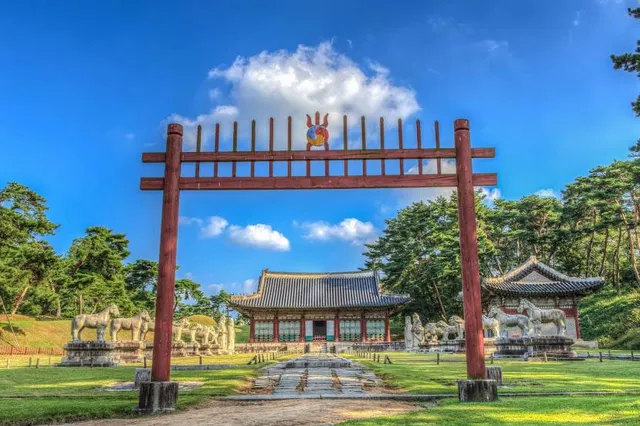
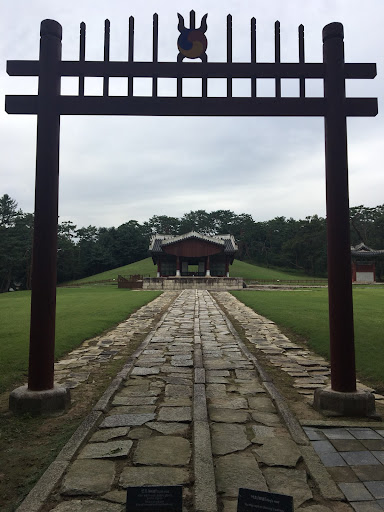
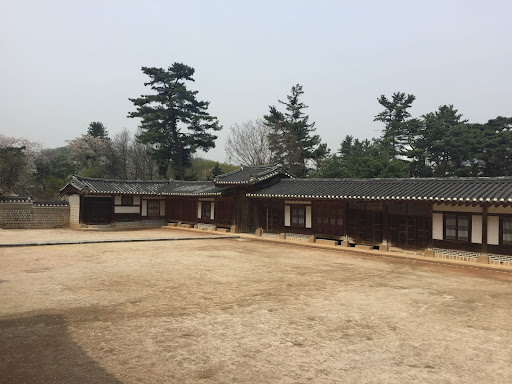
(Royal tombs Tour) I visited the Royal tombs of Joseon Dynasty in North-eastern Seoul with my son. The Royal tombs from the Joseon Dynasty (13921910) were recently registered as a UNESCO World Heritage site. The tombs are an excellent example of the architecture and landscape of the Joseon Dynasty. Dongguneung which is located in Guri, Gyeonggi-do province is a cluster of Joseon Dynasty royal tombs. 17 Joseon Kings and queens are buried here included Taejo who is the founder of the Joseon Dynasty. He was buried at the tomb of Geonwolleung in 1408. The construction of the cluster was ordered by Taejong of Joseon in 1408 and ninth tomb was placed here in 1855. This historic site is home to Hongneung, the tomb of Emperor Gojong(18521919), the 26th monarch of the Joseon Dynasty, buried together with his Empress Myeongseong from the Min clan(18511895), and Yuneung, the tomb of Emperor Sunjong(18741926), the 27th monarch of the Joseon Dynasty, buried with his both Empresses near here. In accordance with Pungsu (geomancy principles), Hongneung and Yuneung were built in front of Myojeok Mountain as a main mountain to protect the burial ground, since its topography reflects a blue dragon to the left and a white tiger to the right and facing another mountain at a distance. Unlike the royal tombs of predecessors, Hongneung and Yuneung are imperial royal tombs which, clearly show the changes that took place in the royal burial system during the Joseon Period. Those changes are: in front of each burial mound, a Chimjeon instead of Jeongjagak is placed and stone statues of civil and military officials, animal figures of giraffes, elephants, lions, haetaes, camels and horses are erected in order along Spirit road, Royal road, and the stone path from the Chimjeon to the Hongsalmun on both sides. The Spirit road, Royal road also became wider and Jaesil, ritual preparation chamber, became larger than those of past royal tombs because Gojong proclaimed Joseon an empire in 1897, receiving the title of Emperor Gwangmu; thus sitting as the last monarch of the Joseon Dynasty and the first emperor of the Korean Empire. I realized today that my memory of visiting Dongguneung in childhood was absolutely wrong. It was HongYuneung, not Dongguneung because there were many stone statues in my memory. I was very excited about the opportunity to be back here again after decades. The Great Korean Empire was proclaimed in October 1897 by Emperor Gojong under pressure after the Donghak Peasant Revolution of 1894 to 1895 and the Gabo Reforms that swept the country from 1894 to 1896. Joseon Dynasty has been troubled by partisan strife and the hereditary politics of its royal relatives, and there were always the powerless people who suffered in the poor country. Where did the power of Joseon come from and where did it go? You will be able to look back on the history of Joseon in the front of the Royal Tombs, the last place of life that no one can avoid. A King can lower himself down because no matter how low it gets, he is a king. The king who exalt himself is not a king. No matter how high he gets, he is not confident. Most of the kings of the Joseon Dynasty exaggerated the royal tombs in the narrow national territory in order to raise themselves instead of strengthening its military forces and economic power, even though they were not able to protect their country from foreign invasions. However, the Joseon Dynasty has always been saved from the crisis by the people who have been treated...
Read moreHongneung is a royal tomb where the Emperor Gojong, the 26th king of Joseon, and his consort Empress Myeongseong are buried. Emperor Gojong failed to preserve the country against internal political upheavals and foreign aggression and during his reign. His wife, Empress Myeongseong, was slain by the Japanese Army in 1895. Empress Myeongseong's tomb was originally located near Cheongnyangni but she was later moved next to her husband. Distinguished from the existing styles of tombs at that time, Hongneung was constructed after the style of the tombs of the Ming emperors as the Korean Empire had been proclaimed in 1897. It has a 12 leaved-folding screen in stone and a stone plate embosomed among floral patterns but no stone slabs around the tumulus outside of the handrails. Instead of a T-shaped shrine, a house containing the king's bedroom with an area of five kan by four kan is placed in front of the tomb. Around the tomb are placed sculptures of civil and military officers and animal images such as giraffes, elephants, lions, and camels. The officer sculptures are large in size and traditional in their decoration. Yureung is another royal tomb where the Emperor Sunjong and his wives, the Empress Sunmyeonghyo, and Sunjeonghyo, are buried It is unique among the royal tombs of the Joseon Dynasty in that has a room is assigned for each of the three graves. Around the tomb are located a 12-leaved folding screen embosomed with floral decorations and 12 kan handrails. Instead of a T-shaped shrine, a hall containing the king's bedroom stands beneath the tomb, backed up by animal and the officer sculptures. As the title "emperor" was accorded to Sunjong during the reign of the Emperor Gojong, this tomb was changed in size, style, and location of the buildings to be appropriate for the tomb of an emperor. To place two tombs into one, an outer fence was drawn and a pond made of stone was installed between the two. Although these royal tombs, Hongneung and Yureung, are the last of Joseon Dynasty, this does not have any implication for the history of royal tombs of...
Read more2024 11월 16일 오후 3-4 시경쯤 방문했습니다. 주차장이 공사로 진입이 안되길래 그앞에 세우고 노모(85세 )와 가족들을 내려주고 주차할 곳을 찿으러 차를 이동시켰죠..문제는 그 주차자 입구에 40대 후반정도 되는 직원으로 보이는 두 남자분이었습니다. 저희도 입구가 어디인지 쉽게 찿을수 없어 헤매던중 거기 계신 또다른 방문객이" 여기 입구가 어디야? " 라고 하길래 저도 가족들에게 " 그러네...여기 입구가 어디인지 찿기 어려운데? 잘 알 수 있도록 뭘좀 해 놔야 하는거 아냐? " 라고 하며 그들앞을 지나가고 있었습니다. 그걸 들었는지...굉장히 짜증스럽게 " 다 잘되어 있습니다아아아아,,,!!" 라고 저희에게 소리 치더군요...제가 "어디요? " 라고 했더니 " 홈페이지에 다 있습니다. ..." 라고 매우 불친절하게 ( 일하기 싫은사람은 좀 쓰지 마세요) 요즘 누가 홈페이지까지 들어가서 그런걸 보고 공부하고 그럽니까~! 그냥 방문객들이 잘 알 수 있도록 안내판하나 거는게 뭐 그리 어렵다고 참고로 저는 외국에 살고있는 사진작가로 업무차 근처에 왔다가 가을 사진을 촬영하기 위해 그곳을 방문했습니다. 한국인이 저도 찿기 힘든 입구를 외국인이 였다면 어땠을까요? 그리고 아직도 저런 70년대 스타일 공무원이 있다는것에 너무 놀랐습니다. 저에게 반말을 하질않나...마치 입구찿지 못하는 방문객을 진상 취급 하더군요. cctv 확인하시면 누구인지 알 수 있을겁니다. 그냥 친절하게 " 왼족으로 쭉 들어가시면 입구가 나옵니다. " 하면 될 일을....저는 무슨 영화 범죄도시에 나오는...
Read more