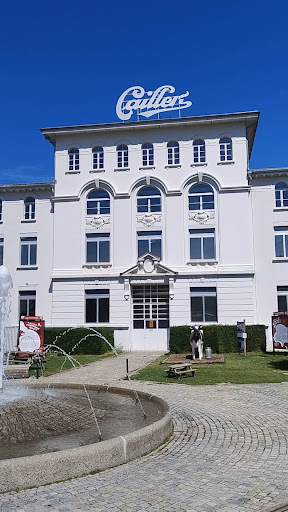
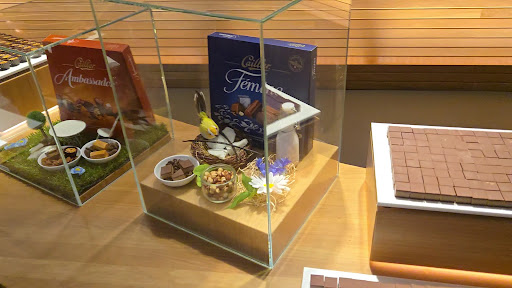
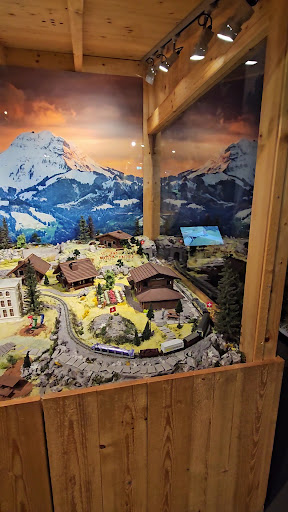
Visiting the Maison Cailler chocolate factory was a really cool and memorable experience. It’s actually the most visited tourist attraction in French-speaking Switzerland, and one of the most visited in the country overall, with over 400,000 visitors each year since it opened in 2010. They’ve done a great job in giving you an introduction to chocolate and to the Cailler brand. To be honest, I didn’t know much about Cailler before visiting — as someone from England, I’m more used to Cadbury and other British chocolate — but this was a fun and eye-opening experience, and I felt the entry price was very fair for what you get.
The tour is organised with timed slots, and each guest is given an audio guide in their chosen language. The first part of the visit is immersive and creative, with exhibits that walk you through the history of chocolate. Afterwards, you’re taken into the factory section, where you can see how the different chocolates are made and learn about the ingredients that go into them, as well as the roles farmers and suppliers play in the process. The experience ends with a generous tasting of some of Cailler’s most popular chocolates — and yes, you can eat as much as you like, which is definitely a highlight.
What makes this place stand out compared to other chocolate museums I’ve visited (like in England) is the setting. The surrounding countryside is stunning, and it reinforces the story of Swiss chocolate, particularly the unique contribution of Alpine milk. The immersive first half of the tour was especially well done, and the location itself adds to the whole experience.
That said, there were a couple of areas I thought could be improved. The section about cacao beans felt a little underdeveloped. You can scan a few points to learn about farmers in Ghana and Ivory Coast, but considering cacao is the essential ingredient, it felt unequal compared to the space devoted to Cailler’s European story. It would have been nice to hear more about the people who grow the beans, their lives, and how the process works from harvesting to production. Nestlé, which acquired Cailler in 1929, is the largest food and drinks manufacturer in the world, and while they are making efforts with sustainability programmes, I think the exhibition could better acknowledge the ethical complexities of cacao production and highlight the farmers’ contribution with more depth and dignity.
Another point was the human interaction during the tour. The whole process feels very streamlined, almost like being on a production line yourself. At the very start, the staff offered us a small piece of chocolate while waiting in the queue, which was a nice touch. But once inside, there was little personal engagement. Instructions were given, but without much warmth, and at the tasting section at the end, the staff didn’t seem particularly friendly or keen to answer questions. They did speak excellent English, which was helpful, but there was no sense of enthusiasm or passion for the brand. I understand that with so many visitors every week this can be difficult, but a few approachable, knowledgeable staff around the factory areas would really elevate the experience.
Overall, I’d say this is a highly recommended and enjoyable visit, especially if you’re in the area and want to learn more about Swiss chocolate while tasting plenty of it. It’s good value for money, the location is beautiful, and the immersive elements are well-designed. With a little more focus on the farmers behind the cacao and with staff who are more engaging and enthusiastic, this could go from being a very good experience to an...
Read moreAs an avid traveler with a passion for discovering authentic experiences, my recent visit to the Chocolate Museum Cailler in Broc, Switzerland left me feeling thoroughly underwhelmed and disappointed. While I had hoped to immerse myself in the rich history and craftsmanship of Swiss chocolate, the museum's overwhelming commercialization, exorbitant prices, and its affiliation with Nestlé, a controversial corporate giant, tainted the entire experience.
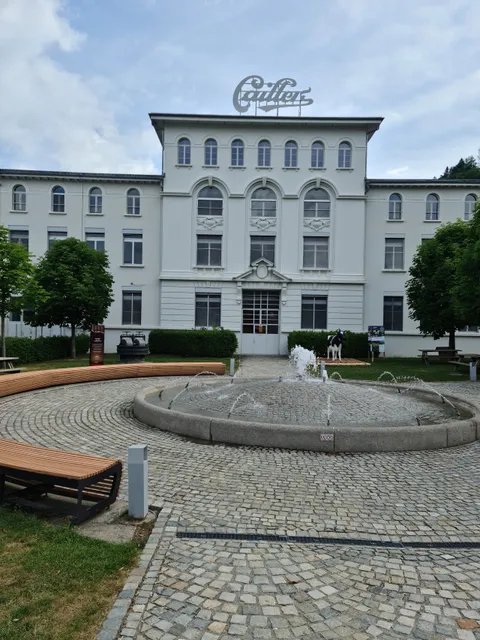
The first glaring issue with the Chocolate Museum Cailler was its overwhelmingly touristic atmosphere. Instead of a genuine exploration of the art and tradition of chocolate-making, the museum seemed to cater solely to mass tourism. The experience felt manufactured and devoid of any genuine connection to the region's chocolate heritage. Instead of an authentic cultural immersion, visitors were herded like cattle through crowded corridors, detracting from any potential educational value.
Furthermore, the steep admission fees were unjustified given the lack of substance in the museum. It is unfortunate that what should be a celebration of Swiss chocolate's history was marred by the greedy pursuit of profits. The prohibitive costs pushed away budget travelers and families, making it an exclusive attraction accessible only to a select few, further emphasizing its overly commercial nature.
Perhaps the most disheartening aspect of the Chocolate Museum Cailler is its association with Nestlé. Nestlé's questionable ethics and practices have been well-documented, particularly concerning environmental exploitation and marketing strategies that target vulnerable communities. As a company that has been repeatedly accused of putting profits before ethical considerations, its affiliation with the museum casts a shadow over the entire experience, leaving a bitter taste in the mouths of conscious travelers.
Furthermore, Nestlé's involvement raises concerns about the accuracy and impartiality of the information presented in the museum. Can visitors trust that they are getting an unbiased account of Swiss chocolate history when the narrative is potentially influenced by a corporate entity with vested interests?
Instead of providing an educational and engaging experience that promotes the beauty and cultural significance of Swiss chocolate, the Chocolate Museum Cailler appears to be merely a marketing tool for Nestlé, aimed at boosting their already colossal revenue. The museum lacks the charm and authenticity that one would expect from a place dedicated to such an integral aspect of Swiss heritage.
In conclusion, the Chocolate Museum Cailler in Broc, Switzerland, fails to live up to its potential as a cultural and educational attraction. Its excessive commercialization, high admission fees, and affiliation with Nestlé raise concerns about its authenticity and moral implications. As an alternative, I would recommend seeking out smaller, locally-owned chocolate workshops that prioritize craftsmanship and sustainability over mass consumerism. These experiences are more likely to offer an authentic and meaningful appreciation of Swiss chocolate culture without the taint of corporate...
Read moreI consider Cailler one of the highlights of my trip to Switzerland! I've wanted to come to the Cailler factory for years... but unless you're based in Lausanne or Vevey/Montreux, it is a bit too long to do as a daytrip. We were based in Lausanne, and got lucky as our transfer in Romont involved the Chocolate Express to Broc; in reality, it is just a regular s-bahn, but the livery does make the ride more fun. The factory is a few minutes walk from the Broc-Chocolaterie stop. The actual factory tour starts with an 8-room Disney-like exhibit with lights, sounds, and animatronics giving a brief history of chocolate and how it spread to Europe; i found this really entertaining. I also liked how the staff staggers the crowds, so it's not a crowded mess through these rooms. Then you're put into a "sight and smell" room, where you can read and smell the various ingredients that are often used in chocolate making. There are 3 sections where you can sample chocolate. The first is an actual factory line making Branche chocolates, so you get to see it from manufacturing to packaging; staff unloads the individually wrapped chocolates onto a tray at the end, and you can sample to your heart's content. There's then an instructional section of how to evaluate chocolate from the smell, crunch, sheen, etc; there you're treated to a second helping of chocolate, featuring the Swiss alp milk variety. The piece de resistance ends in the "chocolate tasting room," where there are 10-12 trays filled with chocolate blocks and pralines; this is the real Willy Wonka experience, where you really can indulge as much as you'd like. We had gone to the Lindt Home of Chocolate experience in Kilchberg a week before, which was a disorganized mess compared to Cailler (with far fewer tastings). I think the Cailler tour is well worth the 17chf they're charging. We actually booked the Gruyere Day Pass, which includes a free hot chocolate at Cailler, and admission to both Maison Gruyere and Chateau Gruyere; i found the day pass convenient and an easy way to make a day trip to the Gruyere region, which is beautiful as well as offering incredible gastronomic experiences. Finally the shop at Cailler does actually offer certain chocolates on sale (that is cheaper than what you'll find at Coop or Migros), plus some other knicknacks and cute souvenirs. But just next door to the factory is a Nestlé Company Shop; I found Cailler products there (along with Nespresso machines and pods) for up to 50% off, so it's worth a look, but ymmv of course. Overall I would highly recommend this...
Read more