HTML SitemapExplore
logo
Find Things to DoFind The Best Restaurants

วัดใหญ่ชัยมงคลวรวิหาร — Attraction in Ayothaya Town Municipality

Name
วัดใหญ่ชัยมงคลวรวิหาร
Description
Nearby attractions
Chedi Wat Sam Pluem
120 ตำบล คลองสวนพลู Khlong Suan Phlu, Phra Nakhon Si Ayutthaya District, Phra Nakhon Si Ayutthaya 13000, Thailand
Nearby restaurants
ก๋วยเตี๋ยววัดใหญ่
40/2 หมู่ที่ 3 ต.คลองสวนพลู, Phra Nakhon Si Ayutthaya 13000, Thailand
Khanom Jeen Ton Kampu Ayothaya
43, 34, ไผ่ลิง เมือง, Phra Nakhon Si Ayutthaya District, Phra Nakhon Si Ayutthaya 13000, Thailand
สเต็กลุงหยิก อยุธยา
40/32 ม.3, Phra Nakhon Si Ayutthaya District, Phra Nakhon Si Ayutthaya 13000, Thailand
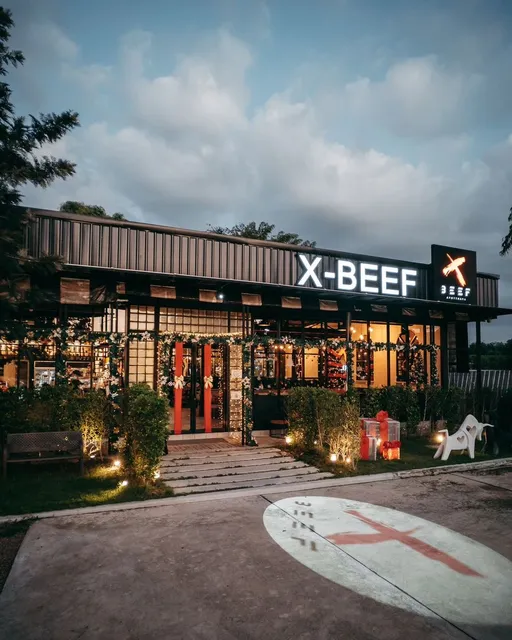
X BEEF Steakhouse เอ็กซ์บีฟ สเต็กอยุธยา
ร้าน X Beef ตรงข้ามโรงเรียนวัดใหญ่ 22/27 Phai Ling, Phra Nakhon Si Ayutthaya District, Phra Nakhon Si Ayutthaya 13000, Thailand
Ruen Thai Ayothaya
8 2, Tambon Khlong Suan Plu, Phra Nakhon Si Ayutthaya District, Phra Nakhon Si Ayutthaya 13000, Thailand
Samavi Sai Mai Roti
8HWR+6GX, Khlong Suan Phlu, Phra Nakhon Si Ayutthaya District, Phra Nakhon Si Ayutthaya 13000, Thailand
Heng Charoen Dim Sum
120 43 หมู่ที่ 3 ถนน 3477 บางปะอิน Tambon Kamang, Phra Nakhon Si Ayutthaya District, Phra Nakhon Si Ayutthaya 13000, Thailand
Somtum Ya Chaichaimongkol Restaurant (ส้มตำยาใจชัยมงคล)
8HWR+MFX, Phai Ling, Phra Nakhon Si Ayutthaya District, Phra Nakhon Si Ayutthaya 13000, Thailand
ก๋วยเตี๋ยวเรือชินเฮง เจ้าเก่า ถนนวัดใหญ่ชัยมงคล -วัดพนัญเชิง
8HVQ+H2P, 3477, Tambon Kamang, Phra Nakhon Si Ayutthaya District, Phra Nakhon Si Ayutthaya 13000, Thailand
Bang Imron Saimai Roti Branch 1
16, 4, Khlong Suan Phlu, Phra Nakhon Si Ayutthaya District, Phra Nakhon Si Ayutthaya 13000, Thailand
Related posts
Keywords
วัดใหญ่ชัยมงคลวรวิหาร tourism.วัดใหญ่ชัยมงคลวรวิหาร hotels.วัดใหญ่ชัยมงคลวรวิหาร bed and breakfast. flights to วัดใหญ่ชัยมงคลวรวิหาร.วัดใหญ่ชัยมงคลวรวิหาร attractions.วัดใหญ่ชัยมงคลวรวิหาร restaurants.วัดใหญ่ชัยมงคลวรวิหาร travel.วัดใหญ่ชัยมงคลวรวิหาร travel guide.วัดใหญ่ชัยมงคลวรวิหาร travel blog.วัดใหญ่ชัยมงคลวรวิหาร pictures.วัดใหญ่ชัยมงคลวรวิหาร photos.วัดใหญ่ชัยมงคลวรวิหาร travel tips.วัดใหญ่ชัยมงคลวรวิหาร maps.วัดใหญ่ชัยมงคลวรวิหาร things to do.
วัดใหญ่ชัยมงคลวรวิหาร things to do, attractions, restaurants, events info and trip planning
วัดใหญ่ชัยมงคลวรวิหาร
ThailandPhra Nakhon Si Ayutthaya ProvinceAyothaya Town Municipalityวัดใหญ่ชัยมงคลวรวิหาร

Basic Info

วัดใหญ่ชัยมงคลวรวิหาร

40 หลวงพ่อขาว ซ. 3 Phai Ling, Phra Nakhon Si Ayutthaya District, Phra Nakhon Si Ayutthaya 13000, Thailand
4.7(9.6K)
Open 24 hours
Save
spot

Ratings & Description

Info

Cultural
Scenic
Family friendly
Accessibility
attractions: Chedi Wat Sam Pluem, restaurants: ก๋วยเตี๋ยววัดใหญ่, Khanom Jeen Ton Kampu Ayothaya, สเต็กลุงหยิก อยุธยา, X BEEF Steakhouse เอ็กซ์บีฟ สเต็กอยุธยา, Ruen Thai Ayothaya, Samavi Sai Mai Roti, Heng Charoen Dim Sum, Somtum Ya Chaichaimongkol Restaurant (ส้มตำยาใจชัยมงคล), ก๋วยเตี๋ยวเรือชินเฮง เจ้าเก่า ถนนวัดใหญ่ชัยมงคล -วัดพนัญเชิง, Bang Imron Saimai Roti Branch 1
logoLearn more insights from Wanderboat AI.
Phone
+66 35 242 640
Website
facebook.com

Plan your stay

hotel
Pet-friendly Hotels in Ayothaya Town Municipality
Find a cozy hotel nearby and make it a full experience.

hotel
Affordable Hotels in Ayothaya Town Municipality
Find a cozy hotel nearby and make it a full experience.

hotel
The Coolest Hotels You Haven't Heard Of (Yet)
Find a cozy hotel nearby and make it a full experience.

hotel
Trending Stays Worth the Hype in Ayothaya Town Municipality
Find a cozy hotel nearby and make it a full experience.

Reviews

Nearby attractions of วัดใหญ่ชัยมงคลวรวิหาร

Chedi Wat Sam Pluem
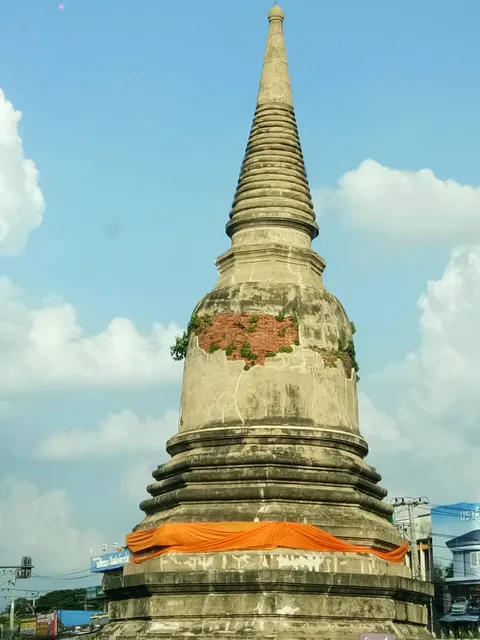
Chedi Wat Sam Pluem

Chedi Wat Sam Pluem

4.5

(739)

Open 24 hours
Click for details

Nearby restaurants of วัดใหญ่ชัยมงคลวรวิหาร

ก๋วยเตี๋ยววัดใหญ่

Khanom Jeen Ton Kampu Ayothaya

สเต็กลุงหยิก อยุธยา

X BEEF Steakhouse เอ็กซ์บีฟ สเต็กอยุธยา

Ruen Thai Ayothaya

Samavi Sai Mai Roti

Heng Charoen Dim Sum

Somtum Ya Chaichaimongkol Restaurant (ส้มตำยาใจชัยมงคล)

ก๋วยเตี๋ยวเรือชินเฮง เจ้าเก่า ถนนวัดใหญ่ชัยมงคล -วัดพนัญเชิง

Bang Imron Saimai Roti Branch 1
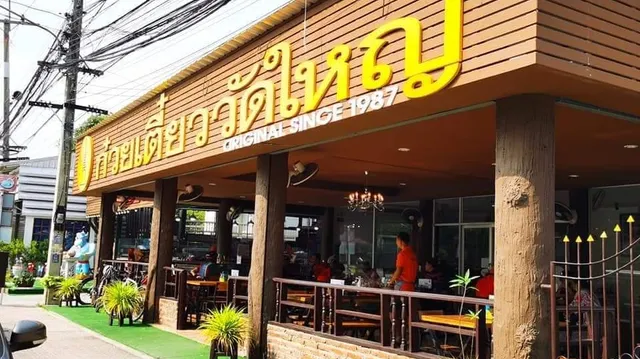
ก๋วยเตี๋ยววัดใหญ่

ก๋วยเตี๋ยววัดใหญ่

3.9

(359)

Click for details
Khanom Jeen Ton Kampu Ayothaya

Khanom Jeen Ton Kampu Ayothaya

4.6

(1.5K)

$

Click for details
สเต็กลุงหยิก อยุธยา

สเต็กลุงหยิก อยุธยา

4.1

(122)

Click for details
X BEEF Steakhouse เอ็กซ์บีฟ สเต็กอยุธยา

X BEEF Steakhouse เอ็กซ์บีฟ สเต็กอยุธยา

4.8

(881)

$$

Click for details
Get the Appoverlay
Get the AppOne tap to find yournext favorite spots!
Wanderboat LogoWanderboat

Your everyday Al companion for getaway ideas

CompanyAbout Us
InformationAI Trip PlannerSitemap
SocialXInstagramTiktokLinkedin
LegalTerms of ServicePrivacy Policy

Get the app

© 2025 Wanderboat. All rights reserved.
logo

Reviews of วัดใหญ่ชัยมงคลวรวิหาร

4.7
(9,614)
avatar
5.0
6y

Historical background

In the year 1357 two princes of Ayutthaya, Chao Kaeo and Chao Thai, died of cholera. King Ramathibodhi I (r. 1350 - 1369) ordered the bodies of both princes to be exhumed and at the cremation site, a monastery with a holy monument (stupa) and a preaching hall (viharn), be established. He gave the monastery the name "Wat Pa Kaeo" or the Monastery of the Crystal Forest.

The temple became the home of Buddhist monks ordained and trained at the Monastery of Phra Wanaratanathen in Ceylon (present Sri Lanka). The Sangha group was mainly engaged in meditation. The king conferred the title of "Right side Supreme Patriarch" to the head of the group, Somdet Phra Wanarat. The monastery became known as “Wat Chao Phya Thai” - The Monastery of the Supreme Patriarch.

This temple was repeatedly involved in the history of Ayutthaya. It was here that the conspirators (Khun Inthorathep, Mün Ratchasaneh, Luang Si Yot, Phirenthorathep and Prince Tianracha), end 1548 gathered in the preaching hall to burn candles to consult an oracle whether or not to overthrown the throne usurper Khun Worawongsa and Queen Thao Sri Sudachan; which resulted in Prince Tienracha becoming king in on 19 January 1549, crowned with the title King Maha Chakkraphat (r.1548-1569).

In 1592 King Naresuan (r. 1590-1605) defeated the Burmese Army at Nong Sarai by killing the Burmese Crown Prince in single-handed combat on elephant. In the battle the King and his brother King Ekathotsarot got separated from their army officers. On return to Ayutthaya the King wanted to punish to death his officers, but the Supreme Patriarch intervened and requested the punishment to be suspended; which King Naresuan granted. The Royal Chronicles of Ayutthaya although, state nothing about the construction of the great chedi. It is assumed that, on this occasion, King Naresuan ordered the restoration and enlargement of the temple and the principal chedi. The chedi was named Phra Chedi Chaiya Mongkhon. Presumably this celebration gave rise to the temple’s new name, Wat Yai Chaiya Mongkhon .

The monastery was re-established and officially recognized in 1957.

Wihan Phra Phuttha Saiyat or the Vihara of the Reclining Buddha was constructed during the reign of King Naresuan. The new image was remodeled in 1965 after the original got ruined by fortune hunters. The statue lies in a north-south position, with its head in southern direction and facing the east.

In 1979 the abbot, Phra Pawanarangsi, in coordination with the Fine Arts Department constructed a new ordination hall on the old remains, maintaining partly the ancient site, so that the original structure remains visible.

Architecture

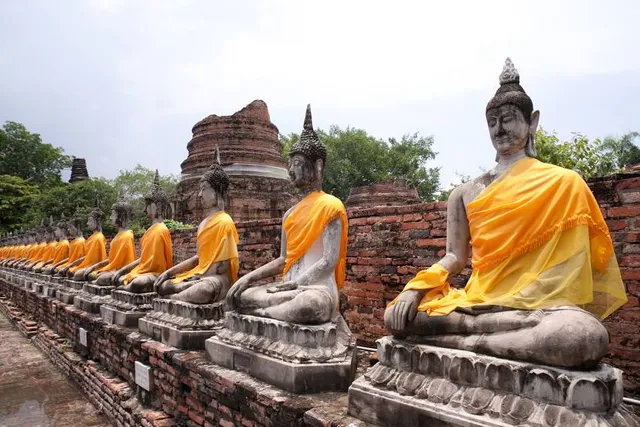
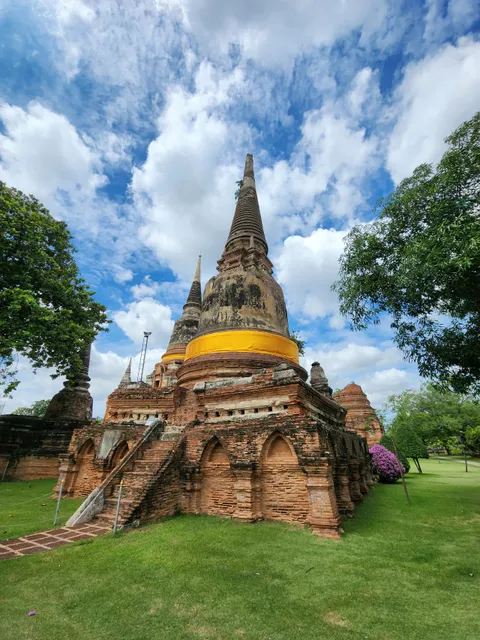
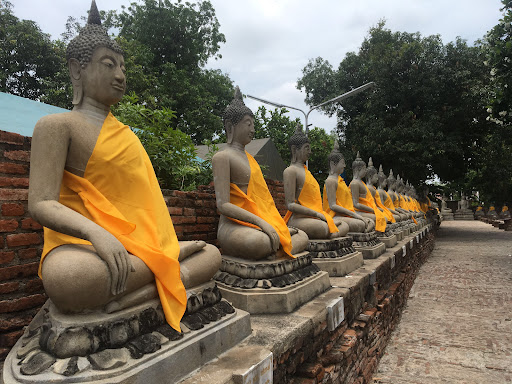
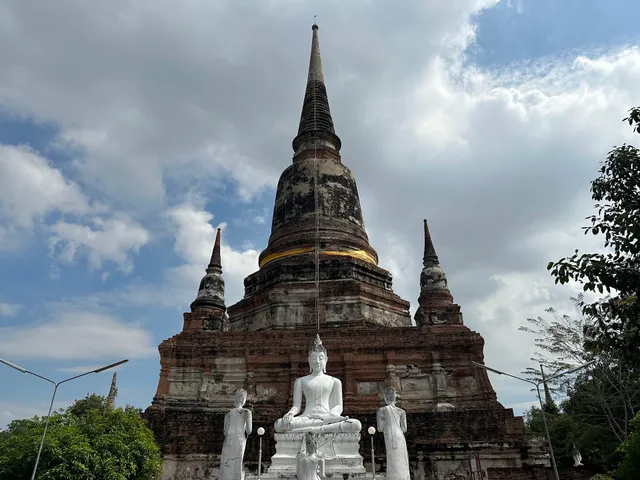
The chedi of Wat Yai Chai Mongkhon is one of the landmarks of Ayutthaya, standing high, and visible to all, who approach the city from the east, at par with Chedi Phukhao Thong. The bell-shaped principal chedi stands on an elevated square base with smaller Chedi at the corners. There is a second octagonal pedestal above the base to accommodate the bell-shaped body. Stairs lead up on the east side towards the first terrace, and continue inwards the dome. Inside the dome we can see the chamber where the relics were contained. Two mondops stand in the front, with their pyramidal upper structures collapsed, exposing the Buddha statues. These rows of Buddha statues are newly sculpted in order to replace those which collapsed through the time. The statues are all identical and before gilded. The bases contain the ashes of the death. West of the chedi are the remains of a sermon hall. The whole temple complex is surrounded by an outer wall.

The ordination hall or ubosot lies east and in the front of the large chedi. The hall measures 16 m by 44 m and has been re-roofed to preserve it from further damage. If I recall well it was before partial surrounded by a moat (which now has been filled). Phra Phuttha Chaiya Mongkhon in the ordination hall is one of the most sacred Buddha images...

   Read more
avatar
5.0
1y

Discovering the Serenity of Wat Yai Chai Mongkol: A Personal Journey

As I stepped into the serene grounds of Wat Yai Chai Mongkol, nestled in the heart of Ayutthaya, Thailand, I was instantly enveloped in an atmosphere that whispered tales of ancient splendor and spiritual tranquility. This temple, with its rich historical significance and architectural beauty, promised a journey back in time, offering a glimpse into Thailand's glorious past and the spiritual depth that permeates its culture.

The First Glimpse: Awe-Inspiring Architecture

The majestic chedi, standing tall against the backdrop of a clear blue sky, was the first to catch my eye. Its grandeur, a testament to the engineering and artistic prowess of the Siamese kingdom, beckoned me closer. As I wandered through the temple grounds, the intricate stonework and the harmonious blend of colors and textures spoke of a bygone era when devotion and craftsmanship went hand in hand.

A Walk Amongst Ruins and Reverence

Moving through the complex, I found myself amidst the ruins of ancient prayer halls and stupas, each telling a story of devotion, decay, and the relentless march of time. The sight of monks in saffron robes, moving silently along these ancient pathways, added a profound sense of peace and timelessness to the ambiance. It was as if the modern world had faded away, leaving only the essence of faith and history.

The Reclining Buddha: A Symbol of Serenity

One of the highlights of my visit was the majestic reclining Buddha statue, its serene expression exuding a sense of calm and benevolence. Sitting there, in the quietude of its presence, I felt a deep connection to the spiritual heritage of Thailand. It was a moment of introspection, of finding a quiet strength within, inspired by the gentle smile of the Buddha.

Reflections by the Lotus Pond

The temple's lotus pond, a mirror to the sky above, offered a moment of reflection. As I watched the lotuses, gently swaying in the breeze, their beauty and resilience reminded me of the enduring nature of faith. In the simplicity of a flower, there was a profound lesson on blossoming amidst adversity, on reaching towards the light.

A Journey Through Time and Spirit

Wat Yai Chai Mongkol is not just a place of historical interest; it is a sanctuary of peace and spirituality. As I concluded my visit, walking past the towering chedi once more, I carried with me a sense of awe and a deeper appreciation for Thailand's cultural and spiritual depth. This temple, with its ruins and relics, is a bridge between the past and present, inviting travelers to pause, reflect, and find peace amidst its ancient stones.

A Personal Revelation

My journey to Wat Yai Chai Mongkol was more than a mere exploration of a historic site; it was a pilgrimage of the soul. In the silence of the ruins, amidst the whispers of the past, I found a space for contemplation, a reminder of the beauty that arises from within when one takes the time to look beyond the surface.

Embarking on Your Own Journey

For those yearning to explore the rich tapestry of Thailand's history and spirituality, Wat Yai Chai Mongkol offers a profound experience. It is a place where history, art, and faith intertwine, offering each visitor a unique journey into the heart of Thai heritage.

As I share this journey with you, I invite you to embark on your own exploration, to discover the serenity and beauty that lies within the ancient walls of Wat Yai Chai Mongkol. It is a journey that promises not just insights into a splendid past but also reflections on the timeless essence of...

   Read more
avatar
5.0
2y

Tourists flock to Wat Yai Chai Mongkol because it is widely regarded as the most significant and well-known temple in all of Ayutthaya province. The temple's architectural brilliance and its historical significance during the Ayutthaya era are among its many notable features. The temple's tallest chedi can be found here, and worshippers can pay their respects at the "Samanen Nikayaram" pavilion, which is located at the temple's back. To top it all off, the temple grounds are lovely, making it a must-see for anyone touring Ayutthaya.

Wat Yai Chai Mongkol is an old temple that dates back to the early Ayutthaya period, when King Ramathibodi I, also known as King U Thong, founded the city of Ayutthaya. Supposedly, in the year 1900, King U Thong ordered the exhumation of a sacred relic endowed with miraculous abilities. In time, the artifact made its way to a temple dedicated to the relic's worship known as "Wat Pa Kaew."

Afterward, a delegation of monks from Wat Pa Kaew set out for Ayutthaya from Sri Lanka. Due to the monks' newfound popularity among the community, enrollment at Wat Pa Kaew's monastic school grew. Because of this, King U Thong created a monastic administrative position called Sangha Nikaya and gave the head monk, Phra Wanarat, the same status as the head of the Pali tradition.

King Naresuan the Great's triumph over the Burmese at Bang Rachan, Suphan Buri, is commemorated at Wat Pa Kaew. At that time, Burma's armed forces were making their way towards Ayutthaya. They were met by King Naresuan and his army, who were still preparing for battle when the king famously challenged his brother, "Where will you stand when I go into battle? When the soldiers come, they'll find me under the tree, where it's cool and shady. The Burmese king was so impressed by this display of his bravery and strength that he withdrew his troops. Later on, King Naresuan asked for forgiveness on behalf of his enemies. Lord Buddha, he said, had shown the way by forgiving the warriors who had encircled him before they had confessed. Word of the king's mercy and his bravery spread, and the temple was renamed "Wat Yai Chai Mongkol," or the "Great Temple of the Auspicious Victory."

Points of Interest: The Victory Pagoda, which commemorates King Naresuan's glorious victory, is the most captivating aspect of Wat Yai Chai Mongkol. During the conflict, the Burmese army camped near this pagoda in Nong Sa Rai Sub-district, Suphan Buri Province. King Naresuan and his royal monks, accompanied by 25 other monks, went to the pagoda to beg forgiveness from the gods for the soldiers who had fought against them. After declaring his piety and bravery, King Naresuan built the great chedi to celebrate his triumphant reign and immortalize his legacy. Eventually, the chedi became known as "Chedi...

   Read more
Page 1 of 7
Previous
Next

Posts

Sao ChanSao Chan
Historical background In the year 1357 two princes of Ayutthaya, Chao Kaeo and Chao Thai, died of cholera. King Ramathibodhi I (r. 1350 - 1369) ordered the bodies of both princes to be exhumed and at the cremation site, a monastery with a holy monument (stupa) and a preaching hall (viharn), be established. He gave the monastery the name "Wat Pa Kaeo" or the Monastery of the Crystal Forest. The temple became the home of Buddhist monks ordained and trained at the Monastery of Phra Wanaratanathen in Ceylon (present Sri Lanka). The Sangha group was mainly engaged in meditation. The king conferred the title of "Right side Supreme Patriarch" to the head of the group, Somdet Phra Wanarat. The monastery became known as “Wat Chao Phya Thai” - The Monastery of the Supreme Patriarch. This temple was repeatedly involved in the history of Ayutthaya. It was here that the conspirators (Khun Inthorathep, Mün Ratchasaneh, Luang Si Yot, Phirenthorathep and Prince Tianracha), end 1548 gathered in the preaching hall to burn candles to consult an oracle whether or not to overthrown the throne usurper Khun Worawongsa and Queen Thao Sri Sudachan; which resulted in Prince Tienracha becoming king in on 19 January 1549, crowned with the title King Maha Chakkraphat (r.1548-1569). In 1592 King Naresuan (r. 1590-1605) defeated the Burmese Army at Nong Sarai by killing the Burmese Crown Prince in single-handed combat on elephant. In the battle the King and his brother King Ekathotsarot got separated from their army officers. On return to Ayutthaya the King wanted to punish to death his officers, but the Supreme Patriarch intervened and requested the punishment to be suspended; which King Naresuan granted. The Royal Chronicles of Ayutthaya although, state nothing about the construction of the great chedi. It is assumed that, on this occasion, King Naresuan ordered the restoration and enlargement of the temple and the principal chedi. The chedi was named Phra Chedi Chaiya Mongkhon. Presumably this celebration gave rise to the temple’s new name, Wat Yai Chaiya Mongkhon . The monastery was re-established and officially recognized in 1957. Wihan Phra Phuttha Saiyat or the Vihara of the Reclining Buddha was constructed during the reign of King Naresuan. The new image was remodeled in 1965 after the original got ruined by fortune hunters. The statue lies in a north-south position, with its head in southern direction and facing the east. In 1979 the abbot, Phra Pawanarangsi, in coordination with the Fine Arts Department constructed a new ordination hall on the old remains, maintaining partly the ancient site, so that the original structure remains visible. Architecture The chedi of Wat Yai Chai Mongkhon is one of the landmarks of Ayutthaya, standing high, and visible to all, who approach the city from the east, at par with Chedi Phukhao Thong. The bell-shaped principal chedi stands on an elevated square base with smaller Chedi at the corners. There is a second octagonal pedestal above the base to accommodate the bell-shaped body. Stairs lead up on the east side towards the first terrace, and continue inwards the dome. Inside the dome we can see the chamber where the relics were contained. Two mondops stand in the front, with their pyramidal upper structures collapsed, exposing the Buddha statues. These rows of Buddha statues are newly sculpted in order to replace those which collapsed through the time. The statues are all identical and before gilded. The bases contain the ashes of the death. West of the chedi are the remains of a sermon hall. The whole temple complex is surrounded by an outer wall. The ordination hall or ubosot lies east and in the front of the large chedi. The hall measures 16 m by 44 m and has been re-roofed to preserve it from further damage. If I recall well it was before partial surrounded by a moat (which now has been filled). Phra Phuttha Chaiya Mongkhon in the ordination hall is one of the most sacred Buddha images in Ayutthaya.
Vũ Hải NamVũ Hải Nam
Discovering the Serenity of Wat Yai Chai Mongkol: A Personal Journey As I stepped into the serene grounds of Wat Yai Chai Mongkol, nestled in the heart of Ayutthaya, Thailand, I was instantly enveloped in an atmosphere that whispered tales of ancient splendor and spiritual tranquility. This temple, with its rich historical significance and architectural beauty, promised a journey back in time, offering a glimpse into Thailand's glorious past and the spiritual depth that permeates its culture. The First Glimpse: Awe-Inspiring Architecture The majestic chedi, standing tall against the backdrop of a clear blue sky, was the first to catch my eye. Its grandeur, a testament to the engineering and artistic prowess of the Siamese kingdom, beckoned me closer. As I wandered through the temple grounds, the intricate stonework and the harmonious blend of colors and textures spoke of a bygone era when devotion and craftsmanship went hand in hand. A Walk Amongst Ruins and Reverence Moving through the complex, I found myself amidst the ruins of ancient prayer halls and stupas, each telling a story of devotion, decay, and the relentless march of time. The sight of monks in saffron robes, moving silently along these ancient pathways, added a profound sense of peace and timelessness to the ambiance. It was as if the modern world had faded away, leaving only the essence of faith and history. The Reclining Buddha: A Symbol of Serenity One of the highlights of my visit was the majestic reclining Buddha statue, its serene expression exuding a sense of calm and benevolence. Sitting there, in the quietude of its presence, I felt a deep connection to the spiritual heritage of Thailand. It was a moment of introspection, of finding a quiet strength within, inspired by the gentle smile of the Buddha. Reflections by the Lotus Pond The temple's lotus pond, a mirror to the sky above, offered a moment of reflection. As I watched the lotuses, gently swaying in the breeze, their beauty and resilience reminded me of the enduring nature of faith. In the simplicity of a flower, there was a profound lesson on blossoming amidst adversity, on reaching towards the light. A Journey Through Time and Spirit Wat Yai Chai Mongkol is not just a place of historical interest; it is a sanctuary of peace and spirituality. As I concluded my visit, walking past the towering chedi once more, I carried with me a sense of awe and a deeper appreciation for Thailand's cultural and spiritual depth. This temple, with its ruins and relics, is a bridge between the past and present, inviting travelers to pause, reflect, and find peace amidst its ancient stones. A Personal Revelation My journey to Wat Yai Chai Mongkol was more than a mere exploration of a historic site; it was a pilgrimage of the soul. In the silence of the ruins, amidst the whispers of the past, I found a space for contemplation, a reminder of the beauty that arises from within when one takes the time to look beyond the surface. Embarking on Your Own Journey For those yearning to explore the rich tapestry of Thailand's history and spirituality, Wat Yai Chai Mongkol offers a profound experience. It is a place where history, art, and faith intertwine, offering each visitor a unique journey into the heart of Thai heritage. As I share this journey with you, I invite you to embark on your own exploration, to discover the serenity and beauty that lies within the ancient walls of Wat Yai Chai Mongkol. It is a journey that promises not just insights into a splendid past but also reflections on the timeless essence of spirituality and peace.
Kyd Tantano MasongKyd Tantano Masong
Tourists flock to Wat Yai Chai Mongkol because it is widely regarded as the most significant and well-known temple in all of Ayutthaya province. The temple's architectural brilliance and its historical significance during the Ayutthaya era are among its many notable features. The temple's tallest chedi can be found here, and worshippers can pay their respects at the "Samanen Nikayaram" pavilion, which is located at the temple's back. To top it all off, the temple grounds are lovely, making it a must-see for anyone touring Ayutthaya. Wat Yai Chai Mongkol is an old temple that dates back to the early Ayutthaya period, when King Ramathibodi I, also known as King U Thong, founded the city of Ayutthaya. Supposedly, in the year 1900, King U Thong ordered the exhumation of a sacred relic endowed with miraculous abilities. In time, the artifact made its way to a temple dedicated to the relic's worship known as "Wat Pa Kaew." Afterward, a delegation of monks from Wat Pa Kaew set out for Ayutthaya from Sri Lanka. Due to the monks' newfound popularity among the community, enrollment at Wat Pa Kaew's monastic school grew. Because of this, King U Thong created a monastic administrative position called Sangha Nikaya and gave the head monk, Phra Wanarat, the same status as the head of the Pali tradition. King Naresuan the Great's triumph over the Burmese at Bang Rachan, Suphan Buri, is commemorated at Wat Pa Kaew. At that time, Burma's armed forces were making their way towards Ayutthaya. They were met by King Naresuan and his army, who were still preparing for battle when the king famously challenged his brother, "Where will you stand when I go into battle? When the soldiers come, they'll find me under the tree, where it's cool and shady. The Burmese king was so impressed by this display of his bravery and strength that he withdrew his troops. Later on, King Naresuan asked for forgiveness on behalf of his enemies. Lord Buddha, he said, had shown the way by forgiving the warriors who had encircled him before they had confessed. Word of the king's mercy and his bravery spread, and the temple was renamed "Wat Yai Chai Mongkol," or the "Great Temple of the Auspicious Victory." Points of Interest: The Victory Pagoda, which commemorates King Naresuan's glorious victory, is the most captivating aspect of Wat Yai Chai Mongkol. During the conflict, the Burmese army camped near this pagoda in Nong Sa Rai Sub-district, Suphan Buri Province. King Naresuan and his royal monks, accompanied by 25 other monks, went to the pagoda to beg forgiveness from the gods for the soldiers who had fought against them. After declaring his piety and bravery, King Naresuan built the great chedi to celebrate his triumphant reign and immortalize his legacy. Eventually, the chedi became known as "Chedi Chai Mongkol."
See more posts
See more posts
hotel
Find your stay

Pet-friendly Hotels in Ayothaya Town Municipality

Find a cozy hotel nearby and make it a full experience.

Historical background In the year 1357 two princes of Ayutthaya, Chao Kaeo and Chao Thai, died of cholera. King Ramathibodhi I (r. 1350 - 1369) ordered the bodies of both princes to be exhumed and at the cremation site, a monastery with a holy monument (stupa) and a preaching hall (viharn), be established. He gave the monastery the name "Wat Pa Kaeo" or the Monastery of the Crystal Forest. The temple became the home of Buddhist monks ordained and trained at the Monastery of Phra Wanaratanathen in Ceylon (present Sri Lanka). The Sangha group was mainly engaged in meditation. The king conferred the title of "Right side Supreme Patriarch" to the head of the group, Somdet Phra Wanarat. The monastery became known as “Wat Chao Phya Thai” - The Monastery of the Supreme Patriarch. This temple was repeatedly involved in the history of Ayutthaya. It was here that the conspirators (Khun Inthorathep, Mün Ratchasaneh, Luang Si Yot, Phirenthorathep and Prince Tianracha), end 1548 gathered in the preaching hall to burn candles to consult an oracle whether or not to overthrown the throne usurper Khun Worawongsa and Queen Thao Sri Sudachan; which resulted in Prince Tienracha becoming king in on 19 January 1549, crowned with the title King Maha Chakkraphat (r.1548-1569). In 1592 King Naresuan (r. 1590-1605) defeated the Burmese Army at Nong Sarai by killing the Burmese Crown Prince in single-handed combat on elephant. In the battle the King and his brother King Ekathotsarot got separated from their army officers. On return to Ayutthaya the King wanted to punish to death his officers, but the Supreme Patriarch intervened and requested the punishment to be suspended; which King Naresuan granted. The Royal Chronicles of Ayutthaya although, state nothing about the construction of the great chedi. It is assumed that, on this occasion, King Naresuan ordered the restoration and enlargement of the temple and the principal chedi. The chedi was named Phra Chedi Chaiya Mongkhon. Presumably this celebration gave rise to the temple’s new name, Wat Yai Chaiya Mongkhon . The monastery was re-established and officially recognized in 1957. Wihan Phra Phuttha Saiyat or the Vihara of the Reclining Buddha was constructed during the reign of King Naresuan. The new image was remodeled in 1965 after the original got ruined by fortune hunters. The statue lies in a north-south position, with its head in southern direction and facing the east. In 1979 the abbot, Phra Pawanarangsi, in coordination with the Fine Arts Department constructed a new ordination hall on the old remains, maintaining partly the ancient site, so that the original structure remains visible. Architecture The chedi of Wat Yai Chai Mongkhon is one of the landmarks of Ayutthaya, standing high, and visible to all, who approach the city from the east, at par with Chedi Phukhao Thong. The bell-shaped principal chedi stands on an elevated square base with smaller Chedi at the corners. There is a second octagonal pedestal above the base to accommodate the bell-shaped body. Stairs lead up on the east side towards the first terrace, and continue inwards the dome. Inside the dome we can see the chamber where the relics were contained. Two mondops stand in the front, with their pyramidal upper structures collapsed, exposing the Buddha statues. These rows of Buddha statues are newly sculpted in order to replace those which collapsed through the time. The statues are all identical and before gilded. The bases contain the ashes of the death. West of the chedi are the remains of a sermon hall. The whole temple complex is surrounded by an outer wall. The ordination hall or ubosot lies east and in the front of the large chedi. The hall measures 16 m by 44 m and has been re-roofed to preserve it from further damage. If I recall well it was before partial surrounded by a moat (which now has been filled). Phra Phuttha Chaiya Mongkhon in the ordination hall is one of the most sacred Buddha images in Ayutthaya.
Sao Chan

Sao Chan

hotel
Find your stay

Affordable Hotels in Ayothaya Town Municipality

Find a cozy hotel nearby and make it a full experience.

Get the Appoverlay
Get the AppOne tap to find yournext favorite spots!
Discovering the Serenity of Wat Yai Chai Mongkol: A Personal Journey As I stepped into the serene grounds of Wat Yai Chai Mongkol, nestled in the heart of Ayutthaya, Thailand, I was instantly enveloped in an atmosphere that whispered tales of ancient splendor and spiritual tranquility. This temple, with its rich historical significance and architectural beauty, promised a journey back in time, offering a glimpse into Thailand's glorious past and the spiritual depth that permeates its culture. The First Glimpse: Awe-Inspiring Architecture The majestic chedi, standing tall against the backdrop of a clear blue sky, was the first to catch my eye. Its grandeur, a testament to the engineering and artistic prowess of the Siamese kingdom, beckoned me closer. As I wandered through the temple grounds, the intricate stonework and the harmonious blend of colors and textures spoke of a bygone era when devotion and craftsmanship went hand in hand. A Walk Amongst Ruins and Reverence Moving through the complex, I found myself amidst the ruins of ancient prayer halls and stupas, each telling a story of devotion, decay, and the relentless march of time. The sight of monks in saffron robes, moving silently along these ancient pathways, added a profound sense of peace and timelessness to the ambiance. It was as if the modern world had faded away, leaving only the essence of faith and history. The Reclining Buddha: A Symbol of Serenity One of the highlights of my visit was the majestic reclining Buddha statue, its serene expression exuding a sense of calm and benevolence. Sitting there, in the quietude of its presence, I felt a deep connection to the spiritual heritage of Thailand. It was a moment of introspection, of finding a quiet strength within, inspired by the gentle smile of the Buddha. Reflections by the Lotus Pond The temple's lotus pond, a mirror to the sky above, offered a moment of reflection. As I watched the lotuses, gently swaying in the breeze, their beauty and resilience reminded me of the enduring nature of faith. In the simplicity of a flower, there was a profound lesson on blossoming amidst adversity, on reaching towards the light. A Journey Through Time and Spirit Wat Yai Chai Mongkol is not just a place of historical interest; it is a sanctuary of peace and spirituality. As I concluded my visit, walking past the towering chedi once more, I carried with me a sense of awe and a deeper appreciation for Thailand's cultural and spiritual depth. This temple, with its ruins and relics, is a bridge between the past and present, inviting travelers to pause, reflect, and find peace amidst its ancient stones. A Personal Revelation My journey to Wat Yai Chai Mongkol was more than a mere exploration of a historic site; it was a pilgrimage of the soul. In the silence of the ruins, amidst the whispers of the past, I found a space for contemplation, a reminder of the beauty that arises from within when one takes the time to look beyond the surface. Embarking on Your Own Journey For those yearning to explore the rich tapestry of Thailand's history and spirituality, Wat Yai Chai Mongkol offers a profound experience. It is a place where history, art, and faith intertwine, offering each visitor a unique journey into the heart of Thai heritage. As I share this journey with you, I invite you to embark on your own exploration, to discover the serenity and beauty that lies within the ancient walls of Wat Yai Chai Mongkol. It is a journey that promises not just insights into a splendid past but also reflections on the timeless essence of spirituality and peace.
Vũ Hải Nam

Vũ Hải Nam

hotel
Find your stay

The Coolest Hotels You Haven't Heard Of (Yet)

Find a cozy hotel nearby and make it a full experience.

hotel
Find your stay

Trending Stays Worth the Hype in Ayothaya Town Municipality

Find a cozy hotel nearby and make it a full experience.

Tourists flock to Wat Yai Chai Mongkol because it is widely regarded as the most significant and well-known temple in all of Ayutthaya province. The temple's architectural brilliance and its historical significance during the Ayutthaya era are among its many notable features. The temple's tallest chedi can be found here, and worshippers can pay their respects at the "Samanen Nikayaram" pavilion, which is located at the temple's back. To top it all off, the temple grounds are lovely, making it a must-see for anyone touring Ayutthaya. Wat Yai Chai Mongkol is an old temple that dates back to the early Ayutthaya period, when King Ramathibodi I, also known as King U Thong, founded the city of Ayutthaya. Supposedly, in the year 1900, King U Thong ordered the exhumation of a sacred relic endowed with miraculous abilities. In time, the artifact made its way to a temple dedicated to the relic's worship known as "Wat Pa Kaew." Afterward, a delegation of monks from Wat Pa Kaew set out for Ayutthaya from Sri Lanka. Due to the monks' newfound popularity among the community, enrollment at Wat Pa Kaew's monastic school grew. Because of this, King U Thong created a monastic administrative position called Sangha Nikaya and gave the head monk, Phra Wanarat, the same status as the head of the Pali tradition. King Naresuan the Great's triumph over the Burmese at Bang Rachan, Suphan Buri, is commemorated at Wat Pa Kaew. At that time, Burma's armed forces were making their way towards Ayutthaya. They were met by King Naresuan and his army, who were still preparing for battle when the king famously challenged his brother, "Where will you stand when I go into battle? When the soldiers come, they'll find me under the tree, where it's cool and shady. The Burmese king was so impressed by this display of his bravery and strength that he withdrew his troops. Later on, King Naresuan asked for forgiveness on behalf of his enemies. Lord Buddha, he said, had shown the way by forgiving the warriors who had encircled him before they had confessed. Word of the king's mercy and his bravery spread, and the temple was renamed "Wat Yai Chai Mongkol," or the "Great Temple of the Auspicious Victory." Points of Interest: The Victory Pagoda, which commemorates King Naresuan's glorious victory, is the most captivating aspect of Wat Yai Chai Mongkol. During the conflict, the Burmese army camped near this pagoda in Nong Sa Rai Sub-district, Suphan Buri Province. King Naresuan and his royal monks, accompanied by 25 other monks, went to the pagoda to beg forgiveness from the gods for the soldiers who had fought against them. After declaring his piety and bravery, King Naresuan built the great chedi to celebrate his triumphant reign and immortalize his legacy. Eventually, the chedi became known as "Chedi Chai Mongkol."
Kyd Tantano Masong

Kyd Tantano Masong

See more posts
See more posts