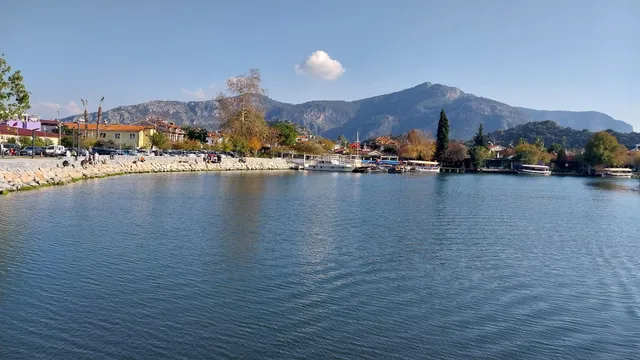
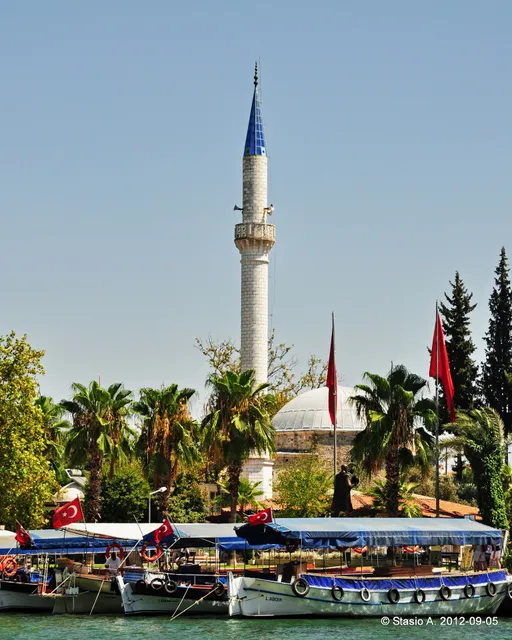
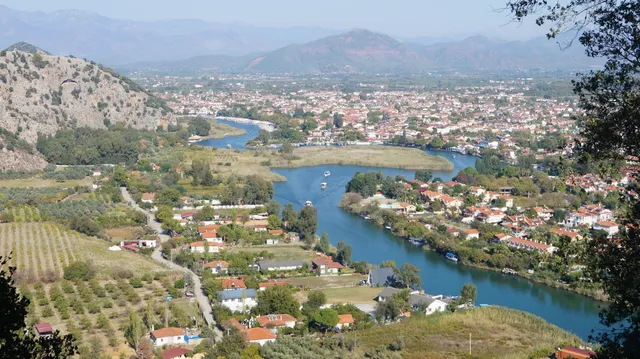
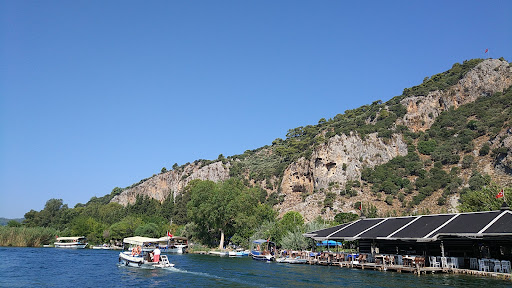
The property within boundaries of District of Koycegiz is located in the face of Dalyan City and on the right shores of Dalyan Stream (Calbis) which connect Koycegiz Lake to Mediterranean. It was the capital of the ‘Kaunos Region’ between the Caria and Lycia until the beginning of the 4th BC.
The existence of Kaunos had known by the scholars but its location was a mystery until English archaeologist Hoskyn discovered it in 1842. Swedish archaeologist P. Roos defined the independent state boundaries of Kaunos as follows: “Starting from the Fethiye Bay at the north and Ancient City of Krya at the north of the bay; extending till Tlos at the 35 km east of Fethiye, Idyma at Gokova Bay at the west and Çamkoy located in the west of Urla which is little forward to north.” In today’s context, the coastal area starting from the south plains of Mugla and extending till the mountains between Mugla and Antalya was under the sovereignty of Kaunos. Kaunos has kept this borders until the 4th century BC but then lost its statue of sovereign state after the Persian invasion. It was one of two cities resisting against Persian invasion (other is Xanthos) such that they paid high taxes to prevailing states many times in order to keep their independency as a port city.
Kaunos was mentioned as Ksibde in Lycian scripts, while as Kbid in the scripts of other surrounding cities. Life style and language of Kaunos people share similarities with Carian people except five letters in their alphabet are not seen in latter which makes Kaunos language is unique to them. Heredot reveals in this respect that “There is Carian influence in their language or their influence in Carian language. This is an issue which I couldn’t clarify.” In fact, epigraphic materials in Carian language are found mostly in Kaunos today. Kaunosian could not be understood until very recently just because Carian language was not decoded. However, by virtue of a stela written in Greek and Carian, it has been possible to unravel Carian language and a little of Kaunosian due to Greek language had already been known.
Kaunos was an important sea port city with two ports; one is in the south at the southeast of Küçük Kale (Small Castle) and the inner port at its northwest, the present Sülüklü Göl (the Lake of the Leeches). The southern port was used from the foundation of the city till roughly the end of the Hellenistic era, after which it became inaccessible due to its drying out. The latter was used till the late days of Kaunos, but due to the silting of the delta and the ports, Kaunos had by then lost its important function as a trade port and started becoming poor. After Caria had been captured by Turkish tribes and the serious malaria epidemic of the 15th century AD, Kaunos was completely abandoned.
The city was constructed on terraces; significant religious structures like Baselius Kaunios Temple, Apollon Sanctuary and Demeter Sacred Rocks on one side and Bath, Theatre and other structures including Palaestra on a large terrace which is called Upper City on the other. The monumental terrace on which the Upper City situated connects Baliklar Mountain with the Acropolis by extending the city into Mediterranean like a tongue and naturally creating a second harbour basin in the east.
In many places in the ancient city, it has been found stone cutlery and arrowheads from Palaeolithic era. The finding and remains in Kaunos reveal the prosperity of the city as a great power of its time and that it was a sovereign state which minted on its behalf. The coins printed in this region especially in the first half of the 5th century BC are of great importance since a winged figure is displayed on the front side while pyramidal formed monoliths on the back. Besides, letters of K and B found on the coins are important due to they are the first two letters of the first name of...
Read moreThe property within boundaries of District of Koycegiz is located in the face of Dalyan City and on the right shores of Dalyan Stream (Calbis) which connect Koycegiz Lake to Mediterranean. It was the capital of the ‘Kaunos Region’ between the Caria and Lycia until the beginning of the 4th BC. The existence of Kaunos had known by the scholars but its location was a mystery until English archaeologist Hoskyn discovered it in 1842. Swedish archaeologist P. Roos defined the independent state boundaries of Kaunos as follows: “Starting from the Fethiye Bay at the north and Ancient City of Krya at the north of the bay; extending till Tlos at the 35 km east of Fethiye, Idyma at Gokova Bay at the west and Çamkoy located in the west of Urla which is little forward to north.” In today’s context, the coastal area starting from the south plains of Mugla and extending till the mountains between Mugla and Antalya was under the sovereignty of Kaunos. Kaunos has kept this borders until the 4th century BC but then lost its statue of sovereign state after the Persian invasion. It was one of two cities resisting against Persian invasion (other is Xanthos) such that they paid high taxes to prevailing states many times in order to keep their independency as...
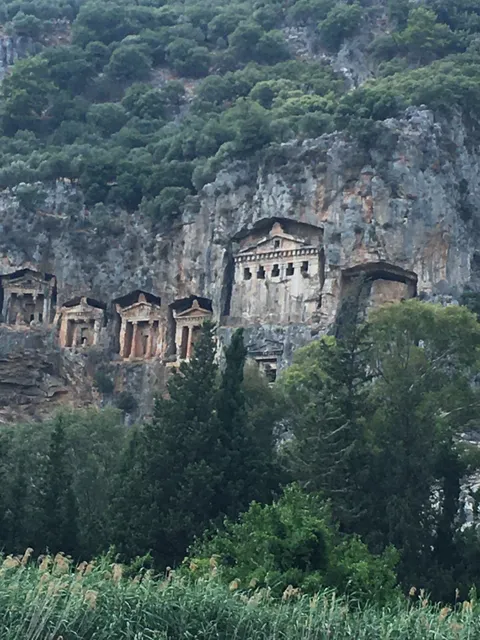
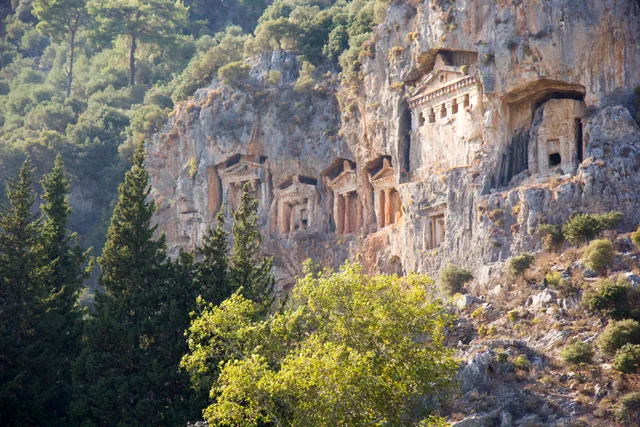
Read moreTombs of the Kings 🤴⚰️🥀💀
Absolutely phenomenal set of ruins overlooking a small river as it runs out into the Aegean Sea 🤩🤩🤩
A good Turkish friend of mine I met in Antalya back in November told me about these ruins... He is a tour guide for Turkey and knows his country like the back of his hand 🇹🇷🖐️💜
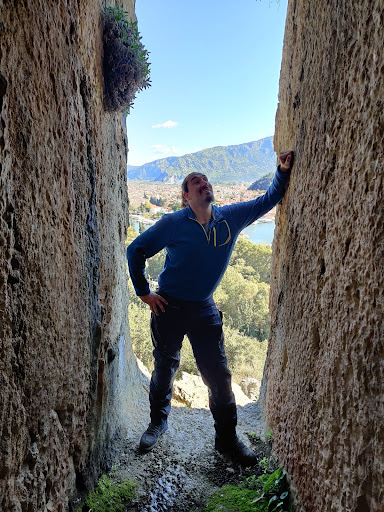
I was seriously excited about checking these tombs out for the last few months. Sadly when we showed up they were locked up and looked as though they had been closed for quite some time.... We took this opportunity to do a lil B&E aaaaaand we ain't talkin' bout no bacon and eggs here fam 🥓🍳😛
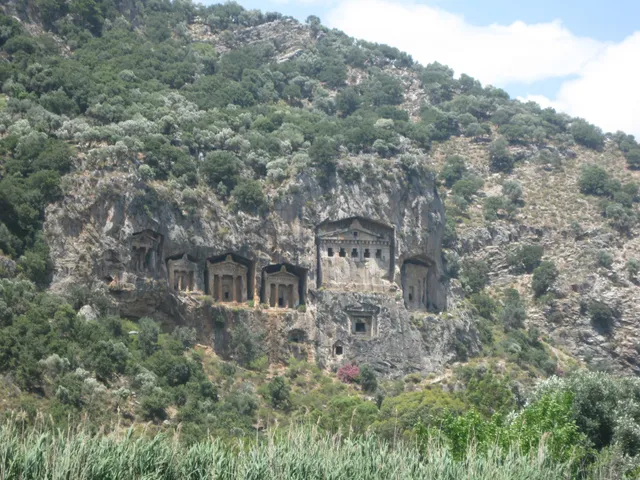
Up close and personal with these ruins they are astonishing! A sheer rock mountain face carved into incredibly ornate tombs fit for a king!!! All the small details over the doorway and cut into the columns are quite spectacular 👌👌👌
It's insane to me that these tombs were carved by a hand out of stone and now look something like small houses completely detached from the surrounding rock except for the floor that they sit on... This is like ancient CNC machining done by hand with a chisel and hammer 🤯🤯🤯🤯🤯🤯
This place did not disappoint and I'm soooooo glad we spent some extra time just sitting here gazing up at this ancient wonder...
Read more