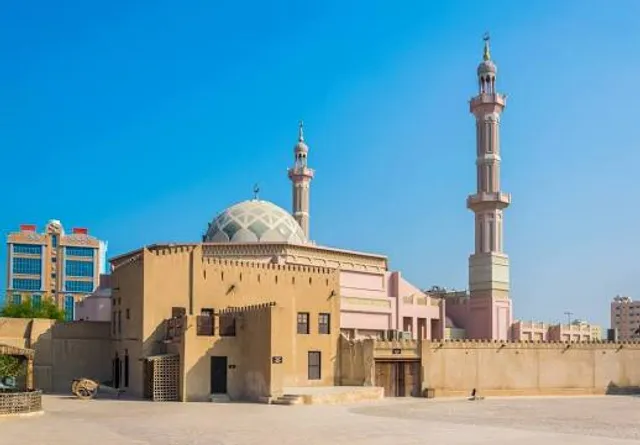
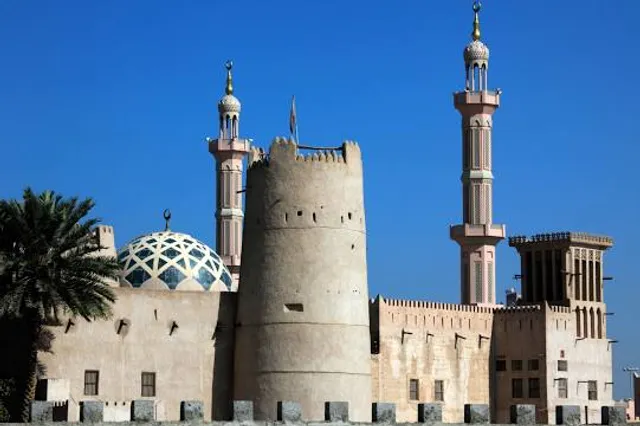
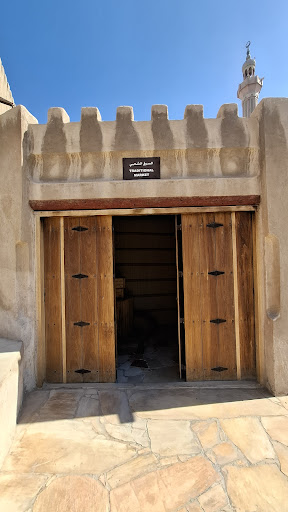
The Ajman Museum offers a captivating journey into the history and heritage of the Emirate of Ajman and the UAE. Housed in the beautifully restored Ajman Fort, an 18th-century stronghold that once served as the ruler's residence and later as a police station, the museum itself is a historical artifact. Ambiance and Setting: Stepping into the museum is like stepping back in time. The fort's traditional architecture, with its grand gateway flanked by cannons, wind towers, and watchtowers, creates an authentic and immersive atmosphere. The central courtyard, around which the exhibits are arranged in various rooms, provides a sense of the fort's original layout and function. Recent refurbishments have enhanced the visitor experience, presenting the history of Ajman clearly and engagingly. Exhibits: The museum boasts a diverse collection of artifacts that shed light on different facets of Ajman's past: Archaeological Finds: One of the highlights is the display of artifacts from the Al Muwaihat cemetery, dating back to 3000 BC. This includes pottery and funeral jewelry, offering a glimpse into the earliest settlers of the region. Pearl Diving and Fishing: Given Ajman's historical reliance on the sea, significant sections are dedicated to pearl diving and fishing. Exhibits showcase traditional tools, equipment, and models of dhows, illustrating the importance of these industries to the local economy and way of life. Traditional Life: Dioramas and displays vividly depict traditional Emirati life, including scenes of Bedouin life, craftsmen at work in the souq (market), and traditional professions. These provide insight into daily life before the discovery of oil and the rapid modernization of the UAE. Manuscripts and Documents: The museum also houses old manuscripts, documents, and photographs that trace the founding of Ajman as an emirate and offer a historical narrative of the region. Weapons and Defense: As the building was originally a fort and later a police station, exhibits include historical weaponry and police equipment from earlier periods. Traditional Medicine and Games: Sections dedicated to traditional medicine practices and local folk games offer a unique cultural perspective.
The museum has integrated modern technology to enhance the visitor experience. An audio tour app, triggered by location sensors, provides narration in Arabic and English. Some exhibits feature virtual storytellers on screens and interactive displays that bring artifacts to life, such as superimposing original artwork onto ancient pottery.
Visitors consistently praise the Ajman Museum for its rich portrayal of the UAE's history and culture. The museum is considered a hidden gem, offering a deeper understanding of the region beyond the modern skyscrapers. Location: The museum is centrally located in Ajman, in the Al Bustan area, near the Gold and Traditional Souqs and within walking distance of the Corniche. Timings: Saturday to Thursday: 8:00 AM to 8:00 PM; Friday: 2:30 PM to 8:00 PM. Admission: There is a nominal entry fee (around AED 5 for adults and AED 1...
Read moreAjman Museum is a historical museum located in the heart of Ajman, United Arab Emirates. Housed in an 18th-century fort, the museum is one of the emirate’s most prominent cultural attractions, showcasing the rich history and heritage of Ajman and the UAE.
Key Features of Ajman Museum:
• Historical Exhibits: The museum contains several exhibits that display artifacts, manuscripts, and archaeological finds that tell the story of Ajman’s past, including its social, economic, and cultural development. • Traditional Emirati Life: Visitors can see various sections that recreate traditional Emirati life, such as old souks, traditional irrigation systems (Falaj), and palm-leaf houses. • Fort Structure: The museum itself is located in an 18th-century fort that was used as the ruler’s residence, then a police station, before being converted into a museum. The fort is a fine example of traditional Arabian architecture with wind towers, watchtowers, and a courtyard. • Sections and Galleries: Various galleries cover different aspects of history, such as a section dedicated to the pearling industry, traditional weapons, tools, and the Emirati ruling family’s artifacts. • Educational Programs: Ajman Museum hosts educational programs and guided tours for visitors to better understand the region’s history and heritage.
Visiting Information:
• Location: Al Bustan, Ajman, UAE • Opening Hours: Typically open from 8:00 AM to 8:00 PM (Closed on Fridays) • Entry Fees: Nominal entry fees for adults and children • Contact: For more information, you can contact Ajman Museum directly through local tourism boards or find details on Ajman Municipality’s website.
The Ajman Museum is a great place for those interested in the cultural and historical background of the UAE, offering a glimpse into its traditional lifestyle, artifacts,...
Read moreThe Ajman Museum (Arabic: متحف عجمان) is a national museum located inside the Ajman Fort in the city of Ajman, United Arab Emirates.1 The museum includes several sections that offer a compelling glimpse of Ajman's past, including archaeology, manuscripts, folk costumes, souvenirs, and more. The museum displays are annotated in both Arabic and English.[3]
Ajman Museum متحف عجمان The museum's entrance in 2007 The museum's entrance in 2007 MapWikimedia | © OpenStreetMap Established 20 May 1991 Location Ajman Fort Coordinates 25°24′49″N 55°26′44″E Type National museum Founder Sheikh Humaid bin Rashid Al Nuaimi Owner Emirate of Ajman It is housed in an 18th-century fortress that was used as a stronghold for the Emirates leadership and as the first line of defense. Earlier it was the ruler's palace[4] and then it was converted as the Ajman police station. When the fort was renovated two wind towers and two watchtowers were maintained.[5] A massive gate and two cannons can be seen on the front of the fort. The museum tells about the local history and heritage, the place highlights various aspects of the past. The Ajman Museum with displays of lifestyle and traditional professions includes a huge collection of archeological artifacts, manuscripts, and old weapons as well as displays of medical and religious practices are on display.[6]
One of the most famous displays is an excavated cemetery discovered in the Al Muwaihat area, which features pottery and funeral jewellery dating back as far as 3000 BC.[7] This was a former fishing village, Ajman also relied heavily on pearl fishing and there is a section specifically devoted to what was once one of the most important pastimes...
Read more