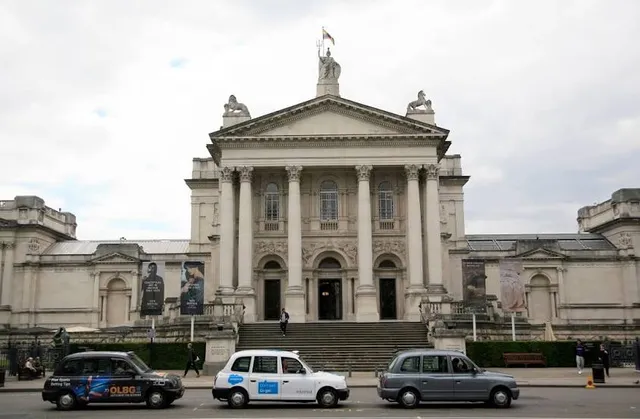
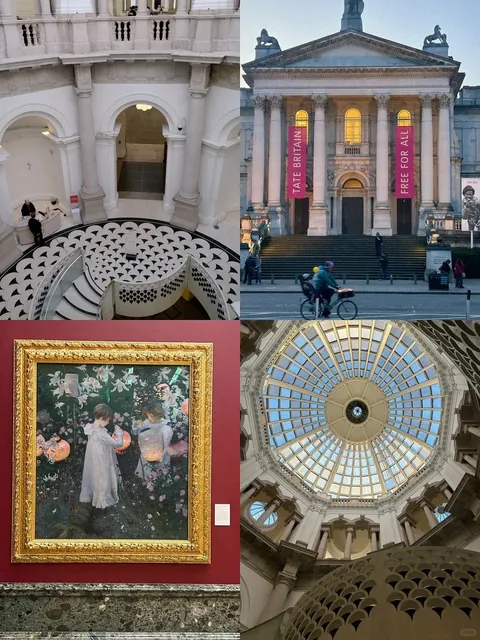
Tate Britain is one of the most enriching art experiences in London, offering a profound journey through the history of British art. From the early Renaissance to contemporary works, the museum’s extensive collection showcases the evolution of British creativity, providing a unique lens into the cultural, political, and social landscape of the UK.
One of the highlights for me is the stunning collection of Pre-Raphaelite paintings. The vibrancy and emotional intensity in works by artists like Dante Gabriel Rossetti and John William Waterhouse are always captivating. Their ability to evoke both beauty and narrative is what makes the Pre-Raphaelite movement so compelling, and it’s wonderful to see their masterpieces displayed here in such a thoughtfully curated space.
Tate Britain’s collection of works by J.M.W. Turner is another highlight that always leaves me in awe. His sweeping landscapes and seascapes, full of dramatic light and atmosphere, have an almost transcendental quality. Turner’s ability to capture both the grandeur of nature and the fragility of human existence is unparalleled, and pieces like The Fighting Temeraire have a timeless resonance.
I also love the museum’s focus on the Romantic period. The works of artists such as John Constable and William Blake give insight into the period’s deep connection to nature, emotion, and the sublime. Blake’s The Ancient of Days is a particularly striking piece, filled with mystical symbolism and energy that invites endless contemplation.
Tate Britain doesn’t just focus on the past, though—it also offers a remarkable selection of 20th-century British art. The works of artists like Francis Bacon, Lucian Freud, and David Hockney provide a fascinating contrast to the earlier periods, challenging perceptions of identity, the human form, and British culture. Bacon’s Portrait of George Dyer in a Mirror is one of the most hauntingly raw portrayals of the human condition I’ve ever seen, filled with psychological depth and emotional power.
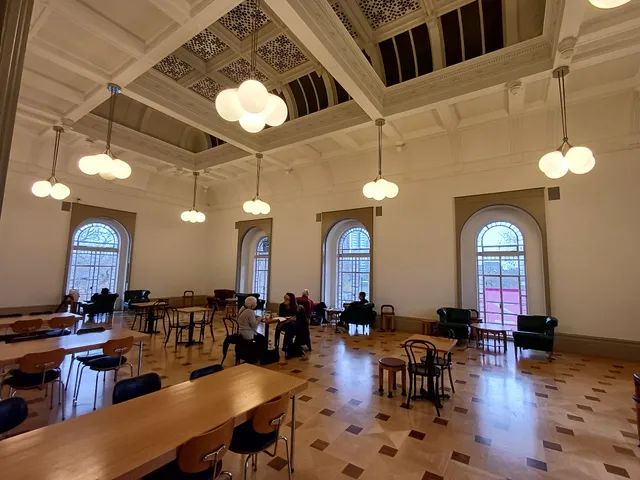
What I particularly enjoy about Tate Britain is its intimate feel compared to its more contemporary counterpart, Tate Modern. It’s the kind of place where you can wander for hours, delving into British history through the lens of art, without feeling overwhelmed. The museum’s space is perfectly suited to its collection, with its majestic galleries and quieter, more contemplative rooms providing a serene atmosphere for reflection.
The exhibitions are thoughtfully curated, and the museum often highlights key themes and movements within British art, offering a deeper understanding of how artists responded to historical events and cultural shifts. The staff are always friendly, knowledgeable, and ready to offer insights, making it an educational and immersive experience.
Whether you’re drawn to the grandeur of Turner’s landscapes or the more intimate works of modern British artists, Tate Britain is an essential visit for anyone interested in British art. It’s a place that not only tells the story of the country through its art but invites visitors to explore its soul—capturing moments of beauty, pain, and human experience. It’s a museum that offers something new each time, making it one of the most rewarding...
Read moreI had a big bag, a rucksack and a bag with me, as my plan was to take my train to Glasgow after visiting the museum and attending my work meeting. I was very rudely told my big bag was not allowed in by the security staff at the entrance, with a very offensive hint to my low“capacity of English understanding”. Desk staff was actually nicer. I raised the point that after already 15 min of discussion, I wanted to speak with a manager to let them know I was in firm disagreement with their policies. My non-native English offended her and I apologised. But no consideration for my frustration in any of this was taken.
Their suggested solution was to leave my big baggage in Victoria station, 10 min away, meaning me wasting other 30 min.
When I tried to drop off my other two bags in the museum storage another big bag was there that clearly didn’t fit the measures showed me by the security staff at the entrance. Storage staff took my luggage as well with no problem.
The duty manager refused to speak louder when I requested, since I couldn’t hear what she was actually saying to me. She was very nervous and reacting in a stressed and frustrated way to my request. The security manager was again rude and said firstly that the reason was space. When I pointed out that storage and museum were completely empty and museum space is actually for public usage and that they should be at people service, they raised the new point that big luggage is not allowed for security reasons. Any security doubt could be easily sorted by searching my bag. Public body should be at people service, should provide accessible service for tourists, should be comprehensive of non native language skills, should provide solution-oriented services, should have reliable and available staff and managers, which, when requested, should be able to explain policies in a professional way which includes making an effort when someone is non-native and is slightly hard of hearing.
The storage staff was the only person doing the reasonable thing, and I fear the system will be repressive of her.
As always workers find obvious and reasonable solutions while managers follow controversial policies which in this case are not inclusive, slightly classist and mainly completely irrational and not accountably explained.
Embarrassing for a...
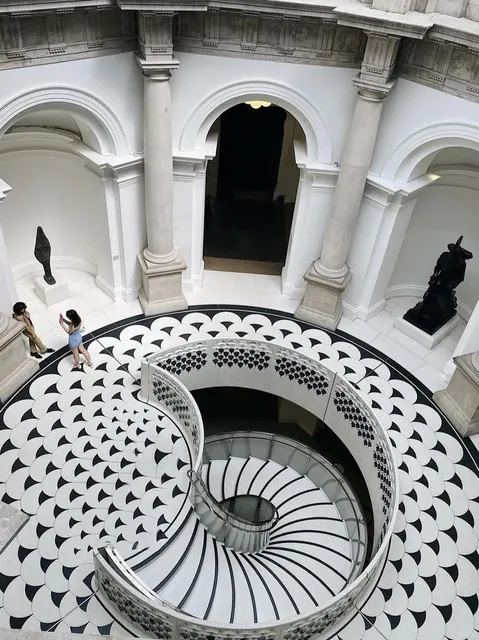
Read moreThe Tate Britain is always an enjoyable experience. Depending on your artistic proclivities you will always find something that you visually enjoy or that speaks to your inner emotional being. The architectural qualities of the building are quite soothing, it's cavernous central hall when not filled with a riotus or experimental sculptural installation can be quite peaceful and cool on a hot summers day.
Tate Britain's exhibition program is varied and takes in artists across the spectrum, recent shows have included Lynette Yadom-Boakye, William Blake, Cornelia Parker, Aubrey Beardsley, The Rosettis, Rachel Whiteread, Paul Nash and many many more. One of my favourites was a recent retrospective exhibition of Paula Regos work before she passed away, which was exceptionally well presented, I returned 3 times as there was so much to take in. I would suggest getting membership if you are an art lover and intend to visit often it's a lot more cost effective than purchasing tickets for the paid shows singularly.
The free permanent collection has recently been rehung including more artists living and dead from various diverse areas of Britain. I visited to view the rehang and although some inclusions seemed slightly jarring purely in location, on a whole I enjoyed it. I always appreciate it when national art institutions make an effort to provide further context and diversify their holdings to better represent the nation they serve. There's a wonderful room of Rothkos in which you get to fully appreciate their size and emotional depth in subdued lighting.
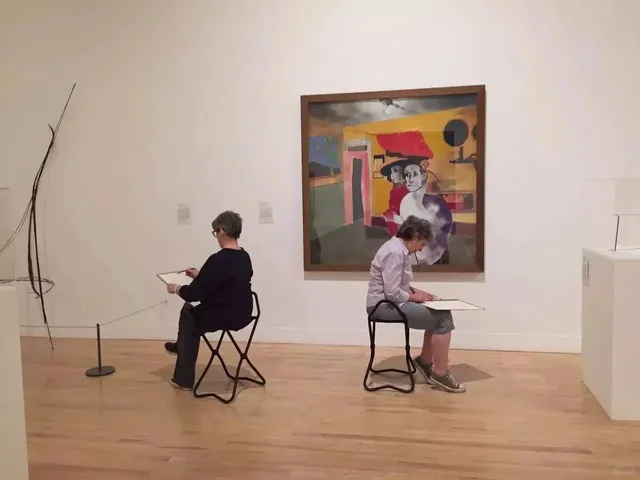
As for the facilities, there are plenty of toilets and they are kept clean to a good standard. There's a free coat check although donations are accepted. There are plenty of soft seats around the gallery spaces and also small and light foldable stalls you can carry with you. This is especially handy for those who wish to sketch as you can prop yourself up infront of some sculptural works by Henry Moore or any other wonderful form and visual delight and sketch to your hearts content.
Tate Britain is one of my go to places, whether it's to gather inspiration for my own future artistic works, to further expand my knowledge and mind or, to simply experience a moment of cool peace away from the hustle and bustle of the street, I can't...
Read more