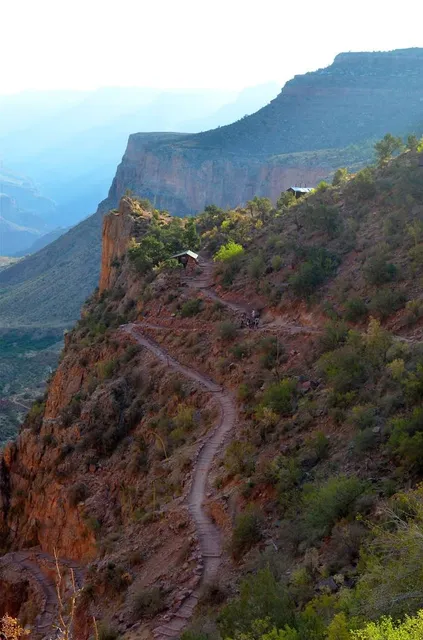
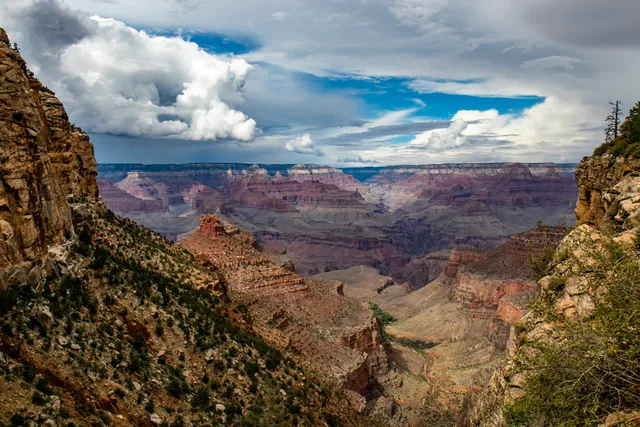
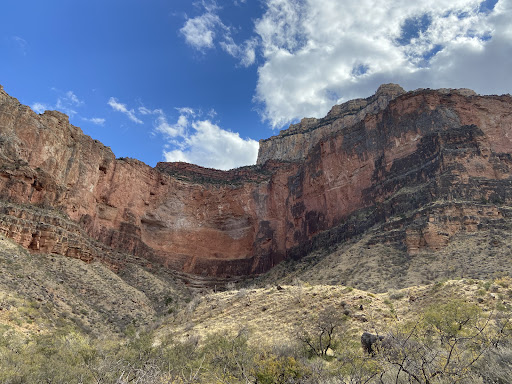
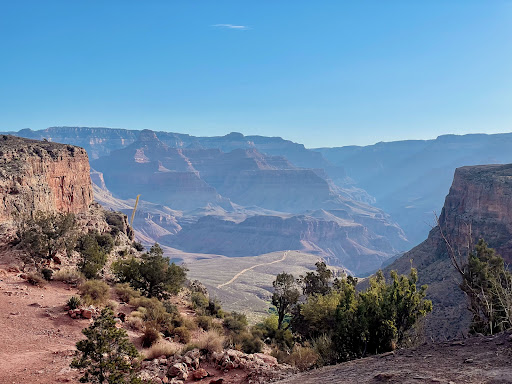
The most important single thing you can do before you hike Bright Angel Trial is to pre-hydrate 48 hours before you start your hike. If you are thirsty, you're already dehydrated. Arizona sucks water out of you like a vampire. You're dead before you know it. For me the best views on Bright Angel Trail are along the river and up through Pipe Creek Canyon to Indian Garden. If you're coming from the bottom, Three Mile Resthouse means you are almost to the top. It is a nice spot to spend 10 or 15 minutes catching your breath for the final climb out of The Grand Canyon and to the nearest spot that sells a cold beer. Hiking in The Grand Canyon is a mental and physical challenge for the average hiker. I see people running up! Not me though. I average about 1 mph, when I factor in stopping to take pictures with my Canon SX720, which is, I think the perfect camera for this hike: light-weight, incredible zoom and lots of battery life. Always check the weather and water situation with the rangers before you begin this hike. Lightning storms during the monsoon are incredible events that will scare you to death. Sometimes the water lines break, so check. On a moderately hot day here in Arizona, I average 32 ounces of water for every two miles I hike in this kind of terrain. There is a 4,700 foot elevation change in just 9 miles. I take extra water with me to splash on my face, feet, pour on my cooling towel and have some extra to offer fellow hikers in need. Water is life out here in the desert. Always bring extra just in case you need it or a fellow hiker needs it. I never take my heavy cameras. A 5 pound Canon 5D Mark IV with a 200mm L lens becomes a 25 pound canon ball around your neck on the way back up. In Arizona, rule number 1 is: when you're hiking in a challenging environment like The Grand Canyon, if you're halfway done with your water, you are halfway done with your hike. Period. I've seen people wandering around like zombies. It is frightening how fast you deteriorate without water. Juice up your water with supplements. Always listen to our rangers. They always know the best course of action to take. Never be so committed to your hike that you ignore the weather. I've seen big rocks coming down during a downpour. The water, the rocks and the lightning ain't not joke folks. Bring an extra pair of socks. When you reach the halfway point of your hike, let your feet air out and put on fresh socks for the hike back up. When you walk up, think like a mule. Never step up onto something when you have to step down. Look 10 feet ahead and find the flattest parts of the trail to step in. Step over the log breaks and stone walls, not on them. They are often the highest points on the trail. Don't be in a hurry. Be sure and stop to take this stunning scenery in. Cheers! Be safe and leave it better than when...
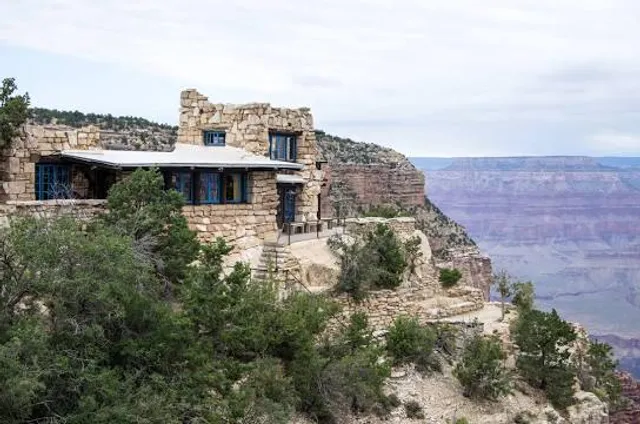
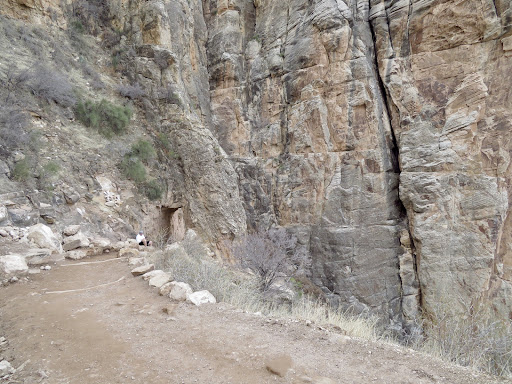
Read moreThis "resthouse" - which consists of an open but roofed shelter, and a couple of pit toilets - maybe a water faucet, maybe not (I cannot remember, and the water gets turned off for leaks, seasons, etc, anyway) - is 3 miles down Bright Angel Trail, from the south rim of the Grand Canyon. This 3 mile section drops about 2400 feet, and going back up is NOT for the faint of heart.
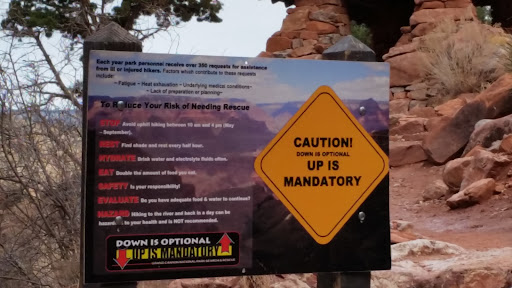
As one of the signs data, "Going down is optional - coming up is mandatory." In other words, don't go down this trail very far, unless you have trained, are well equipped and carrying water, snacks, extra clothing, good footwear, etc.
But if you do and have all those things, the payoff makes it worth all the effort.
I should add that Bright Angel Trail is most often used to come UP from the bottom - hikers going down to the bottom are encouraged to use S Kaibab Trail - so if you see this resthouse and are coming from the bottom - congratulations, you're almost to the top, so stop and rest - then get moving and get your...
Read moreOne thing I cant stress enough is that this is not a typical hike. 3 miles sounds like nothing . I saw so many people head out with no water, street shoes of all manner from dress shoes, flipflops, you name it. Improper clothing and no rain covering. The weather changes dramatically and you really need to be prepared. Test yourself as your going down. Stop and hike back up about 50 ft. If that feels tough, dont go further. Going back will be three times the difficulty and I saw numerous people running down who had to be helped out by the ranger or others. I talked with one of the rangers about it and he told me that they constantly hike up and down identifying individuals who are at risk and they will gently suggest at some point that you need to go back before you become a rescue. Know your limitations or you will ruin...
Read more