BEWARE THE OUTFLOW!!
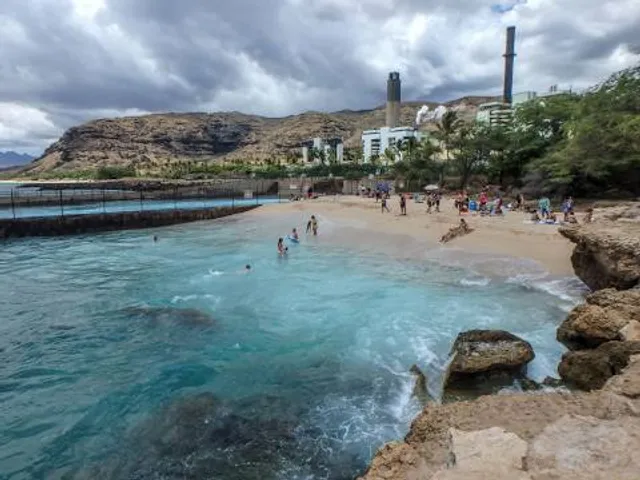
Called 'electric beach' because the dive attraction is following the electric plant's active cooling pipes, this is a great deep water snorkel/free dive site, or shallow shore SCUBA dive with the end of the pipe being at about 30' of depth.
Straight-forward to navigate, as you enter the water and swim directly offshore, the outflow pipe will be underground under the pile of stones to your right. It gradually emerges from the ground as you swim further out until you can see the warm water shooting out of the 10' or so diameter pipes.
The pipe creates an artificial reef, and there are numerous nooks and crevices in the rock debris where a wide variety of fish are hiding. At the edge of the pipe, you can wander either to your right or to your left for a somewhat unimpressive dive across mixed sand and lava outcroppings with a tiny caves.. you may see rays, garden eels, white tipped reef sharks, along with the rest of the usual reef fare.
Alternately, you can spend the entire dive at the end of the pipe. Where the warm water outflows, fish, turtles, and rays can often be seen passing by. Leaf scorpion fish are hidden about the structure, and you'll see turtles swim into the warm outflow and shoot out to sea.
You should technically have a dive flag with you if you snorkel this site.. though most people don't.. DLNR is pretty good about not siting people at this location, however, the disposition of DLNR staff is unpredictable, and at least having a floating dive flag beach ball you can tie off somewhere is a pretty decent idea.
Hazards: As with any Hawaiian snorkel location, it is important to be aware that there are a number of dangers/hazards in the Hawaiian waters. Some of these take the form of shells which may appear vacant, but end up containing a paralyzing snail.. the sea urchins with the long spines will pierce wetsuit or shoes even and go all the way through your foot/hand/whatever leaving spines which shatter when trying to be extracted. A green star fish will sting you viciously, as will a couple 'jelly fish'. If the wind is blowing onto the shore you are snorkeling from, you are at increased risk of Jelly Fish stings! (Most are just painful on par with a bee sting.. some can be worse) As a rule of thumb, if you don't know exactly what your touching, and what harm your touch can bring to both yourself, and that precious creature, then DON'T TOUCH. This is a solid guideline when snorkeling in Hawaii.
It's illegal to touch or harass certain species in Hawaii, including the sea turtles and the dolphins.
As mentioned before, the outflow pipes create a tremendous current! If you are not a strong swimmer with fins on, or you are with people who are not strong swimmers, don't snorkel to the edge where you can look down on the pipe. 20' past the edge of the outflow, the water travels at 4-5 kts.. about as fast as a pro swimmer could swim I'd estimate. Directly over the outflow pipe, there is a more mild suction created by that current which can still be problematic for weaker snorkelers. If your SCUBA diving, don't let yourself get shot by the outflow pipe. The pipe will make you go up and down rapidly until you finally shoot out the bottom of the flow to the sand. (Which takes a good bit of effort with all your gear/drag.. the pipe wants you to stay at the surface going out to sea) At this point, your ears have pressurizes a great deal a great number of times because of both the pressure of the water, and the depth changes, and you have subjected yourself to an increased risk of lung expansion injury. Of course, if you fail to equalize, you'll be stuck damaging your ears, as surfacing, in this instance, is not an option.
A number of tour boats come here, and they can be insensitive to divers and snorkelers. The biggest hazard has generally been the sailing cat which has dropped it's anchor into the middle of groups of divers, as well as nearly hitting people near/on the surface who don't hear the...
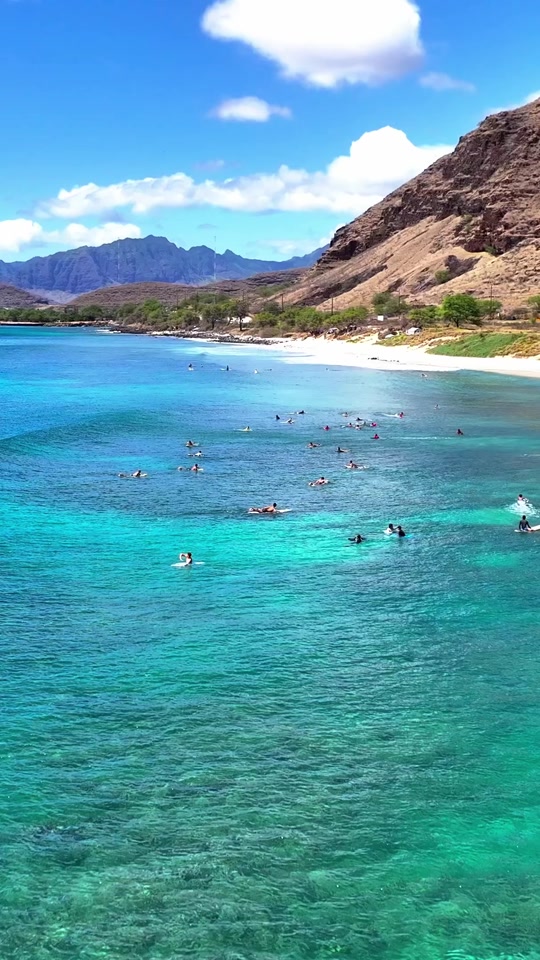
Read moreNO LIFEGUARDS AND DANGEROUS CURRENTS AND SHOREBREAK If you visit the beach once or twice year on vacation this is probably not the place for you to pick up where you left off at in your snorkeling skill building. One of my favorites, BUT this location is NOT for those who are NOT ocean savvy and who are NOT strong swimmers. Let me continue this review with a well meaning warning. If you're winded by a 1 mile jog you're probably not in the right location here to be going for a swim.. This spot is 100% unprotected from the sea state, conditions often go from calm and clear to rough and choppy, with large wave sets, and STRONG CURRENTS in a matter of minutes. There are DOZENS of rescues from this beach monthly for those who over estimate their physical abilities and ocean familiarity. Yesterday 3/27, Honolulu ocean safety had to rescue 40 people who couldn't make it back to shore because of the currents despite the ocean looking flat and calm. FORTY!!! This is a VERY small sand beach with a quick entrance to OPEN OCEAN swimming and often has large surf breaks to swim through in order to get out to the reefs. Because of its size, this beach is not well suited to large crowds who wish to sunbathe or lay out for a full beach day, you WILL be in tight quarters and very close to other beachgoes and theres no way around it here. If you're looking for that tropical beach spread and instagram-able pictures of sprawling white sand beaches, this isn't the spot, instead travel down the road to Tracks or Nanakuli. Again there is NO LIFEGUARD station here, so if the current picks up and pulls you out to sea (I've seen people stranded at 300+ yards) you'd better hope someone on shore sees you and calls Honolulu Ocean Safety. Even then it takes time to launch their jetskis from the beach up the road and travel out to you. So PLEASE PLEASE PLEASE think twice before swimming here if you have any doubts in your physical abilities, swimming abilities, or your ability to read the ocean.
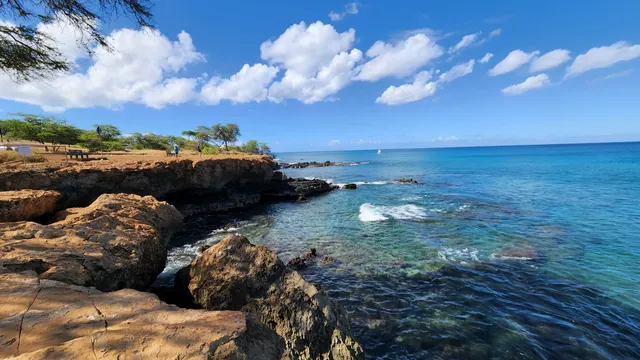
There is a live reef here, it IS relatively healthy (PLEASE STOP STANDING ON IT IN LOW TIDES) and a healthy reef does mean fish, monk seals, general ocean wildlife and yes also sharks. I swim here several times a week and I have seen multiple sharks as small as 2-3 feet and as large as 10ft-12ft. If you're uncomfortable with ocean life and the open ocean this is not the beach for you. That being said, as with the entirety of the leeward coast of Oahu, in good ocean conditions and weather, the water can be crystal clear, there are plenty of fish to see, and a variety of sea life will pop up to say hello. With its easy access to the water it is one of my favorite swimming spots on the island suited to...
Read moreThis is my favorite scuba spot.
@ near 100 dives and at least a couple hundred snorkeling trips I like this best for many reasons but the best is the warm water ride from the power plant exhaust.
I would advise watching others in the cove dive or snorkeling before scuba’n unless with an experienced diver for this site especially if the cove is crowded because the wave movement and power resulting from them can be really tricky...which I enjoy, but the rock/reef is really a challenge at times..& can really scratch anyone in it very easily.
..lots of fish and stuff here too....especially around the water exhaust about 20ish yards offshore.
Going in via the rock/reef is an option but even with my experience I would pick the cove to get in the water almost always...or not go diving/snorkeling. I’ve probably been here diving/snorkeling a couple dozen of times.
Arrive early &/or carpool as this can be crowded fairly early.
A plus I haven’t mentioned is the pavilion...it’s a large structure..which over 20 years ago had cement tables under it giving shelter from the sun if desired and really was awesome the times I spent 6+ hrs here.
I missed some of the other reasons why I like this location so much but it’s been a long time since I went here...sure hope to go back soon though.
Ohh yea last I was here there was no lifeguard. I wouldn’t let kids get in the water past their legs...unless they were experienced with this location and/or similar small coves.
Anyone going in the water here should bring a first aid kit...or at least some peroxide for any...
Read more