The oldest pagoda in Hue is Thien Mu Pagoda whose establishment is associated with the early actions of the first Nguyen Lord in Dang Trong (South Vietnam). This legend relates how, when Nguyen Hoang was sent to Thuan Hoa (now Central Vietnam) to rule this area, he himself made a survey of the terrain to choose a site for settling down. As he rode his horse upstream along the Huong River side he saw a small hillock beside the river, whose terrain looked like a dragon turning its head back. This hill was called Ha Khe. The local people told a story that every night an old lady in a red blouse and green trousers appeared here saying that a true Lord would come to this place and build a pagoda for the prosperity of the country. Thus this place became known as Thien Mu Son (Heavenly Lady Mountain).
It seemed that the grand ideas of Lord Nguyen Hoang matched the people's desires so he ordered a pagoda to be built on the hillock, facing the Huong River and to be named “Thien Mu Tu“ (Thien Mu Pagoda). In fact, a pagoda of the Champa people had previously stood on this site - a relic mentioned in the book O Chau Can Luc written by Duong Van An in 1553. It was not until 1601 that the pagoda was built following the decision of Lord Nguyen Hoan.
With the development, prosperity and spread of Buddhism in Dang Trong, the pagoda was rebuilt on a larger scale in the reign of Lord Nguyen Phuc Chu (1691-1725). In 1710, this Lord ordered that a big bell with an inscribed teaching be cast. And in 1714, he again had the pagoda renovated and many great architectural structures added. These new additions included the Thien Vuong, Dai Hung and Thuyet Phap buildings, Tang Kinh Pavilion, Monks' rooms and a house for religious meditation. Many of these buildings no longer exist today. Nguyen Phuc Chu himself wrote a narrative description describing the construction of the buildings here, praising the philosophy of the Buddhism, and relating the merits of the Buddhist monk Thach Liem, who was instrumental in helping Lord Nguyen boost Buddhism in Dang Trong. The inscribed stele was placed on a big stone turtle with simple decorations which...
Read moreHistory
Thien Mu Pagoda, also known as Linh Mu Pagoda, is a Buddhist temple located in Huong Long commune, 5km from the center of Hue city. It was built in 1601 by Lord Nguyen Hoang, the first ruler of the Nguyen dynasty. The pagoda has been restored eight times since then, most recently in 2006.
Architecture
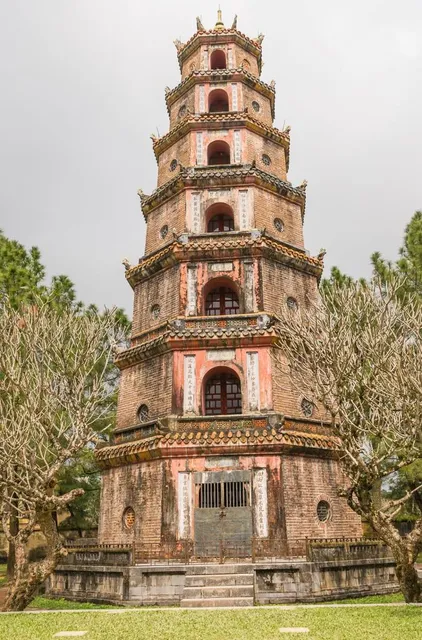
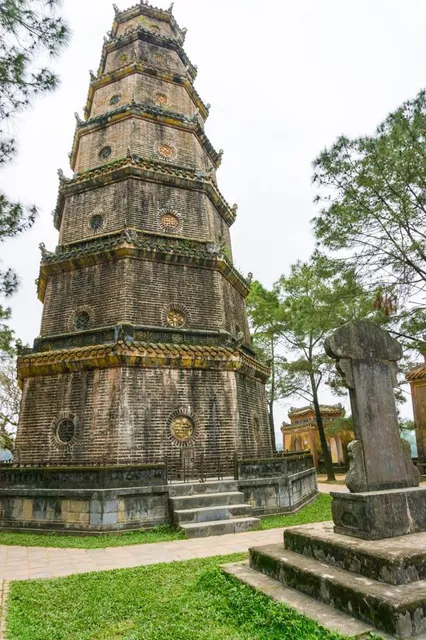
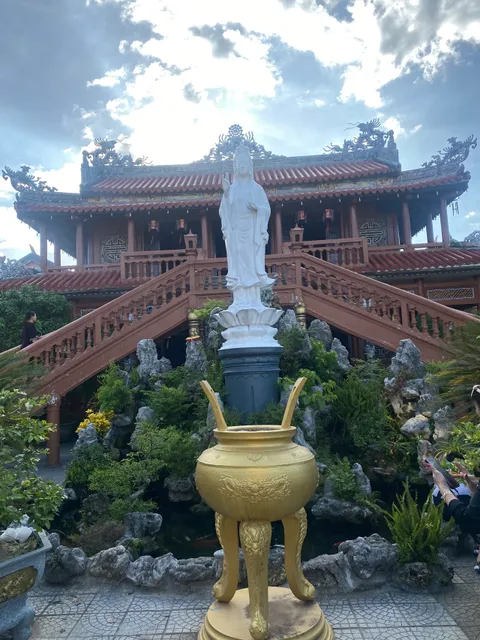
The two main architectural works of the pagoda are Phuoc Duyen Tower and Dai Hung Palace. Phuoc Duyen Tower is an octagonal tower with seven floors, each of which is dedicated to a different Buddha. The highest floor is dedicated to the Buddha of the Present. Dai Hung Palace is the main temple in the pagoda and is home to a large bronze Buddha statue. The palace is also decorated with intricate carvings and paintings.
Setting
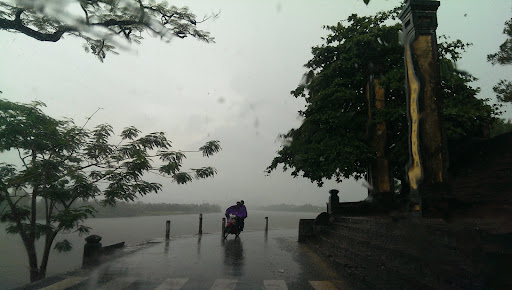
Thien Mu Pagoda is located on the north bank of the Perfume River and offers stunning views of the surrounding landscape. The pagoda is a popular spot for meditation and reflection, and it is a great place to escape the hustle and bustle of the city.
Things to do
There are a number of things to do at Thien Mu Pagoda, including:
Visit the Phuoc Duyen Tower and Dai Hung Palace. Take in the stunning views of the Perfume River and the surrounding landscape. Meditate or reflect in the tranquil setting of the pagoda. Visit the souvenir shop and purchase some Buddhist souvenirs.
Tips
The pagoda is open from 7am to 5pm daily. Admission is free. The pagoda is a popular tourist destination, so it is best to visit early in the morning or late in the afternoon to avoid the crowds. Wear modest clothing when visiting the pagoda. Be respectful of the Buddhist monks and nuns who live at the pagoda.
Overall
Thien Mu Pagoda is a beautiful and peaceful place that is sure to leave a lasting impression. It is a great place to visit if you are looking for a place to meditate, reflect, or simply escape the hustle and bustle...
Read morefelt like stepping into a living piece of history. Perched gracefully on a hill overlooking the Perfume River, it’s not just a temple, it’s a spiritual sanctuary wrapped in tranquility and timelessness.
The first thing that struck me was the iconic seven-story Phước Duyên Tower, standing tall and proud like a guardian of the past. It’s the kind of structure that commands silence and reverence, not just for its beauty but for the stories it holds. Every brick seems to whisper centuries of devotion.
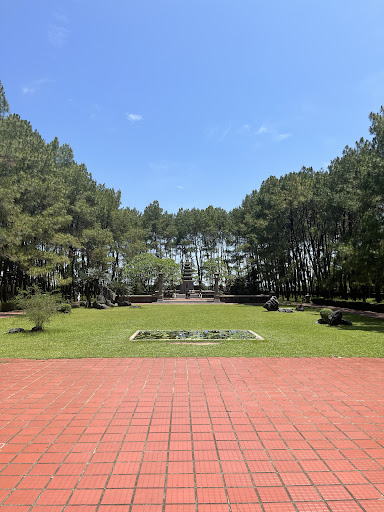
The lush garden around the pagoda was unexpectedly calming. Bonsai trees, carefully trimmed, and the gentle rustle of leaves created a peaceful soundtrack as I walked around. Monks moved silently across the grounds, their presence adding an air of mindfulness that made me want to slow down and just be.
One of the most touching parts was seeing the Austin car on display, used by Thích Quảng Đức before his self-immolation in Saigon in 1963. That part of the visit was deeply emotional. It’s a stark, quiet reminder of the powerful role Buddhism and this pagoda have played in Vietnam’s history, especially during turbulent times.
Inside the main temple, the scent of incense and the soft chanting created an atmosphere that made me feel connected, not just to the spiritual essence of the place, but to something older and more enduring than myself.
Logistically, it’s easy to reach by boat via the Perfume River, which adds a romantic and traditional touch to the experience. I recommend going early in the morning or close to sunset for the best light and to...
Read more