The country, which is now known to us as Orissa, was originlly included in the country or province of Kalinga. The modem term, Orissa, is derived from odra, which is the name of a very small part of Orissa. The country of Kalinga was practically co-extensive with the oriya speaking tracts of Bihar and Orissa and Madras.The country of Kalinga originally extended up to the modem districts of Medinipur and Howrah in Bengal. Even in Mughal times the Suvarparekha river, now in the south-western part of the district of Medinipur, was regarded as the northern boundary of Orissa According to political scientist Sudama Misra, the Kalinga janapada originally comprised the area covered by the Puri and Ganjam districts.33] The Sabar people of Odisha have also been mentioned in the Mahabharata.[34 Baudhayana mentions Kalinga as not yet being influenced by Vedic traditions,
Shanti Stupa at Dhauli is the location where Kalinga War was fought in c. 260 BCE Ashoka of the Mauryan dynasty conquered Kalinga in the bloody Kalinga War in 261 BCE,37] which was the eighth year of his reign.[38] According to his own edicts, in that war about 100,000 people were killed, 150,000 were captured and more were affected.[37] The resulting bloodshed and suffering of the war is said to have deeply affected Ashoka. He turned into a pacifist and converted to Buddhism.[38
By c. 150 BCE, Emperor Kharavela, who was possibly a contemporary of Demetrius I of Bactria,40] conquered a major part of the Indian sub-continent. Kharavela was a Jain ruler. He also built the monastery atop the Udayagiri hill.[41] Subsequently, the region was ruled by monarchs, such as Samudragupta[42] and Shashanka.[43] It was also a part of Harsha's empire.[44]
The city of Brahmapur in Odisha is also known to have been the capital of the Pauravas during the closing years of 4th century CE. Nothing was heard from the Pauravas from about the 3rd century CE, because they were annexed by the Yaudheya Republic, who in turn submitted to the Mauryans. It was only at the end of 4th century CE, that they established royalty at Brahmapur, after about 700 years.
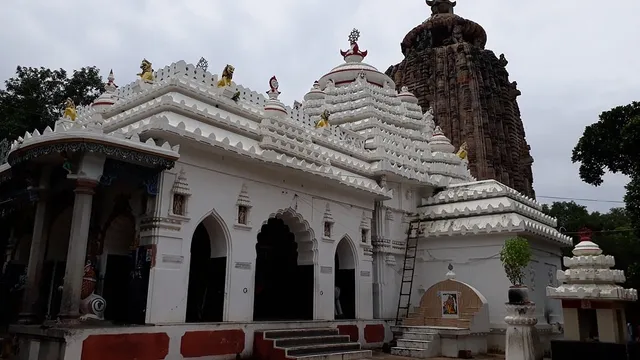
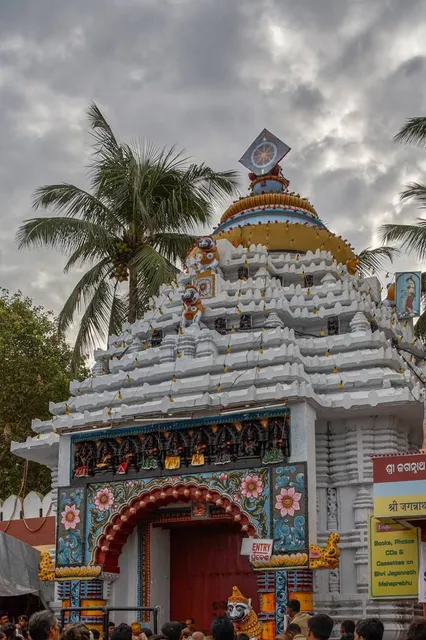
Later, the kings of the Somavamsi dynasty began to unite the region. By the reign of Yayati II, c. 1025 CE, they had integrated the region into a single kingdom. Yayati II is supposed to have built the Lingaraj temple at Bhubaneswar.[20] They were replaced by the Eastern Ganga dynasty. Notable rulers of the dynasty were Anantavarman Chodaganga, who began reconstruction on the present-day Shri Jagannath Temple in Puri (c. 1135), and Narasimhadeva I, who constructed the Konark temple (c. 1250).[45
The Eastern Ganga Dynasty was followed by the Gajapati Kingdom. The region resisted integration into the Mughal empire until 1568, when it was conquered by Sultanate of Bengal.[47] Mukunda Deva, who is considered the last independent king of Kalinga, was defeated and was killed in battle by a rebel Ramachandra Bhanja. Ramachandra Bhanja himself was killed by Bayazid Khan Karrani.[48] In 1591, Man Singh I, then governor of Bihar, led an army to take Odisha from the Karranis of Bengal. They agreed to treaty because their leader Qutlu Khan Lohani had recently died. But they then broke the treaty by attacking the temple town of Puri. Man Singh returned in 1592 and pacified the region.[49]
In 1751, the Nawab of Bengal Alivardi Khan ceded the region to the Maratha Empire.[20]
The British had occupied the Northern Circars, comprising the southern coast of Odisha, as a result of the Second Carnatic War by 1760, and incorporated them into the Madras Presidency gradually.[50] In 1803, the British ousted the Marathas from the Puri-Cuttack region of Odisha during the Second Anglo-Maratha War. The northern and western districts of Odisha were incorporated into the Bengal Presidency.[51]
The Orissa famine of 1866 caused an estimated 1 million deaths.[52] Following this, large-scale irrigation projects were undertaken.[53] In 1903, the Utkal Sammilani organisation was founded to demand the unification of Odia-speaking...
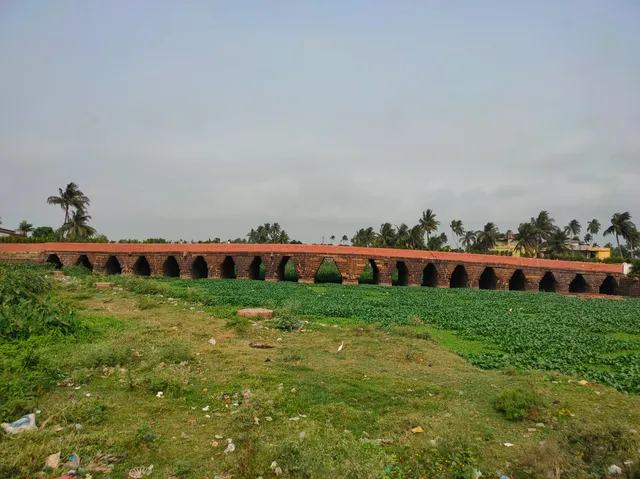
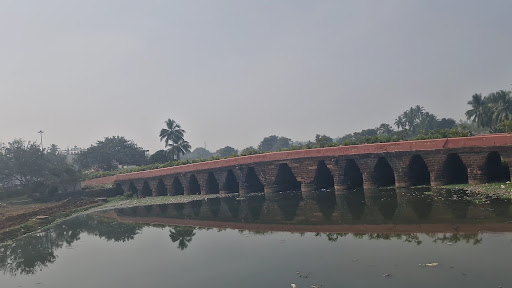
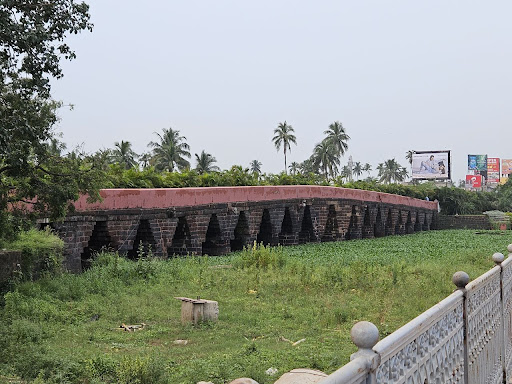
Read moreThe Atharanala Bridge is a historic laterite stone bridge located in Puri, Odisha, India. It spans the Madhupur or Musa stream at the entrance to the city of Puri on the Puri-Bhubaneswar road. Key Features: Construction: Built in the second half of the 18th century AD. Material: Constructed primarily with laterite stone. Design: Features a medieval architectural scheme of pillars and arches. Significance: A Monument of National Importance recognized by the Archaeological Survey of India. Historical Importance: The Atharanala Bridge stands as a testament to the architectural prowess and engineering skills of ancient Indian builders. It serves as a vital link between Puri and other parts of Odisha, facilitating travel and trade for centuries. Tourist Attraction: The bridge is a popular tourist attraction, offering visitors a glimpse into the rich history and architectural heritage of Odisha. It provides a scenic view of the surrounding landscape and the Madhupur stream. In essence, the Atharanala Bridge is a remarkable feat of engineering and a significant historical landmark that continues to play an important role in the life of Puri...
Read moreAtharnala Bridge, built in the 13th century by King Bhanu Deva I of the Eastern Ganga dynasty, is an 85-meter-long, 11-meter-wide laterite-and-lime structure with 18 arches, hence its name (athara = eighteen, nala = passage). It stands over the Musa (Madhupur) stream and is an ASI-protected Monument of National Importance. The bridge showcases medieval Odishan masonry with carved motifs of deities, floral patterns, and hunting scenes, and has historically served as the main gateway to Puri, offering the first view of the Jagannath Temple spire. Today, traffic is restricted to preserve this important...
Read more