HTML SitemapExplore

Archeological complex El Brujo — Local services in Magdalena de Cao

Name
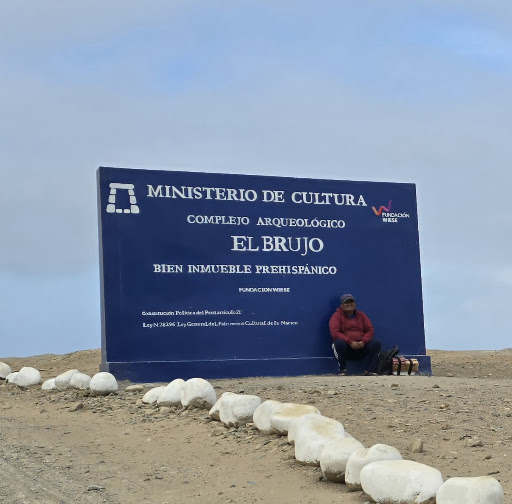
Archeological complex El Brujo
Description
Nearby attractions
Museo Cao
3MPW+C83, Magdalena de Cao 13750, Peru
Huaca Cao Viejo
3MMW+VJ3, Balneario El Brujo 13750, Peru
Nearby restaurants
Nearby local services
Nearby hotels
Related posts
Keywords
Archeological complex El Brujo tourism.Archeological complex El Brujo hotels.Archeological complex El Brujo bed and breakfast. flights to Archeological complex El Brujo.Archeological complex El Brujo attractions.Archeological complex El Brujo restaurants.Archeological complex El Brujo local services.Archeological complex El Brujo travel.Archeological complex El Brujo travel guide.Archeological complex El Brujo travel blog.Archeological complex El Brujo pictures.Archeological complex El Brujo photos.Archeological complex El Brujo travel tips.Archeological complex El Brujo maps.Archeological complex El Brujo things to do.
Archeological complex El Brujo things to do, attractions, restaurants, events info and trip planning
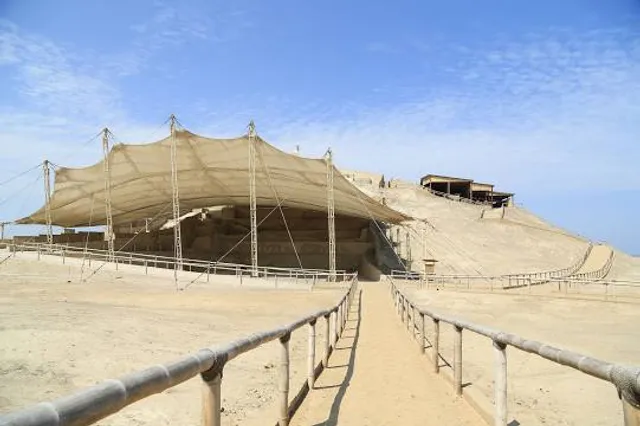
Archeological complex El Brujo
PeruLa LibertadMagdalena de CaoArcheological complex El Brujo

Basic Info

Archeological complex El Brujo

60km al norte de, Trujillo 13750, Peru
4.7(950)
Open until 4:00 PM
Save
spot

Ratings & Description

Info

Cultural
Outdoor
Family friendly
attractions: Museo Cao, Huaca Cao Viejo, restaurants: , local businesses:

logoLearn more insights from Wanderboat AI.
Phone
+51 933 412 730
Website
elbrujo.pe
Open hoursSee all hours
Fri9 AM - 4 PMOpen

Plan your stay

hotel
Pet-friendly Hotels in Magdalena de Cao
Find a cozy hotel nearby and make it a full experience.
hotel
Affordable Hotels in Magdalena de Cao
Find a cozy hotel nearby and make it a full experience.
hotel
The Coolest Hotels You Haven't Heard Of (Yet)
Find a cozy hotel nearby and make it a full experience.
hotel
Trending Stays Worth the Hype in Magdalena de Cao
Find a cozy hotel nearby and make it a full experience.

Reviews

Live events

Surf trip to Chicama from Huanchaco
Sat, Feb 7 • 6:45 AM
Huanchaco, 13000, La Libertad, Peru
View details

Nearby attractions of Archeological complex El Brujo

Museo Cao

Huaca Cao Viejo

Museo Cao

Museo Cao

4.8

(140)

Open 24 hours
Click for details
Huaca Cao Viejo

Huaca Cao Viejo

4.7

(52)

Closed
Click for details
Get the Appoverlay
Get the AppOne tap to find yournext favorite spots!
Wanderboat LogoWanderboat

Your everyday Al companion for getaway ideas

CompanyAbout Us
InformationAI Trip PlannerSitemap
SocialXInstagramTiktokLinkedin
LegalTerms of ServicePrivacy Policy

Get the app

© 2025 Wanderboat. All rights reserved.

Reviews of Archeological complex El Brujo

4.7
(950)
avatar
5.0
19w

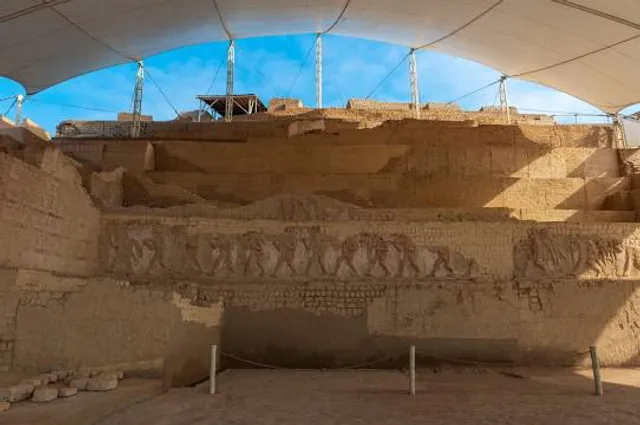
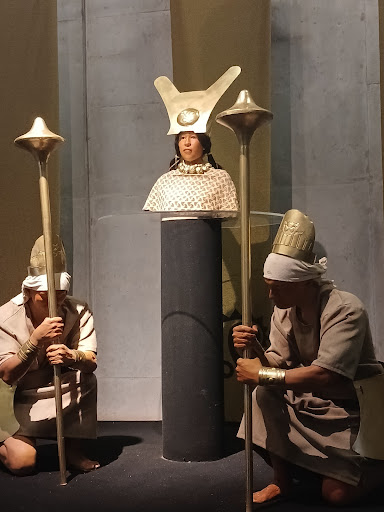
I spent some really interesting hours in the archaeological complex El Brujo. It covers thousands of years of uninterrupted human occupation. The complex is situated about 70 km north of Trujillo. It is about a 45 minutes drive from Trujillo and absolutely worth the trip. The latest excavations carried out at the pyramid called Huaca Cao have revealed a ceremonial site that is 1800 years old. It was built with the intention to bury a royal person. They found a mummified young female person. The condition of the mummy was so good that the could see tattooes on different parts of her body. We could see the body in the museum. She was called: La dama de Cao, (The Lady of Cao) and we could see a lot of artefacts and jewellery. After seeing the museum, we walked around in the huaca, and it was really interesting. This was the Moche culture, and I recommend reading about the Moche before you visit El Brujo. And it is also interesting to make a stop in the nearby village Magdalena de Cao. Lots of nice paintings on the walls...

   Read more
avatar
5.0
1y

An absolute treasure of human history. A modern and significant find that is still in the process of being unearthed. The preservation of this artifact is beyond impeccable.

Not a native to the country and unfamiliar with its road passages, we took a road from Huanchaco to get there which was a little rough to travel. There may be other suitable routes to take.

The staff were friendly and all shared their gratitude for our visit. They also made an extra effort to communicate with us due to our poor skills in spanish. The price was well within reason. We spent approximately an hour and a half there and could have stayed longer had we not arrived so close to closing time. Next to no other tourist were present which added immensely to the experience.

I plan on returning if the...

   Read more
avatar
5.0
7y

Caos's museum was featured in an architecture magazine some years ago. I remember wanting to go there with my family but went with my boyfriend recently instead. The vicinity is gorgeous compared to any other archeological site museum the only thing is that they force a guide upon one and he can be very impatient if you refuse to pay him. The entrance should cover it but at that time we were the only ones left there was a great view of field crops upon ascending but he kinda mislead us and we couldn't take a picture of it. I still rate it 5 cos its something rather careful to sent a guide with every visitor and it keeps the vicinity intact. Transportation to the site should be roundway or you will have a harsh time finding out how to...

   Read more
Page 1 of 7
Previous
Next

Posts

Alfhild HallandAlfhild Halland
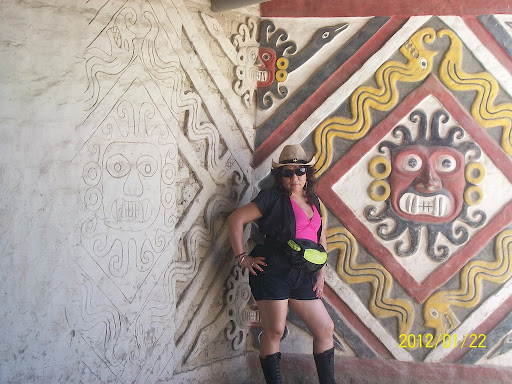
I spent some really interesting hours in the archaeological complex El Brujo. It covers thousands of years of uninterrupted human occupation. The complex is situated about 70 km north of Trujillo. It is about a 45 minutes drive from Trujillo and absolutely worth the trip. The latest excavations carried out at the pyramid called Huaca Cao have revealed a ceremonial site that is 1800 years old. It was built with the intention to bury a royal person. They found a mummified young female person. The condition of the mummy was so good that the could see tattooes on different parts of her body. We could see the body in the museum. She was called: La dama de Cao, (The Lady of Cao) and we could see a lot of artefacts and jewellery. After seeing the museum, we walked around in the huaca, and it was really interesting. This was the Moche culture, and I recommend reading about the Moche before you visit El Brujo. And it is also interesting to make a stop in the nearby village Magdalena de Cao. Lots of nice paintings on the walls of the houses.
Your browser does not support the video tag.
Gabriel DuránGabriel Durán
Un lugar bastante interesante y un museo moderno,la cámara donde yacen las reliquias de la Dama de Cao es alucinante (pero no se pueden tomar fotos) como tambien la gran huaca y los ceramios que se encontraron en el lugar. Desde la parte alta se observa el enorme valle. Los trabajos de arqueologia aún continúan por lo que se podría encontrar más del legado Mochica. Una visita obligatoria en caso de visitar la ciudad de Trujillo.
Buho MayorBuho Mayor
Muy buen trabajo, excelente museo El Brujo es uno de los complejos arqueológicos más importantes y antiguos de la costa norte del Perú. Está conformado principalmente por la Huaca Prieta, la Huaca Cao Viejo y la Huaca Cortada. Está ubicado en el valle del río Chicama, en el distrito de Magdalena de Cao, provincia de Ascope, departamento de La Libertad, a unos 60 km al norte de la ciudad de Trujillo. Se encuentra abierto al público desde el 12 de mayo de 2006. En este complejo arqueológico se encontró la tumba y el cuerpo momificado de la gobernante moche llamada Señora de Cao. Este complejo es un antiguo centro ceremonial donde se puede contemplar el legado de 5.000 años de ocupación por el ser humano, desde los nómadas cazadores recolectores, posteriormente por las culturas cupisnique, moche, lambayeque, chimú, inca, la época colonial y hasta el presente. Su continua construcción es una sucesión de secuencias culturales distintas que se fueron asentando en el lugar desde hace cinco mil años en la época pre cerámica hasta su extinción en la época de la presencia española. La Huaca Prieta fue estudiada por el arqueólogo estadounidense Junius Bird entre 1946 y 1947. Su descubrimiento significó un hito fundamental en la historia de la arqueología peruana. Sus restos fueron los primeros en ser sometidos a la novedosa técnica de datación por radiocarbono, para precisar su antigüedad. Esta, calculada en 2500 a. C., conmocionó la cronología arqueológica peruana, pues se trataba de los restos más antiguos del periodo pre-cerámico o arcaico, es decir, inmediatamente antes de la aparición de la alta cultura. Hasta entonces, los restos culturales más antiguos no sobrepasaban los 1200 a. C. y eran asociados a la cultura chavín. El complejo del periodo moche (Huaca Cao Viejo y Huaca Cortada) es estudiado desde los años 1990 por el Proyecto Arqueológico Complejo El Brujo (PACEB), a cargo del arqueólogo Régulo Franco, con el auspicio de la Fundación Augusto N. Wiese, el Instituto de Cultura La Libertad y la Universidad Nacional de Trujillo. ​Hasta entonces, Cao Viejo era solo un montículo abandonado, que pronto fue cobrando valor, merced a los hallazgos arqueológicos que permitieron ampliar más los conocimientos sobre la cultura moche.
See more posts
See more posts
hotel
Find your stay

Pet-friendly Hotels in Magdalena de Cao

Find a cozy hotel nearby and make it a full experience.

I spent some really interesting hours in the archaeological complex El Brujo. It covers thousands of years of uninterrupted human occupation. The complex is situated about 70 km north of Trujillo. It is about a 45 minutes drive from Trujillo and absolutely worth the trip. The latest excavations carried out at the pyramid called Huaca Cao have revealed a ceremonial site that is 1800 years old. It was built with the intention to bury a royal person. They found a mummified young female person. The condition of the mummy was so good that the could see tattooes on different parts of her body. We could see the body in the museum. She was called: La dama de Cao, (The Lady of Cao) and we could see a lot of artefacts and jewellery. After seeing the museum, we walked around in the huaca, and it was really interesting. This was the Moche culture, and I recommend reading about the Moche before you visit El Brujo. And it is also interesting to make a stop in the nearby village Magdalena de Cao. Lots of nice paintings on the walls of the houses.
Alfhild Halland

Alfhild Halland

hotel
Find your stay

Affordable Hotels in Magdalena de Cao

Find a cozy hotel nearby and make it a full experience.

Get the Appoverlay
Get the AppOne tap to find yournext favorite spots!
Un lugar bastante interesante y un museo moderno,la cámara donde yacen las reliquias de la Dama de Cao es alucinante (pero no se pueden tomar fotos) como tambien la gran huaca y los ceramios que se encontraron en el lugar. Desde la parte alta se observa el enorme valle. Los trabajos de arqueologia aún continúan por lo que se podría encontrar más del legado Mochica. Una visita obligatoria en caso de visitar la ciudad de Trujillo.
Gabriel Durán

Gabriel Durán

hotel
Find your stay

The Coolest Hotels You Haven't Heard Of (Yet)

Find a cozy hotel nearby and make it a full experience.

hotel
Find your stay

Trending Stays Worth the Hype in Magdalena de Cao

Find a cozy hotel nearby and make it a full experience.

Muy buen trabajo, excelente museo El Brujo es uno de los complejos arqueológicos más importantes y antiguos de la costa norte del Perú. Está conformado principalmente por la Huaca Prieta, la Huaca Cao Viejo y la Huaca Cortada. Está ubicado en el valle del río Chicama, en el distrito de Magdalena de Cao, provincia de Ascope, departamento de La Libertad, a unos 60 km al norte de la ciudad de Trujillo. Se encuentra abierto al público desde el 12 de mayo de 2006. En este complejo arqueológico se encontró la tumba y el cuerpo momificado de la gobernante moche llamada Señora de Cao. Este complejo es un antiguo centro ceremonial donde se puede contemplar el legado de 5.000 años de ocupación por el ser humano, desde los nómadas cazadores recolectores, posteriormente por las culturas cupisnique, moche, lambayeque, chimú, inca, la época colonial y hasta el presente. Su continua construcción es una sucesión de secuencias culturales distintas que se fueron asentando en el lugar desde hace cinco mil años en la época pre cerámica hasta su extinción en la época de la presencia española. La Huaca Prieta fue estudiada por el arqueólogo estadounidense Junius Bird entre 1946 y 1947. Su descubrimiento significó un hito fundamental en la historia de la arqueología peruana. Sus restos fueron los primeros en ser sometidos a la novedosa técnica de datación por radiocarbono, para precisar su antigüedad. Esta, calculada en 2500 a. C., conmocionó la cronología arqueológica peruana, pues se trataba de los restos más antiguos del periodo pre-cerámico o arcaico, es decir, inmediatamente antes de la aparición de la alta cultura. Hasta entonces, los restos culturales más antiguos no sobrepasaban los 1200 a. C. y eran asociados a la cultura chavín. El complejo del periodo moche (Huaca Cao Viejo y Huaca Cortada) es estudiado desde los años 1990 por el Proyecto Arqueológico Complejo El Brujo (PACEB), a cargo del arqueólogo Régulo Franco, con el auspicio de la Fundación Augusto N. Wiese, el Instituto de Cultura La Libertad y la Universidad Nacional de Trujillo. ​Hasta entonces, Cao Viejo era solo un montículo abandonado, que pronto fue cobrando valor, merced a los hallazgos arqueológicos que permitieron ampliar más los conocimientos sobre la cultura moche.
Buho Mayor

Buho Mayor

See more posts
See more posts