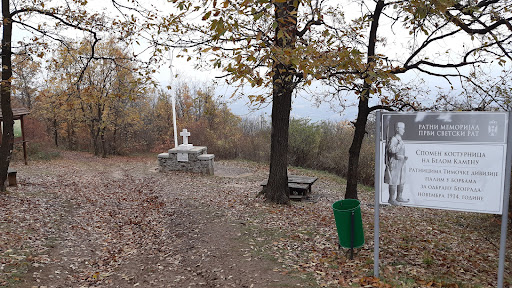
The Kolubara battle November-December 1914
Kingdom of Serbia & Austria-Hungary empire
Line of the front Varovnica- mountain Kosmaj (village Nemenikuce, Sopot, Belgrade)
(Varovnica-Mladenovac, villlage Vlashka)
The Kolubara battle or the Battle of Suvobor is the most important battle between the army of the Kingdom of Serbia and the Austro-Hungarian Army in the First World War. It was conducted in November and December 1914 on the front of over 200 km. It ended with a successful counteroffensive that was carried out by the forces of the First Army under the command of General Zivojin Mishic, against the more numerous and better equipped Austro-Hungarian army, at a time when the entire world expected news of the capitulation of the Kingdom of Serbia. The battle was in its stages a trench type. After the victory of the Serbian army in the Kolubara battle on the Serbian front, until the beginning of the autumn of 1915, there was a silence. After the end of the battle, a sporadic epidemic of typhoid occurs, which will gain great proportions in the beginning of 1915.
Losses during the Kolubara battle
Losses of the Army of the Kingdom of Serbia
The dead - 22,000
The injured - 91,000
Prisoners - 19,000
A total of about 132,000 soldiers
The losses of the Balkan army of the Austria-Hungary empire
The casualties - 27,216 (soldiers and non-commissioned officers) + 1080 (officers)
Wounded - 118,911 (soldiers and non-commissioned officers) + 3,211 (officers)
Prisoners - 1,800 (soldiers and non-commissioned officers) + 66 (officers)
Missing - 73,988 (soldiers and non-commissioned officers) + 656 (officers)
Sick - 44,117 (soldiers and non-commissioned officers) + 2,599 (officers)
A total of 266,212 soldiers and non-commissioned officers and 7,592 officers were thrown out of the war.
The consequences of the battle Kolubara Nov/Dec 1914
The greatest significance of the Kolubara battle is that the Austro-Hungarian Empire failed to destroy the Kingdom of Serbia with its forces, due to which the Central Forces were forced to fight on three fronts in 1915, and more importantly, Germany was forced to send help in the people on the Balkan front, which weakened her strengths on the other two fronts, and hence her chances to successfully eliminate one of them.
The battle was also important on the global agenda. The Magnificent Serb victory postponed the entry into the war of Bulgaria, which was preparing to enter the war on the side of the Central Powers, counting that Serbia was defeated and that without a fight it would reach the territories against which it was against the Kingdom of Serbia One year earlier, the Second Balkan War led the Serbian victory. It contributed to the decision of the Kingdom of Italy to enter the war on the side of Antanta.
General Zivojin Misic was promoted to the rank of duke due to the successful conduct of the operation, while his rival Oscar Poćrek was dismissed from the position of the main commanding Balkan army at the end of 1914, and was replaced by the German Field Marshal August von Makenzen.
The importance of the Kolubara battle in the history of warfare
The Kolubara battle entered the history of war as a unique example that the army, which is predicted a complete breakdown, reorganizes in a short time, turns into a counter-offensive and inflicts a decisive defeat on the enemy. The tactic of reengineering only the I Army and the concentrated impact on the VI Army (which was sprawled on the broad front) by Živojin Mišić is now being taught at military schools around the world.
The Kolubara battle is also significant in that the two armies in operations did not have strategic reserves that could strengthen their lines where needed, but they achieved this by transferring forces from one part of the...
Read more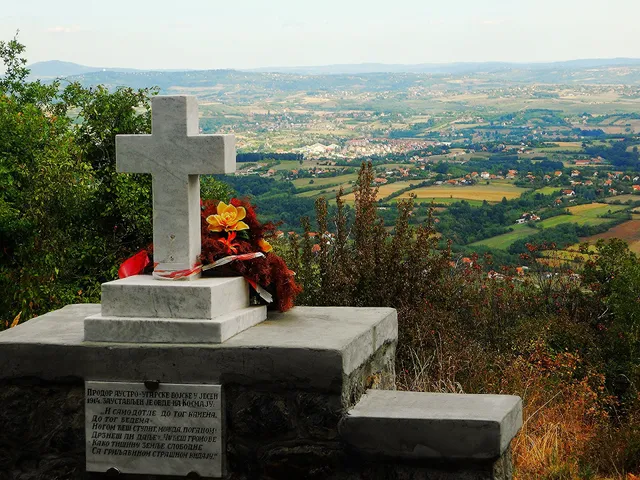
 Learn more insights from Wanderboat AI.