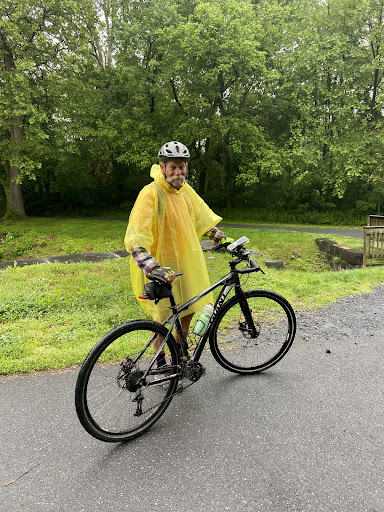
This Bicycle Ride Is Not (I repeat Not) For The Beginner Cycle Tourist. I can say this because I can be considered to be an expert extreme-long distance cycle tourist with 17 coast-to-coast crossings of the United States under my wheels and over 272,000 touring miles cycled in the last 26 years. I have made three trips along the canal (2 eastbound and 1 recently completed westbound as of 5/19/19).
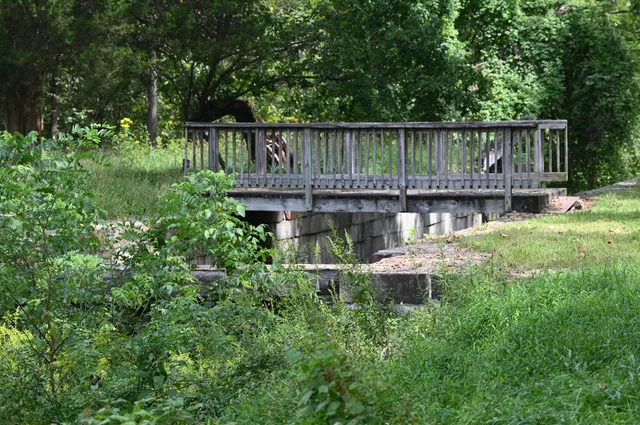
People think that because they completed the GAP Trail between Pittsburgh. PA and Cumberland, MD, they can continue on their way to Washington, DC without much problems but they are fooling themselves badly especially this year (2019). There is no comparison. You are traveling on a crushed limestone very well maintained surface on the GAP Trail and then dirt and rocks on the C&O. Because this is a Historical National Park, the C&O Canal path is kept quite primitive. The heavy rains this year has caused major problems on the path. There are long sections of heavy mud made worse by too many cyclists who don't know how to ride in muddy conditions or dumb enough to know that they should get off their bicycles and walk through the mud patches. There are also sinkholes along the path. The East entrance to the PawPaw Mountain tunnel is almost impassable because the path has been undercut by a stream and there is a risk of a major rock slide in the area. Some fool ripped down the wire fence gate so this is now an obstacle to get over. The aqueduct at Williamsport (MP 100) is under total reconstruction but there is a detour around it. The area called Big Slackwater (MP 86) is under four feet of water in three places so you need to use the High Water Detour. Do not stay on the main path. Take the detour. The major problem is that there is a bridge closed (gone because of major flooding) east of Brunswich (between MP 50 and MP 53) and there is no real detour around the bridge. Cyclists who try to sneak on the railroad bridge next to this closed bridge could risk being caught and fined over $500. It would be best if you would just skip miles 50 through 100 all together.
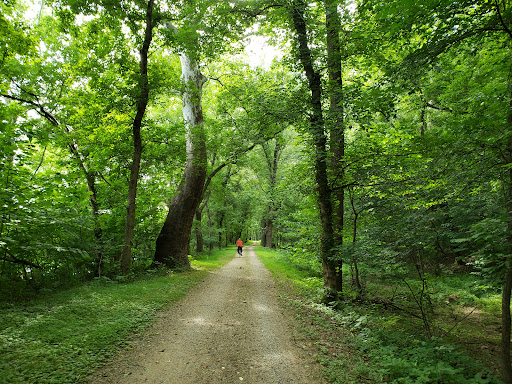
The closer that you get to Washington, DC the path is more primitive than any other sections. In this section (MP 20 to 50), the path consists of two bare sections of dirt less than six inches wide and there is a lot of mud. Some of the H/B campsites along the path are barely usable because of the mud. Bring your own toilet paper because not all of the port-a-toilets at the campsites have some.
You need to have bike repair tools, pump, and tubes ; camping gear; first aid gear; wet weather gear; and food (I helped a cyclist out because he ran out of food). In quite a few sections along the canal, there is no cellphone service so you can't always get immediate help if you get injured or have major bicycle problems.
Do not fool yourself if you think that you can do the whole path in three or four days. Over 30 mile days is unreasonable. In Cumberland, Maryland as I was finishing my westbound trip, I saw two ladies head out eastward with no gear whatsoever with intentions to ride to Washington DC unassisted. They will not last the first 60 miles.
For those who want to have a safe ride in the country, try out the 26 mile paved Western Maryland Rails to Trails path at Hancock, Maryland and the paved Washington and Old Dominion Rails to Trails path between Arlington and Leesburg, Virginia on the South side of the...
   Read moreWhen I was a young man, my Grandfather Jacob Penner would take me down to the C&O canal and we would walk down to the Harpers Ferry bridge and back for the beauty of that old ditch. You see he worked that canal as a young man and I think he still wished it was being used today. He worked lock #64 from 1912-1927 and would tell me how everything worked as planned and how many friends he made over those years. When I travel back to that part of America, I always drive through Sandy Hook heading towards Dargan which takes you under the C&O railroad bridge that crosses the Potomac River near the Shanandoah River at Harpers Ferry, West Virginia. The C&O canal runs just under that point and up river. I wish I could tell you more but I’m 75 now and back in the early 50’s as a kid I didn’t think much about what he was telling me. It was a ditch with some water and trees growing out of its bank. I do remember him telling about dropping lines when the boat would pass, and how well the mules would do with that maneuver. i grew up less then a mile from the canal on a country farm and attendant Sandy Hook Elementary and then Boonsboro Jr and Senior High School. On my way to school each day, the bus would drive along that canal twice a day for about 6 miles. History was just out the window on that bus and I just took it for granted. The story I’m trying to tell, my Grand Father wanted me to learn the History of the canal and how much it meant to his generation before the railroad ran them out...
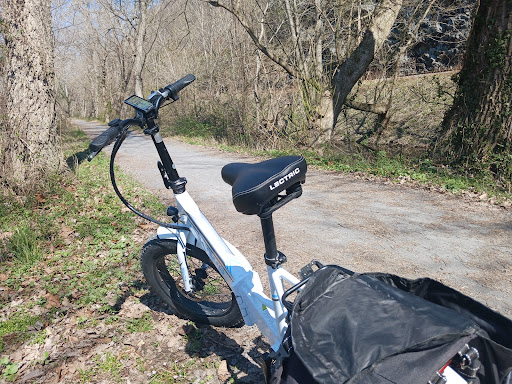
   Read moreI took my ebike here for a ride. I decided to go upstream to Brunswick. Along the way, there are historical markers and park benches to rest. I was surprised to find a campsite along the towpath. There are pit toilets at the parking lot and a portable toilet at the campsite. Before I got to Brunswick, I discovered that the bridge was out. There is a detour with a place to ford the stream. I decided to turn back here because I didn't want to risk falling in or getting my feet wet. It was very enjoyable, I...
   Read more