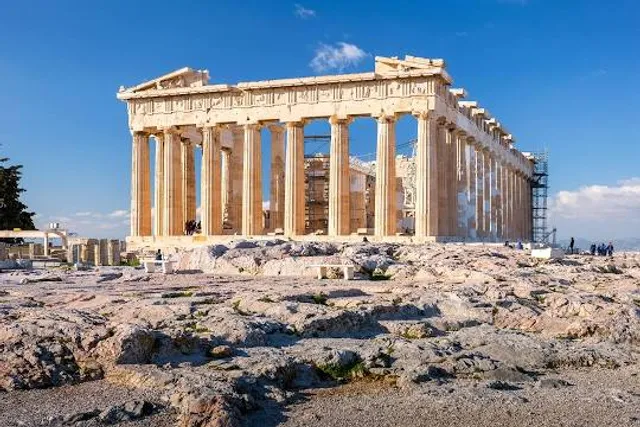

🏛️ Acropolis of Athens, Greece 🇬🇷
The Acropolis of Athens is one of the world’s most iconic ancient sites — a symbol of classical Greek civilization and often called the "cradle of Western civilization." Built during the 5th century BC under the leadership of Pericles, the complex stands atop a limestone hill roughly 150 meters high, overlooking the city of Athens. 🏛️ 1. Parthenon Dedicated to the goddess Athena, it is the centerpiece of the Acropolis. Constructed between 447–438 BC in the Doric order. Once housed a massive 12-meter statue of Athena, adorned with gold and ivory (now lost). Regarded as the peak of classical architecture. 👑 2. Erechtheion Famous for the Caryatids — six elegant columns sculpted as female figures.😁 A multi-level temple dedicated to Athena, Poseidon, and King Erechtheus. Demonstrates brilliant adaptation to uneven terrain. 🕊️ 3. Temple of Athena Nike Located to the right of the entrance, dedicated to the goddess of victory. Small but exquisitely proportioned and decorated. "Nike" means "victory," reflecting Athens' triumph over the Persians. 🚪 4. Propylaea The monumental gateway to the Acropolis. A grand Doric-style entrance with symmetrical colonnades. 🎭 5. Ancient Theaters & Odeon Theatre of Dionysus: One of the earliest theaters in the world — birthplace of Greek drama. Odeon of Herodes Atticus: Built in the 2nd century AD, still used today for performances. 📜 Historical Highlights The Acropolis dates back to the Neolithic period, with its golden age in the 5th century BC.😍 Led by Pericles, designed by architects Ictinus and Callicrates, with sculptures by Phidias. Survived destruction by Persians, conversion into a church and mosque, and Renaissance-era damage. Now a UNESCO World Heritage Site. #EastMeetsWest #Greece #WorldHeritage #Athens #Athena #TravelDeep #ClassicalArchitecture