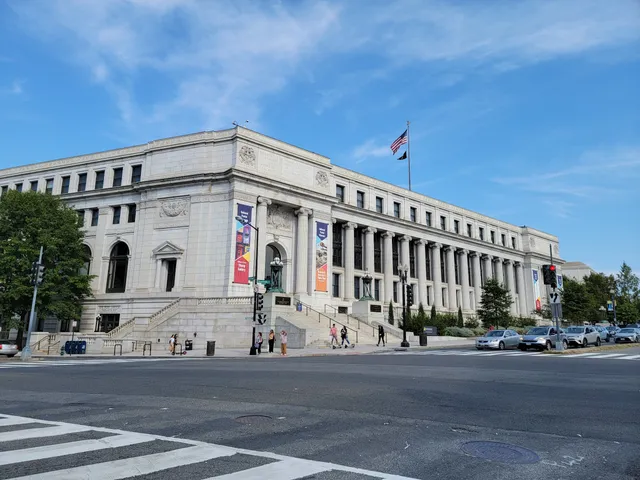
A Free & Fascinating Journey Through Mail History! ✉️🇺🇸
No reservation needed – and it’s completely free! Located right next to Union Station. 🚉🎫 ✨ Special Feature 1: Free Postcards + Museum Stamps Head toward the escalator to the first floor – you’ll find a spot where you can grab free postcards! 📬 Then go back to the info desk near security to get your museum stamp. 🧾✍️ Take the escalator up to the first floor, enter the Stamp Store (see pic 5), and you’ll see a mini post office inside! You can buy stamps and mail your postcards right there. They even have a special postmark! Mailing a postcard to China costs $1.70. 💸🌍 Fun story: Last time I wrote both a U.S. and Chinese address on the card (worried it wouldn’t arrive in China), but since the bottom line is treated as the recipient address in the U.S., it got sent to the U.S. address anyway! 😅 This time, I kept it simple – China only! ✨ Special Feature 2: Pick 6 Free Stamps Per Person Up on the second floor, in the stamp exhibition area, everyone can choose 6 used international stamps from a large display! 🌍📮 Exhibition Highlights: • The evolution of the U.S. postal system and a collection of stamps from around the world. • Changes in postal transportation – each vehicle has detailed info next to it. 🚚✈️ For example, to cut costs and simplify maintenance, post offices nationwide chose the Ford model you see in the photo! 🚗💨 • How mail service evolved with social changes: • During the Westward Expansion, cross-continental mail routes opened. 🌄 • With immigration, international mail services grew. 🧳🌏 • Urbanization led to mailbox redesigns for growing mail volume. 📬🏙️ • In rural areas, post offices became social hubs and bridges between people and the government. 🏘️💬 Notable Exhibits: • A dog specimen named Owney 🐕 – adopted by a New York post office, he traveled across the U.S. by mail train and ship, and postal workers added medals and tags to his collar. He passed away in 1897. • Stamps from China’s semi-colonial, semi-feudal period: • German Kiautschou stamps showed foreign powers setting up their own postal systems in China. • U.S. Shanghai stamps reflected foreign-controlled mail services on Chinese soil. • Qing Dynasty stamps represented China’s own official postal system. Together, these three stamps illustrate a complex era of compromised sovereignty and multiple postal systems in China’s history. 🧩📜 #PostalMuseum #USPS #NationalPostalMuseum #WashingtonDC #FreeMuseum #StampCollection #MailHistory #TravelWithKids #EducationalFun #HistoricDC #UnionStation #Philately #OwenyTheDog #InternationalStamps #PostcardLove #MuseumLife #FamilyFriendly #DCHistory #CulturalHeritage #HiddenGemDC