
Washington DC | I Have Walked Through You in Three Seasons
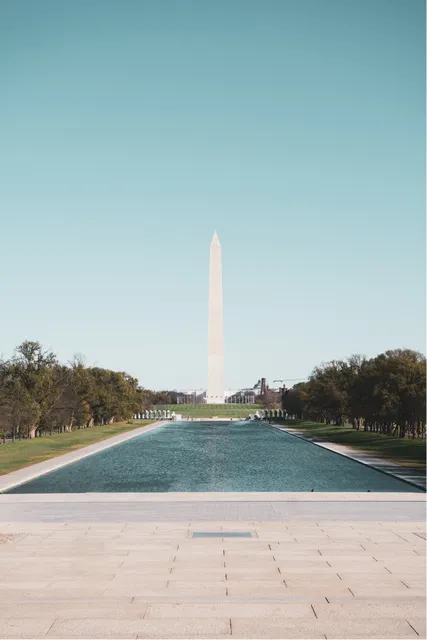
I’ve visited Washington three times, each in a different season. The first time, I saw the architecture. The second time, I heard the music. Only the third time did I meet the people behind the city. 🟤 Early Winter My first visit was in winter. Wind swept across the river, and the national museums stood one after another, each telling me in solemn tones: there is never just one version of the human story. Outside the National Museum of American History, I saw a group of students conducting oral history interviews. Through my headphones, English mingled with sighs in an accent I couldn’t quite place—Eastern European or Middle Eastern. The wind was sharp, and the passing crowds seemed to be simultaneously telling and retelling their origins, like living archives that could never be stamped “finalized.” 🟤 Early Spring The second time, the city was just awakening from winter, like someone who had drunk half a glass of warm water but hadn’t fully regained their senses. I went to see the cherry blossoms with a friend. On our way back to the hotel, we passed Embassy Row, and I thought of the poet who once lay down in a bed of flowers. A writer I admire once wrote about showing Sheyda, an exiled Iranian poet, around DC. That day, Sheyda wore no hijab. She was free—in a tank top, low-rise jeans, her navel exposed, and Onassis sunglasses perched on her nose. When she saw a magnolia tree, its fallen petals like stranded seashells scattered every which way, she began reciting Forogh Farrokhzad’s poetry in Persian. Her voice broke, and then, like a marionette, she lay down among the blossoms. Construction workers across the street paused to watch her. In one moment, she saw herself as a beached mermaid, her hair combed by receding tides. In the next, she was a fallen angel, pale purple feathers suspended in God’s blinding light. This is DC: the residences of diplomats and the heartaches of exiles are separated only by a street. 🟤 Late Summer My third visit was in late summer. I went to the Kennedy Center to watch Riverdance. The sunset reflected off the river, as if someone had gently brushed a thin layer of gold over the Potomac. When the performance began, the rhythm of Irish step dance was sharp and decisive—like a declaration: No matter how chaotic the world becomes, my steps will land where I choose. By the time we left, night had fallen. But whenever I think of that day, all I remember are the drums in my heart and the sunset over the river. 🟤 Beyond Seasons In an Ethiopian restaurant in Shaw, the seasons blur. The air is always filled with the caramel scent of roasting coffee beans and the aroma of spicy wot. A few words of Amharic, some softly rounded English, and the clinking of cutlery weave together. I ordered injera, the sour fermented flatbread laid out before me like a map. The contours of home, the paths of migration—all hidden within its porous layers. That day, the restaurant played Meklit’s “Abebayehosh.” I asked the owner, “What does this song mean?” She set down the coffee and smiled. “Abeba, bloom for us. Bloom for us.” She said, “When I was little, we sang this at festivals and weddings.” Meklit’s version carries the shadow of diaspora—a shadow stretching between two continents, moving forward while looking back. #WashingtonDC #SeasonsOfDC #CityOfStories