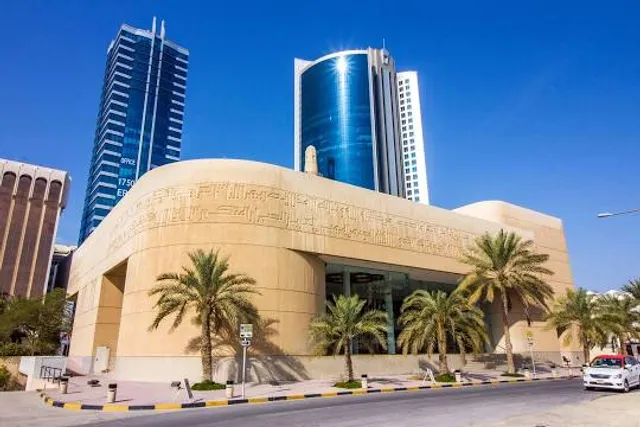
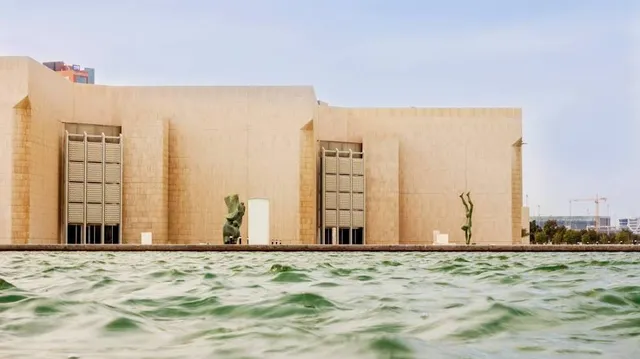
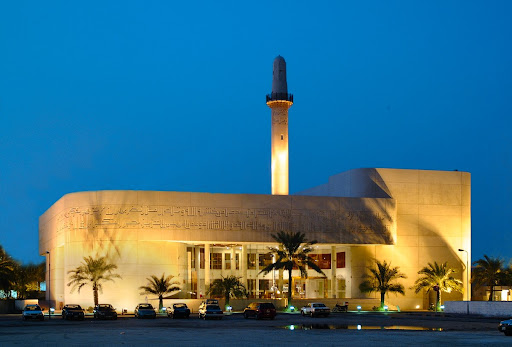
Beit Al Qur'an (Arabic: بيت القرآن, meaning: the House of Qur'an) is a multi-purpose complex dedicated to the Islamic arts and is located in Hoora, Bahrain. Established in 1990, the complex is most famous for its Islamic museum, which has been acknowledged as being one of the most renowned Islamic museums in the world.
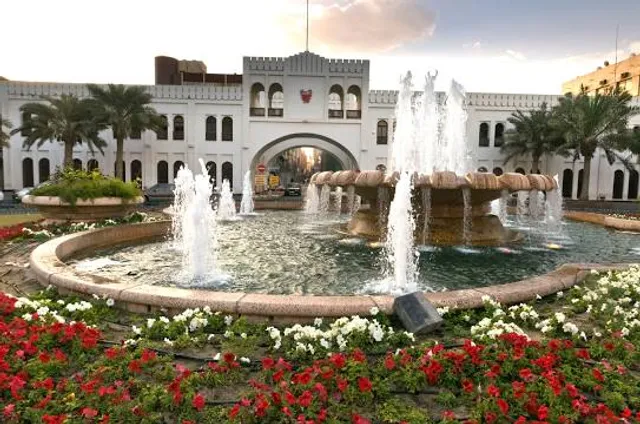
Facilities :- The Beit al Qur'an complex is open to the public on Saturdays to Wednesdays from 9am to 12pm and 4pm to 6pm respectively. The complex's exterior designs are based on an old fashioned 12th-century mosque. The entire complex itself comprises a mosque, a library, an auditorium, a madrasa, and a museum that consists of ten exhibition halls. A large stained glass dome covers the grand hall and the mosque. The Mihrab, the sign indicating the direction to Mecca, is covered in blue ceramic tiles with engraved Al Qursi Qur'anic verse.
The library consists of over 50,000 books and manuscripts in three languages – Arabic, English and French – that are mostly on Islam. The institute does specialise in Islamic art, and many of the reference books have international importance. The library and its reading rooms are open to the public during working hours with internet access available, as well as providing individual rooms for researchers and specialists.
There is also an auditorium – named the Mohammed Bin Khalifa Bin Salman Al Khalifa Lecture Hall – which can accommodate up to 150 people, and is mainly used for lectures and conferences. Guest speakers are brought to Bahrain from many countries, including the US, UK, and France. The conference hall is often made available for general use for public lectures in cooperation with different societies and institutions in Bahrain.
The Yousuf Bin Ahmad Kanoo School for Qur'anic Studies is located within the site. The school offers seven study areas fully equipped with computers and modern aids, with separate classes for women and children learning the Qur'an.
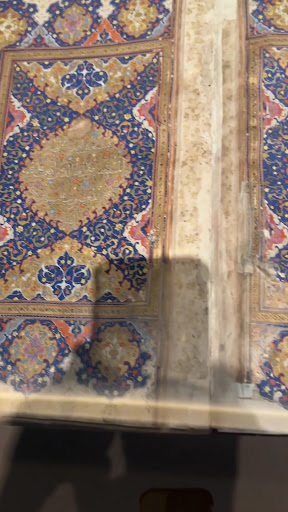
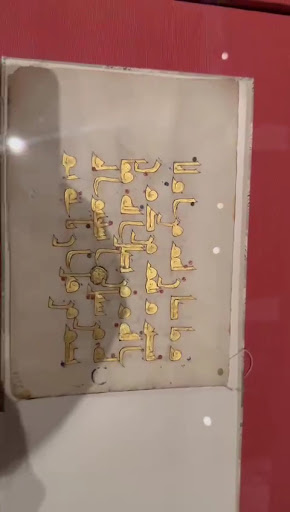
Museum :- The Al Hayat Museum is the complex's most recognized establishments; it consists of ten halls spread over two floors, exhibiting rare Qur'anic manuscripts from different periods, starting from the first century Hijra (700 AD). Manuscripts on parchments that originate from Saudi Arabia (Mecca and Medina), Damascus and Baghdad, are present in the museum. The manuscripts undergo special procedures for the preservation of these artifacts, in order to protect them from damage. Some of the artifacts present in the museum include a rare manuscript of the Qur'an dating from 1694 AD which was printed in Germany. The museum also houses the world's oldest translated copy of the Qur'an, which was translated to Latin in Switzerland and dates to 955 AD. The first copy of the Qur'an, written during the reign of Caliph Uthman ibn Affan, is on display in the museum alongside a number of small copies of the Qur'an, which could only be read using optical instruments.
Grains, peas and rice, dating from the 14th century in present-day Pakistan, which contain surahs engraved into them, are displayed in the museum. The exhibits include a rare number of gold and copper pottery and glass from different eras of Iraq, Turkey, Iran and Egypt, respectively.
The works of Islamic scholars, such as Ibn Taymiyyah are preserved in the museum. It has been claimed to have been "the only institute in the world dedicated to the Qur'an and...
Read moreVery nice place, can seen from the one of the main raod Sheikh Hamad Causeway, but it can be approach/enter from rear side road 1901, car can be park on road side sholder. One masjid also there on left side side of enterance lobby with name of Masjid Abdul Rehman Jasim Kanoo, which opened only salah times. Entry fee or ticket is not a specific. One box is placed beside the entry door you can put some money whatever you affoard. There is one wall where written the name of contributors of this museum. Photography is not allowed inside the museum There are multiple portions/halls for manuscripts of quran from different eras. The first hall is most spaciouse, where we can find the scripts of Quran from seventh century to 11th centuries. after that some hall having scripts of Quran from 10th century to 15th cebntury and then onward from 15th to 18th from and the from 18th to 20 and last one is of 20th century manuscripts. These manuscripts are from different centuries majority from Middle east, then Turkey, Faris and then from Indian subcontinent. There is also mention the name of these script like east Kufic, west Kufic, Naskh. I liked most the Naskh which is from Turkish and from Subcontinent. There are also many Quranic scripts translated in different languages. And many scripts from firstly printed in different regions of the world. Overall a must...
Read more3.5/5- An absolutely beautiful building with a unique collection and it has SO much potential.
I would like to start by highlighting the beautiful interior and architecture of the building, it's so peaceful and serene- I love it. However, it's not used to it's full potential.
First and foremost, things that need rectifying: there are no prayer spaces for ladies, and there should be one on the same level of interior as the male prayer space the elevators were not functioning there are no parking spaces
Suggestions for improvement: Having a framed map of the building showing the different sections a sign that lets you know about the exhibit as the corridor leading to it wasn't clear until someone pointed it out there could be descriptions about the architecture and some of the artefacts present chairs/seat options giving a physical or digital entree ticket with calligraphy writing a membership card for those who want to use the library throughout the year without paying an entree fee each time (but paying for the year or 6 month membership card)
with that being said, it is a beautiful place with a unique collection, it would be great to showcase it more...
Read more