Lalbagh Fort
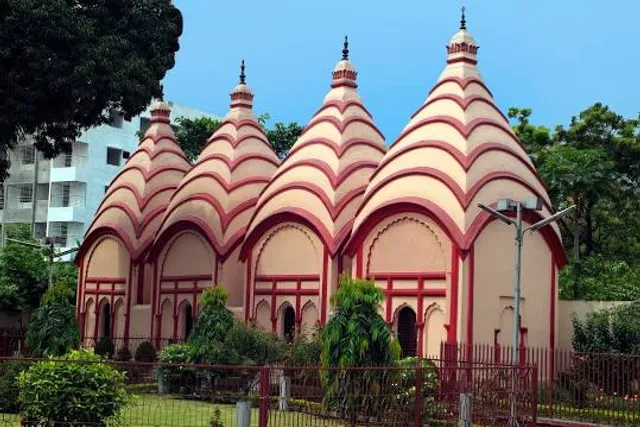
Old Dhaka
Lalbagh Fort
Old Dhaka
Lalbagh Fort
Old Dhaka
Lalbagh Fort
Old Dhaka
Lalbagh Fort
Old Dhaka
Lalbagh Fort
Old Dhaka
Lalbagh Fort
Old Dhaka
BE ORGANIZED
Travel Essentials

TRAIN

LAUNCH

RESTAURANT

RESORT

STREET FOOD

VOLUNTEER

SHOPPING

TOUR OPERATOR

TOUR GUIDE

AMUSEMENT PARK

BUS

HOTEL

AIRLINES

RENT A CAR

TRAIN

LAUNCH

RESTAURANT

RESORT

STREET FOOD

VOLUNTEER

SHOPPING

TOUR OPERATOR

TOUR GUIDE

AMUSEMENT PARK

BUS

HOTEL

AIRLINES

RENT A CAR
 
Lalbagh Fort
Lalbagh Fort (also Fort Aurangabad) is an incomplete 17th-century Mughal fort complex that stands before the Buriganga River in the southwestern part of Dhaka, Bangladesh. The construction was started in 1678 AD by Mughal Subahdar Muhammad Azam Shah who was the son of Emperor Aurangzeb and later emperor himself. His successor, Shaista Khan, did not continue the work, though he stayed in Dhaka up to 1688.
History
The south gate of the fort was painted by Johan Zoffany in 1787
The Mughal prince Muhammad Azam, the third son of Aurangzeb started the work of the fort in 1678 during his vice-royalty in Bengal. He stayed in Bengal for 15 months. The fort remained incomplete when he was called away by his father Aurangzeb.
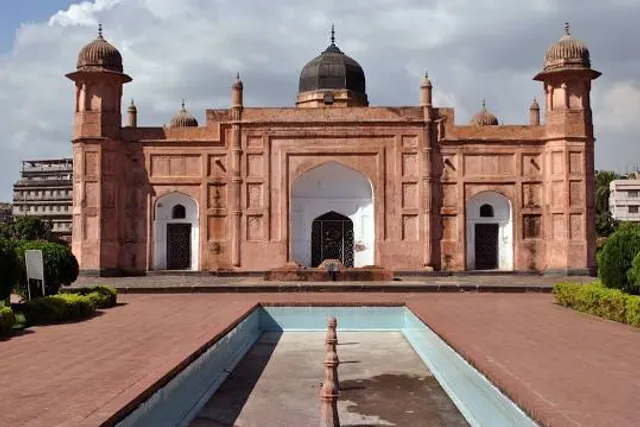
Shaista Khan was the new subahdar of Dhaka at that time, and he did not complete the fort. In 1684, the daughter of Shaista Khan named Iran Dukht Pari Bibi died there. After her death, he started to think of the fort as unlucky and left the structure incomplete. Among the three major parts of Lalbagh Fort, one is the tomb of Pari Bibi.
After Shaista Khan left Dhaka, it lost its popularity. The main cause was that the capital was moved from Dhaka to Murshidabad. After the end of the royal Mughal period, the fort was abandoned. In 1844, the area acquired its name as Lalbagh replacing Aurangabad, and the fort became Lalbagh Fort.
Structures
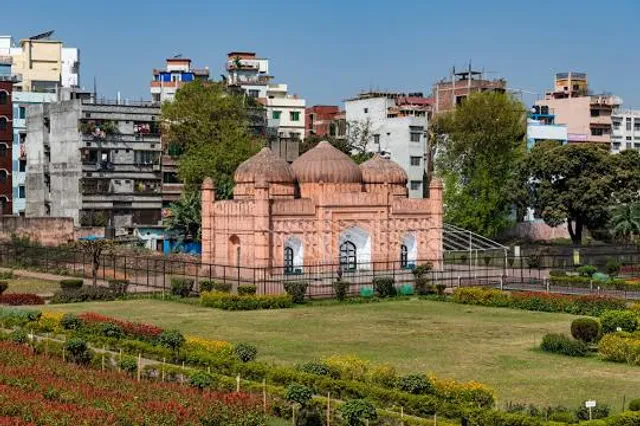
For long the fort was considered to be a combination of three buildings (the mosque, the tomb of Bibi Pari and the Diwan-i-Aam), with two gateways and a portion of the partly damaged fortification wall. Recent excavations carried out by the Department of Archaeology of Bangladesh have revealed the existence of other structures.
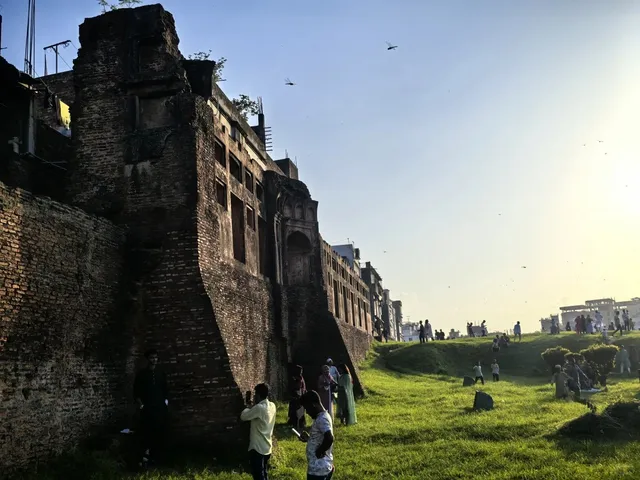
The southern fortification wall has a huge bastion in the southwestern corner. On the north of the southern fortification wall were the utility buildings, stable, and administration block, and its western part accommodated a beautiful roof garden with arrangements for fountains and a water reservoir. The residential part was located on the east of the fortification wall, mainly to the southwest of the mosque.
The fortification wall on the south had five bastions at regular intervals two stories in height, and the western wall had two bastions; the biggest one was near the main southern gate. The bastions had a tunnel.
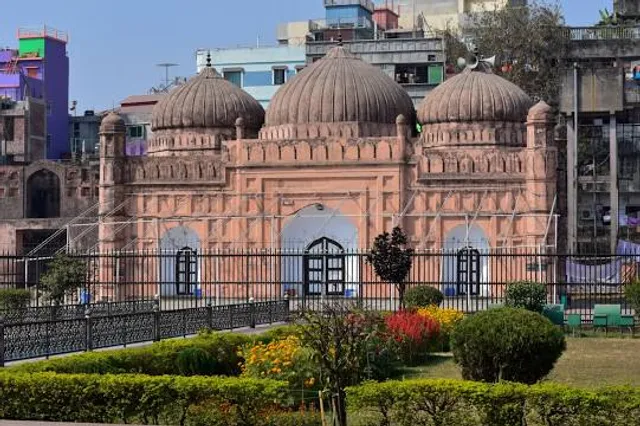
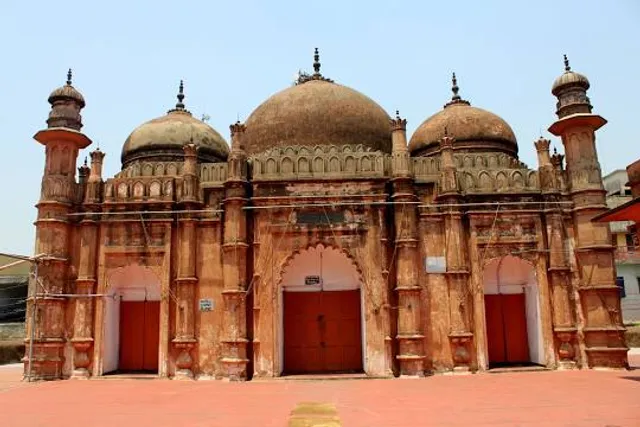
The central area of the fort is occupied by three buildings -the Diwan-i-Aam and the hammam on its east, the Mosque on the west, and the Tomb of Pari Bibi in between the two in one line, but not at an equal distance. A water channel with fountains at regular intervals connects the three buildings from east to west and north to south.
How To Go
Dhaka's Lalbagh Fort can be reached by rickshaw, CNG, or taxi from the front of Gulistan, Shahbagh or...
Read moreLalbagh Fort is truly one of the most beautiful and historically significant places I've had the pleasure of visiting. Its architectural style is captivating, and its historical importance runs deep. Location and Entry: Situated in the heart of Dhaka, the fort is easily accessible. Plenty of transportation options are available in the vicinity. Tickets can be purchased easily at the ticket counter upon arrival. The ticket price is quite reasonable, making it accessible to everyone. Historical Context: The construction of Lalbagh Fort commenced in 1678 during the reign of Mughal Emperor Aurangzeb's son, Prince Azam Shah. However, the construction was never fully completed. Under subsequent rulers, the work continued intermittently before eventually ceasing. This incompletion is evident in various parts of the fort, adding to its mysterious allure. Architectural Style: The fort's architecture is a magnificent example of Mughal-era artistry. The use of red brick and various Islamic architectural designs enhance the fort's beauty. There are three main gates, with the southern gate being the most striking. Upon entering, you'll be greeted by a vast garden, a silent witness to the grandeur of a bygone era. Places of Interest: Several significant structures reside within the fort's walls: Diwan-i-Aam: This was likely the hall of audience for the rulers. The intricate work inside and the pillars offer a glimpse into the royal opulence of that time. Mausoleum of Pari Bibi: This is perhaps one of the most notable structures within the fort. Legend has it that Pari Bibi was the wife of Prince Azam Shah. She was laid to rest here after her untimely death. Built with marble and other precious stones, this mausoleum is truly a sight to behold. Its architectural style exhibits some unique characteristics compared to other Mughal structures. Three-Domed Mosque: A beautiful three-domed mosque stands within the fort complex. It was likely used by the soldiers and other officials. The mosque's architectural design is also quite appealing. Hammamkhana: This is believed to have been the royal bathhouse. The interior design and the well suggest its importance during that period. Atmosphere and Experience: The atmosphere inside the fort is serene and tranquil. The blend of green grass and ancient architecture creates a unique ambiance. People of all ages visit this place. Wandering around the fort allows one to almost visualize the many untold stories of history. Especially for those who appreciate history and architecture, Lalbagh Fort offers an extraordinary experience. Some Tips: It can get quite hot during midday, so it's best to visit in the morning or late afternoon. It's advisable to carry sufficient water. You'll need to do a fair amount of walking to explore the fort, so wearing comfortable shoes is essential. It's our collective responsibility to respect the historical significance of the place and keep it clean. Overall, Lalbagh Fort is not just a historical site; it's a reflection of our past and heritage. If you're in Dhaka, visiting this remarkable place is highly...
Read moreLalbagh Kella (Lalbagh Fort) is a historical Mughal-era fort situated in Dhaka, Bangladesh. It is one of the most significant and iconic landmarks in the country. Here's a detailed history of the fort:
Construction and Origin
The construction of Lalbagh Fort began in 1678 under the orders of Subahdar Muhammad Azam Shah, the third son of Mughal Emperor Aurangzeb. He was serving as the governor of Bengal at the time.
The fort was initially planned to be a grand structure, symbolizing Mughal dominance in Bengal.
Incomplete Construction
Muhammad Azam Shah had to leave Bengal in 1679 to ascend the Mughal throne, leaving the fort unfinished.
The next governor, Shaista Khan, continued the construction but halted it after the tragic death of his daughter, Bibi Pari, within the fort premises. This led him to believe that the site was inauspicious.
Consequently, the fort was never completed.
Main Structures in the Fort
The Mosque
A three-domed mosque within the fort premises is a prime example of Mughal architectural style. It remains a functioning mosque.
The Tomb of Bibi Pari
The mausoleum of Bibi Pari is located inside the fort. It is made of white marble and is considered the most significant structure in the complex.
The tomb has intricate floral designs, and the walls are decorated with precious stones and carvings.
The Diwan-i-Aam (Audience Hall)
This was used as the governor’s residence and administrative center.
It features a unique blend of Mughal and Bengali architectural styles.
Architectural Features
The fort combines traditional Mughal architectural elements like domes, arches, and ornate carvings.
Red sandstone and marble were predominantly used in the construction.
Later Developments
After being abandoned, the fort fell into disrepair over centuries.
During British rule, the site was used as a police barracks and administrative office.
Modern Restoration and Preservation
Today, Lalbagh Fort is a protected heritage site managed by the Bangladesh Department of Archaeology.
The site has been partially restored and serves as a museum, attracting thousands of tourists and history enthusiasts every year.
Significance
Lalbagh Fort is a symbol of Dhaka's rich history and Mughal heritage.
Despite being incomplete, it showcases the grandeur of Mughal...
Read more