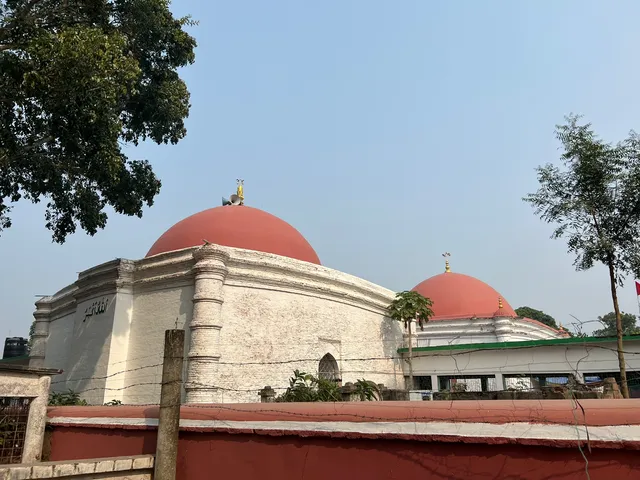
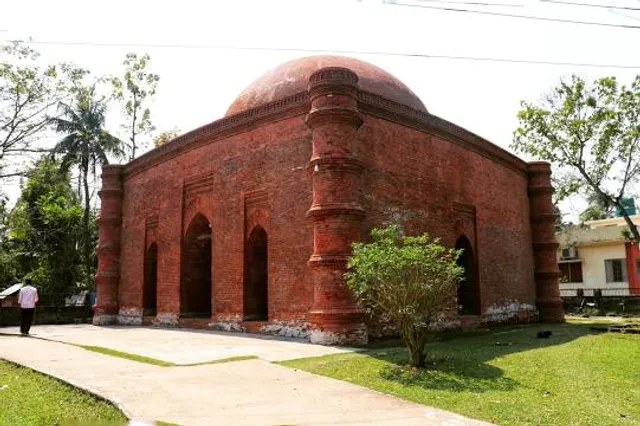
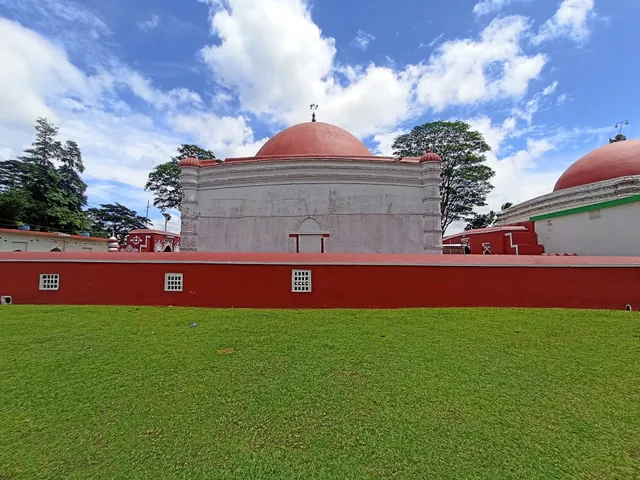
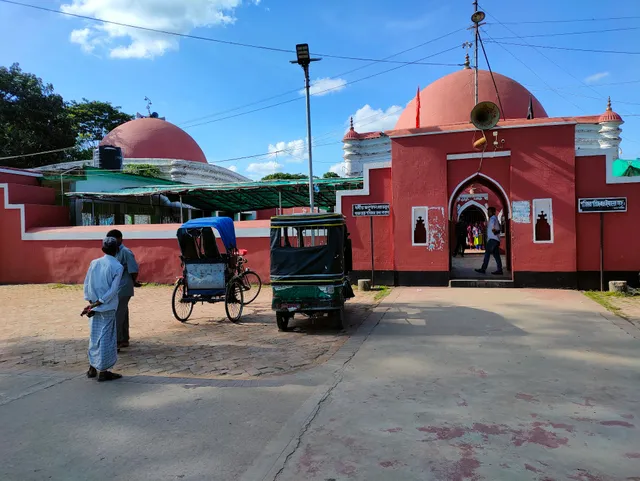
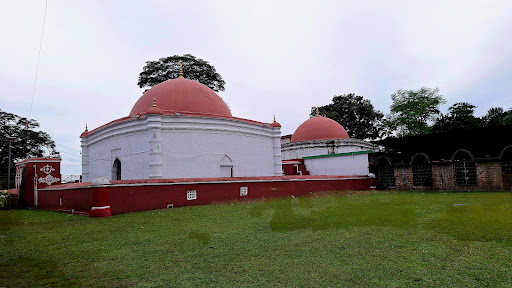
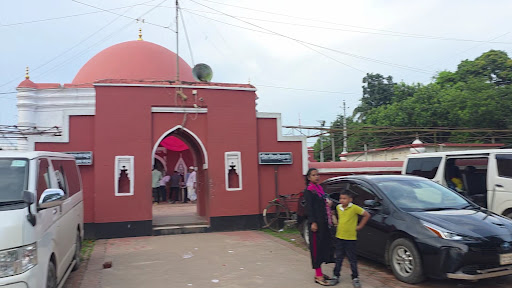
Visited Khan Jahan Ali (RA) Mazar yesterday and had a peaceful and enriching experience. The site is not only spiritually significant but also a remarkable piece of history. The architecture is impressive, and the calm surroundings make it a perfect spot for reflection. The area around Thakur Dighi is especially serene and adds to the overall atmosphere. The place is well-maintained and respectful of its historical importance. Highly recommend for anyone visiting Bagerhat.
Here some historical Information (If need any Corrections, Let me know) :
Khan Jahan Ali (RA), also known as Ulugh Khan and Khan-i-Azam, was appointed as the governor of the Sundarbans by Sultan Mahmud Shah of Bengal. He is credited with transforming the dense mangrove forests into a thriving urban center by constructing roads, bridges, reservoirs (dighis), and numerous mosques. His most notable architectural achievement is the Sixty Dome Mosque (Shat Gombuj Masjid), which stands as a testament to the Indo-Islamic architectural style of the Bengal Sultanate.
The mausoleum itself is a square, single-domed structure built with baked bricks, resting on a raised platform near the Thakur Dighi, a large water tank. The tomb's walls are adorned with inscriptions in Arabic and Persian, and the interior houses the sarcophagus of Khan Jahan Ali (RA). Adjacent to the tomb is a mosque and the sarcophagus of his close associate, Muhammad Tahir.
The Mosque City of Bagerhat, encompassing the Khan Jahan Ali (RA) Mazar and other historical structures, was designated a UNESCO World Heritage Site in 1985. This recognition highlights the city's outstanding example of an architectural ensemble that illustrates a significant stage in human history, particularly the spread of Islam in the region through Sufi traditions.
Sources: Wikipedia and...
Read moreWhen Khan Jahan Ali died in 1459 AD while praying Isha, he was buried here. According to historians, Khan Jahan Ali had this tomb built before his death. For more than five and a half centuries, various visitors and devotees have been visiting this shrine regularly. It is known from various historical documents that Khan Jahan Ali was born in approximately 1369 AD in a noble Muslim family of Delhi, At the beginning of his career, he was a warrior, and also served as an army chief for a long time. Before coming to this region, he was the governor of Jainpur province. Khan Jahan Ali was active in spreading Islam while he was the governor of Jainpur, and built many mosques. In fact, he was a Sufi saint and preacher of Islam. For this reason, in order to spread religion in this region, he established primary settlements in the forested and uninhabited areas of South Bengal during the period of approximately 1410-20 AD and created an environment for others to live in. And by participating in various strategies and wars, he kept this region intact under Shahi Bengal. Impressed by his work skills and dedication, in approximately 1435, the second Sultan of Shahi Bengal, Khan Jahan Ali, was given administrative responsibility (governorship) to spread Islam and establish settlements in the uninhabited and forested areas of South Bengal. As a result, along with the spread of Islamic Sufism, extensive development of this region began. Along with creating the living conditions of the common people, he dug many dighis and canals as a source of fresh water. The common people trusted him. Regardless of religion and caste, his devotees spread throughout South Bengal. For this reason, people of all religions can be seen coming and going around his...
Read moreHazrat Khan Jahan Ali (RA)'s mausoleum is located in Bagerhat district of Khulna division. Hazrat Khan Jahan Ali (RA) is one of the prominent people through whom Bagerhat district has become well-known in Bangladesh. Although he was born in India, he came to Jessore, Bagerhat region of Bangladesh to preach religion. He built the famous mosque of the golden age, Shat Gombuj Mosque, in Bagerhat. His mausoleum is located here.
His mausoleum is built on a high ground on the north bank of Khanjeli Dighi. The mausoleum is square in shape, its area is 42 feet X 42 feet and the height of the wall is 25 feet, and it has a dome on its roof. The mausoleum of Hazrat Khan Jahan (RA) is located on a stone altar inside the mausoleum. The architecture of the dargah or mausoleum is much like the Shat Gombuj. The inscriptions, apart from the date of death and burial, also include the name of Allah, some Surahs of the Quran and may Allah's peace be upon him. Every day, thousands of devotees from different parts of the country and abroad, regardless of their caste and religion, come to visit the shrine in the hope of receiving his spiritual blessings. Besides, every year on 25th Agrahayan, a grand fair is held in the premises of the shrine of this great saint on the occasion of the annual Ursh Mubarak and the annual conference on the first full moon of the month of Chaitra. Thousands of devotees from far and wide gather at his shrine to pay their respects during these...
Read more