HTML SitemapExplore
logo
Find Things to DoFind The Best Restaurants

Khan Jahan Ali Mazar — Attraction in Khulna Division

Name
Khan Jahan Ali Mazar
Description
Nearby attractions
Hazrat Khan Jahan Ali (RA) of Mazar Sharif
Khan Jahan Ali Majar Rd, Bagerhat, Bangladesh
Nine Dome Mosque
MQ54+94X, Bagerhat, Bangladesh
Nearby restaurants
Nearby hotels
Related posts
Keywords
Khan Jahan Ali Mazar tourism.Khan Jahan Ali Mazar hotels.Khan Jahan Ali Mazar bed and breakfast. flights to Khan Jahan Ali Mazar.Khan Jahan Ali Mazar attractions.Khan Jahan Ali Mazar restaurants.Khan Jahan Ali Mazar travel.Khan Jahan Ali Mazar travel guide.Khan Jahan Ali Mazar travel blog.Khan Jahan Ali Mazar pictures.Khan Jahan Ali Mazar photos.Khan Jahan Ali Mazar travel tips.Khan Jahan Ali Mazar maps.Khan Jahan Ali Mazar things to do.
Khan Jahan Ali Mazar things to do, attractions, restaurants, events info and trip planning
Khan Jahan Ali Mazar
BangladeshKhulna DivisionKhan Jahan Ali Mazar

Basic Info

Khan Jahan Ali Mazar

MQ65+989, Khan Jahan Ali Majar Rd, Bagerhat, Bangladesh
4.4(829)
Open 24 hours
Save
spot

Ratings & Description

Info

Cultural
Scenic
Family friendly
Accessibility
attractions: Hazrat Khan Jahan Ali (RA) of Mazar Sharif, Nine Dome Mosque, restaurants:
logoLearn more insights from Wanderboat AI.
Phone
+880 1601-023432

Plan your stay

hotel
Pet-friendly Hotels in Khulna Division
Find a cozy hotel nearby and make it a full experience.
hotel
Affordable Hotels in Khulna Division
Find a cozy hotel nearby and make it a full experience.
hotel
The Coolest Hotels You Haven't Heard Of (Yet)
Find a cozy hotel nearby and make it a full experience.
hotel
Trending Stays Worth the Hype in Khulna Division
Find a cozy hotel nearby and make it a full experience.

Reviews

Nearby attractions of Khan Jahan Ali Mazar

Hazrat Khan Jahan Ali (RA) of Mazar Sharif

Nine Dome Mosque

Hazrat Khan Jahan Ali (RA) of Mazar Sharif

Hazrat Khan Jahan Ali (RA) of Mazar Sharif

4.4

(76)

Open 24 hours
Click for details
Nine Dome Mosque

Nine Dome Mosque

4.5

(107)

Open 24 hours
Click for details
Get the Appoverlay
Get the AppOne tap to find yournext favorite spots!
Wanderboat LogoWanderboat

Your everyday Al companion for getaway ideas

CompanyAbout Us
InformationAI Trip PlannerSitemap
SocialXInstagramTiktokLinkedin
LegalTerms of ServicePrivacy Policy

Get the app

© 2025 Wanderboat. All rights reserved.
logo

Posts

Rahul FreemanRahul Freeman
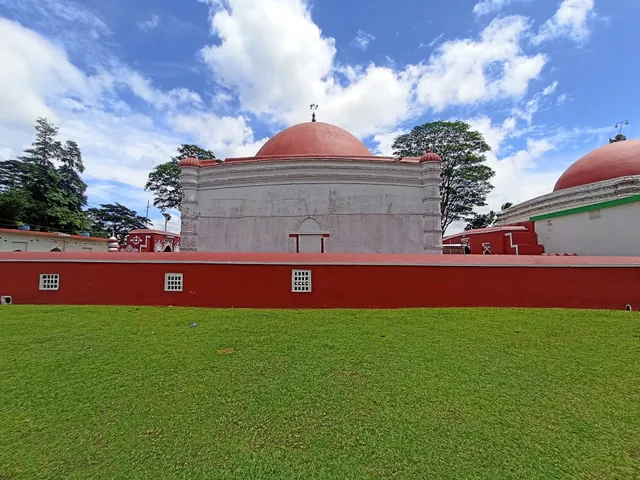
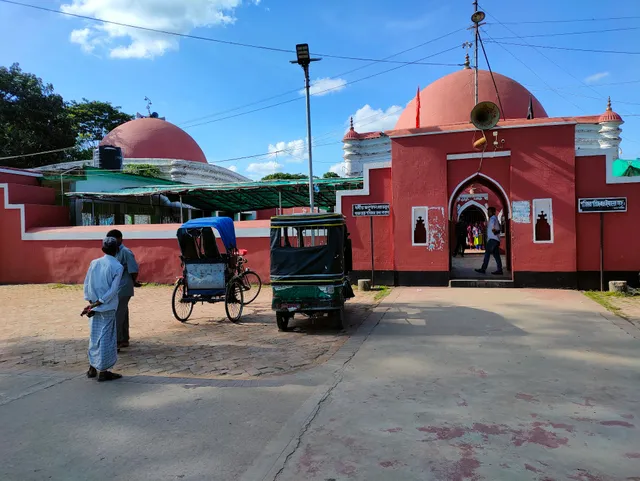
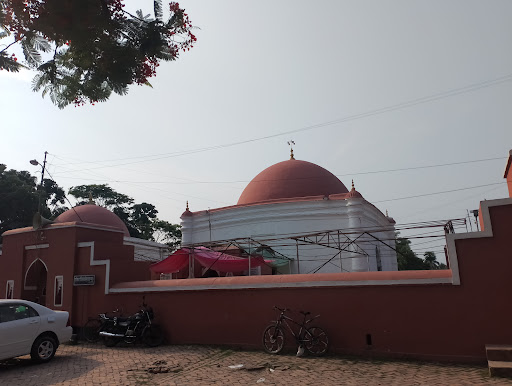
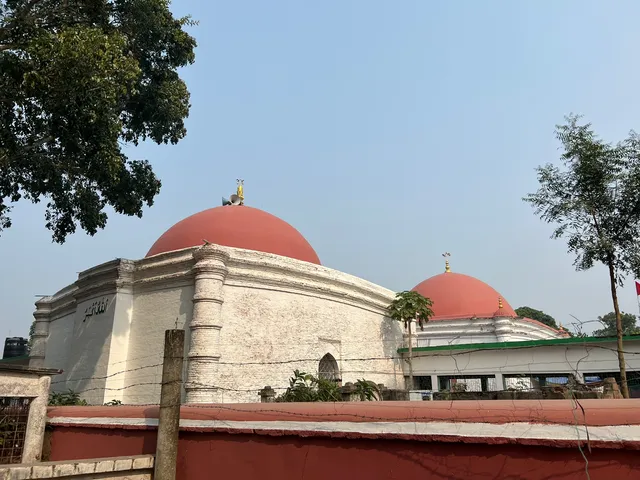
Located in the historic town of Bagerhat, near Khulna in Bangladesh, the Mazar (tomb) of Khan Jahan Ali is not just a sacred site but also a remarkable piece of architectural and cultural heritage. This place beautifully blends spirituality, history, and serenity, attracting both devotees and tourists from all over the country and beyond. Khan Jahan Ali was a 15th-century Sufi saint and a revered Muslim general who played a significant role in spreading Islam in the southern part of Bengal. He is also credited with establishing the beautiful city of Bagerhat, formerly known as Khalifatabad, which is now recognized as a UNESCO World Heritage Site due to its impressive collection of ancient Islamic architecture. As you arrive at the Mazar complex, you’re immediately struck by the peaceful atmosphere. The main tomb is made of stone and features traditional Islamic architectural elements, including domes, intricate carvings, and a simple yet powerful design that speaks to the deep respect people have for Khan Jahan Ali. The tomb is well-maintained and preserved, showing both the age-old craftsmanship and ongoing devotion of the local people. One of the most interesting parts of the visit is the adjacent Dighi (large pond) known as “Thakur Dighi.” Legend says Khan Jahan Ali released crocodiles into this pond, and to this day, a few can still be spotted. People often feed them as part of religious offerings, believing that their wishes will be fulfilled. There is also a mosque nearby, and several other historical structures and tombs around the complex, including the famous Sixty Dome Mosque (Shat Gombuj Masjid), which is only a short distance away. Many visitors choose to visit both places in one trip, making for a truly enriching historical and spiritual journey. The site is usually bustling with pilgrims, especially on Thursdays and during religious festivals. However, even with the crowds, there’s a sense of calm and reflection in the air. Locals are friendly, and small vendors around the area sell souvenirs, snacks, and traditional offerings. Tips for visitors: Dress modestly as this is a religious site. It’s best to visit in the morning or late afternoon to avoid the heat. If you’re interested in photography or history, bring a camera and take time to explore the surroundings.
Ahammad NurAhammad Nur
Khan Jahan Ali's mausoleum, known as Khan Jahan Ali Majar, is a significant historical and architectural site located in Bagerhat, Bangladesh. Khan Jahan Ali, a revered Muslim saint and an influential military figure, played a crucial role in the spread of Islam and the establishment of several towns in the southwestern part of Bengal during the 15th century. The mausoleum, constructed in his honor, is a reflection of the rich architectural traditions of the time. It is built from stone, a material that was less commonly used in Bengal due to its scarcity, highlighting the importance and reverence attributed to Khan Jahan Ali. The tomb is an elegant single-story structure with a square layout, featuring walls adorned with intricate terracotta ornamentation, a hallmark of Bengali Islamic architecture. The dome of the mausoleum is hemispherical and rests on an octagonal drum, providing a striking silhouette against the skyline. The interior houses the simple yet venerated grave of Khan Jahan Ali, covered with a cloth and surrounded by a fence to protect it. Devotees often visit the site to pay their respects, leaving flowers and offerings as a mark of their reverence. The surroundings of Khan Jahan Ali Majar are equally picturesque, featuring a serene pond known as Thakur Dighi. The pond, with its crystal-clear water, adds to the tranquility and spiritual ambiance of the site. Legend has it that the pond was dug by Khan Jahan Ali himself, further enhancing the mystique and sanctity of the location. Khan Jahan Ali Majar is not only a place of historical and architectural significance but also a vibrant center of cultural and religious activities. The annual Urs festival, held to commemorate the death anniversary of Khan Jahan Ali, attracts thousands of pilgrims and visitors from across the region. This event is marked by prayers, feasts, and various cultural performances, reflecting the enduring legacy of Khan Jahan Ali. In recognition of its historical value and cultural importance, Khan Jahan Ali Majar, along with other structures built
khaled moonkhaled moon
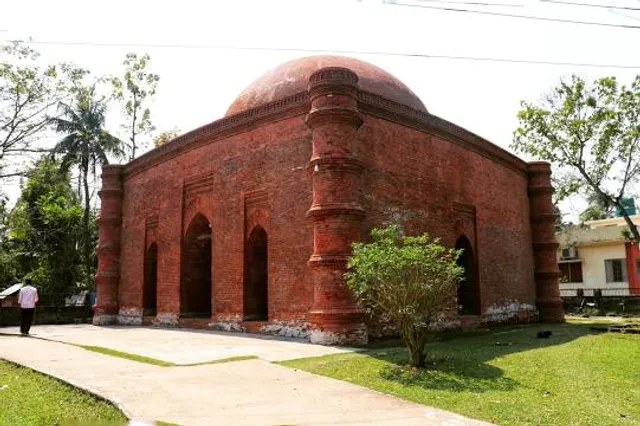
This single-domed mosque is locally considered to be contemporary with Khan Jahan Ali’s Mausoleum located at Khalifatabad, present date Bagerhat. Based on architectural style the date of construction can be estimated to be in the early-fifteenth century. The Khan Jahan Ali Mosque is a Sultanate mosque that has a square structure crowned with a single dome. The mosque is part of a larger complex along with the Khan Jahan Ali’s Mausoleum and dighi (lake). The mosque is situated on the western part of the complex, aligned with the tomb. The mosque is a square of 44'0" x 44'0" externally while internally it has a square plan of 25'10" x 25'10". The structure is a single chamber, roofed over by a hemispherical dome. The eastern façade has three arched openings to the prayer hall while the northern and southern façades have a single arched opening to the prayer hall. The dome is internally carried on by four intersecting arches springing from stone pillars and brick pilasters attached to the side walls. There is a central mihrab aligned with the central entrance at the east and the central portion of the qibla wall is projected westward from the ground to the roof. Stylistically this kind is known as Khan Jahan Ali architecture, commonly found in and around the southwestern part of Bangladesh. The square structure is buttressed by four corner circular turrets. These turrets end at the level of parapet walls and are ribbed in typical Bengali Sultanate fashion. The façades are capped by curvilinear cornices of pre-Mughal type. Exterior façades are of plain brick texture with framed arched openings. The central entrance is larger than the side ones, which are slightly narrower and dwarfish. The mihrab has terracotta ornamentation. There are two niches each at the western, northern, and southern façades the flanking the mihrab and entrances. Presently in use as a mosque and altered in many ways though it was restored and repaired by the Department of Archaeology, Bangladesh, and is now a protected monument.
See more posts
See more posts
hotel
Find your stay

Pet-friendly Hotels in Khulna Division

Find a cozy hotel nearby and make it a full experience.

Located in the historic town of Bagerhat, near Khulna in Bangladesh, the Mazar (tomb) of Khan Jahan Ali is not just a sacred site but also a remarkable piece of architectural and cultural heritage. This place beautifully blends spirituality, history, and serenity, attracting both devotees and tourists from all over the country and beyond. Khan Jahan Ali was a 15th-century Sufi saint and a revered Muslim general who played a significant role in spreading Islam in the southern part of Bengal. He is also credited with establishing the beautiful city of Bagerhat, formerly known as Khalifatabad, which is now recognized as a UNESCO World Heritage Site due to its impressive collection of ancient Islamic architecture. As you arrive at the Mazar complex, you’re immediately struck by the peaceful atmosphere. The main tomb is made of stone and features traditional Islamic architectural elements, including domes, intricate carvings, and a simple yet powerful design that speaks to the deep respect people have for Khan Jahan Ali. The tomb is well-maintained and preserved, showing both the age-old craftsmanship and ongoing devotion of the local people. One of the most interesting parts of the visit is the adjacent Dighi (large pond) known as “Thakur Dighi.” Legend says Khan Jahan Ali released crocodiles into this pond, and to this day, a few can still be spotted. People often feed them as part of religious offerings, believing that their wishes will be fulfilled. There is also a mosque nearby, and several other historical structures and tombs around the complex, including the famous Sixty Dome Mosque (Shat Gombuj Masjid), which is only a short distance away. Many visitors choose to visit both places in one trip, making for a truly enriching historical and spiritual journey. The site is usually bustling with pilgrims, especially on Thursdays and during religious festivals. However, even with the crowds, there’s a sense of calm and reflection in the air. Locals are friendly, and small vendors around the area sell souvenirs, snacks, and traditional offerings. Tips for visitors: Dress modestly as this is a religious site. It’s best to visit in the morning or late afternoon to avoid the heat. If you’re interested in photography or history, bring a camera and take time to explore the surroundings.
Rahul Freeman

Rahul Freeman

hotel
Find your stay

Affordable Hotels in Khulna Division

Find a cozy hotel nearby and make it a full experience.

Get the Appoverlay
Get the AppOne tap to find yournext favorite spots!
Khan Jahan Ali's mausoleum, known as Khan Jahan Ali Majar, is a significant historical and architectural site located in Bagerhat, Bangladesh. Khan Jahan Ali, a revered Muslim saint and an influential military figure, played a crucial role in the spread of Islam and the establishment of several towns in the southwestern part of Bengal during the 15th century. The mausoleum, constructed in his honor, is a reflection of the rich architectural traditions of the time. It is built from stone, a material that was less commonly used in Bengal due to its scarcity, highlighting the importance and reverence attributed to Khan Jahan Ali. The tomb is an elegant single-story structure with a square layout, featuring walls adorned with intricate terracotta ornamentation, a hallmark of Bengali Islamic architecture. The dome of the mausoleum is hemispherical and rests on an octagonal drum, providing a striking silhouette against the skyline. The interior houses the simple yet venerated grave of Khan Jahan Ali, covered with a cloth and surrounded by a fence to protect it. Devotees often visit the site to pay their respects, leaving flowers and offerings as a mark of their reverence. The surroundings of Khan Jahan Ali Majar are equally picturesque, featuring a serene pond known as Thakur Dighi. The pond, with its crystal-clear water, adds to the tranquility and spiritual ambiance of the site. Legend has it that the pond was dug by Khan Jahan Ali himself, further enhancing the mystique and sanctity of the location. Khan Jahan Ali Majar is not only a place of historical and architectural significance but also a vibrant center of cultural and religious activities. The annual Urs festival, held to commemorate the death anniversary of Khan Jahan Ali, attracts thousands of pilgrims and visitors from across the region. This event is marked by prayers, feasts, and various cultural performances, reflecting the enduring legacy of Khan Jahan Ali. In recognition of its historical value and cultural importance, Khan Jahan Ali Majar, along with other structures built
Ahammad Nur

Ahammad Nur

hotel
Find your stay

The Coolest Hotels You Haven't Heard Of (Yet)

Find a cozy hotel nearby and make it a full experience.

hotel
Find your stay

Trending Stays Worth the Hype in Khulna Division

Find a cozy hotel nearby and make it a full experience.

This single-domed mosque is locally considered to be contemporary with Khan Jahan Ali’s Mausoleum located at Khalifatabad, present date Bagerhat. Based on architectural style the date of construction can be estimated to be in the early-fifteenth century. The Khan Jahan Ali Mosque is a Sultanate mosque that has a square structure crowned with a single dome. The mosque is part of a larger complex along with the Khan Jahan Ali’s Mausoleum and dighi (lake). The mosque is situated on the western part of the complex, aligned with the tomb. The mosque is a square of 44'0" x 44'0" externally while internally it has a square plan of 25'10" x 25'10". The structure is a single chamber, roofed over by a hemispherical dome. The eastern façade has three arched openings to the prayer hall while the northern and southern façades have a single arched opening to the prayer hall. The dome is internally carried on by four intersecting arches springing from stone pillars and brick pilasters attached to the side walls. There is a central mihrab aligned with the central entrance at the east and the central portion of the qibla wall is projected westward from the ground to the roof. Stylistically this kind is known as Khan Jahan Ali architecture, commonly found in and around the southwestern part of Bangladesh. The square structure is buttressed by four corner circular turrets. These turrets end at the level of parapet walls and are ribbed in typical Bengali Sultanate fashion. The façades are capped by curvilinear cornices of pre-Mughal type. Exterior façades are of plain brick texture with framed arched openings. The central entrance is larger than the side ones, which are slightly narrower and dwarfish. The mihrab has terracotta ornamentation. There are two niches each at the western, northern, and southern façades the flanking the mihrab and entrances. Presently in use as a mosque and altered in many ways though it was restored and repaired by the Department of Archaeology, Bangladesh, and is now a protected monument.
khaled moon

khaled moon

See more posts
See more posts

Reviews of Khan Jahan Ali Mazar

4.4
(829)
avatar
3.0
33w

Located in the historic town of Bagerhat, near Khulna in Bangladesh, the Mazar (tomb) of Khan Jahan Ali is not just a sacred site but also a remarkable piece of architectural and cultural heritage. This place beautifully blends spirituality, history, and serenity, attracting both devotees and tourists from all over the country and beyond.

Khan Jahan Ali was a 15th-century Sufi saint and a revered Muslim general who played a significant role in spreading Islam in the southern part of Bengal. He is also credited with establishing the beautiful city of Bagerhat, formerly known as Khalifatabad, which is now recognized as a UNESCO World Heritage Site due to its impressive collection of ancient Islamic architecture.

As you arrive at the Mazar complex, you’re immediately struck by the peaceful atmosphere. The main tomb is made of stone and features traditional Islamic architectural elements, including domes, intricate carvings, and a simple yet powerful design that speaks to the deep respect people have for Khan Jahan Ali. The tomb is well-maintained and preserved, showing both the age-old craftsmanship and ongoing devotion of the local people.

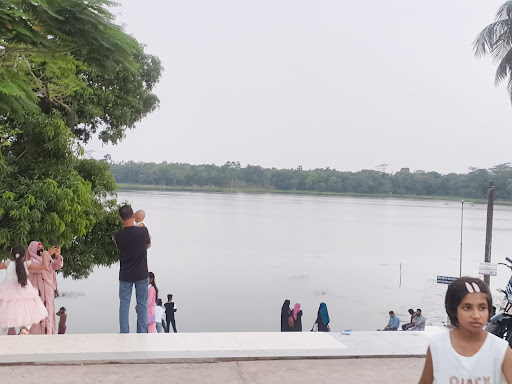
One of the most interesting parts of the visit is the adjacent Dighi (large pond) known as “Thakur Dighi.” Legend says Khan Jahan Ali released crocodiles into this pond, and to this day, a few can still be spotted. People often feed them as part of religious offerings, believing that their wishes will be fulfilled.

There is also a mosque nearby, and several other historical structures and tombs around the complex, including the famous Sixty Dome Mosque (Shat Gombuj Masjid), which is only a short distance away. Many visitors choose to visit both places in one trip, making for a truly enriching historical and spiritual journey.

The site is usually bustling with pilgrims, especially on Thursdays and during religious festivals. However, even with the crowds, there’s a sense of calm and reflection in the air. Locals are friendly, and small vendors around the area sell souvenirs, snacks, and traditional offerings.

Tips for visitors:

Dress modestly as this is a religious site.

It’s best to visit in the morning or late afternoon to avoid the heat.

If you’re interested in photography or history, bring a camera and take time to explore the...

   Read more
avatar
5.0
1y

Khan Jahan Ali's mausoleum, known as Khan Jahan Ali Majar, is a significant historical and architectural site located in Bagerhat, Bangladesh. Khan Jahan Ali, a revered Muslim saint and an influential military figure, played a crucial role in the spread of Islam and the establishment of several towns in the southwestern part of Bengal during the 15th century.

The mausoleum, constructed in his honor, is a reflection of the rich architectural traditions of the time. It is built from stone, a material that was less commonly used in Bengal due to its scarcity, highlighting the importance and reverence attributed to Khan Jahan Ali. The tomb is an elegant single-story structure with a square layout, featuring walls adorned with intricate terracotta ornamentation, a hallmark of Bengali Islamic architecture.

The dome of the mausoleum is hemispherical and rests on an octagonal drum, providing a striking silhouette against the skyline. The interior houses the simple yet venerated grave of Khan Jahan Ali, covered with a cloth and surrounded by a fence to protect it. Devotees often visit the site to pay their respects, leaving flowers and offerings as a mark of their reverence.

The surroundings of Khan Jahan Ali Majar are equally picturesque, featuring a serene pond known as Thakur Dighi. The pond, with its crystal-clear water, adds to the tranquility and spiritual ambiance of the site. Legend has it that the pond was dug by Khan Jahan Ali himself, further enhancing the mystique and sanctity of the location.

Khan Jahan Ali Majar is not only a place of historical and architectural significance but also a vibrant center of cultural and religious activities. The annual Urs festival, held to commemorate the death anniversary of Khan Jahan Ali, attracts thousands of pilgrims and visitors from across the region. This event is marked by prayers, feasts, and various cultural performances, reflecting the enduring legacy of Khan Jahan Ali.

In recognition of its historical value and cultural importance, Khan Jahan Ali Majar, along with other...

   Read more
avatar
5.0
1y

This single-domed mosque is locally considered to be contemporary with Khan Jahan Ali’s Mausoleum located at Khalifatabad, present date Bagerhat. Based on architectural style the date of construction can be estimated to be in the early-fifteenth century. The Khan Jahan Ali Mosque is a Sultanate mosque that has a square structure crowned with a single dome. The mosque is part of a larger complex along with the Khan Jahan Ali’s Mausoleum and dighi (lake). The mosque is situated on the western part of the complex, aligned with the tomb.

The mosque is a square of 44'0" x 44'0" externally while internally it has a square plan of 25'10" x 25'10". The structure is a single chamber, roofed over by a hemispherical dome. The eastern façade has three arched openings to the prayer hall while the northern and southern façades have a single arched opening to the prayer hall. The dome is internally carried on by four intersecting arches springing from stone pillars and brick pilasters attached to the side walls. There is a central mihrab aligned with the central entrance at the east and the central portion of the qibla wall is projected westward from the ground to the roof. Stylistically this kind is known as Khan Jahan Ali architecture, commonly found in and around the southwestern part of Bangladesh.

The square structure is buttressed by four corner circular turrets. These turrets end at the level of parapet walls and are ribbed in typical Bengali Sultanate fashion. The façades are capped by curvilinear cornices of pre-Mughal type. Exterior façades are of plain brick texture with framed arched openings. The central entrance is larger than the side ones, which are slightly narrower and dwarfish. The mihrab has terracotta ornamentation. There are two niches each at the western, northern, and southern façades the flanking the mihrab and entrances. Presently in use as a mosque and altered in many ways though it was restored and repaired by the Department of Archaeology, Bangladesh, and is now a...

   Read more
Page 1 of 7
Previous
Next