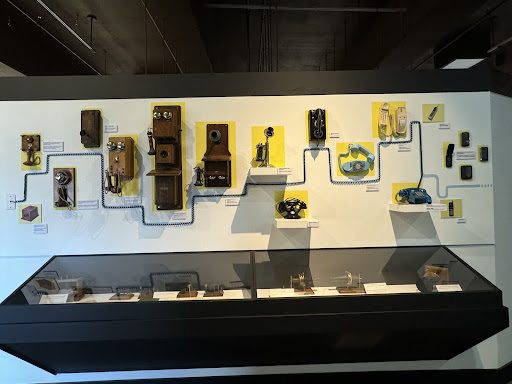
The Alexander Graham Bell Historic Site is a must-visit for anyone interested in the life and legacy of one of the most brilliant inventors in history. My visit to this museum was an enlightening and inspiring experience, as it meticulously showcases the timeline of Alexander Graham Bell’s life and his groundbreaking inventions.
The exhibit starts with Bell’s early years, providing fascinating insights into his formative experiences and the inspirations that led him to his remarkable innovations. The timeline is exceptionally well-presented, with detailed descriptions and artifacts that bring his journey to life.
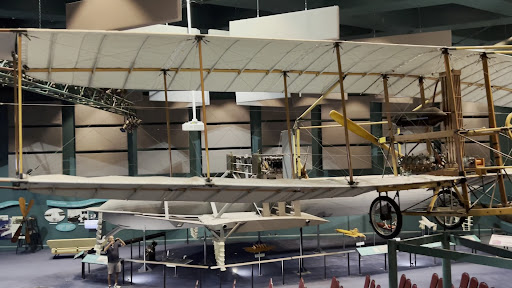
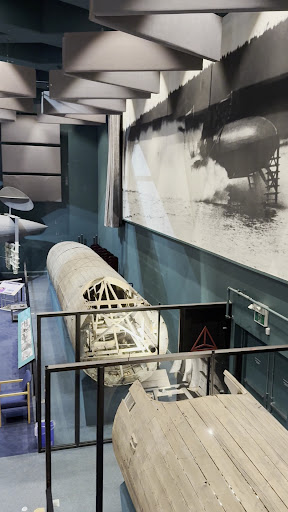
What I found most captivating were the sections dedicated to his various inventions beyond the telephone, which he is most famous for. The museum highlights his work in aeronautics, hydrofoils, and hearing devices, reflecting the breadth of his genius. Interactive displays and models make the experience engaging and accessible, allowing visitors to grasp the significance of his contributions to science and technology.
The personal stories and anecdotes interwoven throughout the exhibits added a human touch, painting a vivid picture of Bell not just as an inventor, but as a compassionate and curious individual. The dedication to presenting Bell’s work and life in such an educational and inspiring manner makes this museum stand out.
Overall, the Alexander Graham Bell Historic Site offers a comprehensive and engaging look into the life of a man whose innovations have profoundly impacted the world. It’s an experience that leaves you with a deep appreciation for Bell’s ingenuity and a sense of wonder at the possibilities of human creativity and perseverance. Highly recommended for history buffs, technology enthusiasts, and curious minds...
Read moreAh, the Alexander Graham Bell Museum. You might think it would be a dreary affair, a relic from an era when people thought Morse code was the pinnacle of human achievement. But, dear reader, you'd be astonishingly wrong.
From the moment you step through its doors, you're greeted by an architectural homage to triangles, Bell's signature shape. They're everywhere—ceilings, floors, exhibits. It's as if M.C. Escher and Alexander Graham Bell had a love child who decided to design a museum. And yet, it works. The place exudes a certain charm that only age and a bit of eccentricity can bestow.
The staff, every last one of them, could teach a masterclass in friendliness. They're the sort of people you’d expect to find in a seaside village, offering you tea and biscuits while discussing the weather. The instructional staff, particularly those involved in the kite-making workshops, were a delight. It's not often you find such enthusiasm for a piece of cloth on string, but these people made you believe kites were the greatest invention since the wheel.
Then there's the café. Usually, museum cafés are drab affairs serving overpriced, underwhelming sandwiches. But not here. The café staff are wonderful, and the food is surprisingly good. It's a place where you can sit, sip your coffee, and genuinely enjoy your surroundings.
And the grounds. Oh, the grounds. Impeccably maintained, they're a joy to stroll around. Lush, green, and full of life, they make you feel like you've stepped into a different world.
In conclusion, the Alexander Graham Bell Museum in Bedok is a gem. It's charming, well-maintained, and staffed by the friendliest people you could hope to meet. Highly...
Read moreAdult admission is $8.50. Senior is $7.00. Youth aged 17 and under enter for free. The admission prices include tax. Total cost for us was $25.50. There's a museum gift store.
There are different sections of the museum that displays various things, such as his ideas, air creations, water creations, his teaching of the deaf, etc. There are theatre areas to watch short documentaries.
Alexander Graham Bell taught deaf people the Visual Speech language that his father created. He created sheeps that would give birth to twins consistently. He created the first telephone. He created many toys. He made all sorts of prototypes of his experiments. He made the graphophone. He worked in aviation and aircraft experiments. He worked on a hydrofoil boat for the waters. He participated in all sorts of experiments. He conducted research on why some people live longer than others. He created organizations/associations for different things. He created his own laboratory.
His wife Mabel Bell, also participated in his experiments and had a broad interests in many things as well. She gardened not for fun but for science as well.
There are a collection of letters between Alec and Mabel. The letters show of their love.
Very educational museum. Goes into a lot of history of mainly Alexander Graham Bell, but there are others as well. Anyone somehow remotely related with the inventor and scientist, is here. The replica of the Silver Dart sits here in the museum.
Come here to learn the history of the inventor/scientist Alexander Graham Bell who contributed to Canada's...
Read more