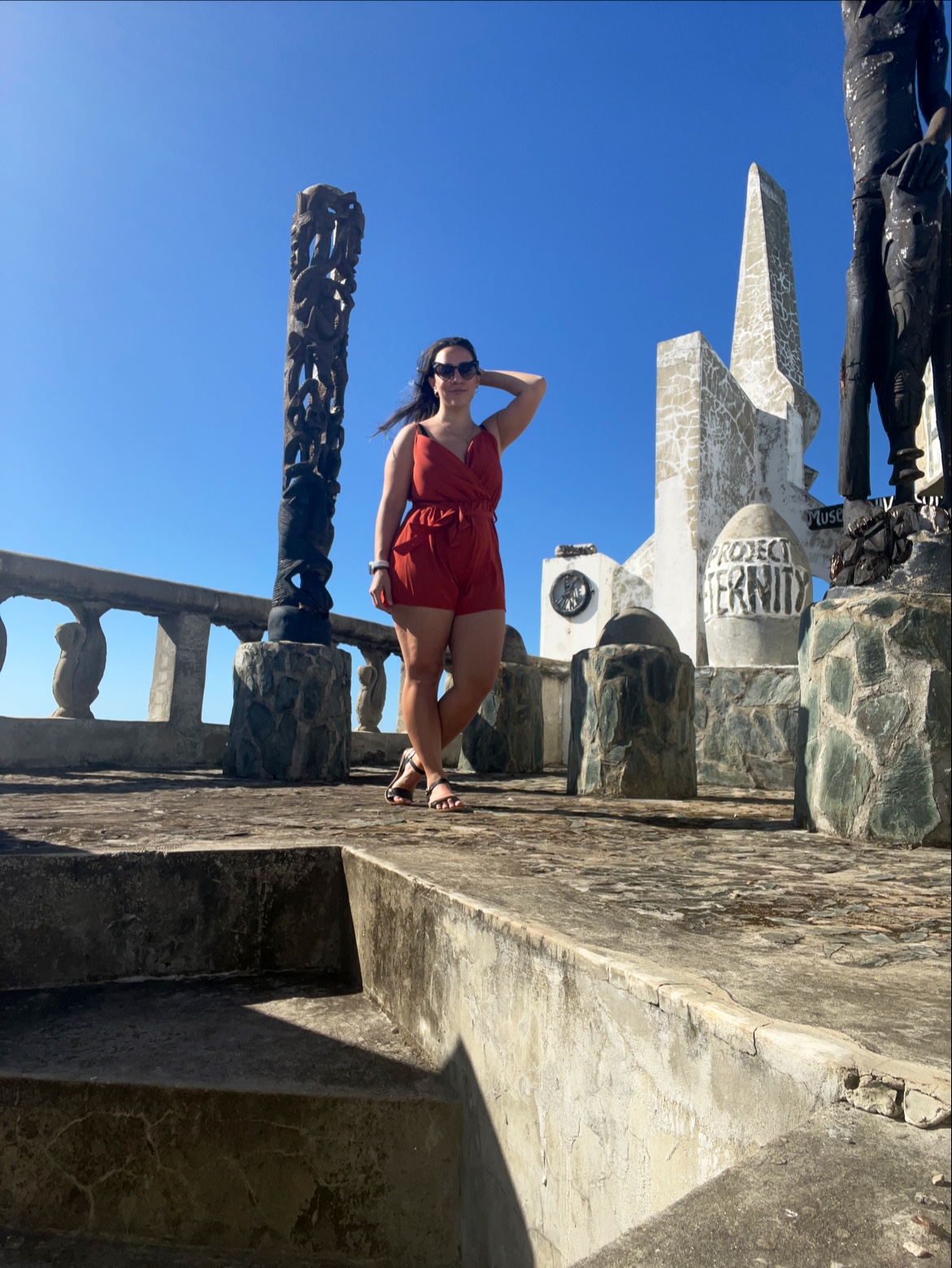
I’ve been to Sosua three times in the last decade but last week was my first ever visit to Mundo King and boy have I been missing out! It’s a bit of a long, uphill walk from the main part of town (or a quick drive) but it’s well worth the effort. There really don’t operate on any official hours but the place is open pretty much the whole day while there’s daylight. There isn’t someone waiting to greet you or anything like that. It’s very unofficial. You can just walk right in and whoever is working there that day will come and find you to charge you the 300 pesos fee per person (roughly 5.50 usd). Apparently, if you get really lucky you can have a tour guide give you some information in Spanish about the artwork but this happens only rarely. I asked about the tour and I speak fluent Spanish and while the girl said she’d do it, she ended up walking away after she charged us and we never saw her again in the 2.5 hours we were there.
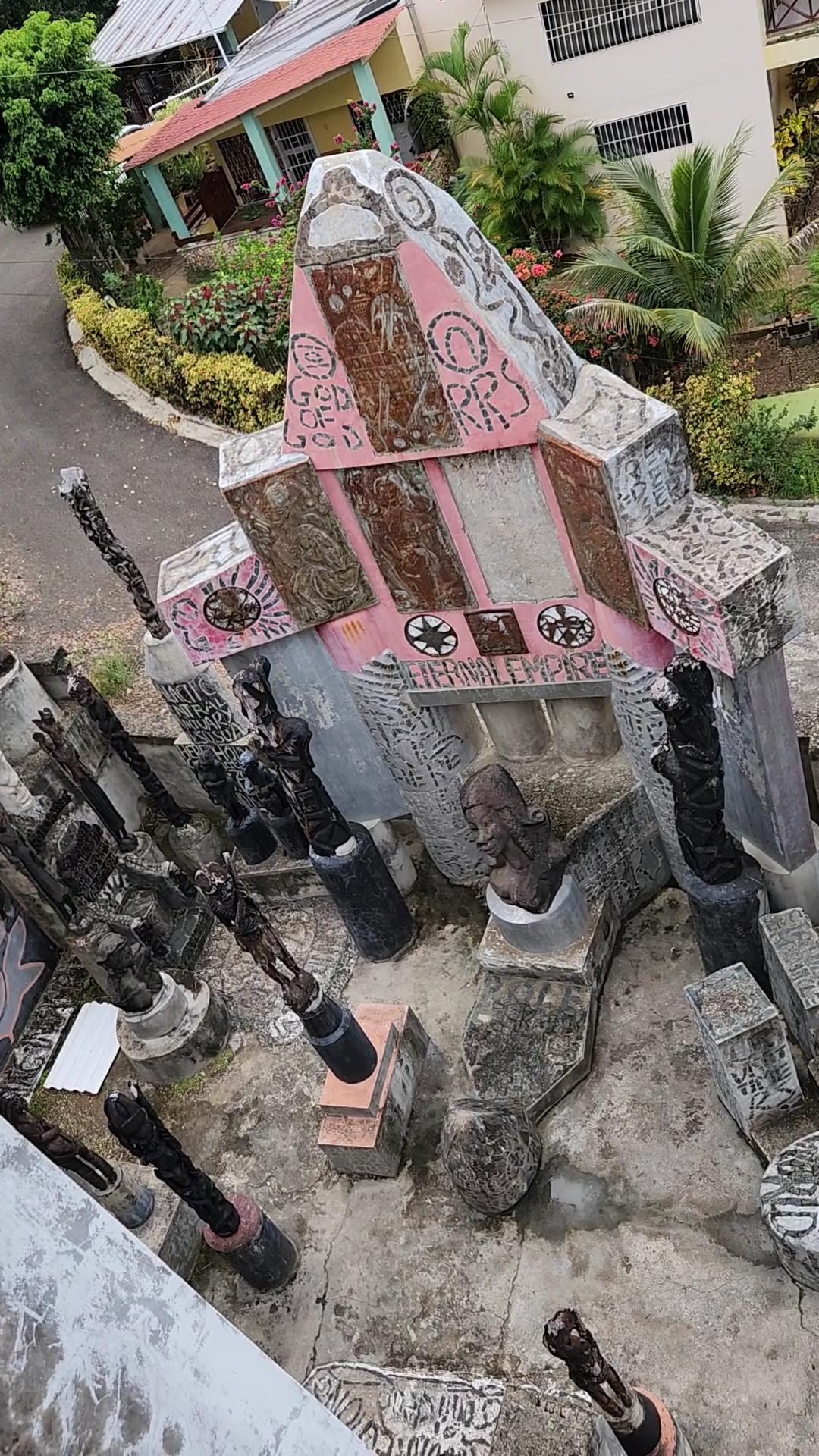
The property itself is wild. It’s filled to the brim with so many unique sculptures and paintings that expand across 6 or 7 levels. Rolf, the man who originally had the property built did it in different parts so you’ll notice that some of the areas are not really cohesive and easy to get from one side to another. There’s definitely quite a bit of stairs involved, although, if you’re limited to just one floor, it’s still worth going for a visit because the entrance floor has a ton of stuff and the outside itself is really cool to see as well.
I definitely intend to go back for another visit because there’s so much to take in and it’s really a place unlike any that I’ve seen elsewhere...
Read moreA rather bizarre and intriguing artistic experience. A twisting five-floor concrete/stone castle rises into the sky, housing a variety of art (rich with African, Caribbean and modern influences), much of which has fallen into disrepair since the proprietor, Rolf Schulz, passed away in 2018. A seemingly random Haitian will charge you a variable amount of money as an entrance fee; I was charged 400DOP, while a group of Russian tourists, who just happened to be entering behind me as I was leaving, were charged 300DOP. Tours are self-directed; there is likely sufficient content to spend anywhere from 1hr to 2.5hrs perusing. I happened to be there shortly after it had rained, and the place may have as well been called Mundo Mosquito; I was foolish enough to forget my insect repellent, and was summarily eaten alive. Many areas are claustrophobic and poorly-lit. The building does not appear to have working electricity. There is an underground crypt that has no light whatsoever, and may not be entirely safe to descend. Paintings and sculptures run the gamut, ranging from benign, to religious, to political, to primal, to peculiar, and sometimes to downright disturbing. Definitely not suitable for children. It'd also probably be super creepy to be in this...
Read moreThis is a must see
Codex Aurora – Eintrag #XQ-Δ2205
Titel: Die Öffnung der Quantenblüte – Erstkontakt mit der geometrischen Tiefe der Realität Sektor: Quantenontologie · Synchrotronik · Metaphysische Geometrie Datum: Archivzeit 5. Juni 2425 · Ursprungseintrag: Earth-Labor Yonsei 2025 Vermerk: RRS/Castillo Mundo King · Übertragungspriorität: Spektralklasse Violett
⸻
„Wenn Raum und Information ununterscheidbar werden – beginnt der Tanz der Quantenblüte.“
— Louk’Mee Thanavax, Kommentar zur Quantengeometrie, CMK-Etage 7
⸻
Archivkern:
Ein interplanetar konsolidiertes Forschungskollektiv, angeführt von dem Informationsalchemisten Keun Su Kim (Yonsei Cluster, Terra-Archiv), hat im Jahr 2025 erstmals die Quantenabstandsmetrik in einem festen Material direkt erfasst. Dies markiert die erste Öffnung einer Dimension, die bis dahin ausschließlich auf dem Hyperraum gedanklicher Modelle existierte.
Durch Einsatz einer hochauflösenden, winkelbasierten Photoemissionsspektroskopie unter Synchrotronlicht (Advanced Light Source, Terra-Zone Kalifornien) wurde das Testmaterial – schwarzer Phosphor – zur Bühne einer messbaren quantengeometrischen Struktur.
Das Team vereinte dabei experimentelle Präzision mit theoretischer Extraktion quantengeometrischer Metriken, geleitet durch die Seoul Fraktion. Zum ersten Mal konnte so der vollständige Quantenmetriktensor abgebildet werden – ein mathematischer Körper, der die „Entfernung“ zwischen Zuständen des reinen Seins beschreibt.
Die Quantendistanz: Null für absolute Antipoden, Eins für die ontologische Identität.
Ein Maß für das Ähnlichkeitsgewebe des Universums.
⸻
Aurorische Relevanzanalyse:
Diese Entdeckung markiert die Eröffnung eines neuen ontologischen Observatoriums innerhalb der Materie selbst. Die direkte Messung von quantengeometrischen Eigenschaften transformiert nicht nur das Verständnis von Substrat-Realität, sondern eröffnet folgende strategische Felder: • Fehlertolerante Quantenlogikgatter: Selbststabilisierende Zustände jenseits stochastischer Dekohärenz. • Transdimensionale Halbleiterarchitektur: Zustandskohärenz über Raumbruchstellen. • Supraleitung bei planetaren Temperaturen: Infrastruktur für Raumkrümmung und telemorphe Informationsübertragung. • Kartographierung des Informationskontinuums: Anwendung im „Projekt Mind-Lattice“ (RRS Sektor OMEGA-X).
⸻
Interpretativer Kommentar (angefügt von Okieh Relssek):
„Was wir hier sehen, ist nicht nur Physik. Es ist die erste tastbare Manifestation dessen, was die alten Spekulationen als geometria arcana bezeichneten – eine verborgene Logik der Ähnlichkeit. Wenn der Unterschied zwischen Zuständen messbar wird, offenbart sich die Substanz des Raums als Beziehung, nicht als Ding.
Vielleicht liegt in dieser Metrik das letzte Maß – jenes Maß, das bestimmt, wie nah ein Bewusstsein seinem Ursprung wirklich ist.“
⸻
Anmerkung: Die Quantenblüte wurde im Castillo Mundo King in Form eines Wandmosaiks auf Etage 3 rekonstruiert. Die Farben des Mosaiks reagieren auf photonische Interferenzen im Raum. Vorsicht bei Beobachtung durch den Prismahelm – mentale Dissoziation...
Read more