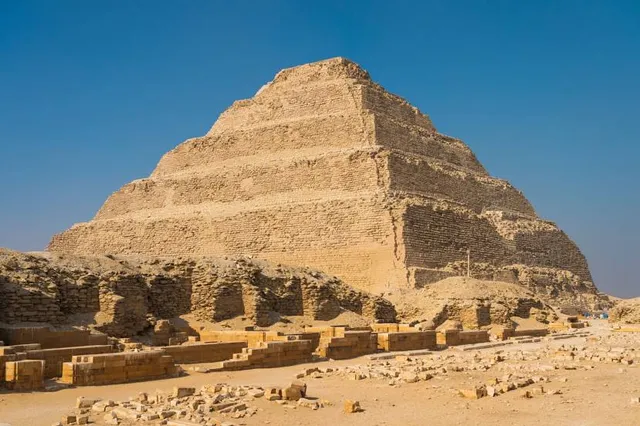
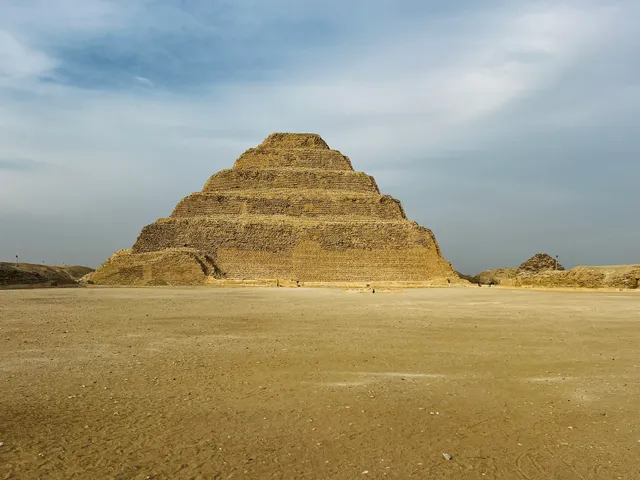
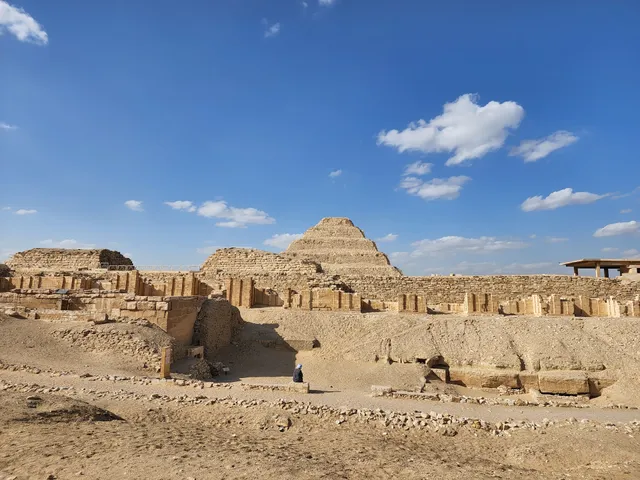
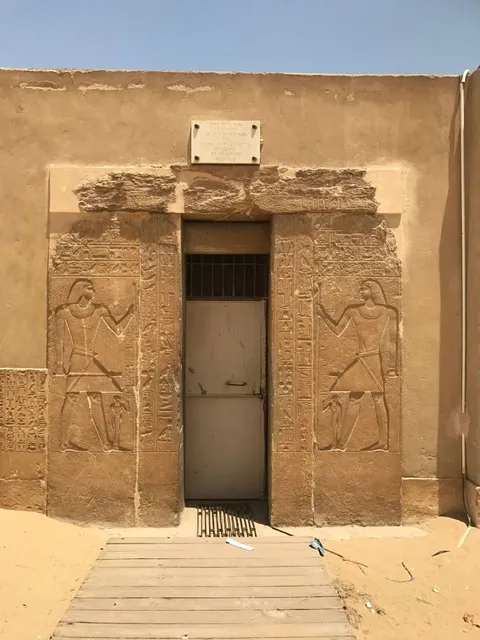
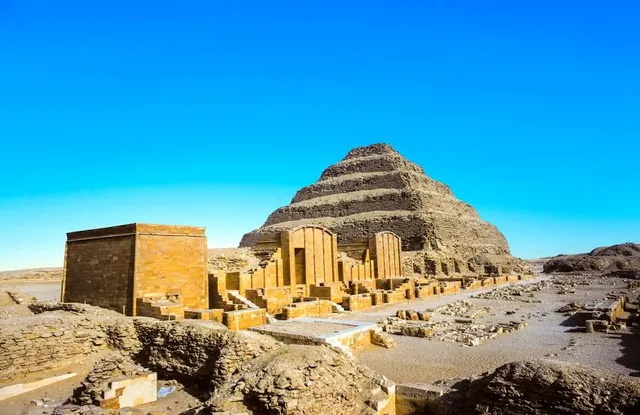
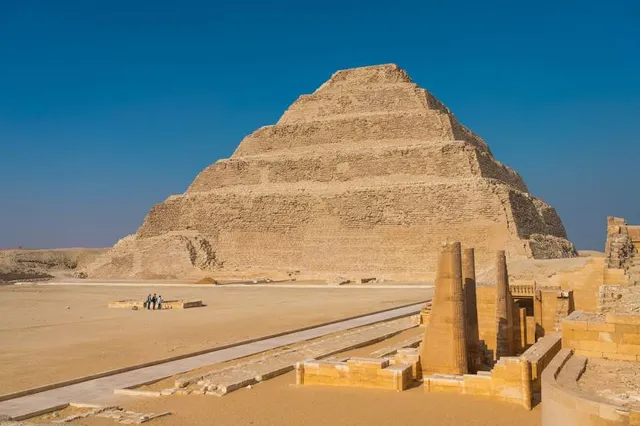
The Pyramid of Djoser , the Pyramid of Saqqara , or the Step Pyramid [ according to whom? ] is an archaeological landmark in the Saqqara necropolis, northwest of the ancient city of Memphis in Egypt . It was built during the 27th century BC to bury Pharaoh Djoser ; It was built by his minister, Imhotep . The engineer and physician, Amhotep, was the main architect of the vast funerary group in the courtyard of the pyramid and the surrounding ceremonial structures
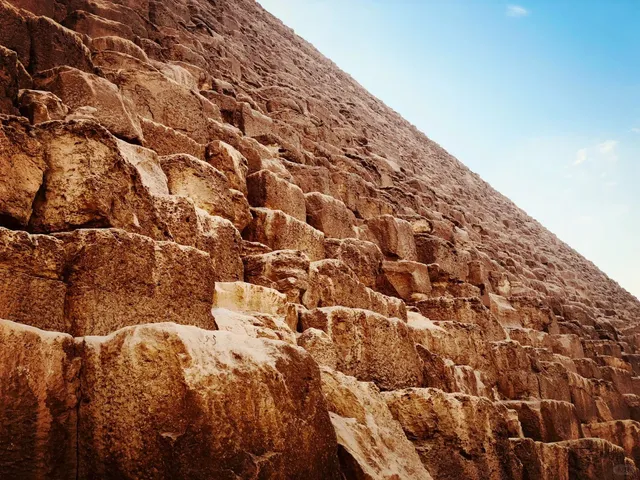
The first Egyptian pyramid consisted of six mastabas built on top of each other, something that represented a huge development in the design of tombs in that era, which was satisfied with one mastaba. The Step Pyramid of Djoser is 62 meters (203 ft) high, with a base area of 109 m x 125 m (358 ft x 410 ft), and was covered with polished white limestone. [3] The Step Pyramid is considered to be the first stone structure of its time, [4] although the yard known as Jisr al-Mudir appears to have preceded the construction of the pyramid.
The pyramid was affected by an earthquake that occurred in 1992 and affected the structure of the pyramid and led to the fall of parts of the funerary group and it was the oldest pyramid in history.
The funerary city site in Saqqara is part of the funerary sites of the city of Memphis, a World Heritage site since 1979.
The Saqqara pyramid complex was discovered for the first time in 1821, when the German Consul General Heinrich von Muttoli "and also the Italian engineer" Girolano Segato "examined it, and discovered its entrance. [6] In its internal passages, they found the remains of a mummy , which was a skull covered with gold and two heels covered with gold also. And "von Minotoli" believed that it belonged to the mummy of Djoser . It happened that "von Minotoli" obtained an authorization from the German Kaiser and approval from Muhammad Ali Pasha , the ruler of Egypt at the time, to obtain a permit to take those antiquities with a group of other antiquities to Germany.But the ship is called the Gottfried Ship It sank due to a severe hurricane near the port of Hamburg in Germany, and almost all traces of it were lost (see Gottfried Ship ). It turned out later that what von Minotoli found in the corridors of the Step Pyramid was nothing but another mummy that was placed in the cemetery at a later time in the Old Testament.
In 1837, researcher John Bering found traces of other mummies in the corridors, and also discovered rooms and paternity under the pyramid.
Then Cecil Firth made extensive explorations in 1926, but he died before completing them. James Keble took care of the excavations, but he also died in 1935. Gene Lauer, who was working under Kepel's administration, continued to supervise the excavations, and measured the underground chambers and passages leading to them. In 1934, the remains of a mummy were found in a room in the tomb, and they were taken to Cairo University after a preliminary examination. They were preserved at the university until 1988. Lauer thought he had found the mummy of Djoser. However, upon closer examination, it was found that it was from several mummies of other people. And the date of those remains was determined by the carbon-14 method ( radiocarbon dating ) and it turned out that they belong to people from the Ptolemaic era (that is, they are not from the reign of Djoser around 2650 BC, but only about 200 years ago BC).
Lauer continued to devote his life to exploring the pyramid of Djoser and the mortuary city in Saqqara until the end of his life in 2001. With Lauer's assistance, he was able to restore the formation of some parts of the wall surrounding the pyramid's courtyard and other subsidiary buildings. [6]
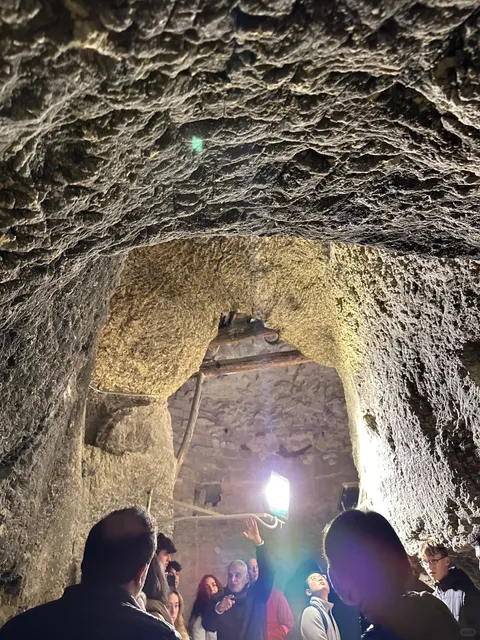
In 2001 , a group of archaeologists from Lithuania found several tunnels in the pyramid complex, which were not known before. Since his accession to the throne of Egypt, Djoser used to take the title of Horus, "Nithri Khat", meaning the sacred body. The chief priest of Heliopolis, Amhotep, ordered the design and construction of a large...
Read moreVisited by ourselves on weekend in September. Since we are both historians we didn't hire a guide. Here are some tips we would like to share with you:
So first of all the weather is still so very hot in September so be sure to wear a hat, have your sunscreen on and through on something to cover your shoulders. It is good to have some water with you though there is a cafeteria inside the area and the prices are fairly reasonable.
We used uber to get there and hand wait even when turning back. Much cheaper than taxi.
The ticket office itself is quite a scam. Even though we purchased all inclusive tickets online they had added inside of the step pyramid and Djosers tomb as extra price. We did purchase the extra tickets as well by card. There were absolutely no people beside us so no line whatsoever. They do try to sell some golf car ride to take you up the hill to the pyramid for extra cash saying that by walking it is 6 km which is obviously not true. We decided to walk and took us just 10 minutes.
The are itself is quite big. We spent around 3 hours there but for non historians probably 1,5 is enough. After great pyramids go Giza this area is so quiet - no tourists.
Be aware that near each tomb or sight there are people trying to tell you some stories about the place and then will not let you leave without tipping them. Just say no and be really firm because the hassle is real here. Another amazingly smart and annoying thing they do is that they close the lights in the tombs and expect tip for turning the lights on. Just tell them to turn the lights on and no tip since you already paid for the ticket. Good luck - was the most annoying place to visit for us. Such a shame since it is very beautiful and full of history.
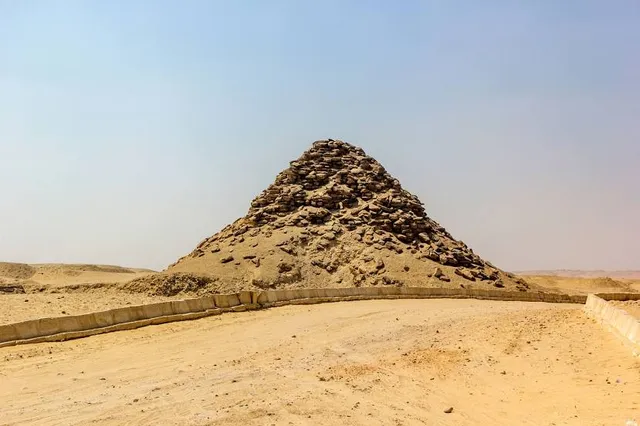
For inside of the step pyramid and Djoser tomb no need to purchase extra tickets- not much to see if your not huge history fan. But don't miss the serapeum - was really interesting for us. Also don't miss the inside of Uni pyramid to see the pyramid texts. Last but not least don't miss the Imphotep museum - small but very modern and lots of...
Read moreMastaba, the tombs of kings or nobles of early Egypt, are stacked in several layers and gradually become smaller as they go upwards. The oldest is the pyramid of King Djoser, the second king of the 3rd dynasty (c. 2660 BC) at Saqqara, which is a six-story mastaba, with a base of 108 × 120 m and a height of 60 m. The Stepped Pyramid is located about 30 minutes away by car from the commonly known Giza Pyramids. There are fewer people than the Giza Pyramids, so you can look around slowly. There is Imhotep Museum, so you can get a good idea of the situation and history at the time. The museum is very well done and I highly recommend it as a must-visit place. In the temple around the pyramid, you can see that the workers raised each brick one by one according to the architect's design at the time. The 15th double door located at the southeast corner of the eastern façade served as the actual passage. Pairs of towering bastions stood on both sides of the double door, and entering through the door led to the colonnaded corridor. After passing through the thick wall through the double door, the colonnaded corridor came out. The colonnaded corridor, roughly facing southeast, consists of about 40 columns, each 6m high, facing each other in pairs. The columns are hewn in the shape of bundled reed stalks, and at one time supported a limestone ceiling carved in the shape of a palm tree. However, now all the limestone ceilings have collapsed, leaving only the pillars. Judging from the fact that there is a pedestal with statues between the pillars, it is presumed that the statues of Djoser and the gods were enshrined there, but none exist. What is unique is that a wall connected to the pillar was erected behind the pillar, but I am only guessing that more walls were built because he was concerned that the pillars would not properly support the ceiling due to the lack of construction technology...
Read more