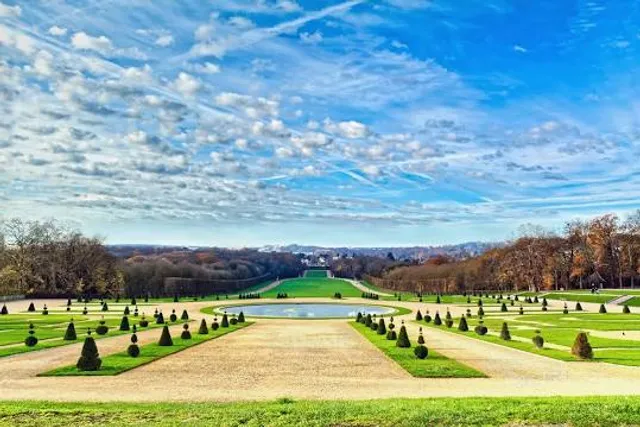
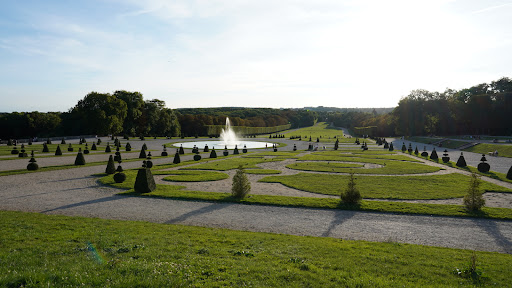
The Château de Sceaux is a grand country house in Sceaux, Hauts-de-Seine, approximately 10 km (6 mi) from the centre of Paris, France. Located in a park laid out by André Le Nôtre, visitors can tour the house, outbuildings and gardens.
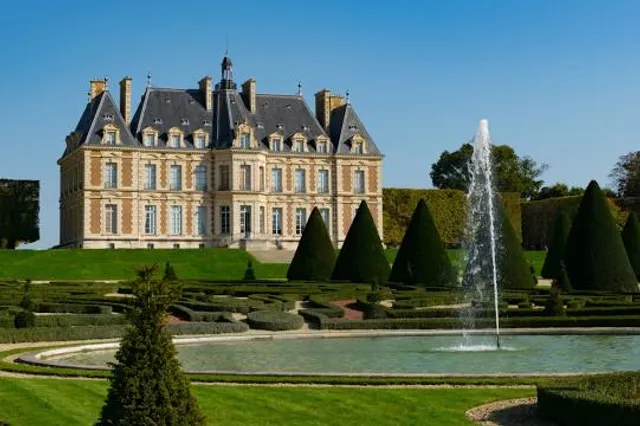
The rebuilt Château of Sceaux, 2020 The Petit Château operates as the Musée de l'Île-de-France, a museum of local history. The commune operates the site as Musée du Domaine départemental de Sceaux.
The former château was built for Jean-Baptiste Colbert, Louis XIV's minister of finance, who purchased the domaine in 1670. The present château, designed to evoke the style of Louis XIII, dates from the Second Empire. Some of Colbert's outbuildings remain, as well as the bones of the garden layout.
History
The seigneurie of Sceaux appears in 15th century documents, but little remains above ground of the château built for the family Potier de Gesvres in 1597. Colbert turned to some of the premier royal architects and craftsmen to design a seat worthy of his station, the architect brothers Claude and Charles Perrault and Antoine Lepautre, and the premier peintre du roi Charles Le Brun.
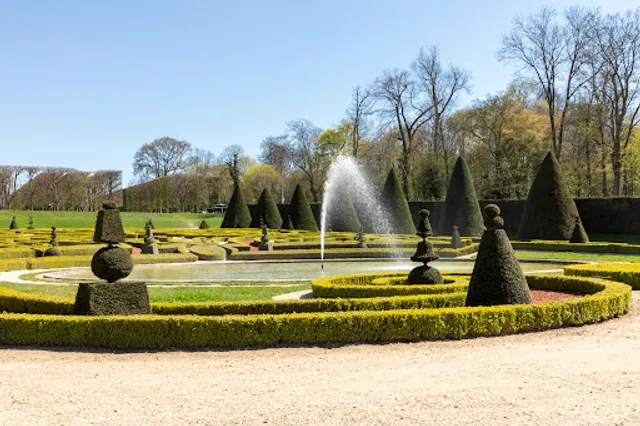
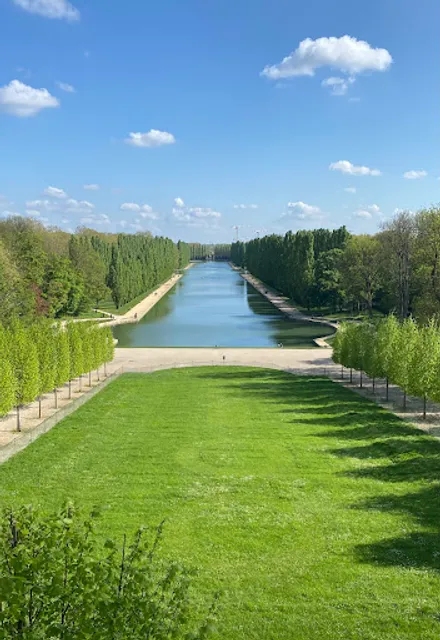
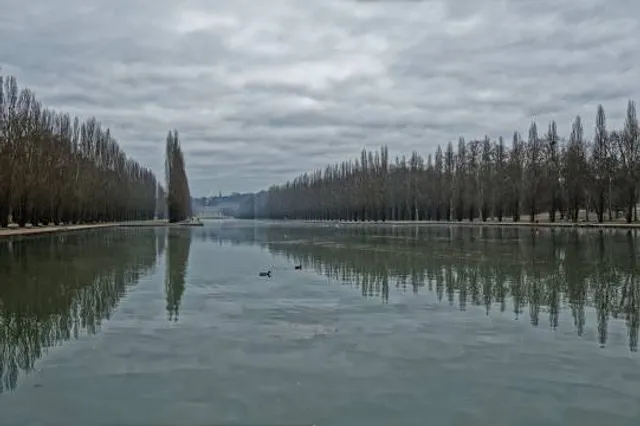
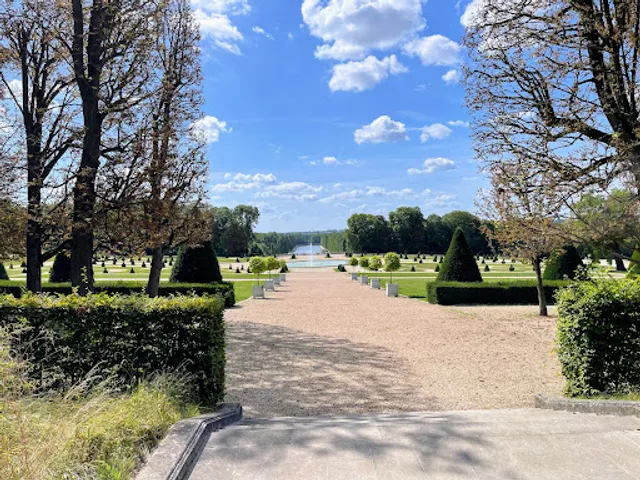
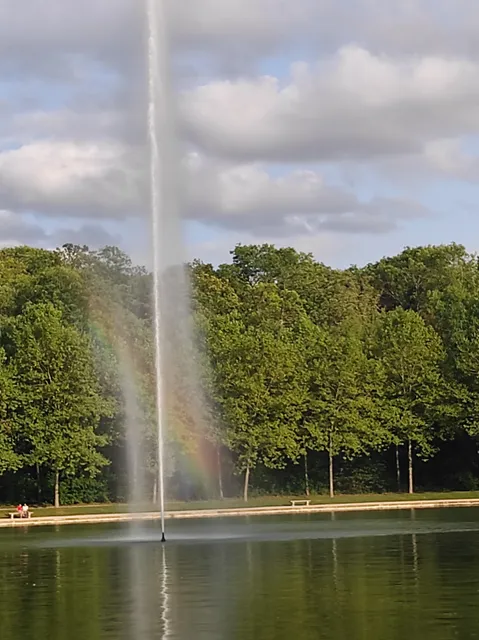
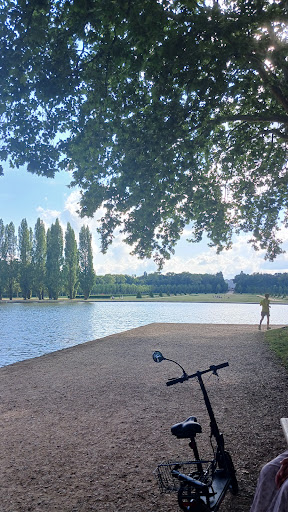
The parterres at Sceaux, engraved by Adam Perelle Jean-Baptiste Colbert, Marquis de Seignelay, son of Colbert and minister of the Navy, inherited Sceaux in 1683. He added sculpture by François Girardon and Antoine Coysevox. His embellishments to the grounds extended the formal terraced layout, the bones of which remain, and excavated the Grand Canal, a kilometre in length, along the valley bottom. Le Nôtre laid out a main axis centered on the château and descending in a series of terraces to the valley bottom, then rising on the far side. The main axis is crossed by two grand secondary axes at right angles, one delineated by the allée de la Duchesse and the formal stone Cascade that flows down to fill an octagonal basin, the other the Grand Canal.
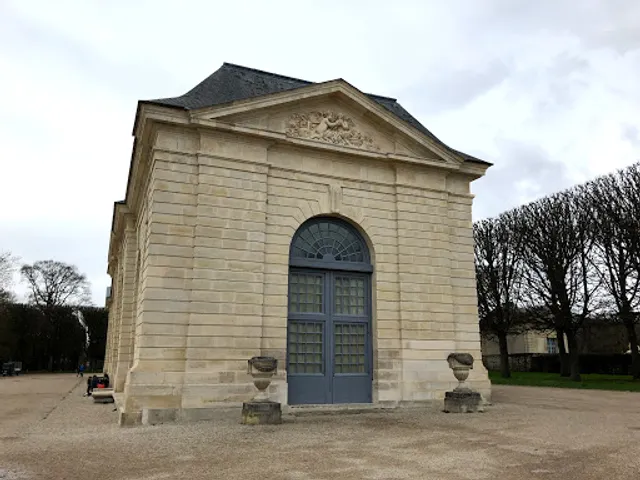
Jules Hardouin-Mansart built the Orangerie, which was inaugurated by the King at a fête in 1685. Sceaux was sold in 1699 to Louis' illegitimate son, the duc du Maine, whose wife, Anne, duchesse du Maine made it the setting for her glittering salon in the first decades of the eighteenth century, which reached its apogee in the Grandes Nuits of 1714-15, sixteen fêtes of music and opera-ballets that unfolded every two weeks and drew the best musicians of France, under the direction of Jean-Joseph Mouret. The salon at Sceaux attracted the young Voltaire. The duchesse du Maine had the pavilion of the Ménagerie built, to designs by Jacques de La Guépière, and gave it a garden setting, to the north of the château; only its foundations remain.
Demolition
During the French Revolution the property was confiscated as a bien national, its contents sold for the benefit of the nation, and the building bought by M. Lecomte, a merchant of Saint-Malo. Under the Consulat, the original château was demolished, but the pavilion of Aurore, the Orangerie, the stables, and outbuildings were preserved. Crops were grown on Le Nôtre's terraces. The duc de Trévise, son of Napoleon's Maréchal Mortier, who had married the daughter of M. Lecomte, inherited the domaine and set to restoring the park and the pavilion and Orangerie. The gardens were restored, with parterres and gravel largely replaced by clipped lawns. In 1856-62 he erected the present smaller château in brick with stone quoins, designed to evoke the style of Louis XIII, designed by the architect Augustin Théophile Quantinet and built by Joseph-Michel Le Soufaché.
In 1922, the heiress of Trévise, princesse de Faucigny-Cystra, planned to give up Sceaux to real estate developers; through the efforts of the mayor Jean-Baptiste Bergeret de Frouville it was preserved and opened to the public of the town that had grown up...
Read moreNestled in the picturesque town of Sceaux, just a stone's throw from the bustling city of Paris, lies the enchanting Château de Sceaux. This hidden gem offers a serene escape from the city life, with its rich architectural heritage and stunningly landscaped gardens that are a testament to the grandeur of French aristocracy. The château itself, a marvel of historical reconstruction, houses the Museum of the Ile de France, boasting an impressive collection of artworks that capture the essence of the region's cultural vibrancy. Visitors are often captivated by the pastel-hued walls, gold-adorned frescoes, and ornate chandeliers that adorn the interior, evoking a sense of stepping back into a more opulent time.
The grounds of the château are equally impressive, designed by the renowned landscape architect André le Nôtre, known for his work at Versailles. The symmetry and landscaping of the gardens provide a perfect backdrop for a leisurely stroll or a family picnic, with vast open spaces that invite relaxation and contemplation. It's no wonder that locals and tourists alike are drawn to this beautiful estate, which offers a tranquil retreat and a rich cultural experience.
The charm of Château de Sceaux is further enhanced by its accessibility, being just a short train ride away on the RER B from central Paris. This convenience makes it an ideal destination for those looking to explore beyond the well-trodden paths of the city's more famous sites. The château's reasonable entrance fee is another pleasant surprise, making it an affordable option for a day out exploring the treasures of French history and art.
For those with a penchant for the shabby chic and antique, the château provides endless inspiration, with its dreamy rooms potentially sparking ideas for one's own future Parisian abode. The château's intimate size belies its grandeur, and its vast grounds offer a sense of enormity and freedom that is rare so close to the city. It's a place where French families have long enjoyed bringing their children for a day out, and where visitors can immerse themselves in the splendor of France's noble past.
In conclusion, Château de Sceaux is not just a destination; it's an experience that stays with you long after you've returned to the hustle and bustle of everyday life. It's a place where history, art, and nature converge to create a truly...
Read moreThis castle and chateau are simply a marvel to look at. Though it is much lesser known than the palace of Versailles, it was actually my preferred chateau to visit having just visited Versailles the previous days.
The architecture and gardens are a little it smaller, though it doesn’t feel like by much. The one difference is however, it is much lesser known than tourist like and much less crwoded, you can basically walk in and visit at any time without queuing too long or at all.
If you’ve got the time after visiting or the big sites, I would definitely recommend checking out this site while in Paris. It really is not that far from the centre...
Read more