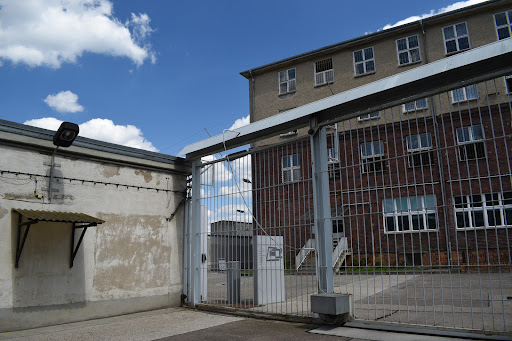
I came to the museum for a guided tour (in the English language) on the 14th of February at 10:40. I was thoroughly impressed by the museum. After getting a sticker in the visitors' reception, you're free to browse a selection of historical books in various languages, including English and German focusing on the history of Germany from the Weimar Republic onwards, as well as the city of Berlin, particularly focusing on the division of Germany and the events leading to the fall of the Berlin Wall. While the selection of books is vast, one thing I noticed was the stark disparity in price between buying a book from the book shop here and buying online (I looked online before buying a book that piqued my interest and it was substantially more expensive).
The cafeteria is small and basic (I didn't purchase anything from there), but that's to be expected. This is also where you go to wait for a guided tour, and I found it slightly strange that very few signs indicate this. Even though the person told me this is where to wait, I still had my doubts and feared that my tour group would embark on their tour without me.
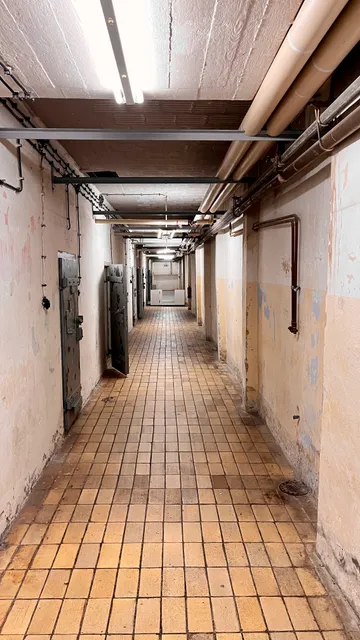
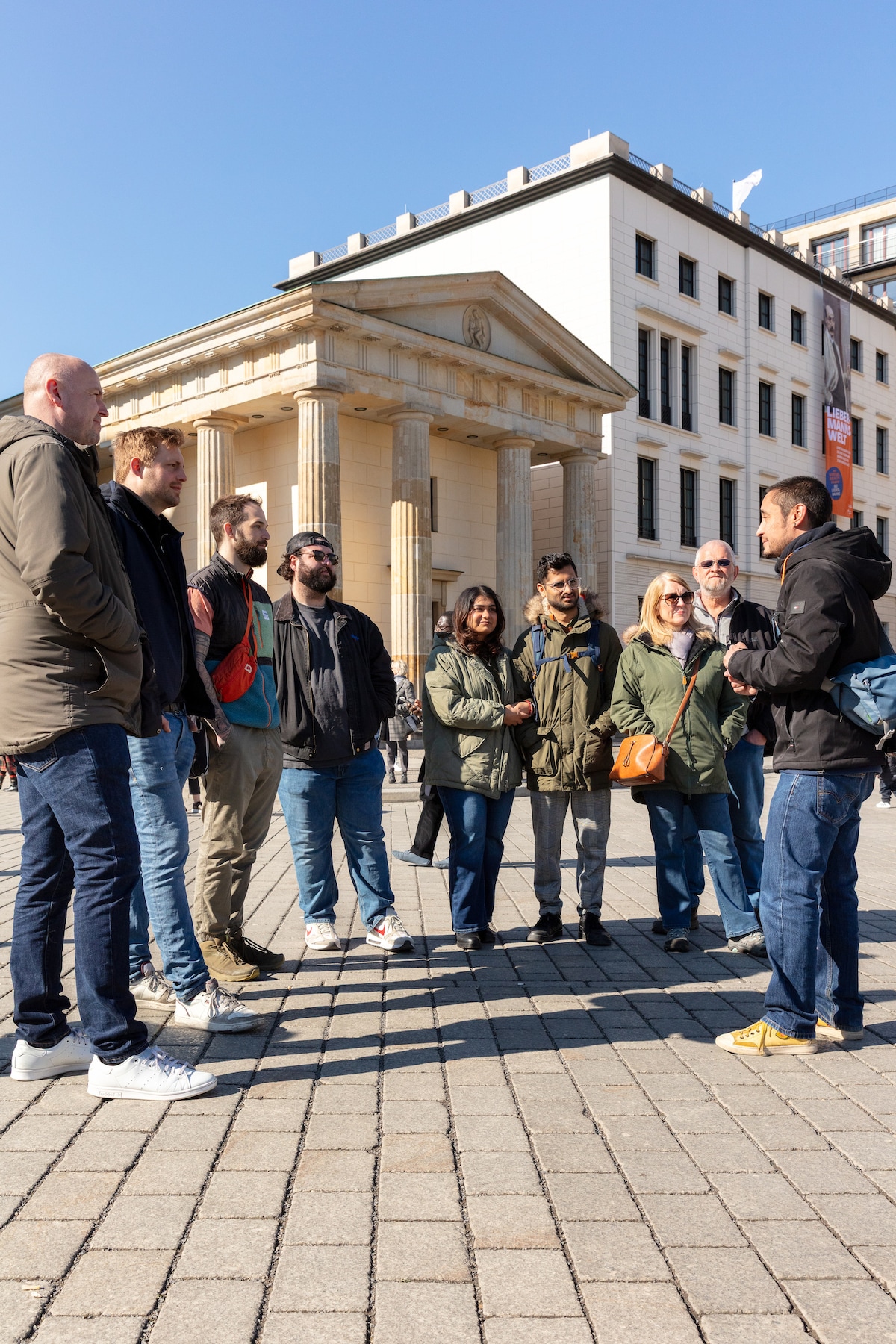
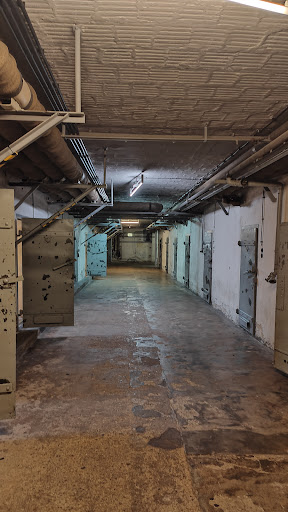
However, my concerns were unwarranted and the guide came in just before the scheduled start of the tour. The tour consisted of a small group of around 15 of us (didn't take note of the actual number) and the guide was very professional and spoke English to a very high standard. At every part of the tour, he gave us a great amount of information, including explaining the specific function of Hohenschoenhausen as a remand prison and that it never actually housed people who had commited conventional crimes (such as murder), but rather people who held views that went against those of the Socialist Unity Party. The inside of both the new and old buildings of the prison is spacious, although if you're tall, you will need to mind your head in the old building when entering a preserved cell. If you're claustrophobic and part of a large group tour, you may struggle with the parts that involve going into small rooms for explanations (such as the cell in the old building, reconstructed interrogation room in the new building and the garage) because the building wasn't designed with comfort in mind. In addition, the depth of the guide's knowledge on the torture techniques used by the Stasi to gain information was also very good (e.g how they managed to effectively force people to sleep poorly due to enforcing a particular sleeping posture). There is also very little light in the old building as there were no windows, preventing detainees from knowing what time of day it was, although the lighting improves in the new building. I was particularly impressed with the standard of maintenance of the building. It hasn't been allowed to fall into disrepair, but they've also managed to preserve what it was like at the time without modernising it, so you will be able to imagine what it was like for detainees, even though the majority of the original furniture is no longer there. As part of your tour, you'll be taken to a cell in the old building (which you can stand inside), a cell in the new building, an interrogation room (with replica furniture) and a garage: you can also see inside some of the rooms that you're not allowed to walk in, including an office in the new building and the area where prisoners had their mugshots taken. In the garage, you get to see an original vehicle used to transport prisoners and learn about how they concealed the location of the prison from detainees, including by going on long drives to trick prisoners in the transport van, which had no windows.
After the conclusion of the tour when you exit the new building, I thoroughly recommend that you visit the exhibition in a separate building. It surprised me quite how long it took me to walk around here and digest all the information (almost 2 hours). The exhibition adds to what you learned in the guided tour, talking about the building's evolution from an industrial kitchen to a prison and about the experiences...
Read moreI had this place recommended to me by several people as one of the best things they experienced in Berlin. This was mostly due to the former inmate guides who used to do the guided tours.
The memorial appears to have run out of these guides (at least for the english tour) - which is fair enough given the time that has passed - but then haven't bothered to hire someone new, who actually knows how to communicate with an audience.
Instead, the man who barely led us around had memorised the base facts about the place and then spent 1.5+ hours beating us to death with them. Everything was repeated at least thrice - some facts more than six times - and most of it we'd already heard in the introductory film. It could have been done in 30 minutes - but we spent more than that standing around a 3D model of the compound while he unnecessarily repeated the introductory video we'd just seen. We never made it to the interrogation cells, the outdoor cells or the hospital because he was so invested in his word vomit.
The most infuriating part, though, is that the memorial has branded itself on the personal stories attached to it. They literally have a wealth of resources, stories, memories. And this inept excuse for a guide made use of exactly none of them. We didn't hear about notable inmates, no personal stories or what happened to them after they were released - instead we received two deeply in-depth demonstrations of how the buttons outside the cells worked. He also managed to comment extensively on a visitor in another group who felt poorly and had to be led out, which turned into a completely unnecessary tirade about how especially women found it hard to cope with the place - totally unprofessional.
My recommendation is to look at any of the tours provided by Berlin...
Read moreI visited this museum about ten years ago and was truly amazed by the stories the guide shared about Hohenschönhausen, the Stasi, the prisoners, and the interrogation techniques they used. It was a powerful and deeply insightful experience.
This time, I decided to return to share that experience with a family member, but I was totally disappointed.
Our tour guide, Lothar Schultz, a former detainee, spent the majority of the two-hour tour talking about himself, his personal ideology, and even his career, while skipping crucial information about the detention center. Gaining insight from a former political prisoner can, of course, add depth and context to understanding Hohenschönhausen. However, his story lacked a coherent narrative and, quite frankly, wasn’t engaging enough to justify stretching it over two hours.
One specific example was the interrogation room. During my first visit, I learned why the tables were asymmetrical, why the prisoner’s back was always facing the door, and something about the significance of the phone ringing. This time, however, the guide merely showed us a vague picture of the banner that led to his arrest and a letter ordering his release.
My advice, though it might sound harsh, is to consider having someone else lead the tour. As someone who considers this museum a personal favorite, I think a more structured and informative guide would better...
Read more