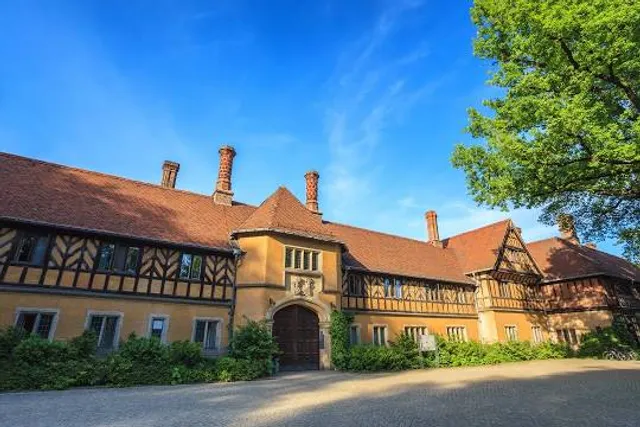
Cecilienhof is an iconic historic palace located in Potsdam, Germany. This elegant palace is known not only for its stunning architecture but also for its historical significance, as it played a pivotal role in the events following World War II. Let's delve into the fascinating history of Cecilienhof in Potsdam.
Construction and Design: Cecilienhof was built between 1914 and 1917 for Crown Prince Wilhelm of the German Empire and his wife, Crown Princess Cecilie. The palace was designed by architect Paul Schultze-Naumburg in the English Tudor style, which was a departure from the more traditional architectural styles often seen in European palaces. The design included half-timbered walls, gables, and decorative elements reminiscent of an English country manor.
Royal Residence: The palace was intended as a residence for the Crown Prince and his family. Cecilienhof featured numerous rooms and halls adorned with exquisite craftsmanship and design, making it a splendid home for German royalty. The surrounding gardens and landscapes added to its charm.
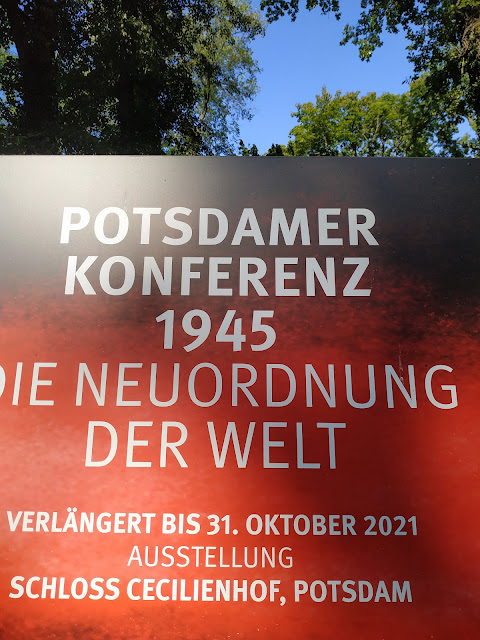
Historical Significance: Cecilienhof gained historical importance in the aftermath of World War II. In July and August 1945, it served as the venue for the Potsdam Conference. This conference brought together the leaders of the Allied powers—the United States, the United Kingdom, and the Soviet Union—to discuss the post-war settlement of Germany and Europe. The "Big Three" leaders, Harry S. Truman (U.S.), Winston Churchill (later succeeded by Clement Attlee, U.K.), and Joseph Stalin (Soviet Union), met at Cecilienhof to negotiate the terms of the Potsdam Agreement.
Potsdam Agreement: The Potsdam Agreement, signed on August 2, 1945, outlined the terms for the administration of Germany after World War II. It included provisions for the division of Germany into four occupation zones, each controlled by one of the Allied powers: the United States, the United Kingdom, France, and the Soviet Union. The conference also addressed issues like denazification, war crimes, and the boundaries of post-war Germany.
Post-War Use: After the Potsdam Conference, Cecilienhof ceased to be a royal residence. It was later used by the Soviet military administration in Germany, and some portions were converted into apartments for the military personnel and their families. The palace and its grounds were off-limits to the public during this period.
Modern Day: Today, Cecilienhof is open to the public as a museum and historical site. Visitors can explore the rooms where the Potsdam Conference took place and learn about the pivotal decisions made there. The palace is also surrounded by beautiful gardens, which make it a popular tourist attraction in Potsdam.
Cecilienhof's unique history, stunning architecture, and its role in shaping post-World War II Europe make it a must-visit destination for history enthusiasts and tourists interested in the aftermath of the war and the geopolitics of the mid-20th century. It stands as a testament to the enduring historical significance of Potsdam and the world-changing decisions made...
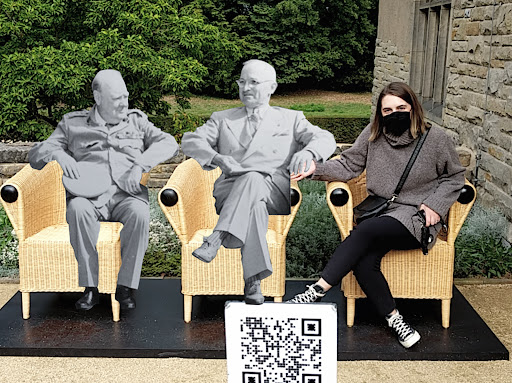
Read moreWe went to visit the Potsdam Conference exhibition here. I recommend downloading the Cecilienhof app in preparation for your visit - there are all kinds of special features and transcriptions that I find myself revisiting long after leaving the exhibition. As an American abroad, I especially found interesting the United States War and Navy Department "Short Guides" for the Middle Eastern countries describing cultural norms and advice for soldiers deploying to the region. The exhibitions related to the dropping of the atomic bombs were very moving and effectively conveyed the gravity of the situation. There was an opportunity to use a QR code to take a photo in the wicker chairs in the backyard with the "Big Three." All in all, the museum had a lot of depth and I would suggest anyone interested in modern history to schedule an appointment to visit. They also have a lovely gift shop where I bought a nice coffee table book with history and photos of Neuer Garten...
Read moreΗ τοποθεσία απλά εκπληκτική. Όμως κάποιοι από το προσωπικό χρειάζονται κάποια μαθήματα συμπεριφοράς. Αξίζει την επισκεψή σας, όμως φροντίστε να είναι καλός ο καιρός, ώστε να περιηγηθείτε μετά έξω κ να φθάσετε περπατώντας δίπλα στο ποτάμι κ τη λίμνη.Εως την γέφυρα των Κατασκόπων. Αλλιώς μπορείτε να κάνετε την ξενάγηση, κ στη συνέχεια να γυρίσετε στην πόλη. Εσείς αποφασίζετε. Πρόκειται για ένα όμορφο μεγάλο σπίτι, μέσα σε κήπους.Χτιστηκε κ στέγασε για χρόνια την οικογένεια κάποιου διαδόχου. Η βίλα σε σχέδια αγγλικού αρχοντικού, σε κερδίζει αμέσως, λόγω τοποθεσίας. Πήραμε το έξτρα εισητηριο που περιλαμβάνει την ξενάγηση στα δωμάτια που έγινε η Συνάντηση των 3 ηγετών. Έτσι μπορούσαμε να βγάλουμε φωτογραφίες κ να βγούμε κ στους κήπους χωρίς πρόβλημα. Διάβασα ότι παλαιότερα, μπορούσες να ξεναγηθείς κ στον επάνω όροφο, σε όλο το χώρο. Αν ξανανοίξει αξίζει να το κάνετε νομίζω.Εμεις θα το θέλαμε. Πήραμε μηχάνημα ξενάγησης στα Αγγλικά από την είσοδο. ΟΜΩΣ ΞΕΧΑΣΑΝ μας πουν ότι μπορούμε να βγάλουμε φωτογραφία καθισμένοι στο ίδιο μέρος με την ιστορική φωτό των 3 ηγετών, κ να μας δώσουν την εφαρμογη από την εισοδο. Στο λέει ο οδηγός στο Νumber 15.Ομως όταν το ανακαλύψαμε, μας είπαν ότι δεν γίνεται πλέον! Μην βιαστειτε να μπείτε στο χώρο, πριν βγάλετε φωτογραφίες. Η έξοδος γίνεται σε άλλο χώρο. Επιλέξτε καλό καιρό για τη βόλτα σας. Το τοπίο είναι υπέροχο. Προχωράς δίπλα στο νερό.Βλεπεις πολύ όμορφα σπίτια, δίπλα στα κανάλια, κάτι που μας άρεσε. Χαλαρωνεις μέσα σε τόση ομορφιά. Μετά την ξενάγηση, περπατήστε και έως την γέφυρα Glenicke Bridge of spies. Πηγαίνετε στο μέσον της γέφυρας εκεί που ενώνεται Ανατολικό και Δυτικό Βερολίνο. Παρατηρήστε το χρώμα της γέφυρας κ θα δείτε ότι έχει 2 διαφορετικους τόνους του πρασινου. Λόγω κορωνοιού δεν λειτουργεί κάποια καφετέρια στο χώρο του Συνεδρίου. Πάρτε μαζί το νερό σας. Εάν έχετε χρόνο, ψάξτε το πριν πάτε για να κάνετε βόλτα στη λίμνη. Δεν είναι απαραίτητο να πάρετε τα πλοιάρια που πλέουν εκεί. Οι ντόπιοι ενοικιάζουν βάρκες, ποδήλατα, κλπ. Κ μπορείς να πας κ σε κανάλια.Δεν είναι απαραίτητο να κάνεις βόλτες μόνο εκεί μπροστά, καθώς δεν υπάρχει κυματισμός όπως στη θάλασσα. Ρωτήσαμε κ για τον καιρό τον χειμώνα κ μας είπαν ότι έχει απίστευτο κρύο.Να ξέρετε ότι οι περισσότεροι εκεί, μιλούν ελληνικά, καθώς έχουν ζήσει στην Ελλάδα! Δώστε χαιρετίσματα!!🎉🎉 Βρήκα κ φωτό απ' το χειμώνα.Αλλο τοπίο, ομορφότερο το καλοκαίρι! Το λεωφορείο της γραμμής σε αφήνει απέξω ακριβώς. Και το ταξί είναι φθηνό, γύρω στα 12€ από το κέντρο της πόλης, είτε από το Sans Souci για να γλυτώσετε περπάτημα κ χρόνο. ΠΡΟΣΟΧΗ να πάτε 10 λεπτά πριν την ώρα...
Read more