HTML SitemapExplore
logo
Find Things to DoFind The Best Restaurants

Knossos Palace — Attraction in Municipality of Heraklion

Name
Knossos Palace
Description
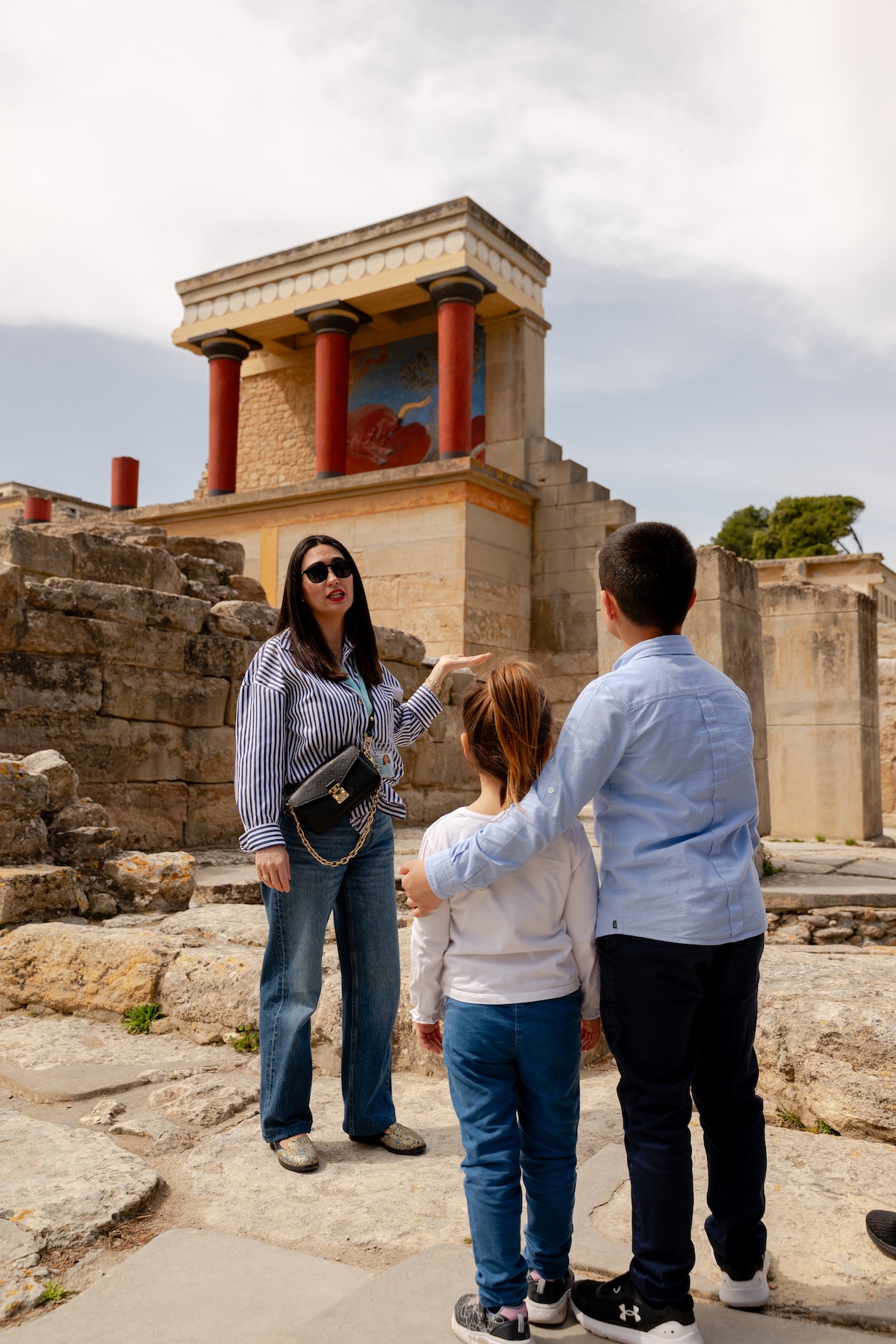
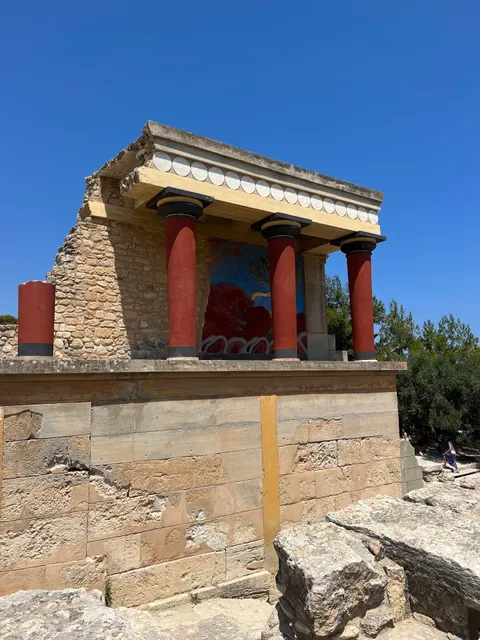
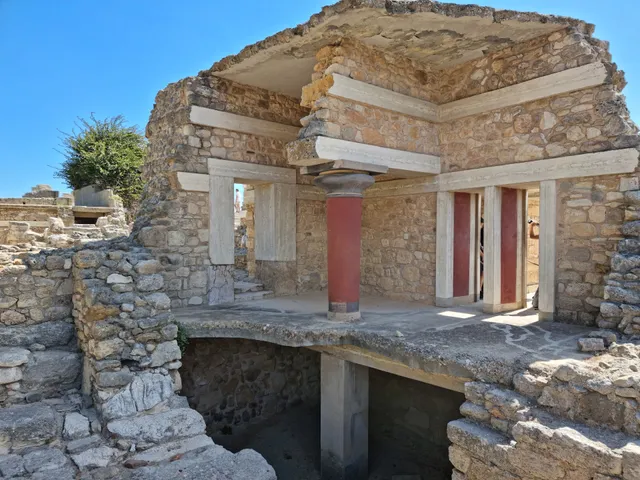
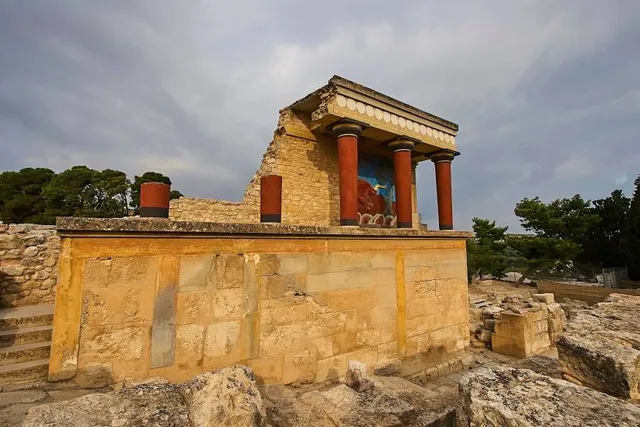
Knossos is a Bronze Age archaeological site in Crete. The site was a major center of the Minoan civilization and is known for its association with the Greek myth of Theseus and the minotaur. It is located on the outskirts of Heraklion, and remains a popular tourist destination.
Nearby attractions
Palau de Cnossos
Knossos 714 09, Greece
Kouloures
Knossos 714 09, Greece
South House
Epar.Od. Knossou - Charaka, Knosos 715 00, Greece
Public Park
Knosou, Kamatero 134 51, Greece
Nearby restaurants
Minotavros Restaurant Cafe
Κνωσσός Ηράκλειο Κρήτης, 714 09, Greece
The Little Garden
Knossos 714 09, Greece
Pasiphae Restaurant
Leof. Knosou 329, Iraklio 715 00, Greece
Rousakis restaurant
Leof. Knosou, Iraklio 714 09, Greece
Free Parking Pasiphae Knossos
Knosou Avenue 329, Iraklio 715 00, Greece
Nearby hotels
Related posts
Escape the City Plan|Greece🇬🇷|Day 1 Guide to Crete Island
Keywords
Knossos Palace tourism.Knossos Palace hotels.Knossos Palace bed and breakfast. flights to Knossos Palace.Knossos Palace attractions.Knossos Palace restaurants.Knossos Palace travel.Knossos Palace travel guide.Knossos Palace travel blog.Knossos Palace pictures.Knossos Palace photos.Knossos Palace travel tips.Knossos Palace maps.Knossos Palace things to do.
Knossos Palace things to do, attractions, restaurants, events info and trip planning
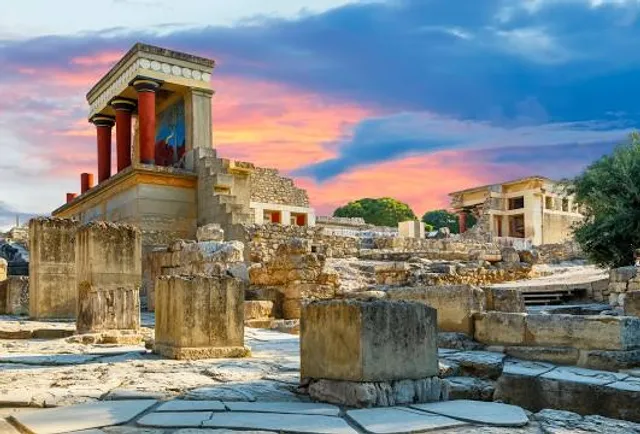
Knossos Palace
GreeceRegion of CreteMunicipality of HeraklionKnossos Palace

Basic Info

Knossos Palace

Knossos 714 09, Greece
4.3(18.9K)
Open 24 hours
Save
spot

Ratings & Description

Info

Knossos is a Bronze Age archaeological site in Crete. The site was a major center of the Minoan civilization and is known for its association with the Greek myth of Theseus and the minotaur. It is located on the outskirts of Heraklion, and remains a popular tourist destination.

Cultural
Outdoor
Family friendly
attractions: Palau de Cnossos, Kouloures, South House, Public Park, restaurants: Minotavros Restaurant Cafe, The Little Garden, Pasiphae Restaurant, Rousakis restaurant, Free Parking Pasiphae Knossos
logoLearn more insights from Wanderboat AI.
Phone
+30 281 023 1940
Website
odysseus.culture.gr

Plan your stay

hotel
Pet-friendly Hotels in Municipality of Heraklion
Find a cozy hotel nearby and make it a full experience.

hotel
Affordable Hotels in Municipality of Heraklion
Find a cozy hotel nearby and make it a full experience.

hotel
The Coolest Hotels You Haven't Heard Of (Yet)
Find a cozy hotel nearby and make it a full experience.

hotel
Trending Stays Worth the Hype in Municipality of Heraklion
Find a cozy hotel nearby and make it a full experience.

Reviews

Nearby attractions of Knossos Palace

Palau de Cnossos

Kouloures

South House

Public Park

Palau de Cnossos

Palau de Cnossos

4.1

(309)

Open 24 hours
Click for details
Kouloures

Kouloures

4.0

(77)

Open 24 hours
Click for details
South House

South House

4.3

(39)

Open 24 hours
Click for details
Public Park

Public Park

4.5

(117)

Open 24 hours
Click for details

Things to do nearby

Create your own Traditional Cretan Soap
Sun, Dec 7 • 9:30 AM
713 05, Heraklion, Greece
View details
Knossos Palace, Archaeological Museum & City Tour
Sun, Dec 7 • 7:00 AM
714 09, Knossos, Greece
View details
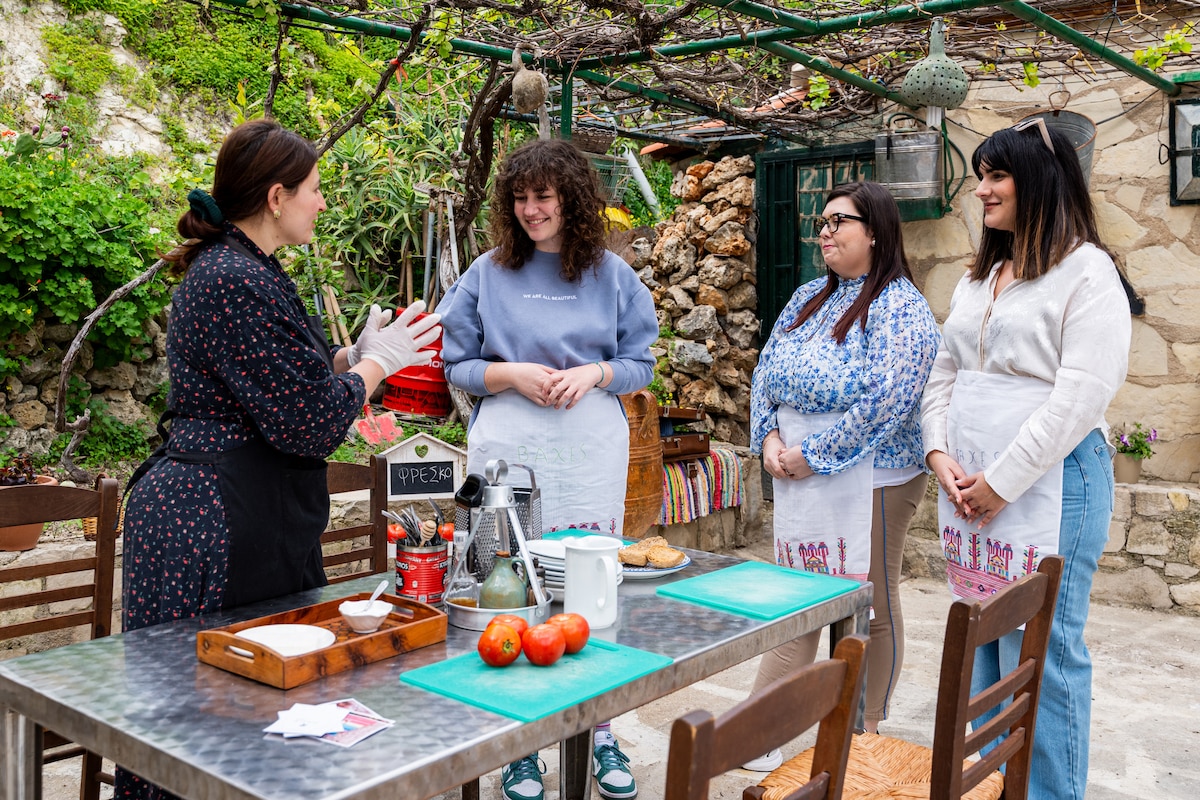
Taste Cretan wines in a countryside garden
Mon, Dec 8 • 12:30 PM
714 09, Heraklion, Greece
View details

Nearby restaurants of Knossos Palace

Minotavros Restaurant Cafe

The Little Garden

Pasiphae Restaurant

Rousakis restaurant

Free Parking Pasiphae Knossos
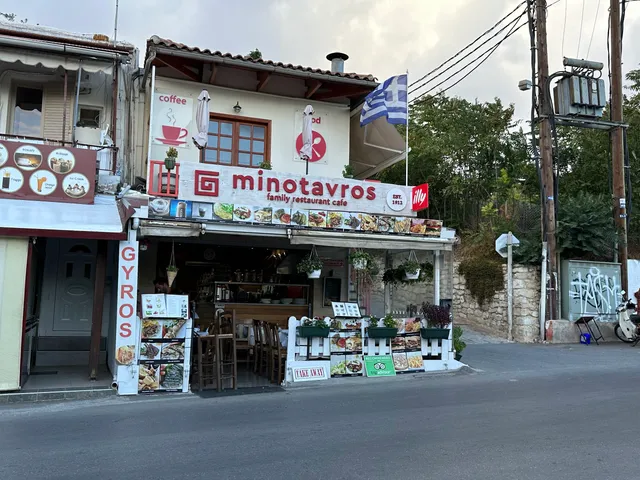
Minotavros Restaurant Cafe

Minotavros Restaurant Cafe

4.2

(271)

Click for details
The Little Garden

The Little Garden

3.3

(70)

Click for details
Pasiphae Restaurant

Pasiphae Restaurant

4.7

(1.9K)

Click for details
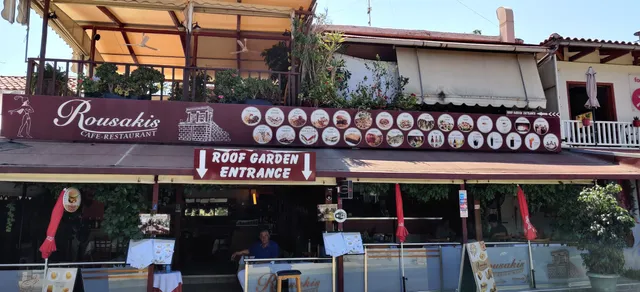
Rousakis restaurant

Rousakis restaurant

2.4

(155)

$$

Click for details
Get the Appoverlay
Get the AppOne tap to find yournext favorite spots!
Wanderboat LogoWanderboat

Your everyday Al companion for getaway ideas

CompanyAbout Us
InformationAI Trip PlannerSitemap
SocialXInstagramTiktokLinkedin
LegalTerms of ServicePrivacy Policy

Get the app

© 2025 Wanderboat. All rights reserved.
logo

Reviews of Knossos Palace

4.3
(18,927)
avatar
5.0
26w

A Journey into the Labyrinth of Time – The Palace of Knossos, Crete

Visiting the Palace of Knossos is not just a tourist excursion — it’s a plunge into the deep waters of ancient European civilization. Located just a few kilometers south of Heraklion, this archaeological site is the largest Bronze Age complex on Crete and is widely considered Europe’s oldest city.

🏛 Historical Significance

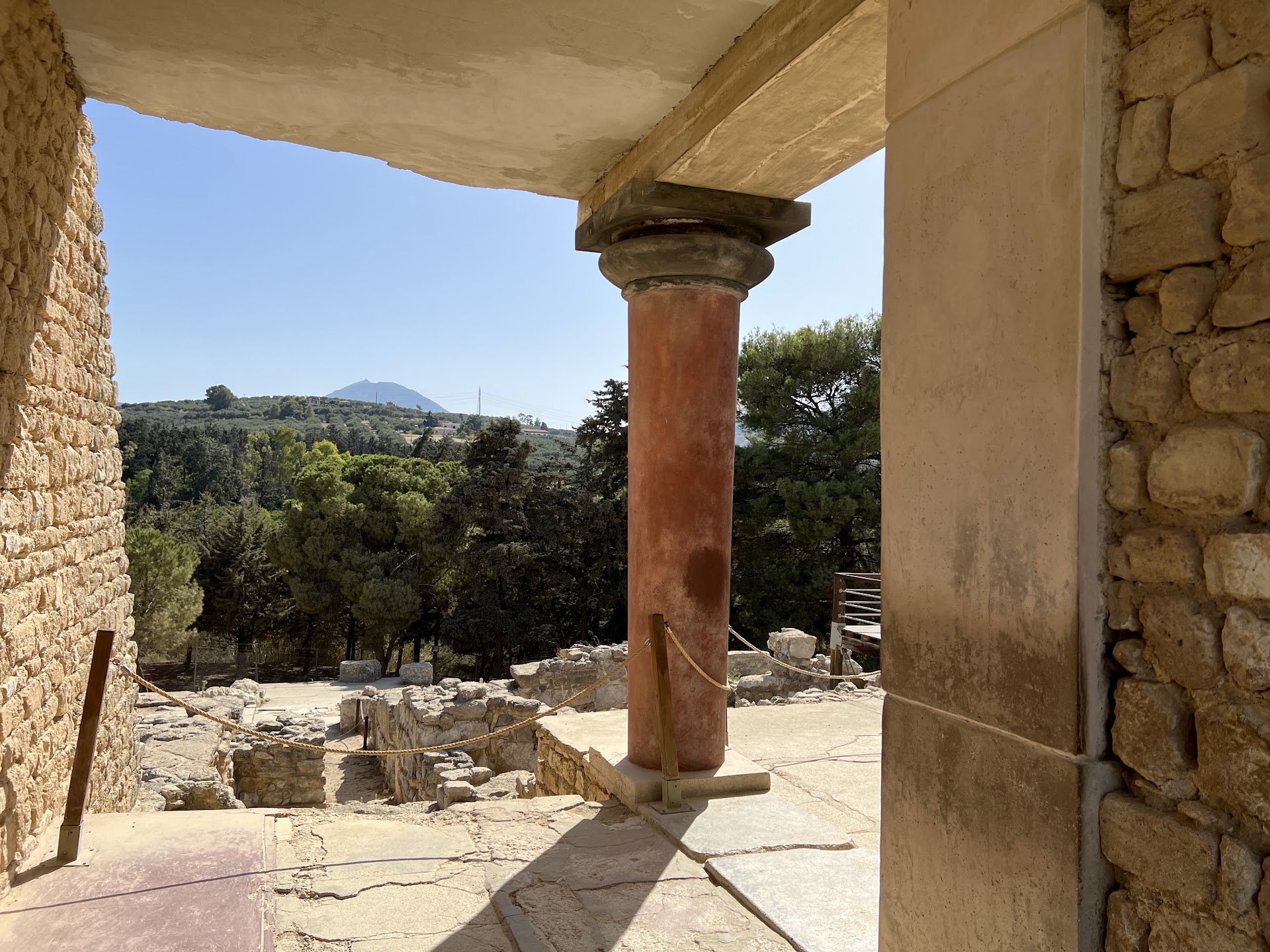
Knossos was the ceremonial and political center of the Minoan civilization, which flourished between 2000 and 1400 BCE. The site was rediscovered in the early 20th century by British archaeologist Sir Arthur Evans, who controversially reconstructed large parts of the complex using concrete, guided more by imagination than hard evidence. While debated, these reconstructions offer a vivid — if speculative — window into a world that might otherwise remain only in shards and ruins.

The Minoans were a seafaring people, sophisticated in trade, art, and architecture. They had plumbing, multi-storey buildings, and vibrant frescoes depicting marine life, ceremonial processions, and religious iconography — all centuries before the Parthenon was even imagined.

Knossos is also steeped in mythology. This is the legendary labyrinth of King Minos, where the Minotaur — half-man, half-bull — was said to lurk. The story of Theseus, Ariadne, and the ball of thread is believed to be inspired by the complex and confusing layout of the palace itself.

🌟 Key Highlights of the Visit • The Throne Room: Home to the famous alabaster seat, this chamber is likely religious in nature, not monarchical. The Griffin frescoes and lustral basins create a mystical atmosphere. • The Grand Staircase: A marvel of ancient architecture, this leads to the upper floors of the palace and demonstrates Minoan understanding of verticality and multi-level design. • The Queen’s Megaron: A beautifully preserved space featuring the “Dolphin Fresco,” showcasing the elegance and artistic sensibility of Minoan life. • The Central Courtyard: Likely the hub of public or ceremonial life, this large open space reflects the importance of communal and possibly ritual gatherings. • Storage Magazines (West Wing): Long, narrow rooms used for storing large pithoi (jars) of oil, grain, and wine — a testament to the economic might of Knossos. • The Frescoes: Though many originals are in the Heraklion Archaeological Museum, some reconstructions on-site (e.g. the Prince of the Lilies, the Bull-Leaping Fresco) are stunning and iconic representations of Minoan culture.

📝 Practical Tips • Timing: Visit early in the morning or late in the afternoon to avoid the crowds and summer heat. • Guide or Audio Tour: Strongly recommended — the significance of many areas is easily missed without context. • Pair with Museum Visit: The Heraklion Archaeological Museum houses most of the original artifacts and frescoes from Knossos. Visiting both offers a complete picture.

🎯 Final Thoughts

Knossos is not just ruins — it’s a myth made tangible, a place where history and legend intertwine. Walking its corridors, one can almost hear the footsteps of priestesses, the clamor of ancient rituals, or the echo of a bull’s roar deep within the labyrinth.

If you’re a lover of archaeology, mythology, or ancient civilizations, Knossos is unmissable. This isn’t just the heart of Minoan Crete — it’s one of the beating hearts of Western...

   Read more
avatar
2.0
1y

I have been to numerous museums in life. I have studied history even, so you can imagine how many I've seen in the world. This, I'm not even sure it can be sold as a museum.

First of, you are probably better off paying one of the random people outside before you enter to get them to give you a tour. They are in your fast and trying to get your money, but to be honest I think we needed it.

As you go in, it looks like an actual start to an open air museum. There is a cafe, gift shop and toilets.

The toilet queue was about 20 minutes plus for the women's, and there was a boy on a chair asking for money at the entrance and handing you paper towels on the way out. Payment was optional, it turned out. What that payment was for, I don't know. Certainly worse than the toilets, I have been in better portaloos. It was boiling hot, no toilet paper, one of the cubicles had the door burst in and it was just laying there broken on the toilet. Dirty, smelly, and you had to cram past the kid begging for money and everyone else in the queue to get out. I was so confused how this was on site.

Going into the museum, there is little direction. There is little anything, to be honest. The sign posts lack information, or information that is fun, eye catching or memorable. All I remember is that some guy guessed what everything was, but then historians think he was wrong anyway. Why bother telling us?

There is little to no shade, fyi, so bring an umbrella. No food/drinks whilst you're walking around either, so you have to make sure you get it before, otherwise you go through the turnstiles and you're stuck.

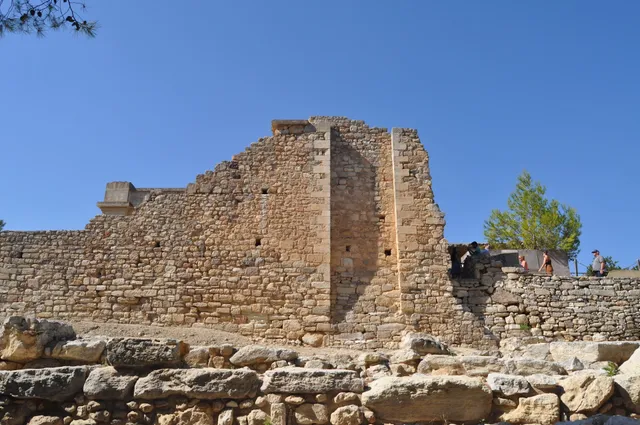
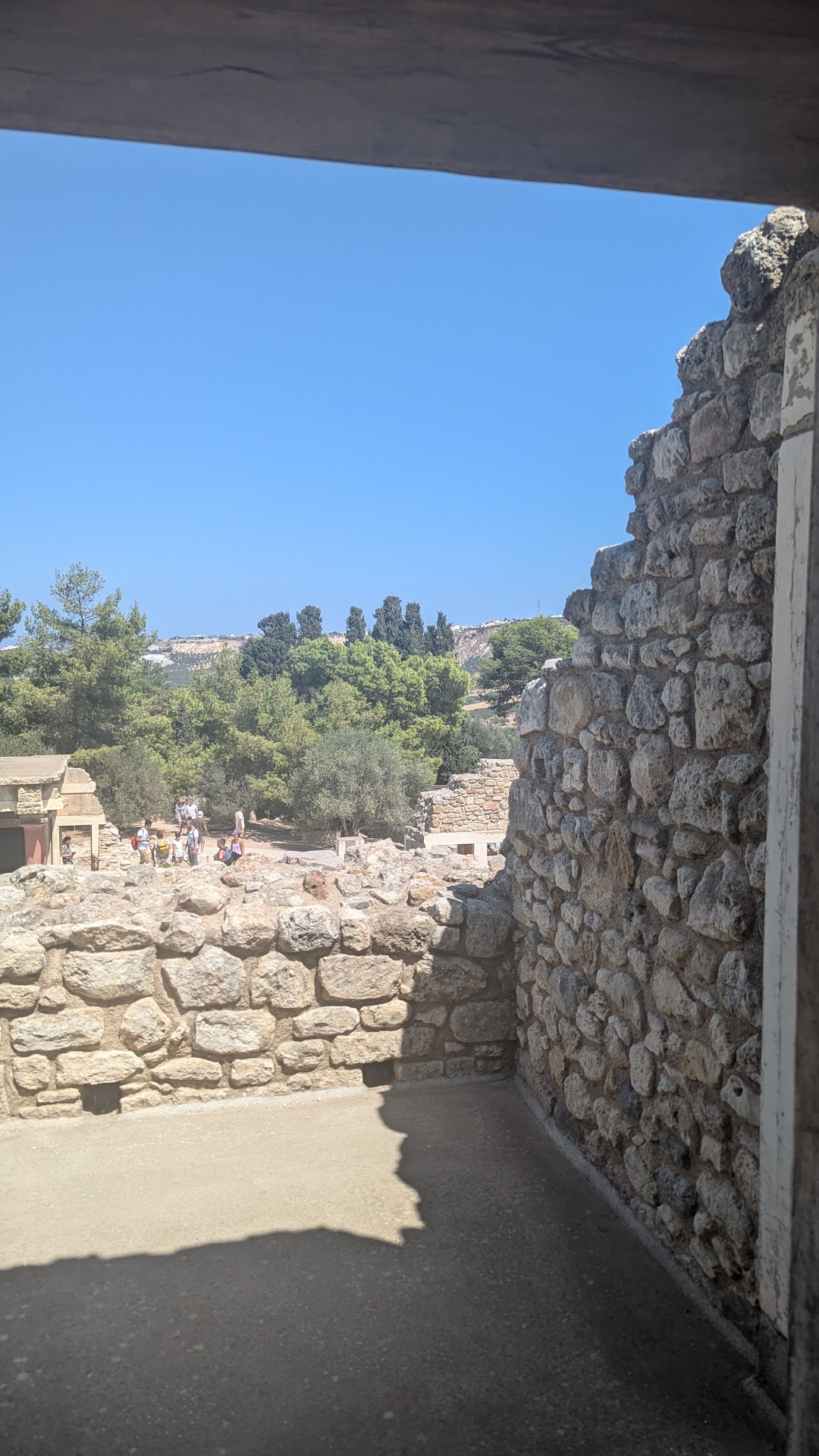
You walk around these piles of rocks, with no information of what was really going on or pictures of what it was supposed to look like. I'm not even sure who lived there after all that.

It takes about 2 hours or so, if you really want to see everything, because you have to double back on yourself multiple times (as I said, no direction). There was a queue to see a room with a seat in it, called the 'throne room', says that random guy who said it so. Apparently it wasn't even actually a throne room anyway. Thanks for that information.

So you walk on this uneven dirt path and look as some rocks and pots. There are hundreds of 'tour guides' plotted around, so to be honest you can find one who speaks your language and follow them about. Couldn't find any audio guides, so I'm not sure where people got them unless they were from those 'tour guides' as well.

To be honest, mostly brick walls everywhere. Once you got one photo you've got them all really.

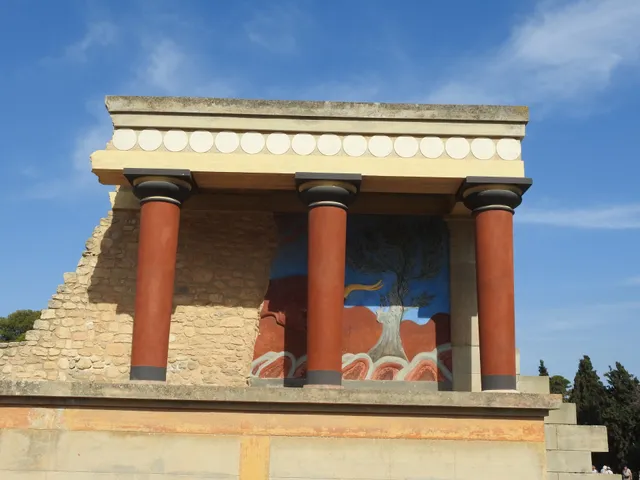
The photo that's plastered everywhere is the only sort of remaining thing there. There are other small things (ie the 'throne room' and some room with some paintings in) but overall it's just brick walls and dust in 30° heat.

I'm happy I went, I can say I have gone, that's what one star is, and the other is for the map I purchased at the end that actually had a photo of what the place was supposed to have looked like. That was cool. Everything else in that gift shop (that isn't a postcard) is horrifically priced. Go if you want bragging rights,...

   Read more
avatar
5.0
1y

The Palace of Knossos (Μινωικό Ανάκτορο Κνωσού) is the largest Bronze Age archaeological site on the island of Crete, Greece, and is considered Europe's oldest city. It is the most significant and best-known site of the Minoan civilization, which flourished between 2000 and 1400 BCE. The palace complex, located just outside the modern city of Heraklion, is a sprawling structure that served as the political, cultural, and ceremonial center of Minoan society.

Key Features of Knossos Palace:

Architecture: The palace is an intricate complex of over 1,000 interlinked rooms, including residential quarters, workshops, storage spaces, religious areas, and banquet halls. Its layout is so complex that it may have inspired the myth of the Labyrinth, associated with the legend of the Minotaur.

Frescoes and Art: Knossos is famous for its vibrant frescoes that adorn the walls of the palace. These artworks depict various aspects of Minoan life, including religious ceremonies, processions, and natural scenes. The "Bull-Leaping Fresco" is one of the most famous, depicting an athletic ritual where participants leap over bulls.

The Throne Room: This room is one of the most significant discoveries at Knossos. It features a stone throne flanked by benches, and a large basin, possibly used for ritual purification. The walls of the Throne Room are adorned with frescoes depicting griffins, mythical creatures that symbolized power and divinity.

The Central Courtyard: This large open space was likely the focal point of the palace, used for religious ceremonies, gatherings, and possibly even bull-leaping events. Surrounding the courtyard are various important rooms and corridors.

Storage Areas: The palace had extensive storage facilities, with large pithoi (storage jars) found in the west wing, indicating the importance of trade and the storage of surplus goods like olive oil, wine, and grain.

Restoration and Excavation: The site was excavated extensively in the early 20th century by British archaeologist Sir Arthur Evans. He controversially reconstructed parts of the palace, using modern materials to restore what he believed the palace originally looked like. This has been both praised for bringing the ancient site to life and criticized for potentially distorting the original structure.

Mythological Significance: Knossos is deeply intertwined with Greek mythology. It is believed to be the home of King Minos, the legendary king of Crete. The myth of the Minotaur, a half-man, half-bull creature that lived in the Labyrinth, is one of the most famous stories associated with Knossos. According to the myth, the hero Theseus eventually killed the Minotaur with the help of Ariadne, the daughter of King Minos.

Today, Knossos is one of Greece's most popular archaeological sites, attracting visitors from all over the world who come to explore the remains of this once-great Minoan palace and delve into the rich history and mythology of...

   Read more
Page 1 of 7
Previous
Next

Posts

Escape the City Plan|Greece🇬🇷|Day 1 Guide to Crete Island
Olivia MaeOlivia Mae
Escape the City Plan|Greece🇬🇷|Day 1 Guide to Crete Island
Z NomadVerse 2.0Z NomadVerse 2.0
A Journey into the Labyrinth of Time – The Palace of Knossos, Crete Visiting the Palace of Knossos is not just a tourist excursion — it’s a plunge into the deep waters of ancient European civilization. Located just a few kilometers south of Heraklion, this archaeological site is the largest Bronze Age complex on Crete and is widely considered Europe’s oldest city. 🏛 Historical Significance Knossos was the ceremonial and political center of the Minoan civilization, which flourished between 2000 and 1400 BCE. The site was rediscovered in the early 20th century by British archaeologist Sir Arthur Evans, who controversially reconstructed large parts of the complex using concrete, guided more by imagination than hard evidence. While debated, these reconstructions offer a vivid — if speculative — window into a world that might otherwise remain only in shards and ruins. The Minoans were a seafaring people, sophisticated in trade, art, and architecture. They had plumbing, multi-storey buildings, and vibrant frescoes depicting marine life, ceremonial processions, and religious iconography — all centuries before the Parthenon was even imagined. Knossos is also steeped in mythology. This is the legendary labyrinth of King Minos, where the Minotaur — half-man, half-bull — was said to lurk. The story of Theseus, Ariadne, and the ball of thread is believed to be inspired by the complex and confusing layout of the palace itself. 🌟 Key Highlights of the Visit • The Throne Room: Home to the famous alabaster seat, this chamber is likely religious in nature, not monarchical. The Griffin frescoes and lustral basins create a mystical atmosphere. • The Grand Staircase: A marvel of ancient architecture, this leads to the upper floors of the palace and demonstrates Minoan understanding of verticality and multi-level design. • The Queen’s Megaron: A beautifully preserved space featuring the “Dolphin Fresco,” showcasing the elegance and artistic sensibility of Minoan life. • The Central Courtyard: Likely the hub of public or ceremonial life, this large open space reflects the importance of communal and possibly ritual gatherings. • Storage Magazines (West Wing): Long, narrow rooms used for storing large pithoi (jars) of oil, grain, and wine — a testament to the economic might of Knossos. • The Frescoes: Though many originals are in the Heraklion Archaeological Museum, some reconstructions on-site (e.g. the Prince of the Lilies, the Bull-Leaping Fresco) are stunning and iconic representations of Minoan culture. 📝 Practical Tips • Timing: Visit early in the morning or late in the afternoon to avoid the crowds and summer heat. • Guide or Audio Tour: Strongly recommended — the significance of many areas is easily missed without context. • Pair with Museum Visit: The Heraklion Archaeological Museum houses most of the original artifacts and frescoes from Knossos. Visiting both offers a complete picture. 🎯 Final Thoughts Knossos is not just ruins — it’s a myth made tangible, a place where history and legend intertwine. Walking its corridors, one can almost hear the footsteps of priestesses, the clamor of ancient rituals, or the echo of a bull’s roar deep within the labyrinth. If you’re a lover of archaeology, mythology, or ancient civilizations, Knossos is unmissable. This isn’t just the heart of Minoan Crete — it’s one of the beating hearts of Western civilization.
Kira PittuckKira Pittuck
I have been to numerous museums in life. I have studied history even, so you can imagine how many I've seen in the world. This, I'm not even sure it can be sold as a museum. First of, you are probably better off paying one of the random people outside before you enter to get them to give you a tour. They are in your fast and trying to get your money, but to be honest I think we needed it. As you go in, it looks like an actual start to an open air museum. There is a cafe, gift shop and toilets. The toilet queue was about 20 minutes plus for the women's, and there was a boy on a chair asking for money at the entrance and handing you paper towels on the way out. Payment was optional, it turned out. What that payment was for, I don't know. Certainly worse than the toilets, I have been in better portaloos. It was boiling hot, no toilet paper, one of the cubicles had the door burst in and it was just laying there broken on the toilet. Dirty, smelly, and you had to cram past the kid begging for money and everyone else in the queue to get out. I was so confused how this was on site. Going into the museum, there is little direction. There is little anything, to be honest. The sign posts lack information, or information that is fun, eye catching or memorable. All I remember is that some guy guessed what everything was, but then historians think he was wrong anyway. Why bother telling us? There is little to no shade, fyi, so bring an umbrella. No food/drinks whilst you're walking around either, so you have to make sure you get it before, otherwise you go through the turnstiles and you're stuck. You walk around these piles of rocks, with no information of what was really going on or pictures of what it was supposed to look like. I'm not even sure who lived there after all that. It takes about 2 hours or so, if you really want to see everything, because you have to double back on yourself multiple times (as I said, no direction). There was a queue to see a room with a seat in it, called the 'throne room', says that random guy who said it so. Apparently it wasn't even actually a throne room anyway. Thanks for that information. So you walk on this uneven dirt path and look as some rocks and pots. There are hundreds of 'tour guides' plotted around, so to be honest you can find one who speaks your language and follow them about. Couldn't find any audio guides, so I'm not sure where people got them unless they were from those 'tour guides' as well. To be honest, mostly brick walls everywhere. Once you got one photo you've got them all really. The photo that's plastered everywhere is the only sort of remaining thing there. There are other small things (ie the 'throne room' and some room with some paintings in) but overall it's just brick walls and dust in 30° heat. I'm happy I went, I can say I have gone, that's what one star is, and the other is for the map I purchased at the end that actually had a photo of what the place was supposed to have looked like. That was cool. Everything else in that gift shop (that isn't a postcard) is horrifically priced. Go if you want bragging rights, that's about it.
See more posts
See more posts
hotel
Find your stay

Pet-friendly Hotels in Municipality of Heraklion

Find a cozy hotel nearby and make it a full experience.

Escape the City Plan|Greece🇬🇷|Day 1 Guide to Crete Island
Olivia Mae

Olivia Mae

hotel
Find your stay

Affordable Hotels in Municipality of Heraklion

Find a cozy hotel nearby and make it a full experience.

Get the Appoverlay
Get the AppOne tap to find yournext favorite spots!
A Journey into the Labyrinth of Time – The Palace of Knossos, Crete Visiting the Palace of Knossos is not just a tourist excursion — it’s a plunge into the deep waters of ancient European civilization. Located just a few kilometers south of Heraklion, this archaeological site is the largest Bronze Age complex on Crete and is widely considered Europe’s oldest city. 🏛 Historical Significance Knossos was the ceremonial and political center of the Minoan civilization, which flourished between 2000 and 1400 BCE. The site was rediscovered in the early 20th century by British archaeologist Sir Arthur Evans, who controversially reconstructed large parts of the complex using concrete, guided more by imagination than hard evidence. While debated, these reconstructions offer a vivid — if speculative — window into a world that might otherwise remain only in shards and ruins. The Minoans were a seafaring people, sophisticated in trade, art, and architecture. They had plumbing, multi-storey buildings, and vibrant frescoes depicting marine life, ceremonial processions, and religious iconography — all centuries before the Parthenon was even imagined. Knossos is also steeped in mythology. This is the legendary labyrinth of King Minos, where the Minotaur — half-man, half-bull — was said to lurk. The story of Theseus, Ariadne, and the ball of thread is believed to be inspired by the complex and confusing layout of the palace itself. 🌟 Key Highlights of the Visit • The Throne Room: Home to the famous alabaster seat, this chamber is likely religious in nature, not monarchical. The Griffin frescoes and lustral basins create a mystical atmosphere. • The Grand Staircase: A marvel of ancient architecture, this leads to the upper floors of the palace and demonstrates Minoan understanding of verticality and multi-level design. • The Queen’s Megaron: A beautifully preserved space featuring the “Dolphin Fresco,” showcasing the elegance and artistic sensibility of Minoan life. • The Central Courtyard: Likely the hub of public or ceremonial life, this large open space reflects the importance of communal and possibly ritual gatherings. • Storage Magazines (West Wing): Long, narrow rooms used for storing large pithoi (jars) of oil, grain, and wine — a testament to the economic might of Knossos. • The Frescoes: Though many originals are in the Heraklion Archaeological Museum, some reconstructions on-site (e.g. the Prince of the Lilies, the Bull-Leaping Fresco) are stunning and iconic representations of Minoan culture. 📝 Practical Tips • Timing: Visit early in the morning or late in the afternoon to avoid the crowds and summer heat. • Guide or Audio Tour: Strongly recommended — the significance of many areas is easily missed without context. • Pair with Museum Visit: The Heraklion Archaeological Museum houses most of the original artifacts and frescoes from Knossos. Visiting both offers a complete picture. 🎯 Final Thoughts Knossos is not just ruins — it’s a myth made tangible, a place where history and legend intertwine. Walking its corridors, one can almost hear the footsteps of priestesses, the clamor of ancient rituals, or the echo of a bull’s roar deep within the labyrinth. If you’re a lover of archaeology, mythology, or ancient civilizations, Knossos is unmissable. This isn’t just the heart of Minoan Crete — it’s one of the beating hearts of Western civilization.
Z NomadVerse 2.0

Z NomadVerse 2.0

hotel
Find your stay

The Coolest Hotels You Haven't Heard Of (Yet)

Find a cozy hotel nearby and make it a full experience.

hotel
Find your stay

Trending Stays Worth the Hype in Municipality of Heraklion

Find a cozy hotel nearby and make it a full experience.

I have been to numerous museums in life. I have studied history even, so you can imagine how many I've seen in the world. This, I'm not even sure it can be sold as a museum. First of, you are probably better off paying one of the random people outside before you enter to get them to give you a tour. They are in your fast and trying to get your money, but to be honest I think we needed it. As you go in, it looks like an actual start to an open air museum. There is a cafe, gift shop and toilets. The toilet queue was about 20 minutes plus for the women's, and there was a boy on a chair asking for money at the entrance and handing you paper towels on the way out. Payment was optional, it turned out. What that payment was for, I don't know. Certainly worse than the toilets, I have been in better portaloos. It was boiling hot, no toilet paper, one of the cubicles had the door burst in and it was just laying there broken on the toilet. Dirty, smelly, and you had to cram past the kid begging for money and everyone else in the queue to get out. I was so confused how this was on site. Going into the museum, there is little direction. There is little anything, to be honest. The sign posts lack information, or information that is fun, eye catching or memorable. All I remember is that some guy guessed what everything was, but then historians think he was wrong anyway. Why bother telling us? There is little to no shade, fyi, so bring an umbrella. No food/drinks whilst you're walking around either, so you have to make sure you get it before, otherwise you go through the turnstiles and you're stuck. You walk around these piles of rocks, with no information of what was really going on or pictures of what it was supposed to look like. I'm not even sure who lived there after all that. It takes about 2 hours or so, if you really want to see everything, because you have to double back on yourself multiple times (as I said, no direction). There was a queue to see a room with a seat in it, called the 'throne room', says that random guy who said it so. Apparently it wasn't even actually a throne room anyway. Thanks for that information. So you walk on this uneven dirt path and look as some rocks and pots. There are hundreds of 'tour guides' plotted around, so to be honest you can find one who speaks your language and follow them about. Couldn't find any audio guides, so I'm not sure where people got them unless they were from those 'tour guides' as well. To be honest, mostly brick walls everywhere. Once you got one photo you've got them all really. The photo that's plastered everywhere is the only sort of remaining thing there. There are other small things (ie the 'throne room' and some room with some paintings in) but overall it's just brick walls and dust in 30° heat. I'm happy I went, I can say I have gone, that's what one star is, and the other is for the map I purchased at the end that actually had a photo of what the place was supposed to have looked like. That was cool. Everything else in that gift shop (that isn't a postcard) is horrifically priced. Go if you want bragging rights, that's about it.
Kira Pittuck

Kira Pittuck

See more posts
See more posts