HTML SitemapExplore
logo
Find Things to DoFind The Best Restaurants

Sri Govindaraja Swamy Temple — Attraction in Andhra Pradesh

Name
Sri Govindaraja Swamy Temple
Description
Nearby attractions
Sri Venkateswara Museum on Temple Art, Tirupati
JCJ9+64R, GN Mada St, Varadaraja Nagar, Tirupati, Andhra Pradesh 517501, India
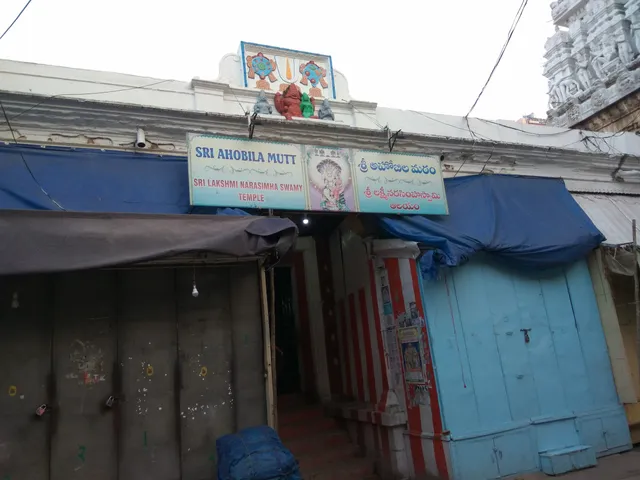
Sri Ahobila Mutt
156, GS Sannidhi St, Varadaraja Nagar, Tirupati, Andhra Pradesh 517501, India
Venkateswara Swamy Temple
Balaji Colony, Tirupati, Andhra Pradesh 517501, India
Sri Venkateshwara Temple
JCJC+FVQ, Bandla St, Mallaiah Gunta Katta, Tata Nagar, Tirupati, Andhra Pradesh 517501, India
Sri Tataiahgunta Gangamma Devasthanam
JCMF+H9R, Korramenugunta, Tirupati, Andhra Pradesh 517501, India
Nearby restaurants
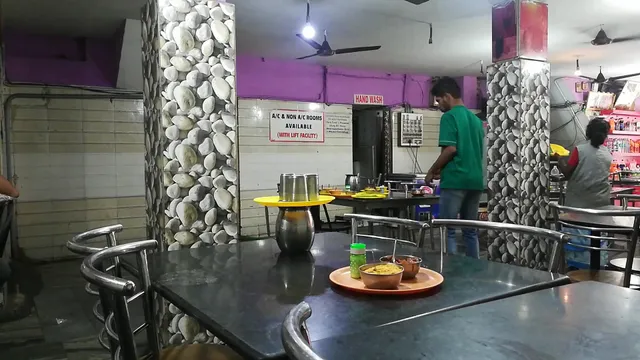
Bhimas Maya Restaurant
away from, Railway Station, 100m, G Car St, Tata Nagar, Tirupati, Andhra Pradesh 517501, India
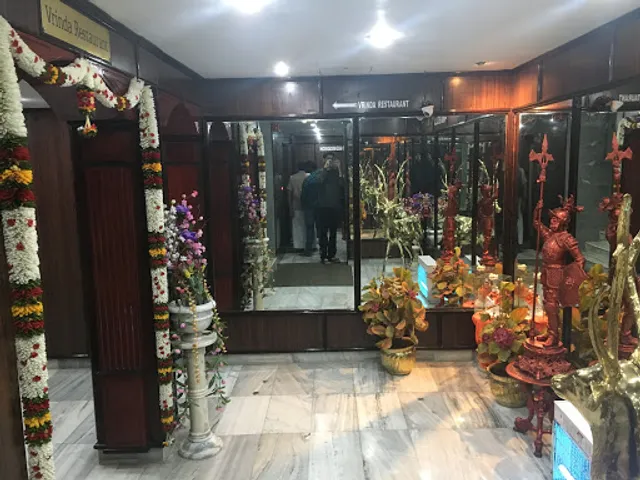
Vrinda Restaurant
14-2, 118, Door No 14-2-118/119 Near Railway Station Town Planning Area, 119, Koneti Katta St, TP Area, Tirupati, Andhra Pradesh 517501, India
Dojin Smart Restaurant
7-6-232, Mitta St, near Theertha Katta Street, beside Srinivasa Palace, Nehru Nagar, Tirupati, Andhra Pradesh 517501, India
R.K meat foods
Balaji Colony, Tirupati, Andhra Pradesh 517501, India
Hotel Ananda Bhavan 2
Annamayya Circle, Tata Nagar, Tirupati, Andhra Pradesh 517501, India
North Indian Fast Foods (Since 1985)
8-3-346, New St, Kotha veedi, Varadaraja Nagar, Tirupati, Andhra Pradesh 517501, India
Manasa Fast Food
Opp, Railway Station Road, Tata Nagar, Tirupati, Andhra Pradesh 517501, India
Hotel Saravana Bhavan
128 Opp. Railway Station T.P Area, Tirupati, Andhra Pradesh 517501, India
Sri Lakshmi Narayana Bhavan
D. No. 14-2-188 & 188 A Netaji Road Opp. Railway Parcel Office T. P. Area, Tirupati, Andhra Pradesh 517501, India
Goldee Punjabi Dhaba
No: 132-B, T.P. Area, opposite Vishnu Nivasam, Tirupati, Andhra Pradesh 517501, India
Related posts
Keywords
Sri Govindaraja Swamy Temple tourism.Sri Govindaraja Swamy Temple hotels.Sri Govindaraja Swamy Temple bed and breakfast. flights to Sri Govindaraja Swamy Temple.Sri Govindaraja Swamy Temple attractions.Sri Govindaraja Swamy Temple restaurants.Sri Govindaraja Swamy Temple travel.Sri Govindaraja Swamy Temple travel guide.Sri Govindaraja Swamy Temple travel blog.Sri Govindaraja Swamy Temple pictures.Sri Govindaraja Swamy Temple photos.Sri Govindaraja Swamy Temple travel tips.Sri Govindaraja Swamy Temple maps.Sri Govindaraja Swamy Temple things to do.
Sri Govindaraja Swamy Temple things to do, attractions, restaurants, events info and trip planning
Sri Govindaraja Swamy Temple
IndiaAndhra PradeshSri Govindaraja Swamy Temple

Basic Info

Sri Govindaraja Swamy Temple

North Mada Street, Tirumala, Tirupati, Andhra Pradesh 517501, India
4.7(2.7K)
Open 24 hours
Save
spot

Ratings & Description

Info

attractions: Sri Venkateswara Museum on Temple Art, Tirupati, Sri Ahobila Mutt, Venkateswara Swamy Temple, Sri Venkateshwara Temple, Sri Tataiahgunta Gangamma Devasthanam, restaurants: Bhimas Maya Restaurant, Vrinda Restaurant, Dojin Smart Restaurant, R.K meat foods, Hotel Ananda Bhavan 2, North Indian Fast Foods (Since 1985), Manasa Fast Food, Hotel Saravana Bhavan, Sri Lakshmi Narayana Bhavan, Goldee Punjabi Dhaba

logoLearn more insights from Wanderboat AI.
Website
tirumala.org

Plan your stay

hotel
Pet-friendly Hotels in Andhra Pradesh
Find a cozy hotel nearby and make it a full experience.
hotel
Affordable Hotels in Andhra Pradesh
Find a cozy hotel nearby and make it a full experience.
hotel
The Coolest Hotels You Haven't Heard Of (Yet)
Find a cozy hotel nearby and make it a full experience.
hotel
Trending Stays Worth the Hype in Andhra Pradesh
Find a cozy hotel nearby and make it a full experience.

Reviews

Nearby attractions of Sri Govindaraja Swamy Temple

Sri Venkateswara Museum on Temple Art, Tirupati

Sri Ahobila Mutt

Venkateswara Swamy Temple

Sri Venkateshwara Temple

Sri Tataiahgunta Gangamma Devasthanam

Sri Venkateswara Museum on Temple Art, Tirupati

Sri Venkateswara Museum on Temple Art, Tirupati

4.3

(156)

Open 24 hours
Click for details
Sri Ahobila Mutt

Sri Ahobila Mutt

4.0

(21)

Open 24 hours
Click for details
Venkateswara Swamy Temple

Venkateswara Swamy Temple

4.7

(217)

Open 24 hours
Click for details
Sri Venkateshwara Temple

Sri Venkateshwara Temple

4.6

(111)

Open 24 hours
Click for details

Things to do nearby

Bitcoin India Tour- Tirupati Edition 2.0
Sat, Dec 6 • 4:30 AM
Siddartha Educational Academy Group of Institutions - SEAT, Seat -C. Gollapalli rd Gollapalli Chintagunta, H9JG+5CX, Tirupati, Andhra Pradesh 517508, India
View details

Nearby restaurants of Sri Govindaraja Swamy Temple

Bhimas Maya Restaurant

Vrinda Restaurant

Dojin Smart Restaurant

R.K meat foods

Hotel Ananda Bhavan 2

North Indian Fast Foods (Since 1985)

Manasa Fast Food

Hotel Saravana Bhavan

Sri Lakshmi Narayana Bhavan

Goldee Punjabi Dhaba

Bhimas Maya Restaurant

Bhimas Maya Restaurant

3.7

(2.6K)

$

Click for details
Vrinda Restaurant

Vrinda Restaurant

3.9

(588)

Click for details
Dojin Smart Restaurant

Dojin Smart Restaurant

4.0

(222)

$$

Click for details
R.K meat foods

R.K meat foods

3.9

(565)

Click for details
Get the Appoverlay
Get the AppOne tap to find yournext favorite spots!
Wanderboat LogoWanderboat

Your everyday Al companion for getaway ideas

CompanyAbout Us
InformationAI Trip PlannerSitemap
SocialXInstagramTiktokLinkedin
LegalTerms of ServicePrivacy Policy

Get the app

© 2025 Wanderboat. All rights reserved.
logo

Posts

Manoj PathiManoj Pathi
The Sri Govindarajaswamy Temple in Tirupati, Andhra Pradesh, is a significant Hindu Vaishnavite temple dedicated to Lord Vishnu in the form of Govindaraja Swamy, believed to be the elder brother of Lord Venkateswara, the presiding deity of the Tirumala Venkateswara Temple. Below is a detailed history of the temple based on available information: Origins and Construction • Early History: The temple is one of the oldest and largest in Tirupati, with some structures dating back to the 9th and 10th centuries. Originally, the temple had Sri Parthasarathi (Lord Krishna) as the main deity before Sri Govindaraja was consecrated as the presiding deity. • Consecration by Ramanujacharya: The temple was consecrated in 1130 AD by the revered Vaishnavite saint Ramanujacharya, the founder of Vishishtadvaita philosophy. Ramanujacharya played a pivotal role in establishing the deity of Govindaraja in Tirupati. According to legend, he had a divine vision instructing him to install the deity, which was brought to Tirupati for safekeeping during turbulent times. • Chidambaram Connection: During the 12th century, due to Muslim invasions in South India, the Utsava murti (processional deity) of Govindaraja from the Govindaraja Perumal Temple in Chidambaram (Thiruchitrakoodam) was brought to Tirupati to protect it from desecration. The main deity (moola murti) in Chidambaram was reportedly thrown into the sea by the Shaivite Chola king, Kulothunga Chola II (referred to as Krimikantha in some sources), who was antagonistic toward Vishnu temples. After the situation stabilized, the Utsava murti was returned to Chidambaram, but Ramanujacharya ensured a new moola murti of Govindaraja was installed in Tirupati. Development Over Time • Chola and Vijayanagara Contributions: Historical records indicate that the temple gained prominence under the Chola dynasty (notably Raja Raja III in 1235 AD) and later under the Vijayanagara dynasty (from 1506 AD). The Yadavaraya dynasty made significant contributions, including gifts for chariot decoration and temple repairs. The temple was further developed by various rulers, with notable additions like the seven-storied Rajagopuram (main entrance tower) constructed by Matla Anantaraja, a local chieftain, in the 16th century. • Architectural Evolution: The temple showcases Dravidian and Vijayanagara architectural styles, with intricate carvings, towering gopurams, and spacious mandapas (halls). The innermost gopuram, dating to the 14th century, features carvings of Ramayana scenes and Lord Krishna’s life. The temple complex includes multiple shrines and a museum displaying historical artifacts, currency, and writings. Mythological Significance • Govindaraja and Venkateswara: According to local legends, Govindaraja Swamy is considered the elder brother of Lord Venkateswara. When Venkateswara sought a loan from Kubera (the god of wealth) for his celestial wedding with Padmavathi Devi, Govindaraja managed and measured the wealth, using a large measuring jar (kolaga) as his pillow. Exhausted from this task, he is depicted in the temple in a reclining yoga nidra posture on the serpent Adisesha, with his consorts Sridevi and Bhudevi seated at his feet and Brahma emerging from his navel. • Role in Wealth and Prosperity: Govindaraja is revered as the deity who bestows prosperity and helps manage wealth efficiently, tied to his role in overseeing Venkateswara’s wedding finances. Temple Features • Deities and Shrines: The main deity, Govindaraja Swamy, is in a reclining posture facing east. The temple complex houses two main shrines: one for Govindaraja (north). • Timings: The temple is open from 5:00 AM to 12:30 PM and 2:00 PM to 9:00 PM, with a break for rituals between 12:30 PM and 2:00 PM. • Darshan and Sevas: Options include free darshan, special entrance (Rs. 5), and quick darshan (Rs. 20). The Unjal Seva is a recently introduced ritual for the Utsava murti, costing Rs. 116 for two people. Mobile phones and gadgets are not allowed inside, and there are facilities for securing footwear and belongings.
SUJAY KALESUJAY KALE
**Google Review for Govindraja Swami Temple, Tirupati** ⭐⭐⭐⭐⭐ Govindraja Swami Temple, situated in the heart of Tirupati, is a historic and spiritually significant shrine dedicated to Lord Vishnu. It stands as one of the oldest temples in the region, with a rich history that traces back to the 12th century, attributed to the revered saint Ramanujacharya. This temple is an architectural marvel, featuring exquisite carvings and Dravidian style gopurams that captivate devotees and tourists alike. **History:** The temple is named after Lord Govindaraja, an incarnation of Lord Vishnu. According to legend, the deity was enshrined here by Saint Ramanujacharya in 1130 AD. The temple's history is intertwined with that of the Tirupati region and plays a significant role in the religious landscape of Andhra Pradesh. **Temple Timings:** The temple is open daily and the timings are as follows: - Morning: 5:00 AM to 12:30 PM - Evening: 1:00 PM to 9:30 PM **Dos and Don'ts:** **Dos:** 1. **Dress Code:** Devotees are advised to wear traditional attire. Men should wear dhotis or pyjamas with an upper cloth, and women should wear sarees or churidars. 2. **Maintain Cleanliness:** The temple premises are sacred, so please maintain cleanliness and dispose of waste in designated bins. 3. **Follow Rituals:** Participate respectfully in the temple rituals and follow the instructions given by the temple priests and staff. **Don'ts:** 1. **No Photography:** Photography and videography are strictly prohibited inside the temple premises. 2. **Avoid Bringing Valuables:** To avoid inconvenience and for safety reasons, do not bring valuable items to the temple. 3. **No Smoking or Alcohol:** Smoking, consumption of alcohol, and non-vegetarian food are strictly prohibited in and around the temple premises. **Experience:** Visiting Govindraja Swami Temple is a serene and enriching experience. The temple's serene ambiance, combined with the rhythmic chants and rituals, offers a peaceful retreat from the bustling city life. The intricate carvings and grand architecture are a testament to the rich cultural heritage of South India. Additionally, the temple is well-managed, and the staff is courteous and helpful. **Accessibility:** The temple is easily accessible from the main city and is well-connected by local transport. It is a short distance from the Tirupati railway station and bus stand, making it convenient for pilgrims and tourists. **Conclusion:** Govindraja Swami Temple is not just a place of worship but also a cultural landmark that offers a glimpse into the divine and historical legacy of Tirupati. Whether you are a devotee seeking blessings or a history enthusiast admiring ancient architecture, this temple is a must-visit. **Highly Recommended!** --- I hope this review provides a comprehensive overview of the Govindraja Swami Temple and helps visitors make the most of their visit.
Vikas SinghVikas Singh
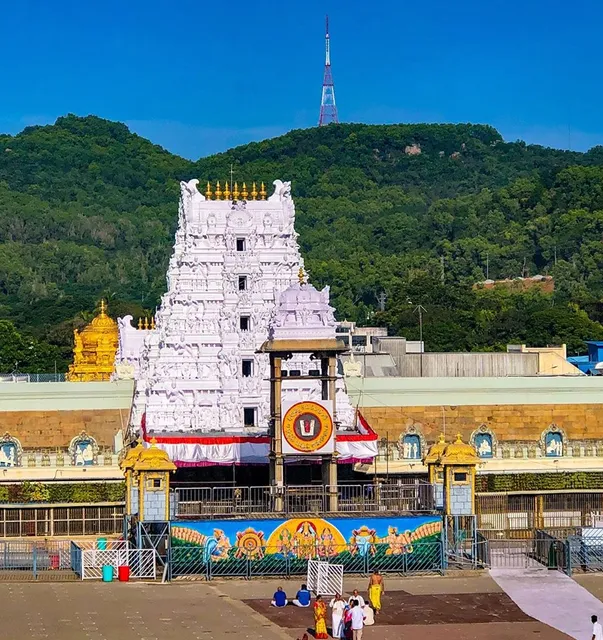
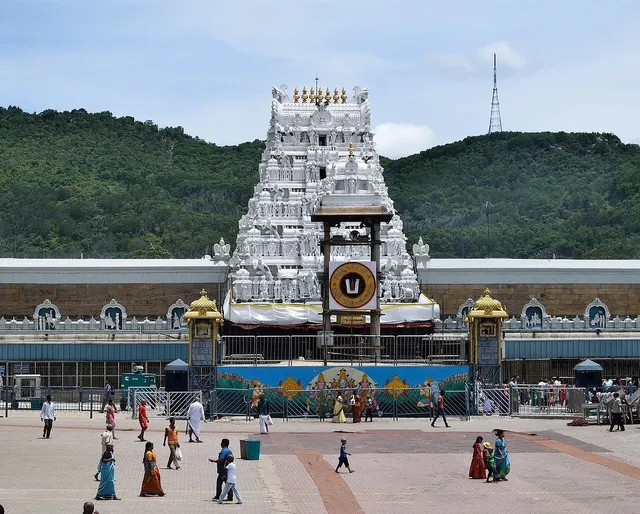
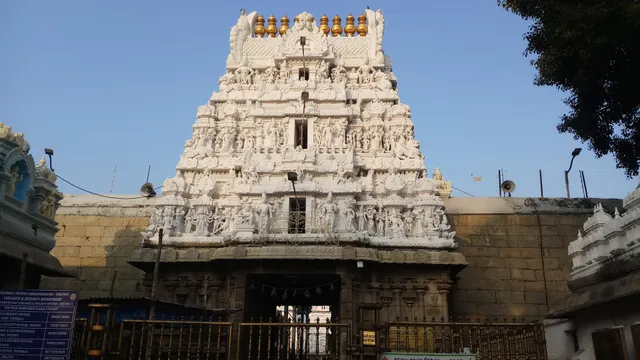
The main entrance to the shrine is surmounted by a big gopuram built by Matla Anantaraja in 1624 CE. The walls of this seven storied gopura are decorated with the series-pilaster, Kuta pilaster, Kumbhapanjara pilaster, Salakoshtha pilaster, Kumbhapanjara pilaster, Salakoshtha pilaster, kumbhapanjara pilaster and Kuta pilaster. There are numerous Vaishnava sculptures all over the walls and the figures of the donor and his wife and parents. The main gopuram leads to the first and outermost courtyard. In this are the Vedanta Desika shrine, Sri Lakshmi Narasimha Swamy temple, Sri Rangaanatha Swamy temple, Sri Chakrathalwar sanidhi, Sri Sudarshana murthy sanidhi and Sri Kondandarama Swamy temple. If you go early morning you will be blessed by two temple elephants. Since no mobile phone is allowed inside you can deposit them for free at the locker facility here. You can also deposit luggage and slippers here. A gopuram and an entrance below it leads into the second courtyard. In this is located Sri Pundareela Valle Amma vari temple and Mahalaxmi Amma Vari Sanidhi. On the roof of Mahalaxmi temple you can see sculptures of various forms of Laxmi including Gajalaxmi and Dhanalaxmi. Opposite this temple is mandap and on the roof you can see sculptures of dashavatars including Kalki avtar. A little ahead is the Shrine of three Alvars- Sri Kurath alvar, Sri Anand alvar and Sri Madhura Kavi alvar. Also located in this courtyard is Thirumalainambi shrine, Ramanuja shrine and Sri Bhashya Karla sanidhi. A gopuram at the far end and the entrance below it leads to the last and inner most courtyard. The main shrine of Govindaraja is located here. The temple is dedicated to Lord Vishnu, who is referred to as Govindarajaswamy. The deity is in reclining yoga nidra posture, facing east, by keeping right hand under his head and left hand straight over his body. Sridevi and Bhudevi the consorts of Vishnu are in sitting posture at the foot of Govindaraja. Near the entrance to this shrine is Sri Andal Amma Vari temple. Towards south west corner of the courtyard, there is a shrine dedicated to Kalyana Venkateswara which had a mandapa with finely finished colonettes. The beautiful pavilion in the middle has columns of grey green granite and a wooden roof. Also located in this courtyard is Sri Varadaraja Swami Vari temple, Sri Thirumangalai alvar shrine, Sri Vari Padamulu shrine and Sri Vyasanjaneya swamy temple. No camera or mobile phone is allowed. It is best to go early morning between 6-9 am when the crowd is less. The temple is closed between 9.00-9.30 am, 12.30-1.00 pm and 5-6 pm. So, plan your visit accordingly.
See more posts
See more posts
hotel
Find your stay

Pet-friendly Hotels in Andhra Pradesh

Find a cozy hotel nearby and make it a full experience.

The Sri Govindarajaswamy Temple in Tirupati, Andhra Pradesh, is a significant Hindu Vaishnavite temple dedicated to Lord Vishnu in the form of Govindaraja Swamy, believed to be the elder brother of Lord Venkateswara, the presiding deity of the Tirumala Venkateswara Temple. Below is a detailed history of the temple based on available information: Origins and Construction • Early History: The temple is one of the oldest and largest in Tirupati, with some structures dating back to the 9th and 10th centuries. Originally, the temple had Sri Parthasarathi (Lord Krishna) as the main deity before Sri Govindaraja was consecrated as the presiding deity. • Consecration by Ramanujacharya: The temple was consecrated in 1130 AD by the revered Vaishnavite saint Ramanujacharya, the founder of Vishishtadvaita philosophy. Ramanujacharya played a pivotal role in establishing the deity of Govindaraja in Tirupati. According to legend, he had a divine vision instructing him to install the deity, which was brought to Tirupati for safekeeping during turbulent times. • Chidambaram Connection: During the 12th century, due to Muslim invasions in South India, the Utsava murti (processional deity) of Govindaraja from the Govindaraja Perumal Temple in Chidambaram (Thiruchitrakoodam) was brought to Tirupati to protect it from desecration. The main deity (moola murti) in Chidambaram was reportedly thrown into the sea by the Shaivite Chola king, Kulothunga Chola II (referred to as Krimikantha in some sources), who was antagonistic toward Vishnu temples. After the situation stabilized, the Utsava murti was returned to Chidambaram, but Ramanujacharya ensured a new moola murti of Govindaraja was installed in Tirupati. Development Over Time • Chola and Vijayanagara Contributions: Historical records indicate that the temple gained prominence under the Chola dynasty (notably Raja Raja III in 1235 AD) and later under the Vijayanagara dynasty (from 1506 AD). The Yadavaraya dynasty made significant contributions, including gifts for chariot decoration and temple repairs. The temple was further developed by various rulers, with notable additions like the seven-storied Rajagopuram (main entrance tower) constructed by Matla Anantaraja, a local chieftain, in the 16th century. • Architectural Evolution: The temple showcases Dravidian and Vijayanagara architectural styles, with intricate carvings, towering gopurams, and spacious mandapas (halls). The innermost gopuram, dating to the 14th century, features carvings of Ramayana scenes and Lord Krishna’s life. The temple complex includes multiple shrines and a museum displaying historical artifacts, currency, and writings. Mythological Significance • Govindaraja and Venkateswara: According to local legends, Govindaraja Swamy is considered the elder brother of Lord Venkateswara. When Venkateswara sought a loan from Kubera (the god of wealth) for his celestial wedding with Padmavathi Devi, Govindaraja managed and measured the wealth, using a large measuring jar (kolaga) as his pillow. Exhausted from this task, he is depicted in the temple in a reclining yoga nidra posture on the serpent Adisesha, with his consorts Sridevi and Bhudevi seated at his feet and Brahma emerging from his navel. • Role in Wealth and Prosperity: Govindaraja is revered as the deity who bestows prosperity and helps manage wealth efficiently, tied to his role in overseeing Venkateswara’s wedding finances. Temple Features • Deities and Shrines: The main deity, Govindaraja Swamy, is in a reclining posture facing east. The temple complex houses two main shrines: one for Govindaraja (north). • Timings: The temple is open from 5:00 AM to 12:30 PM and 2:00 PM to 9:00 PM, with a break for rituals between 12:30 PM and 2:00 PM. • Darshan and Sevas: Options include free darshan, special entrance (Rs. 5), and quick darshan (Rs. 20). The Unjal Seva is a recently introduced ritual for the Utsava murti, costing Rs. 116 for two people. Mobile phones and gadgets are not allowed inside, and there are facilities for securing footwear and belongings.
Manoj Pathi

Manoj Pathi

hotel
Find your stay

Affordable Hotels in Andhra Pradesh

Find a cozy hotel nearby and make it a full experience.

Get the Appoverlay
Get the AppOne tap to find yournext favorite spots!
**Google Review for Govindraja Swami Temple, Tirupati** ⭐⭐⭐⭐⭐ Govindraja Swami Temple, situated in the heart of Tirupati, is a historic and spiritually significant shrine dedicated to Lord Vishnu. It stands as one of the oldest temples in the region, with a rich history that traces back to the 12th century, attributed to the revered saint Ramanujacharya. This temple is an architectural marvel, featuring exquisite carvings and Dravidian style gopurams that captivate devotees and tourists alike. **History:** The temple is named after Lord Govindaraja, an incarnation of Lord Vishnu. According to legend, the deity was enshrined here by Saint Ramanujacharya in 1130 AD. The temple's history is intertwined with that of the Tirupati region and plays a significant role in the religious landscape of Andhra Pradesh. **Temple Timings:** The temple is open daily and the timings are as follows: - Morning: 5:00 AM to 12:30 PM - Evening: 1:00 PM to 9:30 PM **Dos and Don'ts:** **Dos:** 1. **Dress Code:** Devotees are advised to wear traditional attire. Men should wear dhotis or pyjamas with an upper cloth, and women should wear sarees or churidars. 2. **Maintain Cleanliness:** The temple premises are sacred, so please maintain cleanliness and dispose of waste in designated bins. 3. **Follow Rituals:** Participate respectfully in the temple rituals and follow the instructions given by the temple priests and staff. **Don'ts:** 1. **No Photography:** Photography and videography are strictly prohibited inside the temple premises. 2. **Avoid Bringing Valuables:** To avoid inconvenience and for safety reasons, do not bring valuable items to the temple. 3. **No Smoking or Alcohol:** Smoking, consumption of alcohol, and non-vegetarian food are strictly prohibited in and around the temple premises. **Experience:** Visiting Govindraja Swami Temple is a serene and enriching experience. The temple's serene ambiance, combined with the rhythmic chants and rituals, offers a peaceful retreat from the bustling city life. The intricate carvings and grand architecture are a testament to the rich cultural heritage of South India. Additionally, the temple is well-managed, and the staff is courteous and helpful. **Accessibility:** The temple is easily accessible from the main city and is well-connected by local transport. It is a short distance from the Tirupati railway station and bus stand, making it convenient for pilgrims and tourists. **Conclusion:** Govindraja Swami Temple is not just a place of worship but also a cultural landmark that offers a glimpse into the divine and historical legacy of Tirupati. Whether you are a devotee seeking blessings or a history enthusiast admiring ancient architecture, this temple is a must-visit. **Highly Recommended!** --- I hope this review provides a comprehensive overview of the Govindraja Swami Temple and helps visitors make the most of their visit.
SUJAY KALE

SUJAY KALE

hotel
Find your stay

The Coolest Hotels You Haven't Heard Of (Yet)

Find a cozy hotel nearby and make it a full experience.

hotel
Find your stay

Trending Stays Worth the Hype in Andhra Pradesh

Find a cozy hotel nearby and make it a full experience.

The main entrance to the shrine is surmounted by a big gopuram built by Matla Anantaraja in 1624 CE. The walls of this seven storied gopura are decorated with the series-pilaster, Kuta pilaster, Kumbhapanjara pilaster, Salakoshtha pilaster, Kumbhapanjara pilaster, Salakoshtha pilaster, kumbhapanjara pilaster and Kuta pilaster. There are numerous Vaishnava sculptures all over the walls and the figures of the donor and his wife and parents. The main gopuram leads to the first and outermost courtyard. In this are the Vedanta Desika shrine, Sri Lakshmi Narasimha Swamy temple, Sri Rangaanatha Swamy temple, Sri Chakrathalwar sanidhi, Sri Sudarshana murthy sanidhi and Sri Kondandarama Swamy temple. If you go early morning you will be blessed by two temple elephants. Since no mobile phone is allowed inside you can deposit them for free at the locker facility here. You can also deposit luggage and slippers here. A gopuram and an entrance below it leads into the second courtyard. In this is located Sri Pundareela Valle Amma vari temple and Mahalaxmi Amma Vari Sanidhi. On the roof of Mahalaxmi temple you can see sculptures of various forms of Laxmi including Gajalaxmi and Dhanalaxmi. Opposite this temple is mandap and on the roof you can see sculptures of dashavatars including Kalki avtar. A little ahead is the Shrine of three Alvars- Sri Kurath alvar, Sri Anand alvar and Sri Madhura Kavi alvar. Also located in this courtyard is Thirumalainambi shrine, Ramanuja shrine and Sri Bhashya Karla sanidhi. A gopuram at the far end and the entrance below it leads to the last and inner most courtyard. The main shrine of Govindaraja is located here. The temple is dedicated to Lord Vishnu, who is referred to as Govindarajaswamy. The deity is in reclining yoga nidra posture, facing east, by keeping right hand under his head and left hand straight over his body. Sridevi and Bhudevi the consorts of Vishnu are in sitting posture at the foot of Govindaraja. Near the entrance to this shrine is Sri Andal Amma Vari temple. Towards south west corner of the courtyard, there is a shrine dedicated to Kalyana Venkateswara which had a mandapa with finely finished colonettes. The beautiful pavilion in the middle has columns of grey green granite and a wooden roof. Also located in this courtyard is Sri Varadaraja Swami Vari temple, Sri Thirumangalai alvar shrine, Sri Vari Padamulu shrine and Sri Vyasanjaneya swamy temple. No camera or mobile phone is allowed. It is best to go early morning between 6-9 am when the crowd is less. The temple is closed between 9.00-9.30 am, 12.30-1.00 pm and 5-6 pm. So, plan your visit accordingly.
Vikas Singh

Vikas Singh

See more posts
See more posts

Reviews of Sri Govindaraja Swamy Temple

4.7
(2,654)
avatar
5.0
24w

The Sri Govindarajaswamy Temple in Tirupati, Andhra Pradesh, is a significant Hindu Vaishnavite temple dedicated to Lord Vishnu in the form of Govindaraja Swamy, believed to be the elder brother of Lord Venkateswara, the presiding deity of the Tirumala Venkateswara Temple. Below is a detailed history of the temple based on available information: Origins and Construction • Early History: The temple is one of the oldest and largest in Tirupati, with some structures dating back to the 9th and 10th centuries. Originally, the temple had Sri Parthasarathi (Lord Krishna) as the main deity before Sri Govindaraja was consecrated as the presiding deity. • Consecration by Ramanujacharya: The temple was consecrated in 1130 AD by the revered Vaishnavite saint Ramanujacharya, the founder of Vishishtadvaita philosophy. Ramanujacharya played a pivotal role in establishing the deity of Govindaraja in Tirupati. According to legend, he had a divine vision instructing him to install the deity, which was brought to Tirupati for safekeeping during turbulent times. • Chidambaram Connection: During the 12th century, due to Muslim invasions in South India, the Utsava murti (processional deity) of Govindaraja from the Govindaraja Perumal Temple in Chidambaram (Thiruchitrakoodam) was brought to Tirupati to protect it from desecration. The main deity (moola murti) in Chidambaram was reportedly thrown into the sea by the Shaivite Chola king, Kulothunga Chola II (referred to as Krimikantha in some sources), who was antagonistic toward Vishnu temples. After the situation stabilized, the Utsava murti was returned to Chidambaram, but Ramanujacharya ensured a new moola murti of Govindaraja was installed in Tirupati. Development Over Time • Chola and Vijayanagara Contributions: Historical records indicate that the temple gained prominence under the Chola dynasty (notably Raja Raja III in 1235 AD) and later under the Vijayanagara dynasty (from 1506 AD). The Yadavaraya dynasty made significant contributions, including gifts for chariot decoration and temple repairs. The temple was further developed by various rulers, with notable additions like the seven-storied Rajagopuram (main entrance tower) constructed by Matla Anantaraja, a local chieftain, in the 16th century. • Architectural Evolution: The temple showcases Dravidian and Vijayanagara architectural styles, with intricate carvings, towering gopurams, and spacious mandapas (halls). The innermost gopuram, dating to the 14th century, features carvings of Ramayana scenes and Lord Krishna’s life. The temple complex includes multiple shrines and a museum displaying historical artifacts, currency, and writings. Mythological Significance • Govindaraja and Venkateswara: According to local legends, Govindaraja Swamy is considered the elder brother of Lord Venkateswara. When Venkateswara sought a loan from Kubera (the god of wealth) for his celestial wedding with Padmavathi Devi, Govindaraja managed and measured the wealth, using a large measuring jar (kolaga) as his pillow. Exhausted from this task, he is depicted in the temple in a reclining yoga nidra posture on the serpent Adisesha, with his consorts Sridevi and Bhudevi seated at his feet and Brahma emerging from his navel. • Role in Wealth and Prosperity: Govindaraja is revered as the deity who bestows prosperity and helps manage wealth efficiently, tied to his role in overseeing Venkateswara’s wedding finances. Temple Features • Deities and Shrines: The main deity, Govindaraja Swamy, is in a reclining posture facing east. The temple complex houses two main shrines: one for Govindaraja (north). • Timings: The temple is open from 5:00 AM to 12:30 PM and 2:00 PM to 9:00 PM, with a break for rituals between 12:30 PM and 2:00 PM. • Darshan and Sevas: Options include free darshan, special entrance (Rs. 5), and quick darshan (Rs. 20). The Unjal Seva is a recently introduced ritual for the Utsava murti, costing Rs. 116 for two people. Mobile phones and gadgets are not allowed inside, and there are facilities for securing footwear...

   Read more
avatar
4.0
40w

Frequently asked questions (FAQs) about the Govinda Swamy Temple in Tirupati along with their answers

What is the Govinda Swamy Temple?

  • The Govinda Swamy Temple in Tirupati is a sacred shrine dedicated to Lord Venkateswara, also known as Govinda. It is an important spiritual destination for devotees seeking blessings in a peaceful environment.

Where is the Govinda Swamy Temple located? Ans: The temple is located in Tirupati, Andhra Pradesh, and is easily accessible from the Tirupati Railway Station and Tirupati Bus Station. It is situated in the heart of the city.

Is the Govinda Swamy Temple as famous as the Tirumala Venkateswara Temple? Ans:While the Tirumala Venkateswara Temple is more famous, the Govinda Swamy Temple is also a revered place of worship in Tirupati. It offers a quieter and less crowded experience compared to the Tirumala Temple.

What is the significance of the Govinda Swamy Temple? Ans:The temple holds significant religious importance for devotees who seek blessings from Lord Venkateswara in a peaceful setting. It is believed to bring prosperity, peace, and spiritual growth.

What type of architecture does the Govinda Swamy Temple follow? Ans:The temple is designed in the traditional "South Indian Dravidian style", featuring ornate pillars, intricate carvings, and a beautifully crafted "sanctum sanctorum" where the idol of Lord Venkateswara (Govinda) is enshrined.

What are the temple timings? Ans:- The "Govinda Swamy Temple" is generally open from "6:00 AM to 8:00 PM". Specific rituals and prayers are held in the morning and evening.

What rituals and poojas are performed at the temple? Ans: - The temple conducts regular "pujas" and prayers in the morning and evening. Special rituals such as "Abhishekam" and "Archana" are also performed. Devotees can also arrange for specific prayers and blessings.

Is there a dress code for visitors? Ans:- Yes, it is recommended to wear traditional attire when visiting the temple. Men are typically expected to wear dhotis or pants with shirts, while women should wear sarees or salwar kameez.

How crowded is the Govinda Swamy Temple? Ans:- The Govinda Swamy Temple is much less crowded compared to the Tirumala Temple, allowing for a more peaceful and personal experience while offering prayers and spending time in the temple.

Are there any special events or festivals at the Govinda Swamy Temple? Ans:- The temple celebrates various festivals, including Vaikuntha Ekadashi, Brahmotsavam, and other significant religious occasions. These festivals are celebrated with great devotion and rituals.

How do I get to the Govinda Swamy Temple from Tirupati Railway Station? Ans:The temple is just a short distance (approximately 2-3 kilometers) from the Tirupati Railway Station. You can take an auto-rickshaw, taxi, or walk to the temple.

Is there an entry fee to visit the Govinda Swamy Temple? Ans:No, there is no entry fee for visiting the temple. However, certain special prayers or rituals may involve a nominal charge.

What facilities are available for visitors? Ans: The temple provides basic amenities like drinking water and a counter for prasadam (holy offerings). There are several hotels and guesthouses nearby where devotees can stay.

Can I perform special poojas or rituals at the Govinda Swamy Temple? Ans: Yes, devotees can perform special poojas and rituals, including Abhishekam and Archana. You can also request specific prayers for prosperity, health, and other blessings.

What is the overall experience of visiting the Govinda Swamy Temple? Ans:The Govinda Swamy Temple offers a serene, spiritual atmosphere, ideal for devotees looking for a quiet, peaceful space to offer prayers. It is perfect for those who wish to connect with Lord Venkateswara(Govinda) in a tranquil...

   Read more
avatar
5.0
1y

Google Review for Govindraja Swami Temple, Tirupati

⭐⭐⭐⭐⭐

Govindraja Swami Temple, situated in the heart of Tirupati, is a historic and spiritually significant shrine dedicated to Lord Vishnu. It stands as one of the oldest temples in the region, with a rich history that traces back to the 12th century, attributed to the revered saint Ramanujacharya. This temple is an architectural marvel, featuring exquisite carvings and Dravidian style gopurams that captivate devotees and tourists alike.

History: The temple is named after Lord Govindaraja, an incarnation of Lord Vishnu. According to legend, the deity was enshrined here by Saint Ramanujacharya in 1130 AD. The temple's history is intertwined with that of the Tirupati region and plays a significant role in the religious landscape of Andhra Pradesh.

Temple Timings: The temple is open daily and the timings are as follows: Morning: 5:00 AM to 12:30 PM Evening: 1:00 PM to 9:30 PM

Dos and Don'ts: Dos: Dress Code: Devotees are advised to wear traditional attire. Men should wear dhotis or pyjamas with an upper cloth, and women should wear sarees or churidars. Maintain Cleanliness: The temple premises are sacred, so please maintain cleanliness and dispose of waste in designated bins. Follow Rituals: Participate respectfully in the temple rituals and follow the instructions given by the temple priests and staff.

Don'ts: No Photography: Photography and videography are strictly prohibited inside the temple premises. Avoid Bringing Valuables: To avoid inconvenience and for safety reasons, do not bring valuable items to the temple. No Smoking or Alcohol: Smoking, consumption of alcohol, and non-vegetarian food are strictly prohibited in and around the temple premises.

Experience: Visiting Govindraja Swami Temple is a serene and enriching experience. The temple's serene ambiance, combined with the rhythmic chants and rituals, offers a peaceful retreat from the bustling city life. The intricate carvings and grand architecture are a testament to the rich cultural heritage of South India. Additionally, the temple is well-managed, and the staff is courteous and helpful.

Accessibility: The temple is easily accessible from the main city and is well-connected by local transport. It is a short distance from the Tirupati railway station and bus stand, making it convenient for pilgrims and tourists.

Conclusion: Govindraja Swami Temple is not just a place of worship but also a cultural landmark that offers a glimpse into the divine and historical legacy of Tirupati. Whether you are a devotee seeking blessings or a history enthusiast admiring ancient architecture, this temple is a must-visit.

Highly Recommended!

I hope this review provides a comprehensive overview of the Govindraja Swami Temple and helps visitors make the most of...

   Read more
Page 1 of 7
Previous
Next