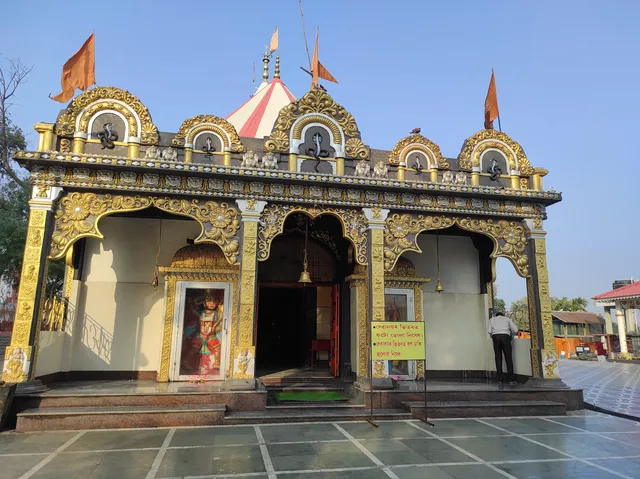
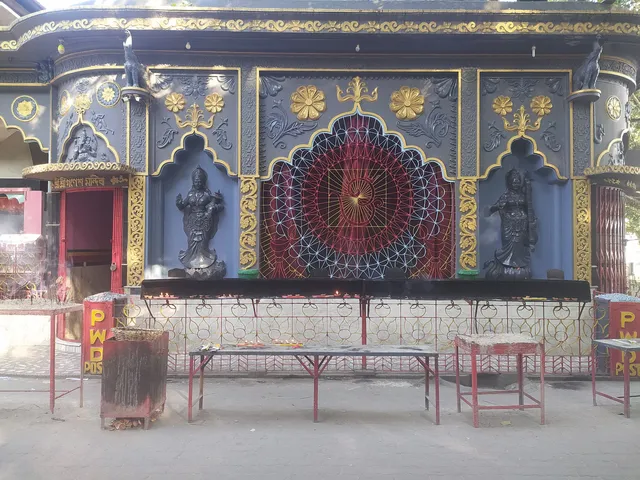
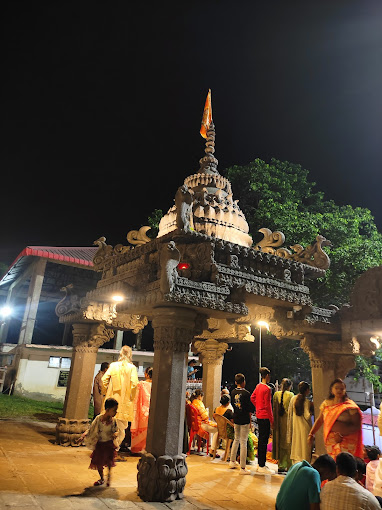
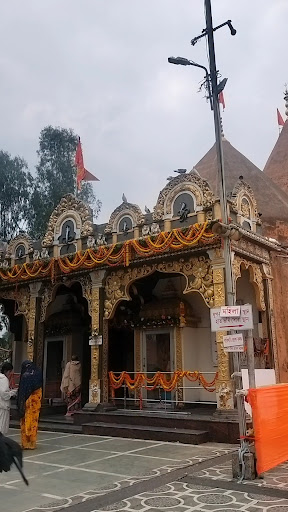
The ancient Mahabhairav Temple is located at a hillock on the northern part of Tezpur town, Assam. This temple is believed to have been established by king Bana in the pre-historical times. This Shiva temple was originally built of stone but the present one was renovated and built with concrete. During the Ahom rule, the kings especially of the Tungkhungiya dynasty donated large area of Devotee land to the Temple and appointed pujaris ,Paiks to look after the temple. The responsibility of management was in the hands of a Borthakur. The temple is now managed by the Government of Assam through a managing committee headed by the Deputy Commissioner, Sonitpur. Maha Shivaratri the annual festival of Shaivite branch of Hinduism is celebrated in the temple complex with devotees coming from far and wide.Laddu laced with Bhang ,an edible preparation of cannabis and also mixed with milk and spices, are offered as prasad to Lord Shiva as per the rituals. Various puja are also conducted at this temple, pigeons are also freed that symbolizes that spirit of ancestors are being liberated.Archaeologist believe that the temple was built during 8th to 10th century A.D. by the kings of the Salasthamba dynasty ,which is evident by the presence of huge stone pillars scattered all around the temple.The original temple was destroyed during the Islamic invasions of the Middle Ages. It was again rebuilt by the successive kings and rulers, until it was heavily damaged by the catastrophic earthquake of 1897.
The present structure of the temple was built sometime in the early part of the present century by a devotee and ascetic Sri Swayambar Bharati, popularly known as Naga Baba. After a few years, another ascetic Sri Mahadeo Bharati built the "Nat Mandir" close to the temple. After a few years another devotee built the cement-concrete idols of Ganesh and Hanuman as "Dwarpaals" in front of the temple.The temple is dedicated to Lord Shiva and built by King Banasura. The Shiva linga of this temple is said to be made of 'Living Stone' which grows over slowly by the years.Some people believe that Bana attained prosperity by worshipping Lord Shiva in...
Read moreShiv Purab: A Tribute to Mahabhairab Temple, Tezpur
In the ancient heart of Tezpur, nestled atop a hillock that watches over the town with quiet grace, stands the Mahabhairab Temple — a timeless abode of Lord Shiva, where stone whispers stories of devotion, courage, and divine presence.
This holy shrine, believed to have been originally built during the Gupta period, is not just a temple, but a living testament to Assam’s spiritual and cultural legacy. The mighty lingam of Mahabhairab, said to be made of “living stone” that grows with time, is revered as one of the oldest and most powerful symbols of Shaivism in this region.
The air here carries a sanctity that silences the mind and uplifts the soul. It is said that Banasura, the mighty demon king and a devout follower of Lord Shiva, worshipped him right here. The temple, steeped in legends, is believed to be the very place where Lord Shiva once appeared in his fierce form of Mahabhairab to bless his devotee and to protect dharma.
A Personal Note of Gratitude
On this sacred occasion of Shiv Purab, I bow with folded hands and a humble heart before the eternal Mahadev. The blessings I have received at this divine place — strength in times of doubt, calm in chaos, and a sense of silent resilience — cannot be described in mere words.
Standing before the ancient Shiva lingam, I felt time stand still. My burdens were lifted. In the flickering light of ghee lamps and the fragrance of dhup and bilva leaves, I saw not just a deity, but a presence that watches over Tezpur and over us all — a father, protector, and the destroyer of ignorance.
May His Blessings Endure
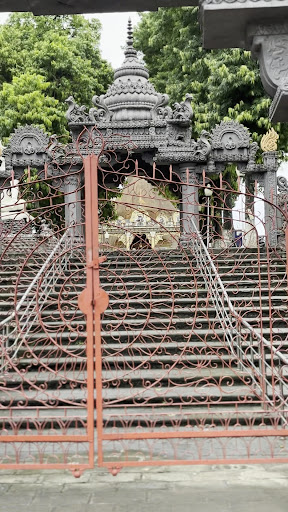
May Mahabhairab bless every soul who climbs the temple stairs with faith. May he guide our steps, silence our egos, and awaken the divine within us. In these testing times, may his Trishul pierce through negativity, and his Damru echo through our hearts, reminding us that after destruction always comes creation.
Om Namah Shivaya. Om...
Read moreTucked away on the tranquil hillocks of Tezpur, the iconic Mahabhairab Temple isn't just a spiritual pitstop — it’s a soul-stirring experience, where mythology, mystery, and mountain breeze come together in poetic rhythm. Dedicated to Lord Shiva in his fearsome Bhairava avatar, this ancient shrine feels like a chapter from an old scripture — one that still breathes.
Legend has it, and Assamese grandmothers will happily vouch for it, that King Banasura, a zealous devotee of Shiva and a mythological figure himself, founded this temple. The shivlinga housed here is believed to be one of the largest in India, carved out of a single stone and possibly dating back to the 8th to 10th century CE, though some whisper it’s even older.
Fascinating Nuggets to Digest Before You Bow: The temple's name — “Mahabhairab” — literally translates to the Great Terrifying One, and yet the vibe is soothing, almost meditative. A paradox only Shiva could pull off. It comes alive during Shivratri, when devotees queue up in serpentine lines (pun intended), and the air is thick with chants, incense, and an unmistakable scent of divinity (and jalebis). Local lore claims the original lingam was self-manifested (Swayambhu) and that Shiva himself appeared here in Bhairava form to bless his devotee Banasura. It’s managed today by the State Government of Assam, preserving not just the structure but the legacy it holds for both pilgrims and curious wanderers.
My Reverie: There’s something timeless about Mahabhairab Temple — perhaps it’s the whispering pines, the distant bells, or the sensation that you’re standing at a spiritual crossroads where the past and present exchange pleasantries. Whether you're a devout pilgrim or a history buff with a penchant for ancient secrets, this temple offers a slice of serenity with a dollop of divinity.
Final Thought: Go for the blessings, stay for the energy. And while you're at it, breathe in that Tezpur air — it's laced...
Read more